August 2026
Heads Down
There hasn’t been much time for thinking or reflecting over the past couple of weeks. With only four weeks remaining until our final firing deadline, it really is a case of heads down and getting the work made — or at least as much of it as is realistically possible within the time we have left.
My list of pieces for the final degree show continues to evolve. Every time I think I have settled on the work I want to make, another idea quietly appears in my sketchbook, tempting me to squeeze in just one more vessel before the end of the course. It is a constant balancing act between ambition and reality.
Progress through the firing process has felt frustratingly slow, with work gradually moving from one stage to the next. I keep hoping that, at some point over the next few weeks, the pieces will begin to emerge from the kilns in quick succession and finally start to come together as the cohesive body of work I have been striving towards. At the moment, it still feels a little like a wing and a prayer. Perhaps that is simply because I am continuing to explore and push ideas for as long as time allows, rather than settling too soon.
I am hoping to complete two new large contour vessels over the coming weeks to replace the one that sadly cracked. Against my better judgement, I have started building one at home in an effort to make the most of every available hour. I can only hope that, this time, I manage to transport it safely to university without adding any unnecessary drama to the process.
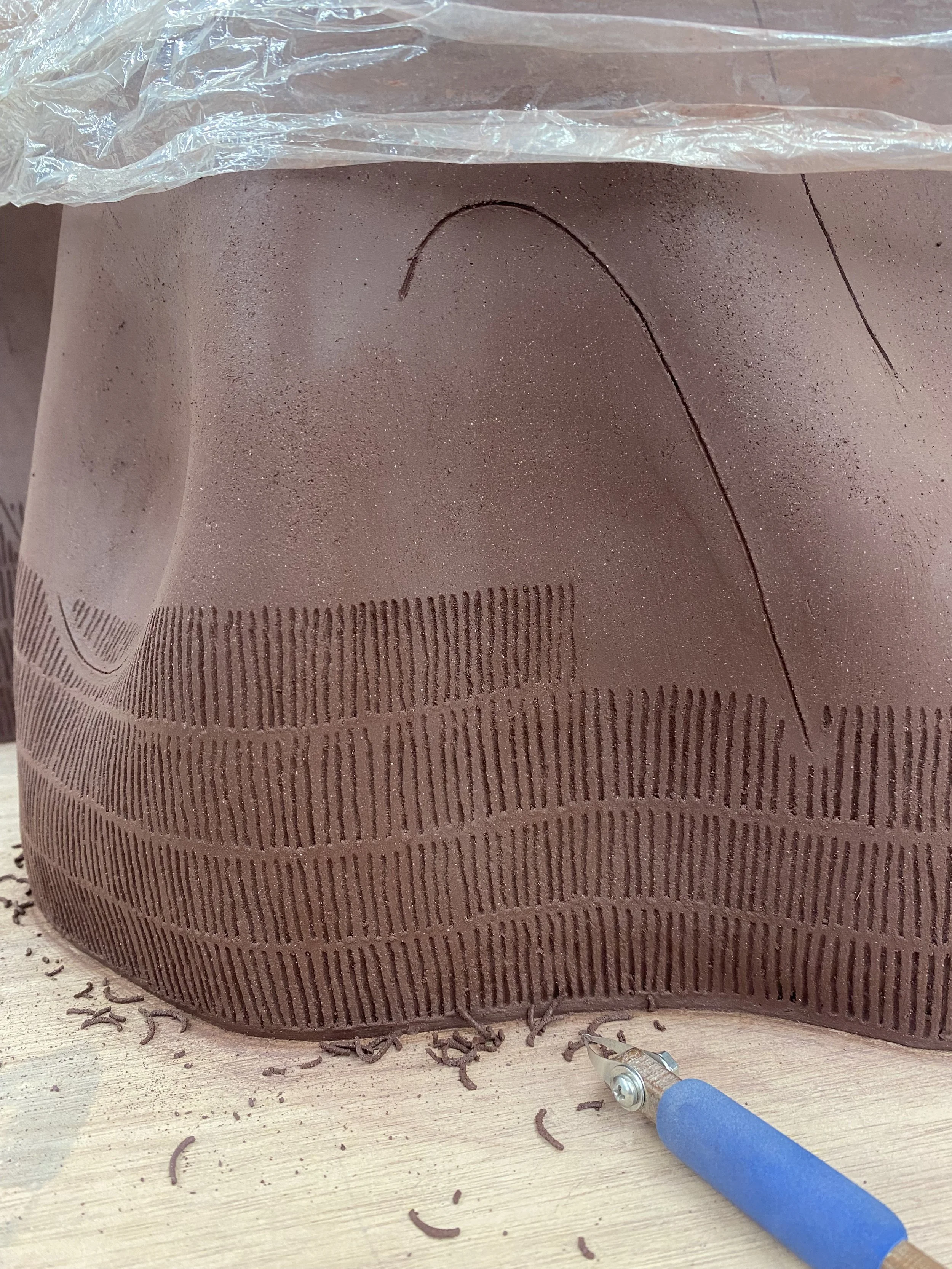
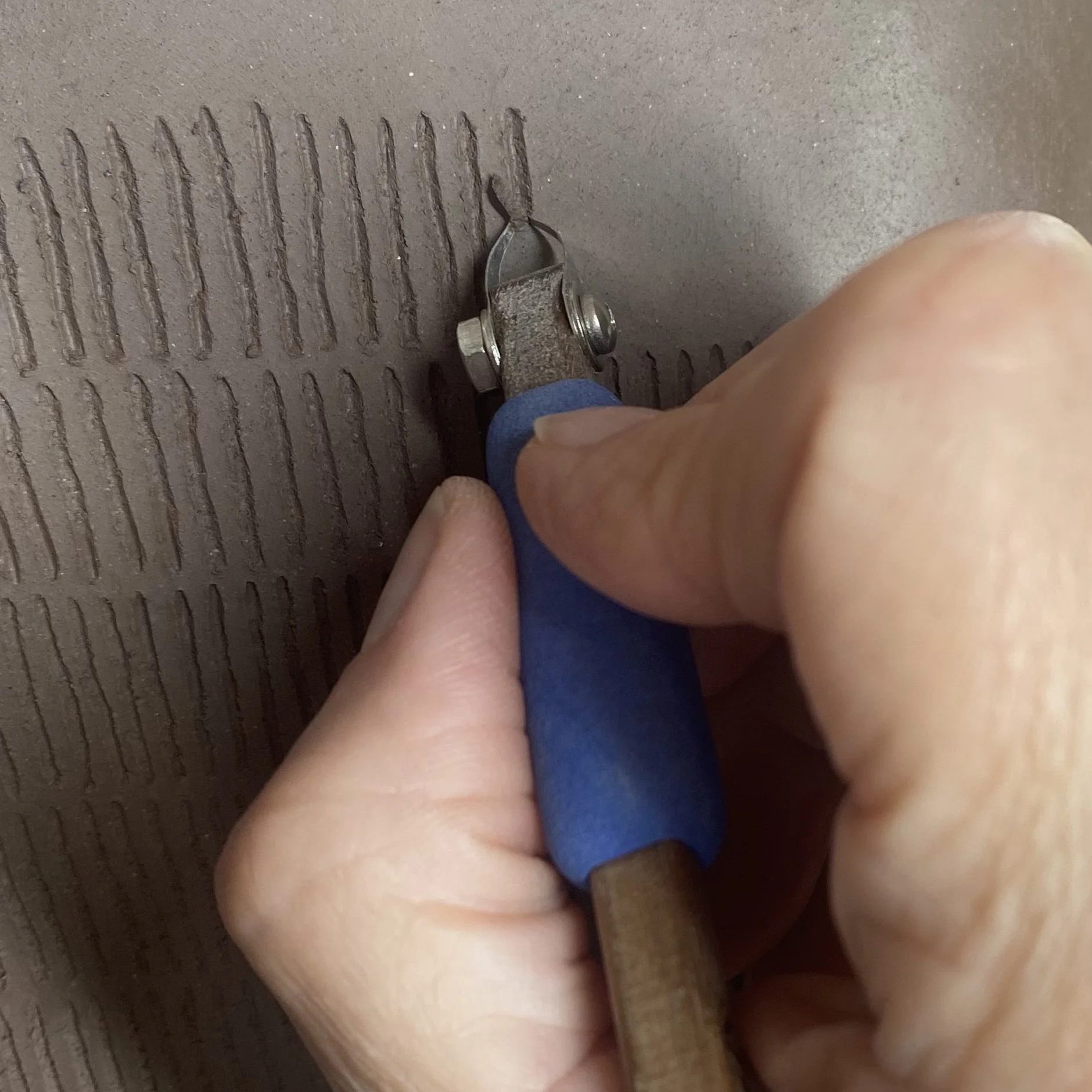
One small highlight this week has been treating myself to a new carving tool. After countless hours incising surfaces, my old tools were beginning to lose their edge, so I finally invested in a DiamondCore carving tool. Sometimes it is the smallest additions to the studio that make the biggest difference. It has already transformed the carving process, reminding me that good tools are every bit as important as good materials.
For now, there is little to do but keep making.
The thinking has been done.
The time for making is now.
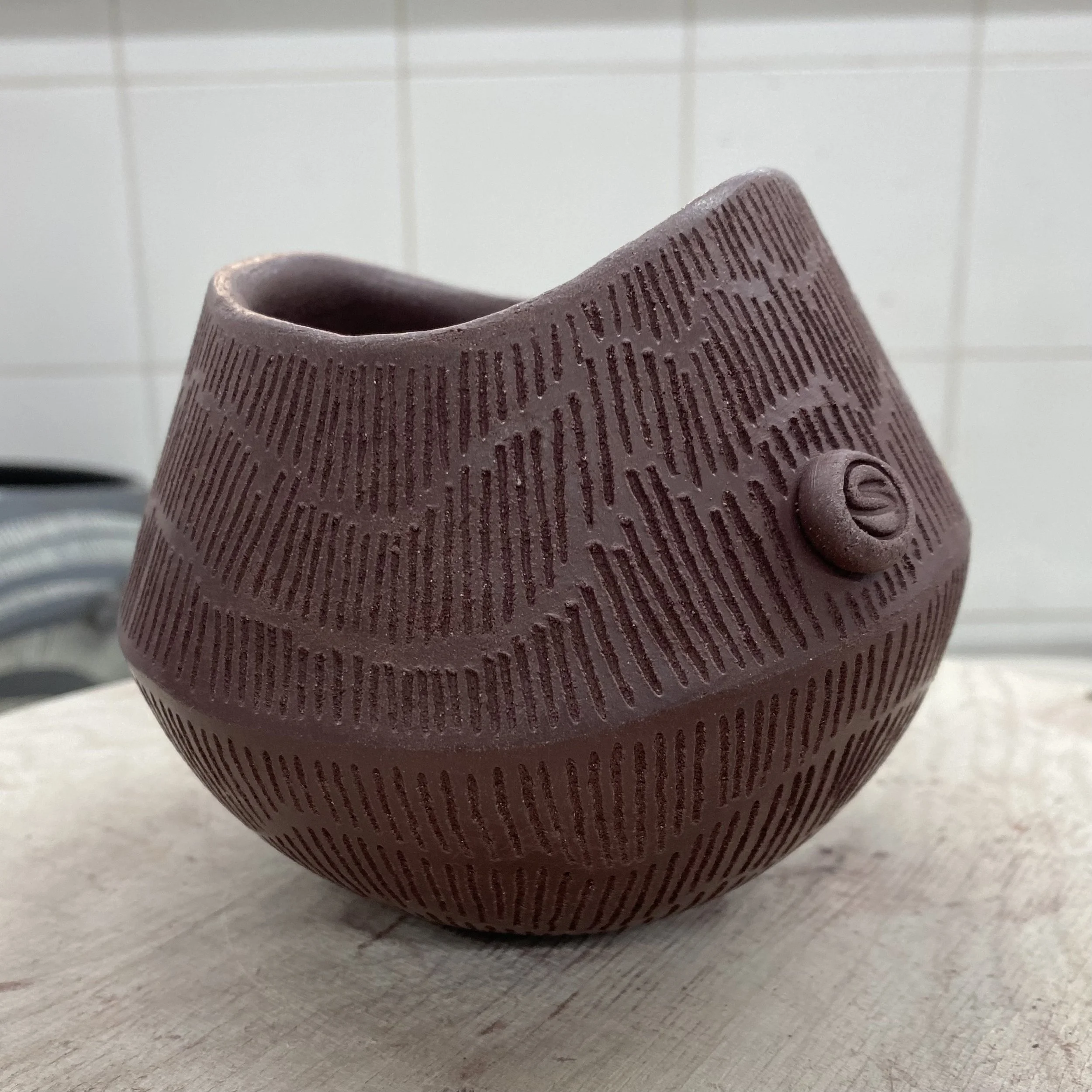
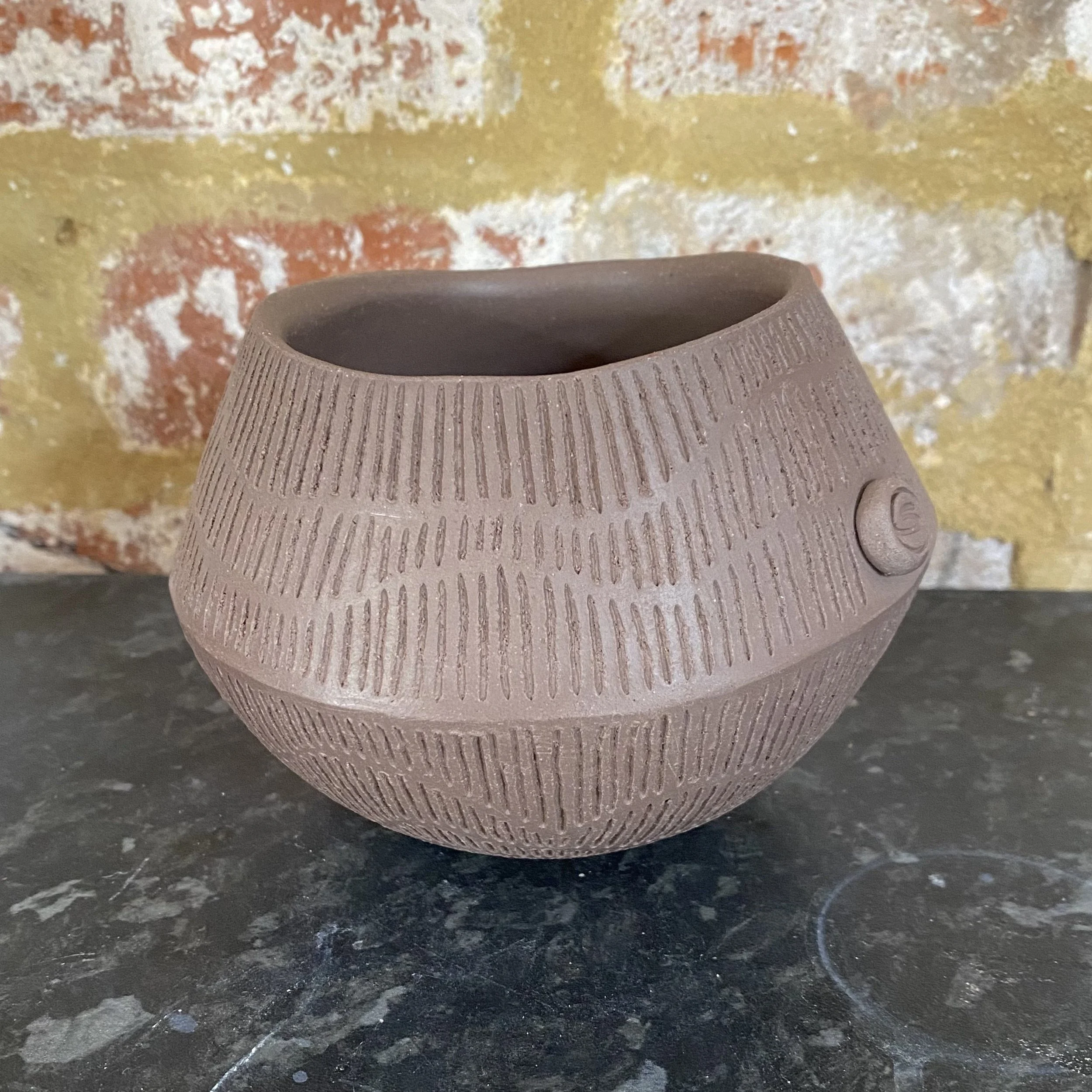
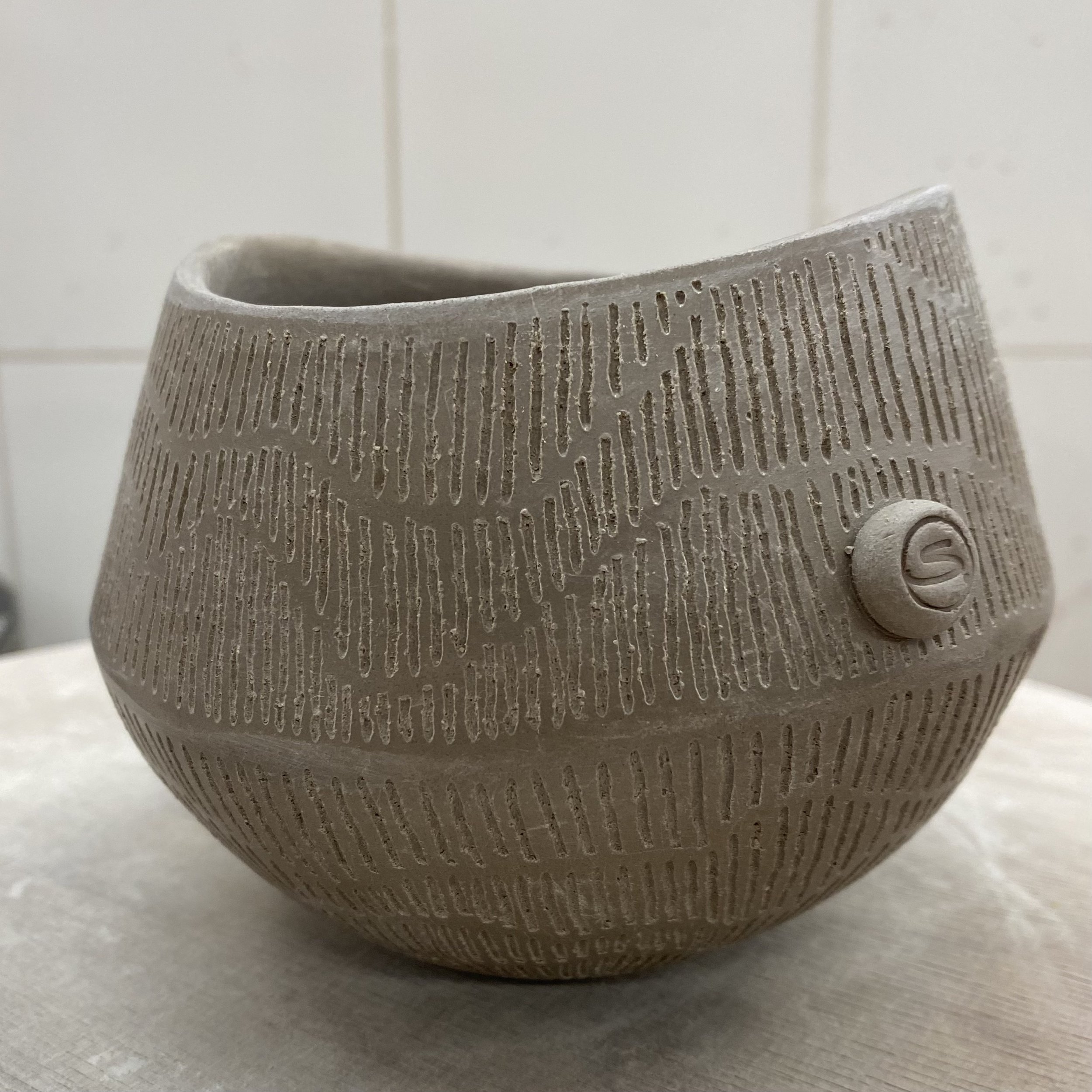
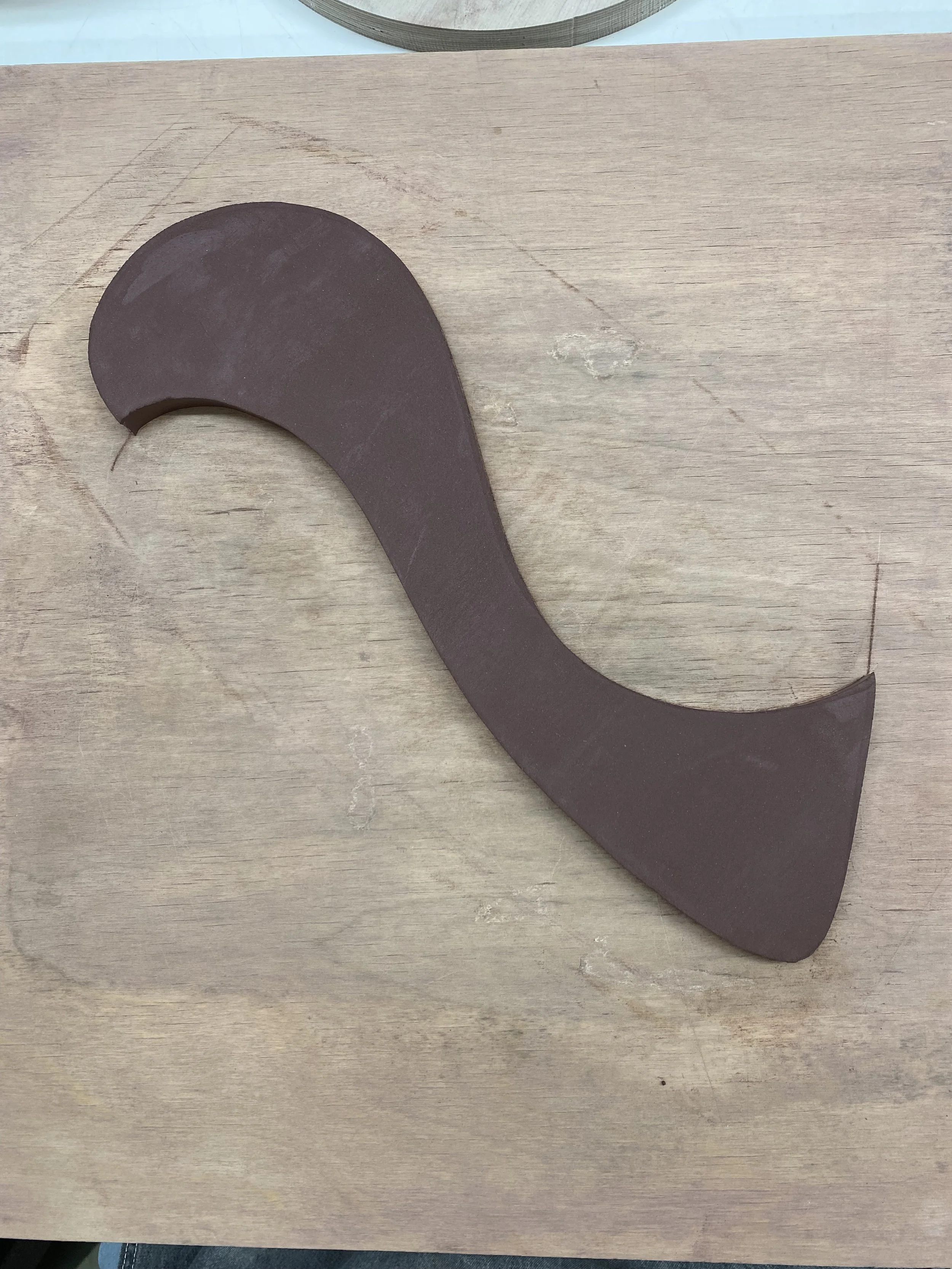
From Contour to Vessel
Over the past few weeks I have been thinking about how best to explain the process behind my Contour Vessels. While the finished pieces may appear simple, each one begins long before the clay is touched.
People often ask where the forms come from. The answer is that they begin with a place.
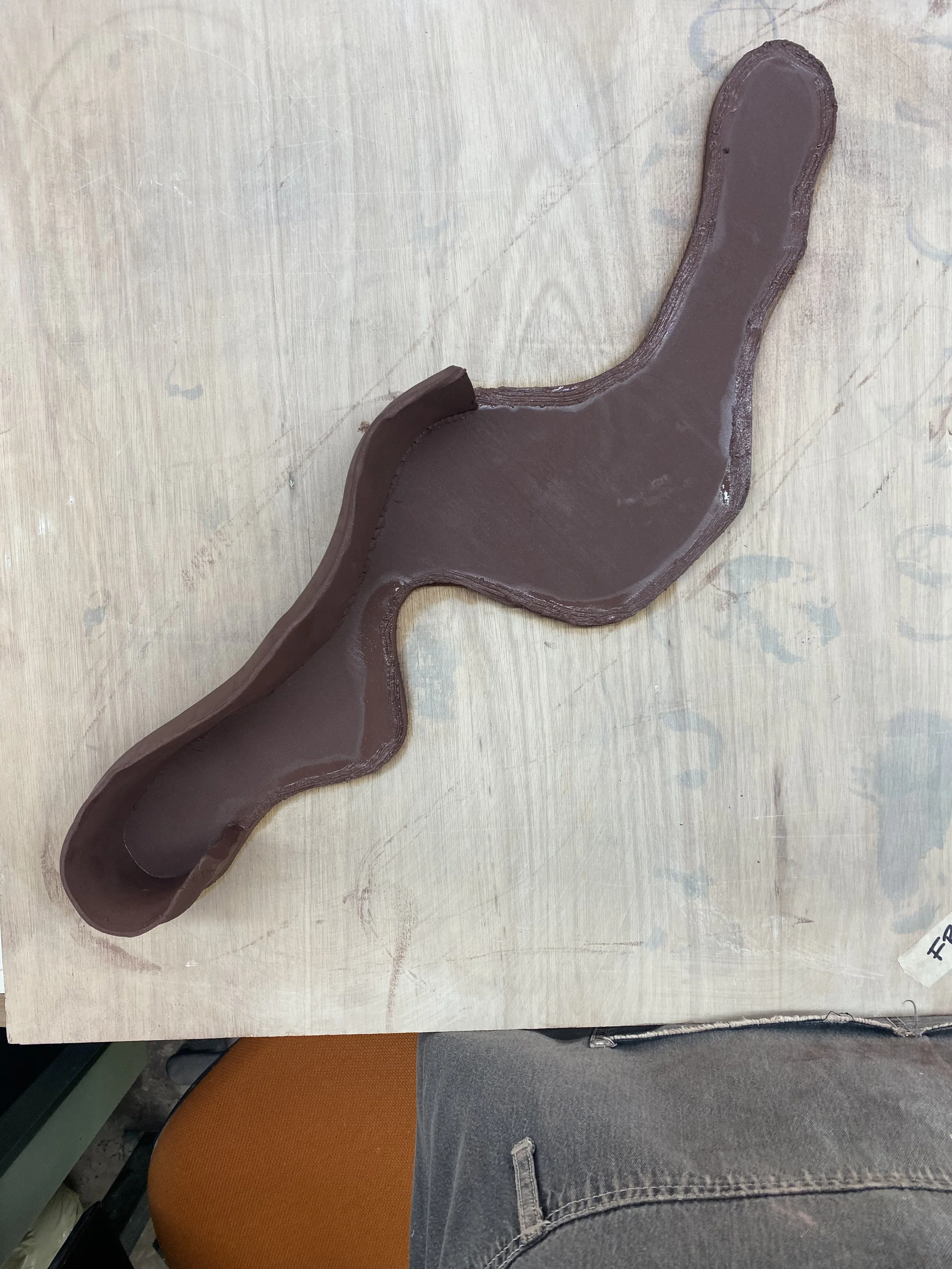
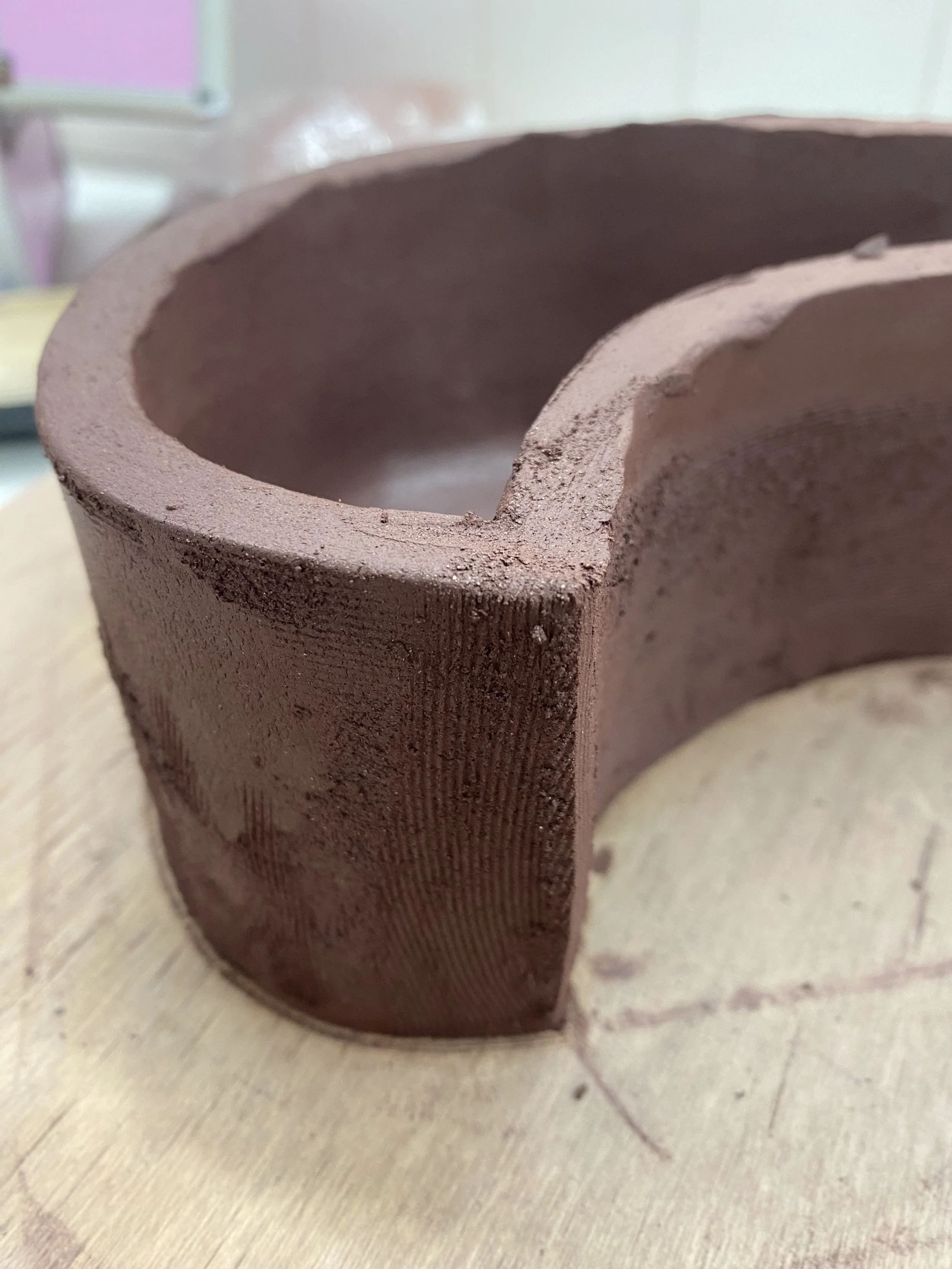
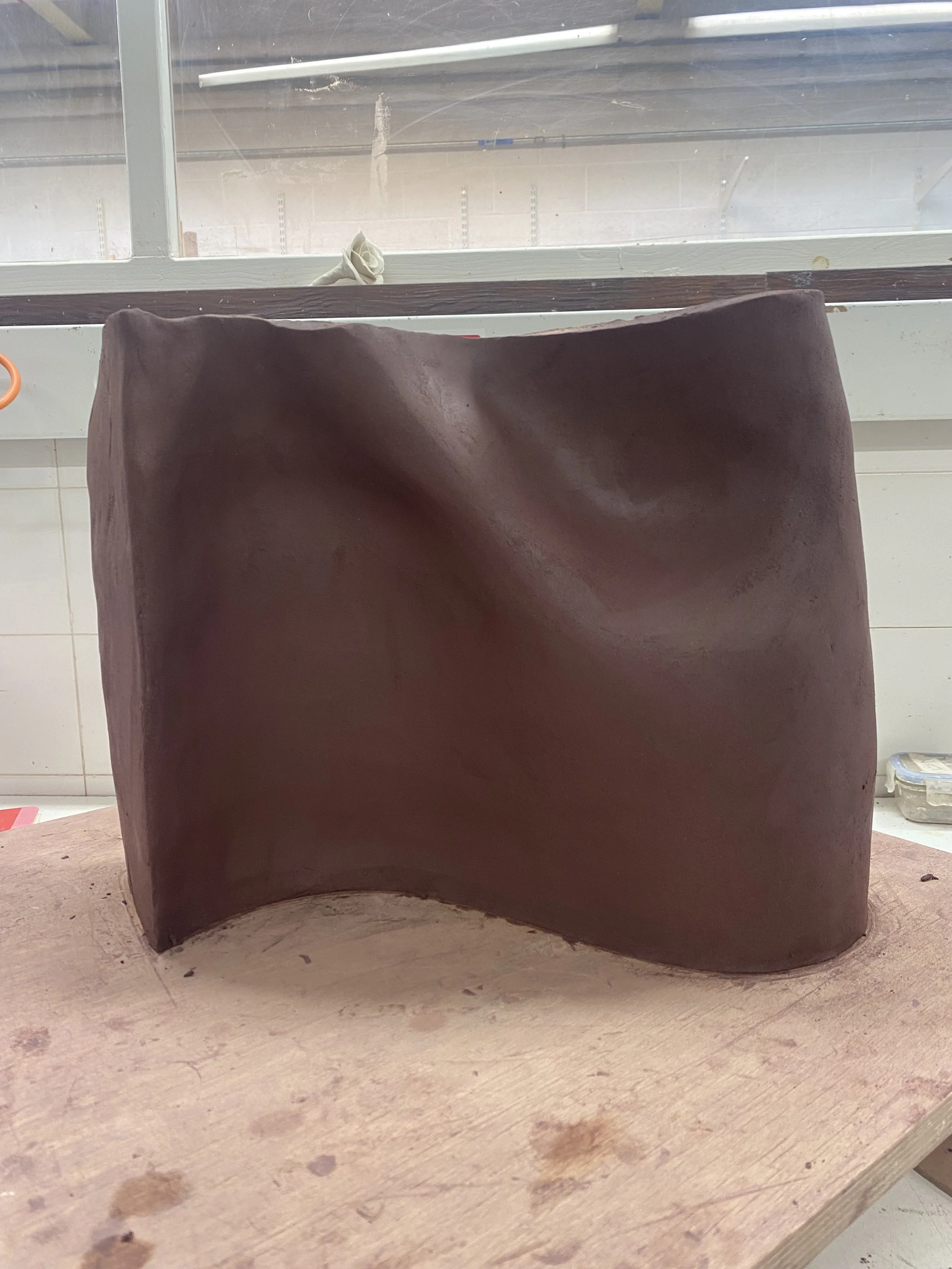
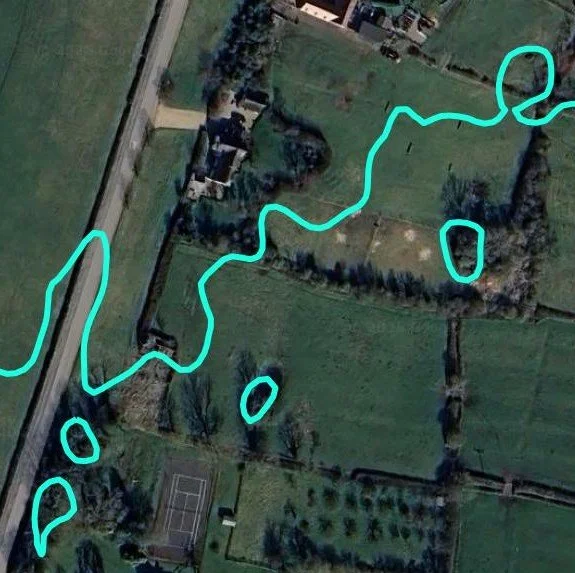
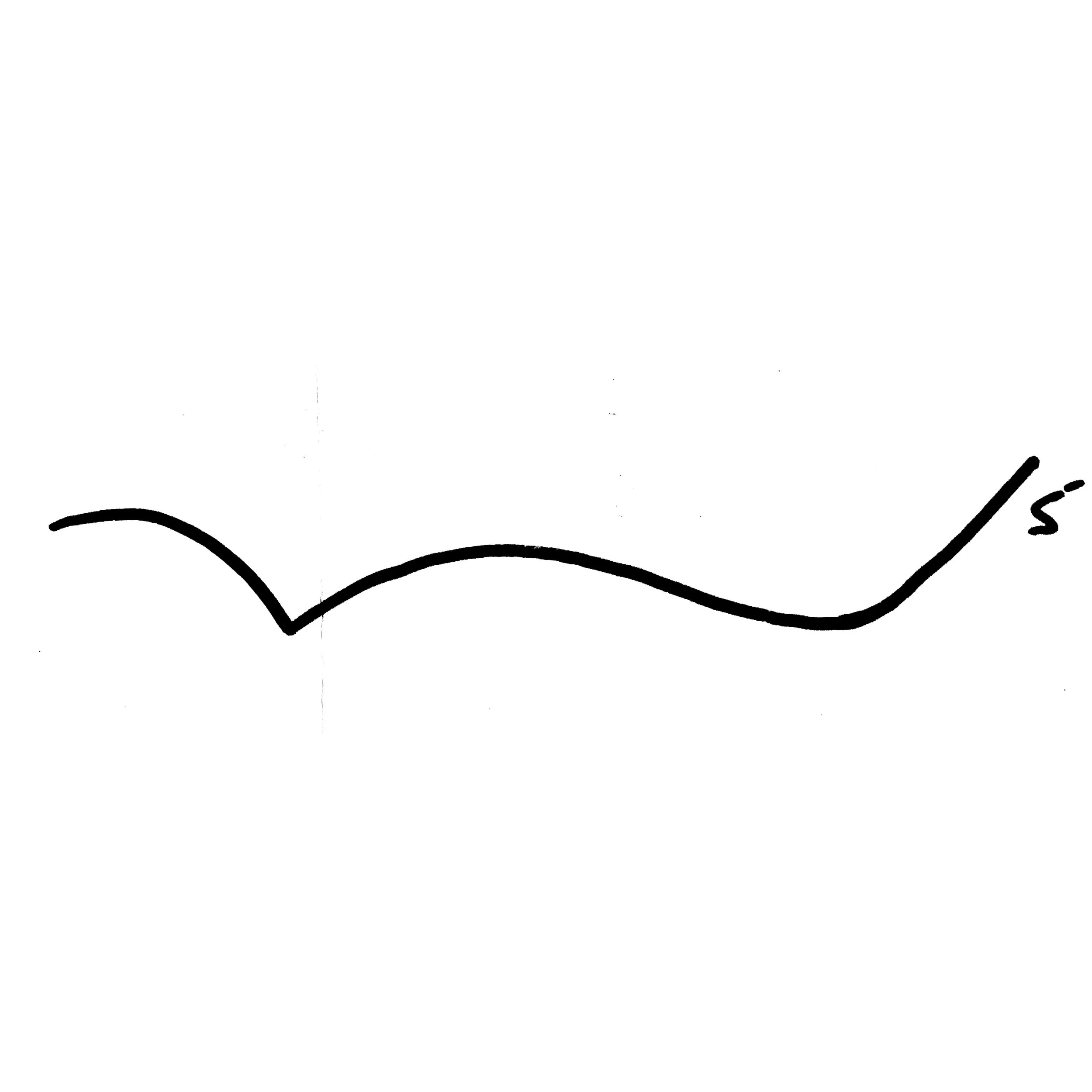
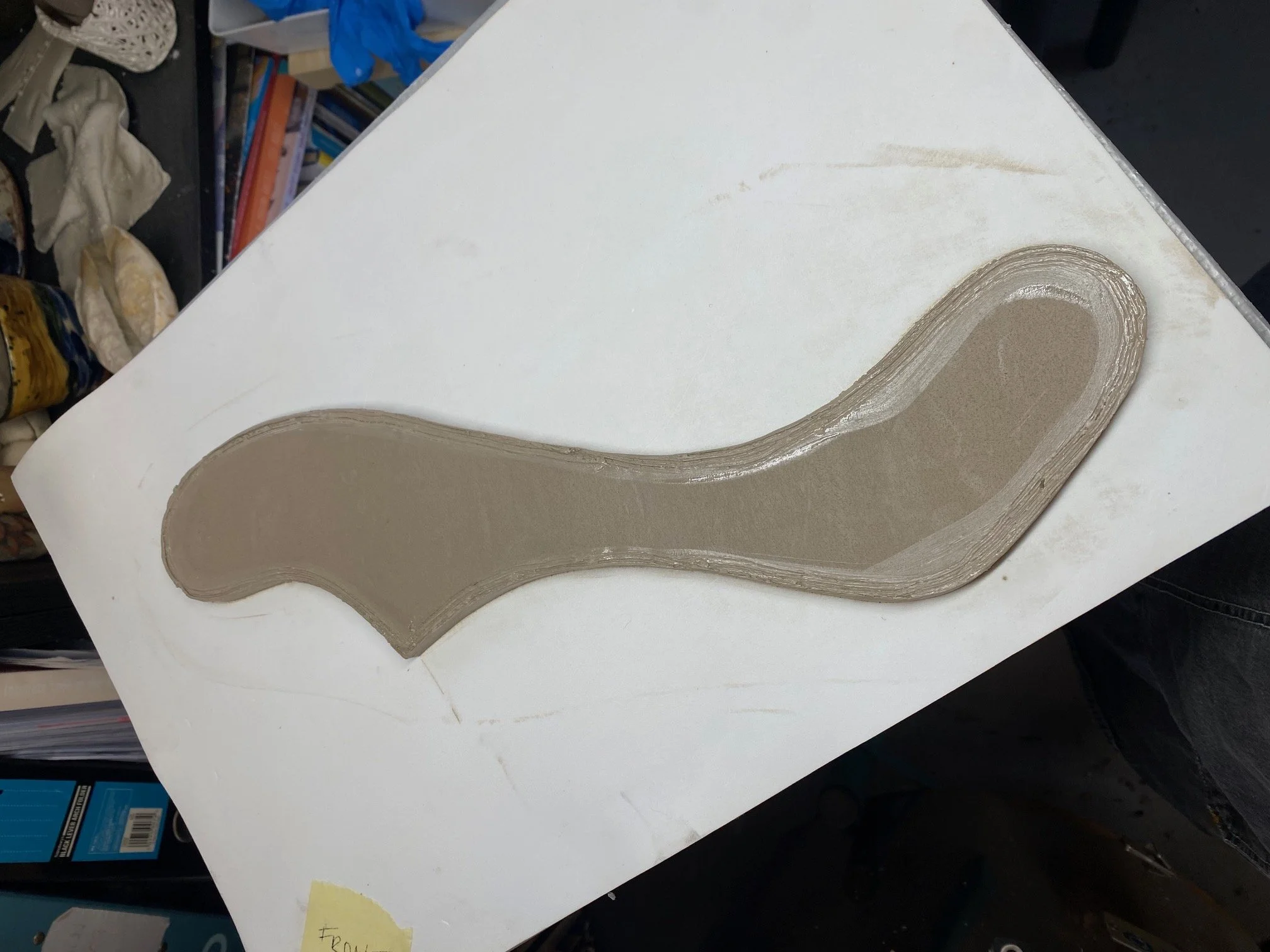
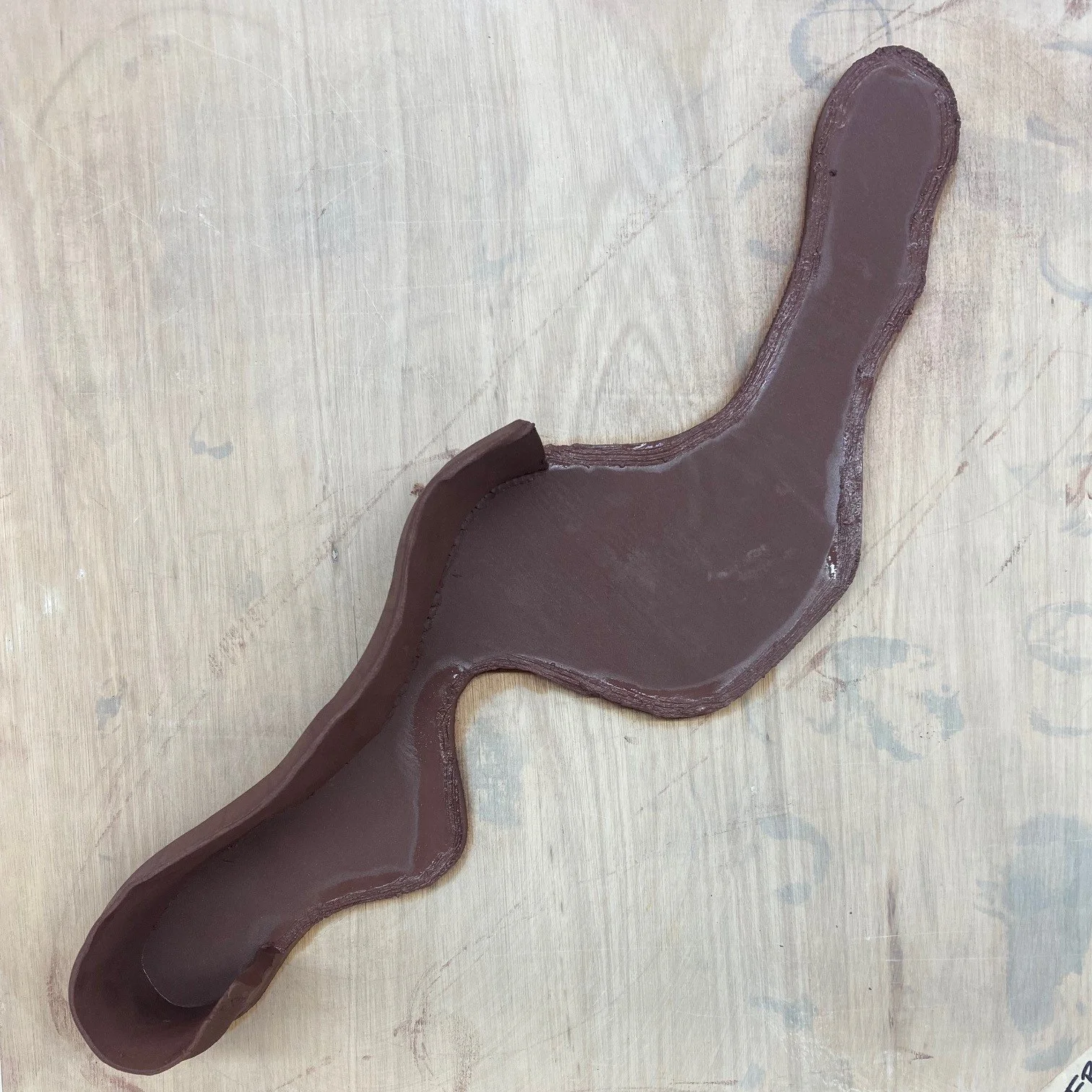
Every Contour Vessel starts with a mapped contour line taken from a landscape that holds personal significance. I don't reproduce the contour exactly. Instead, I select a small section and draw it by hand, allowing it to become familiar through observation. This drawing then informs the front edge of the vessel's base. From that single line, the entire form begins to emerge.
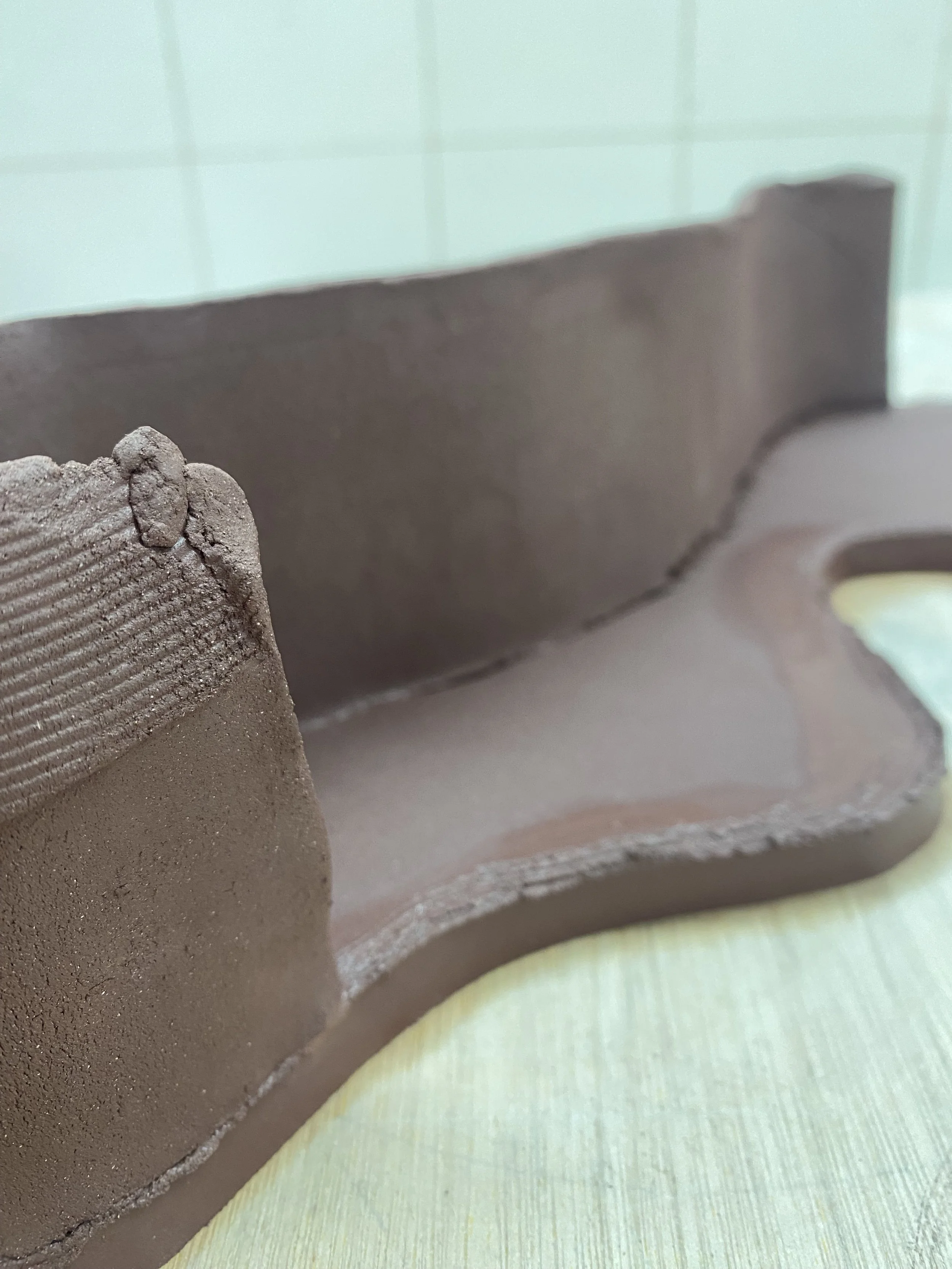
At this point the process becomes less prescriptive and much more intuitive. The contour informs the vessel, but it never dictates it. As the form is hand-built using slabs and coils, I respond to the clay itself, allowing subtle shifts in movement, balance and proportion to develop naturally. It is this dialogue between the remembered landscape, the material and the making that ultimately shapes each piece.
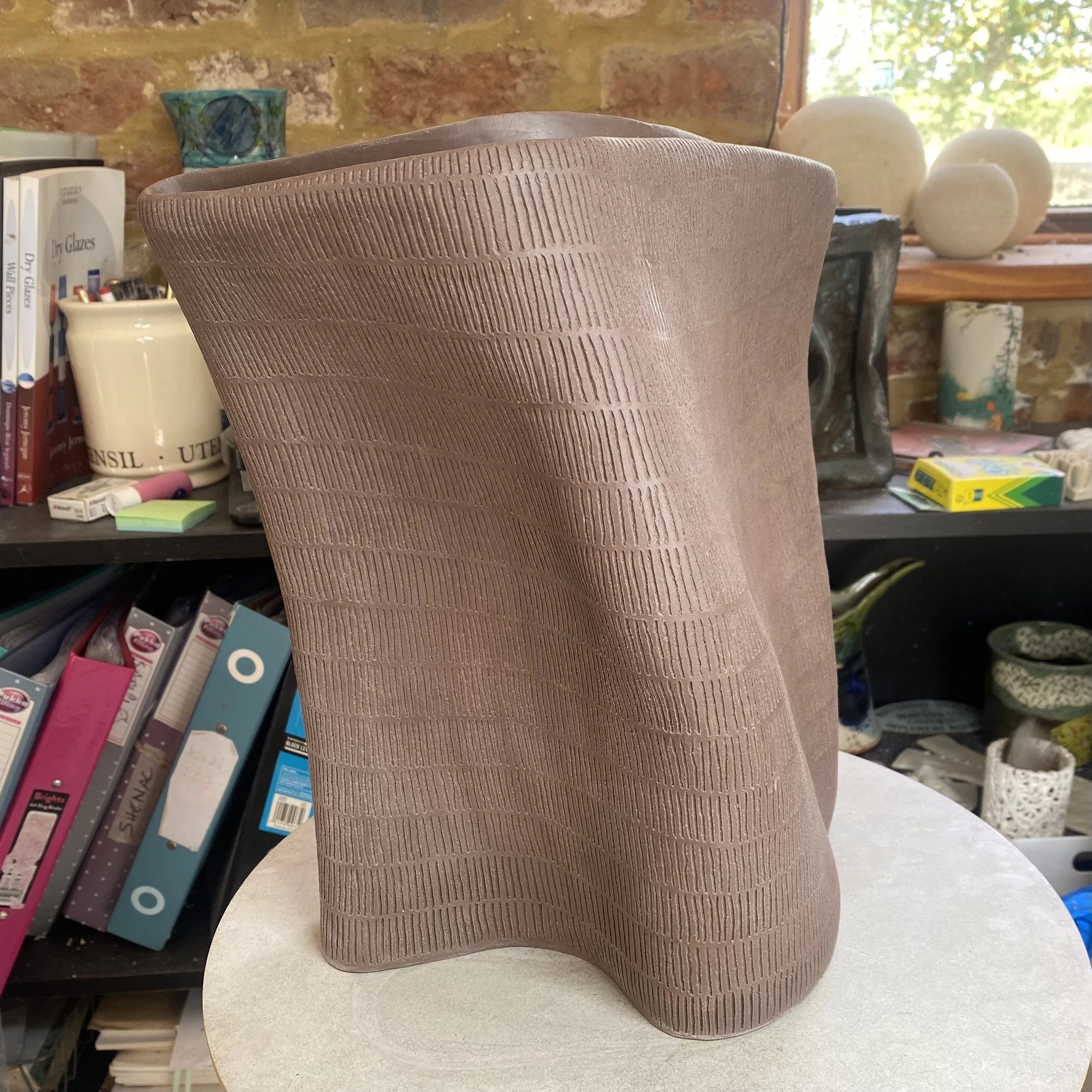
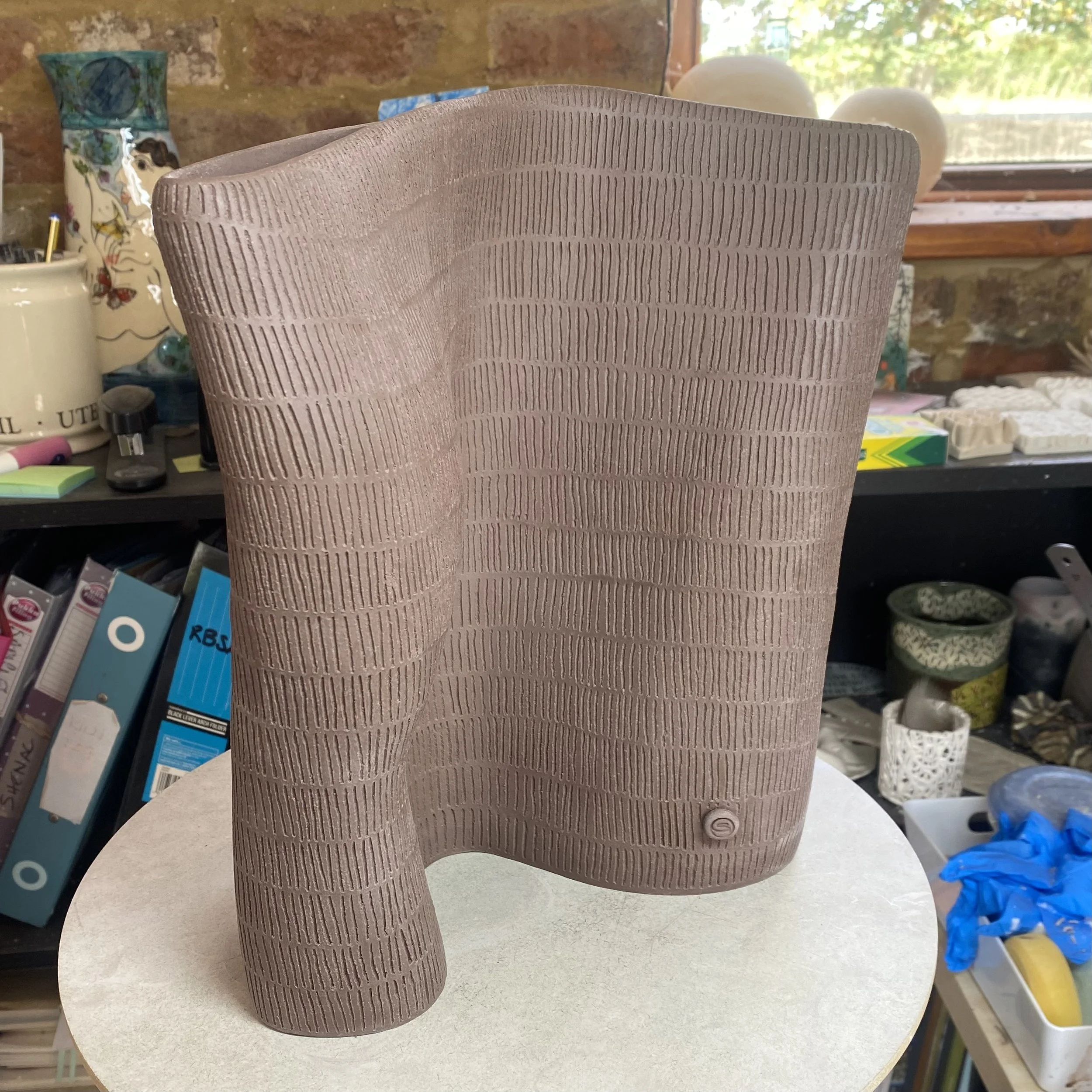
Only once the form has settled do I begin to incise the surface. These marks are not decoration. They are another language through which I explore rhythm, movement and the emotional resonance of place. Finally, layers of coloured engobe are applied, their palette informed by the colours and atmosphere of the landscape that inspired the vessel.
Looking back over these photographs, I realised they show something I hadn't fully appreciated before. My work is not simply about making ceramic vessels. It is about translating one thing into another.
A landscape becomes a contour.
A contour becomes a drawing.
A drawing becomes a form.
A form becomes a vessel.
A vessel becomes a memory made tangible.
Although my current work is rooted in the landscape around Sawbridge, this methodology is not limited to one place. Every landscape has its own contours, rhythms and colours. In time, I hope these vessels will become a way of responding to places anywhere in the world, each one carrying its own unique sense of memory and connection.
For me, that is perhaps the most exciting part of this journey. The process has become as important as the finished vessel itself.
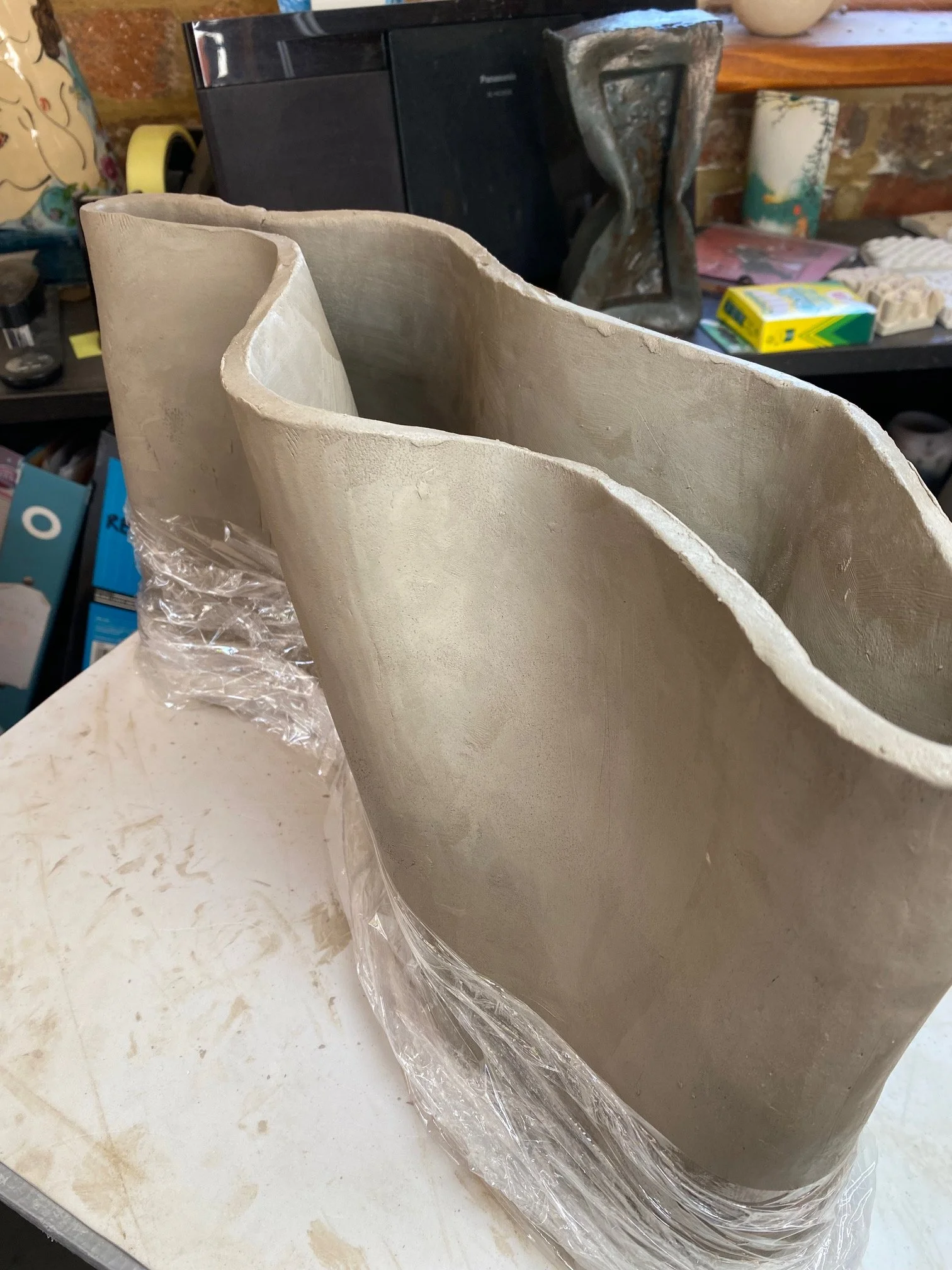
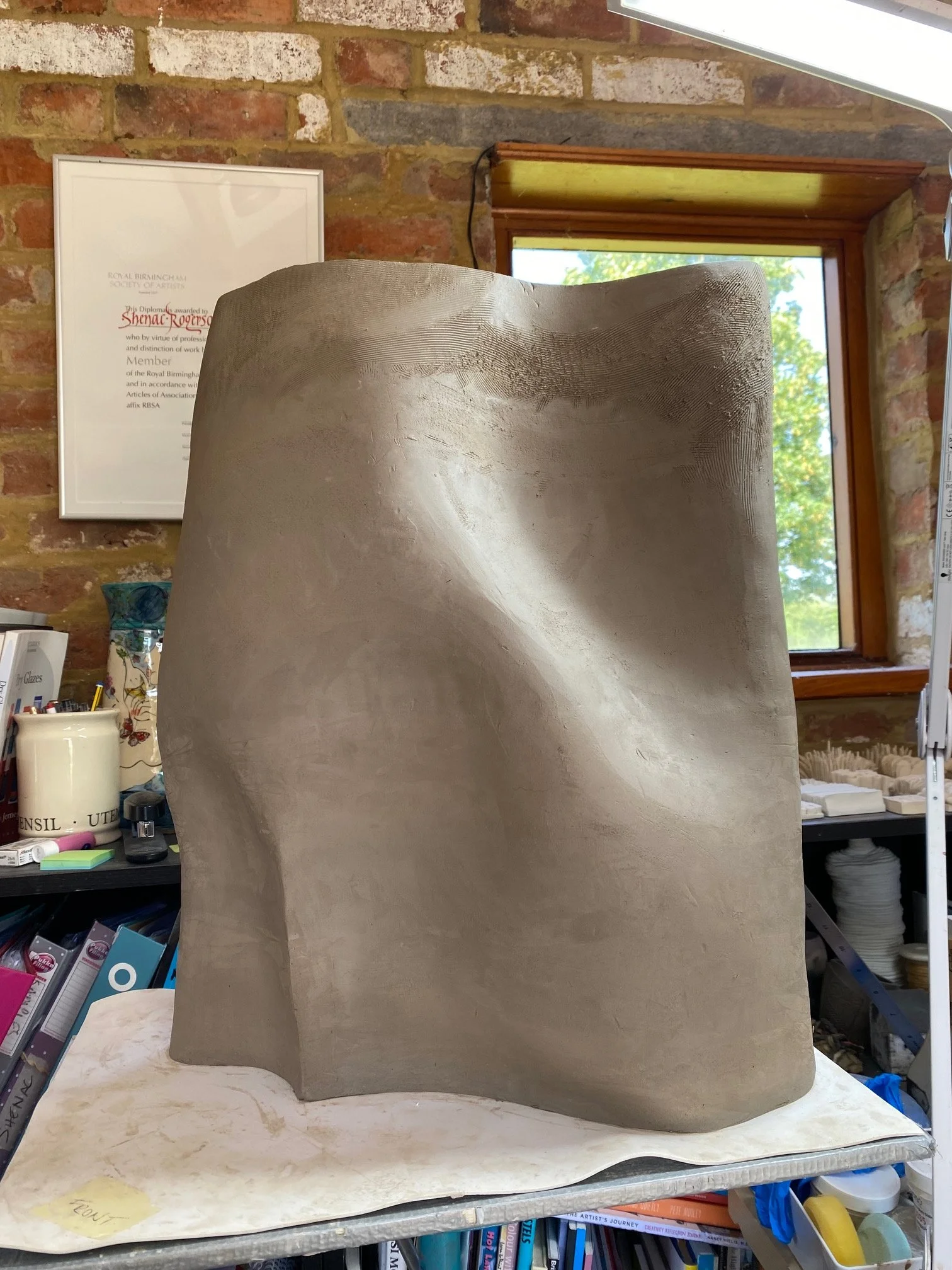
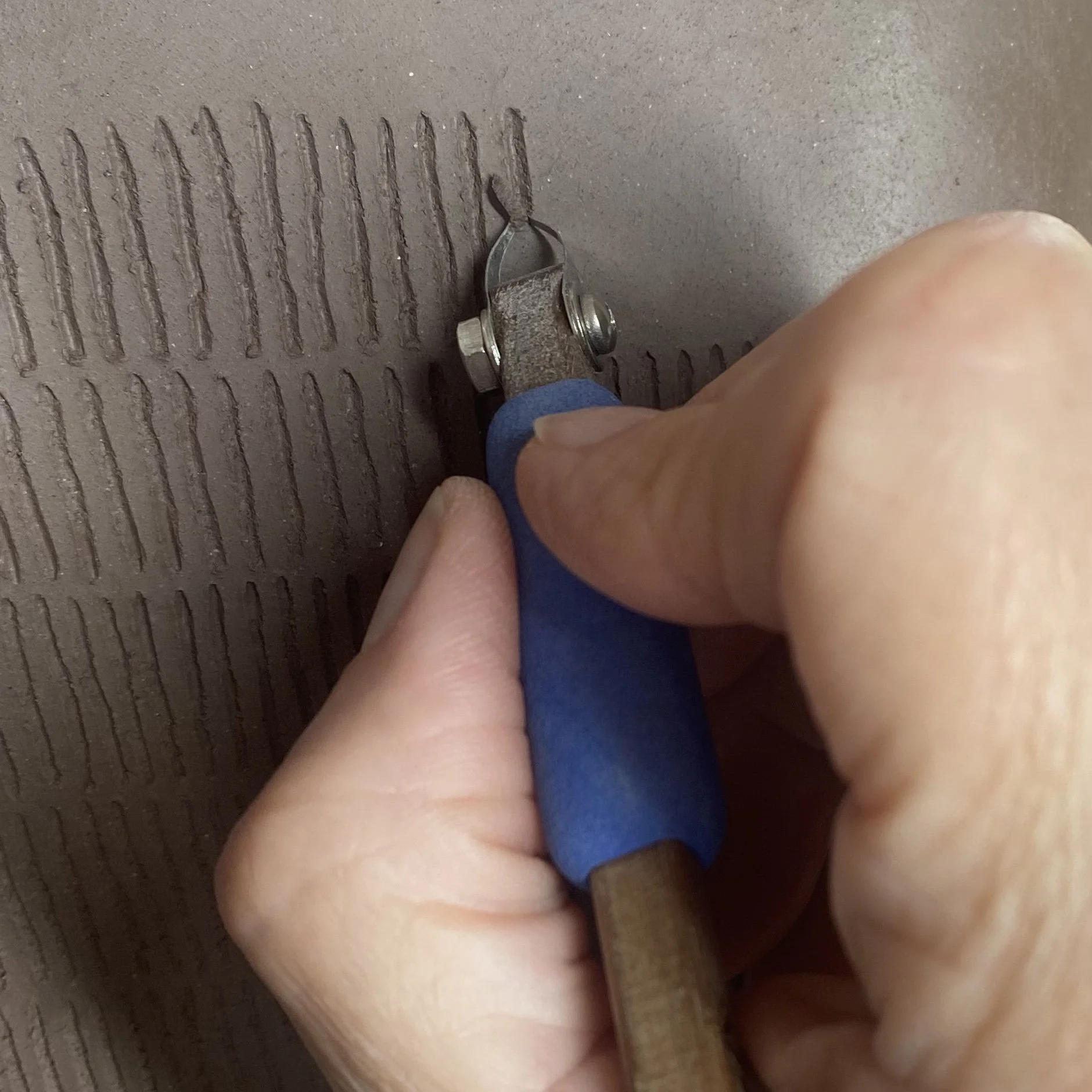
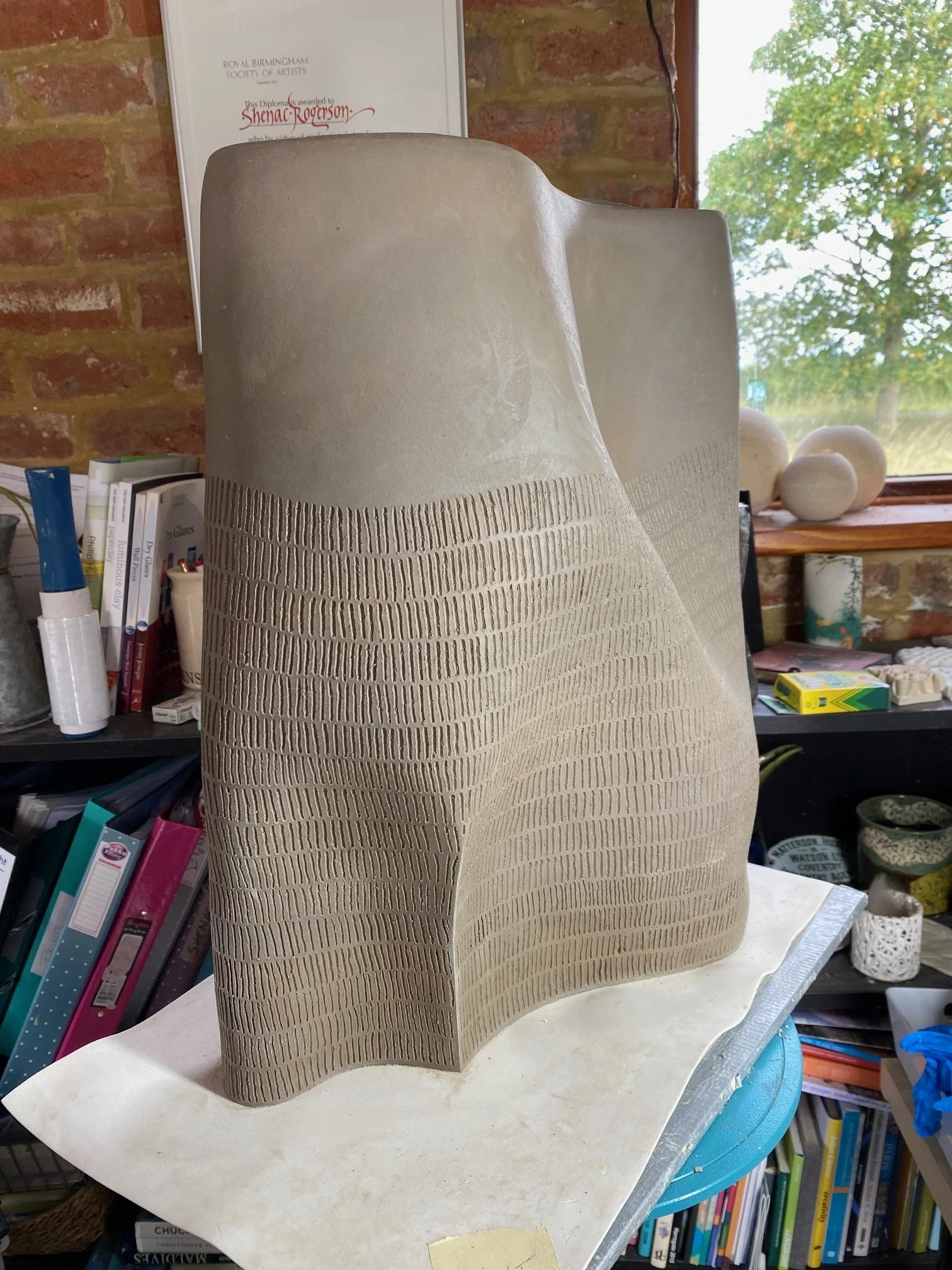
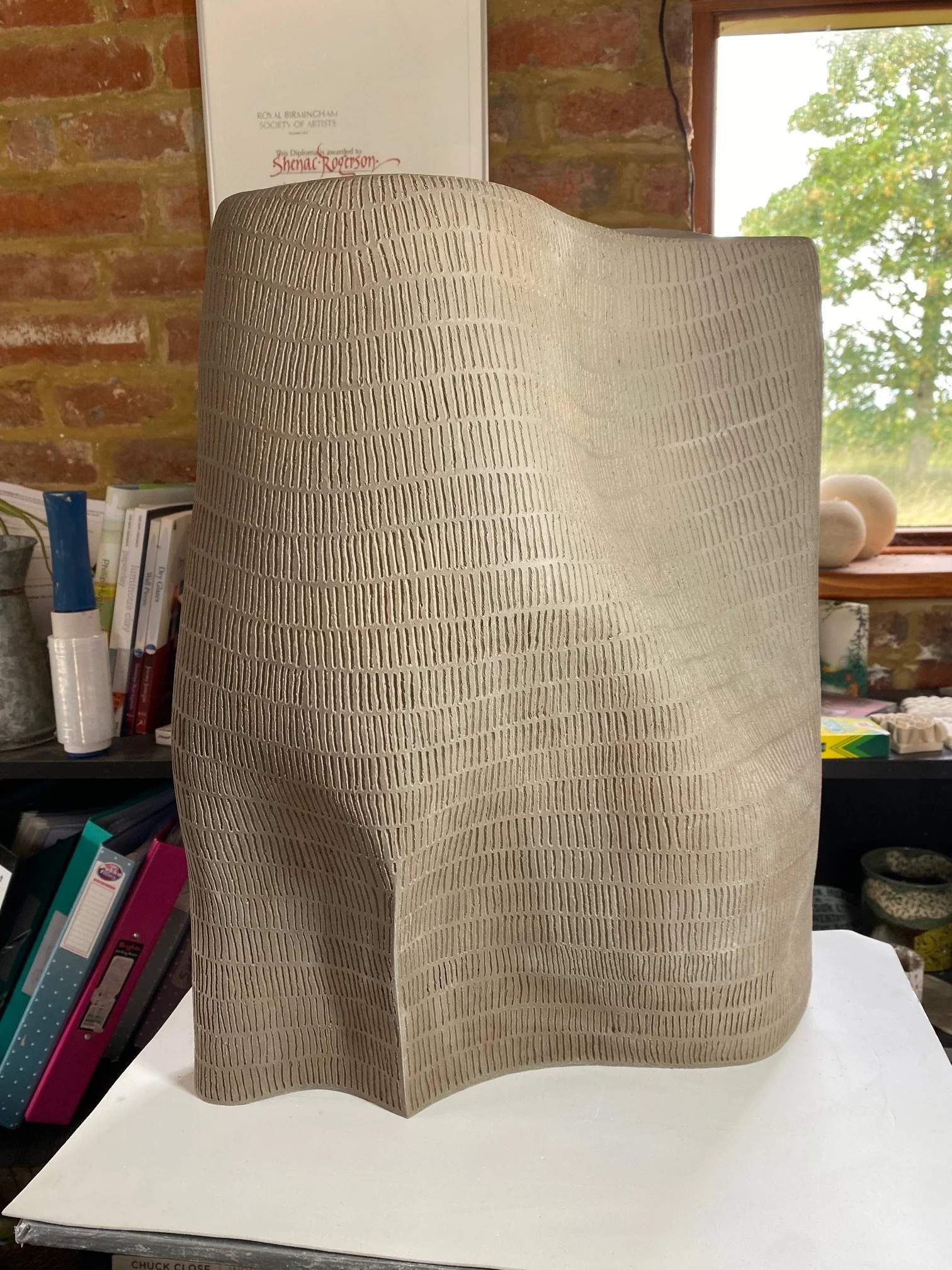
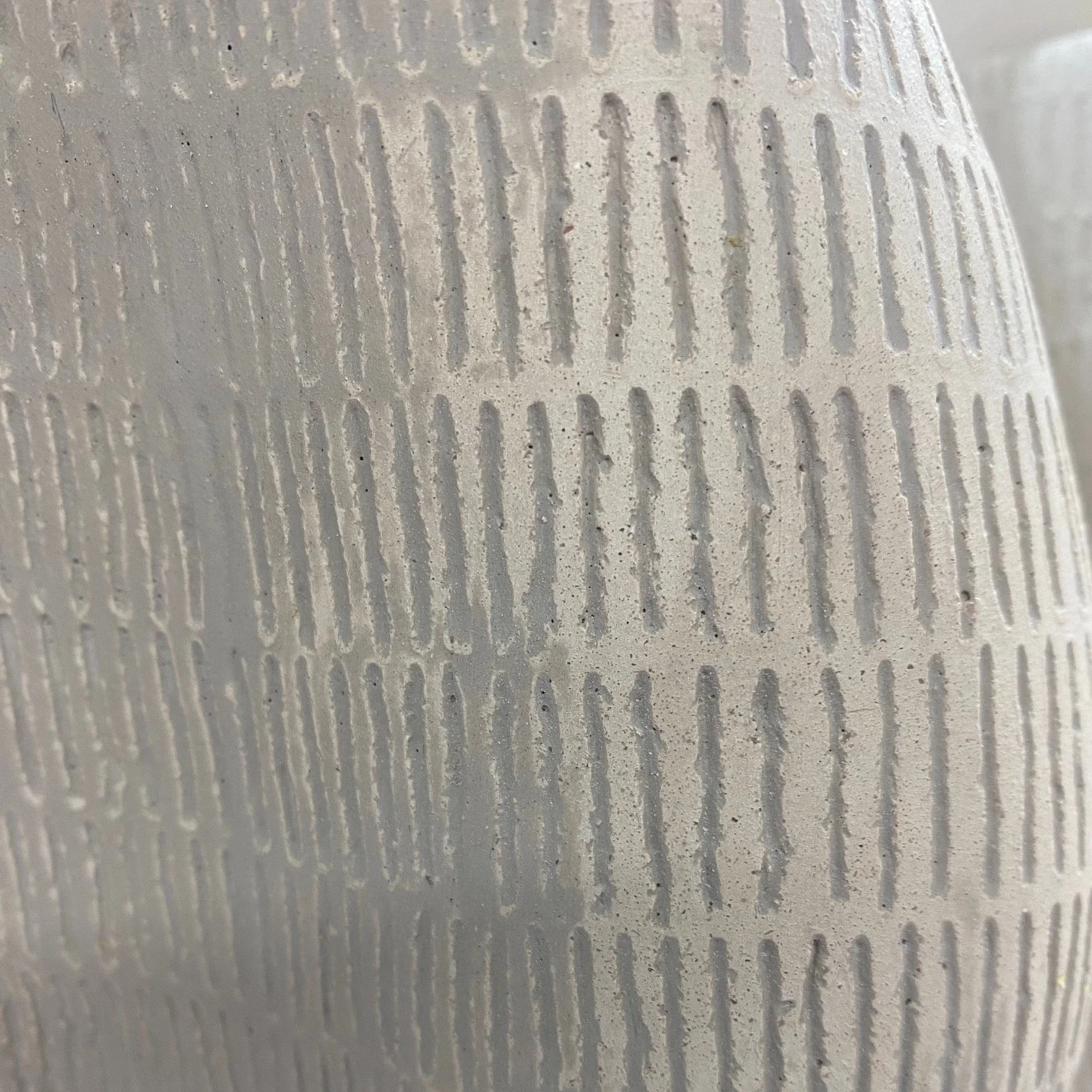
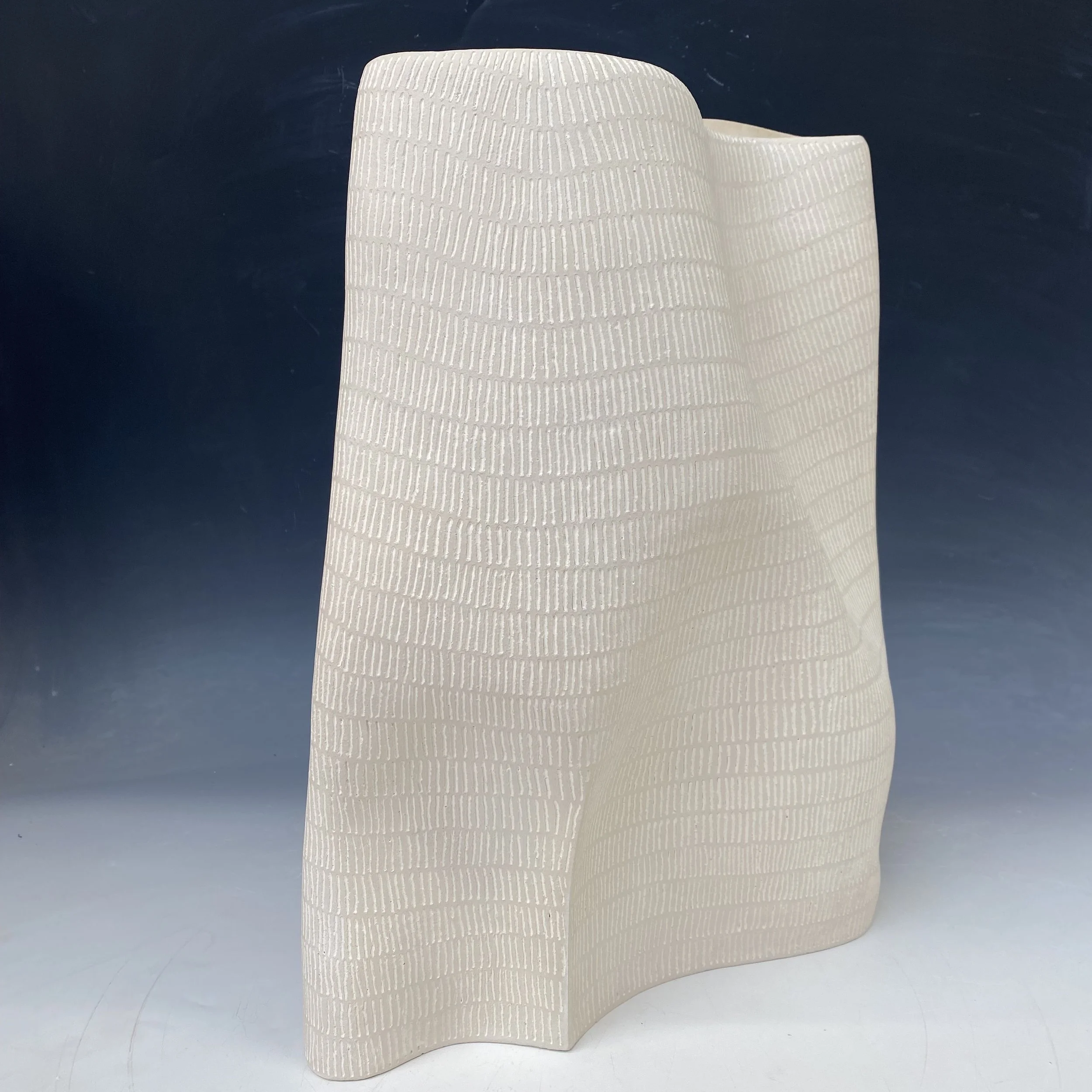
From Contour to Vessel
1. Finding the Place - A mapped landscape.
2. Distilling the Contour - A single line is selected and drawn.
3. The First Gesture - The contour becomes the vessel's base.
4. Building the Form - Slabs and coils establish the structure.
5. Listening to the Clay - The form evolves through making.
6. Finding the Rhythm - Surface marks respond to landscape and memory.
7. The Vessel Emerges - Leather-hard and ready for firing.
8. Holding the Landscape - Engobes bring the colours of place to the surface.
9. Memories of Place - The finished Contour Vessel.
From the line of place emerges a connection — an emotional resonance with landscape and memory, given form through clay.
w/c 10 August 2026
Working to the Wire
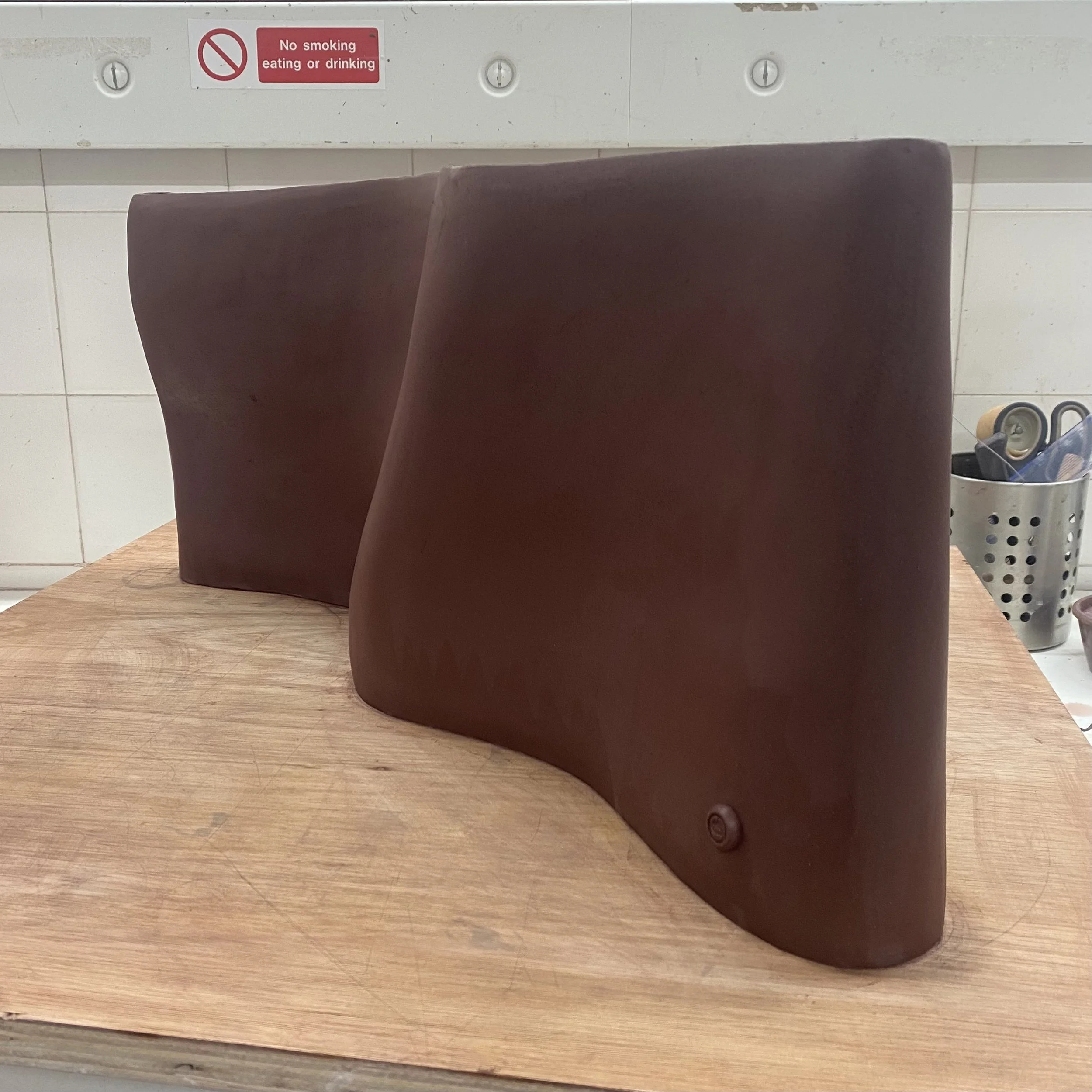
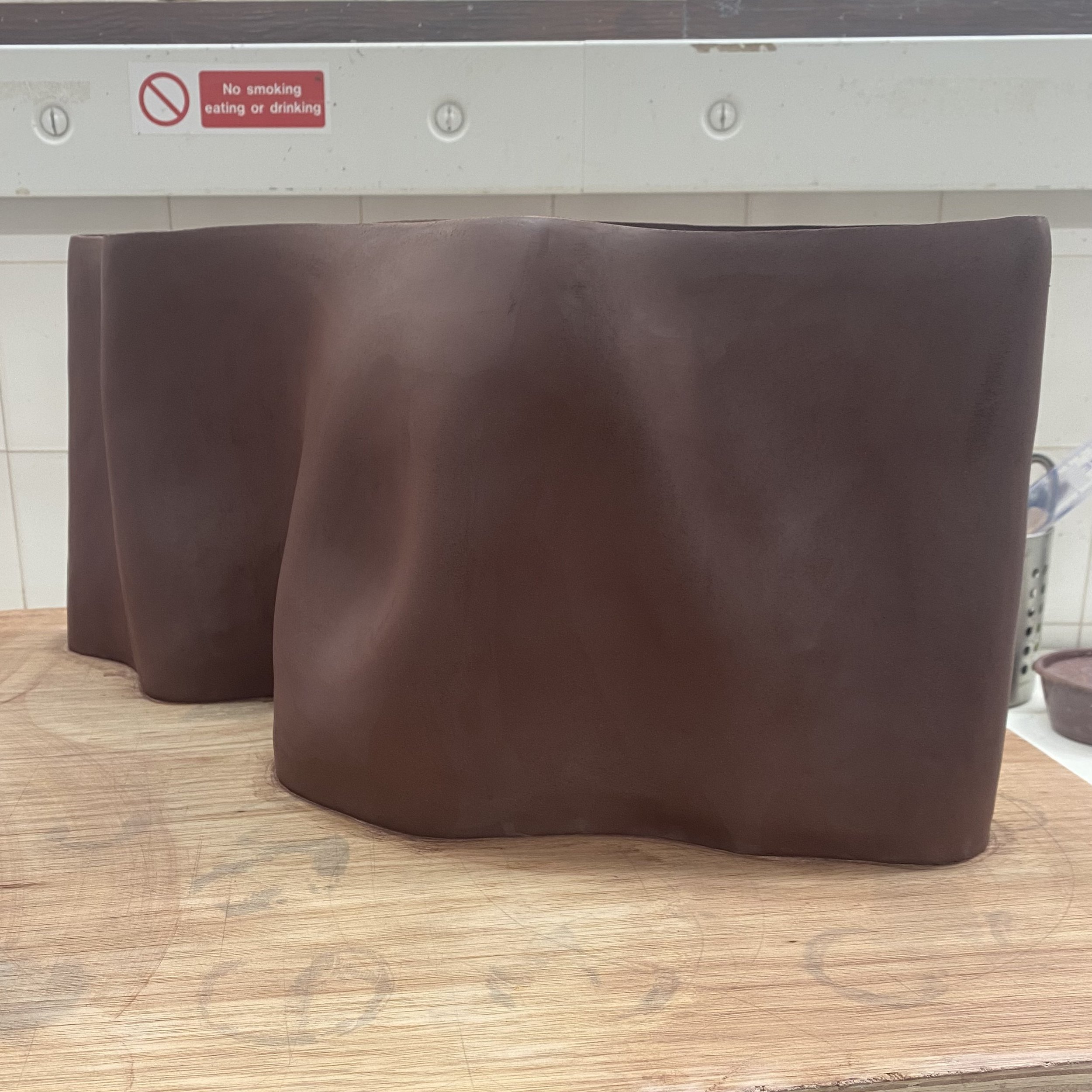
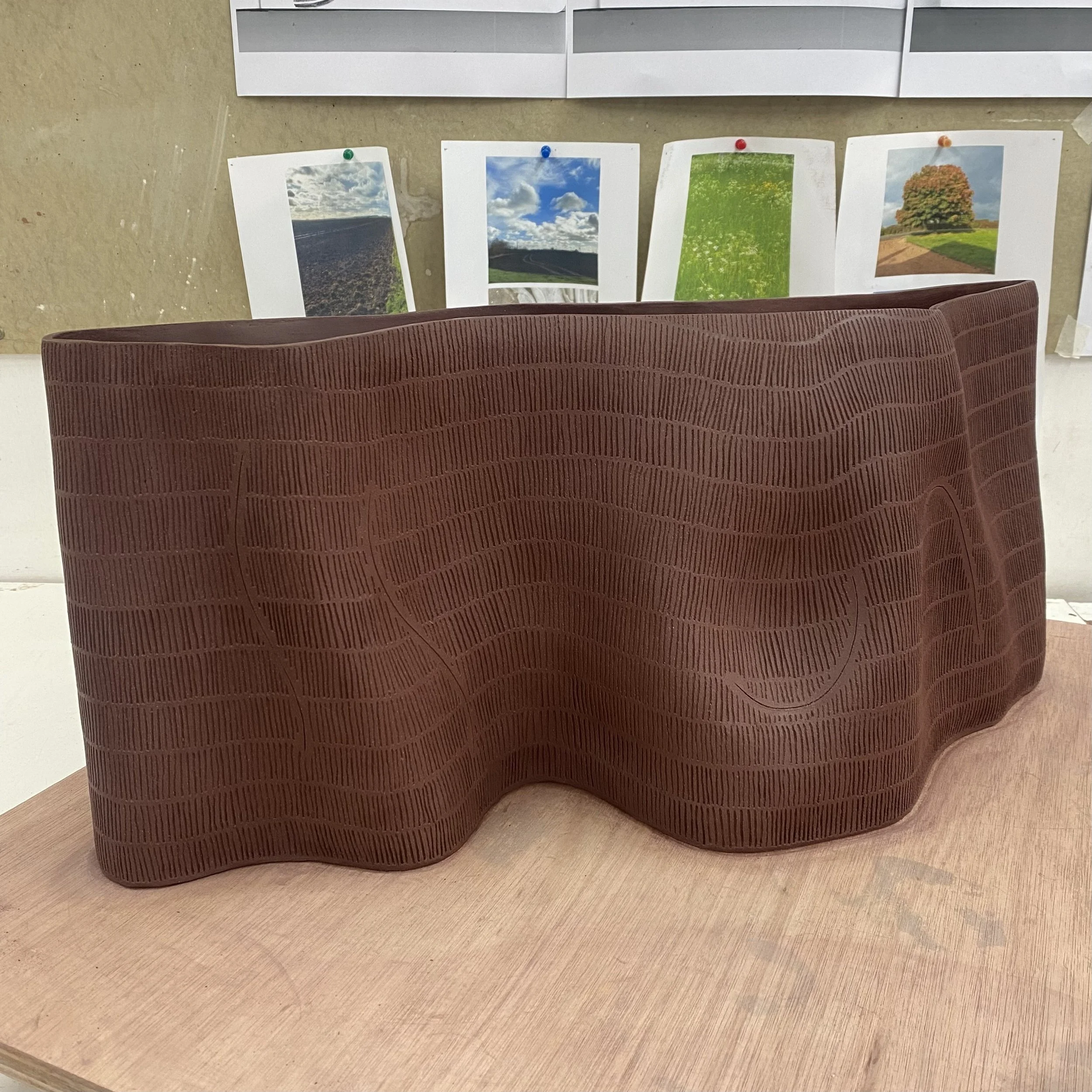
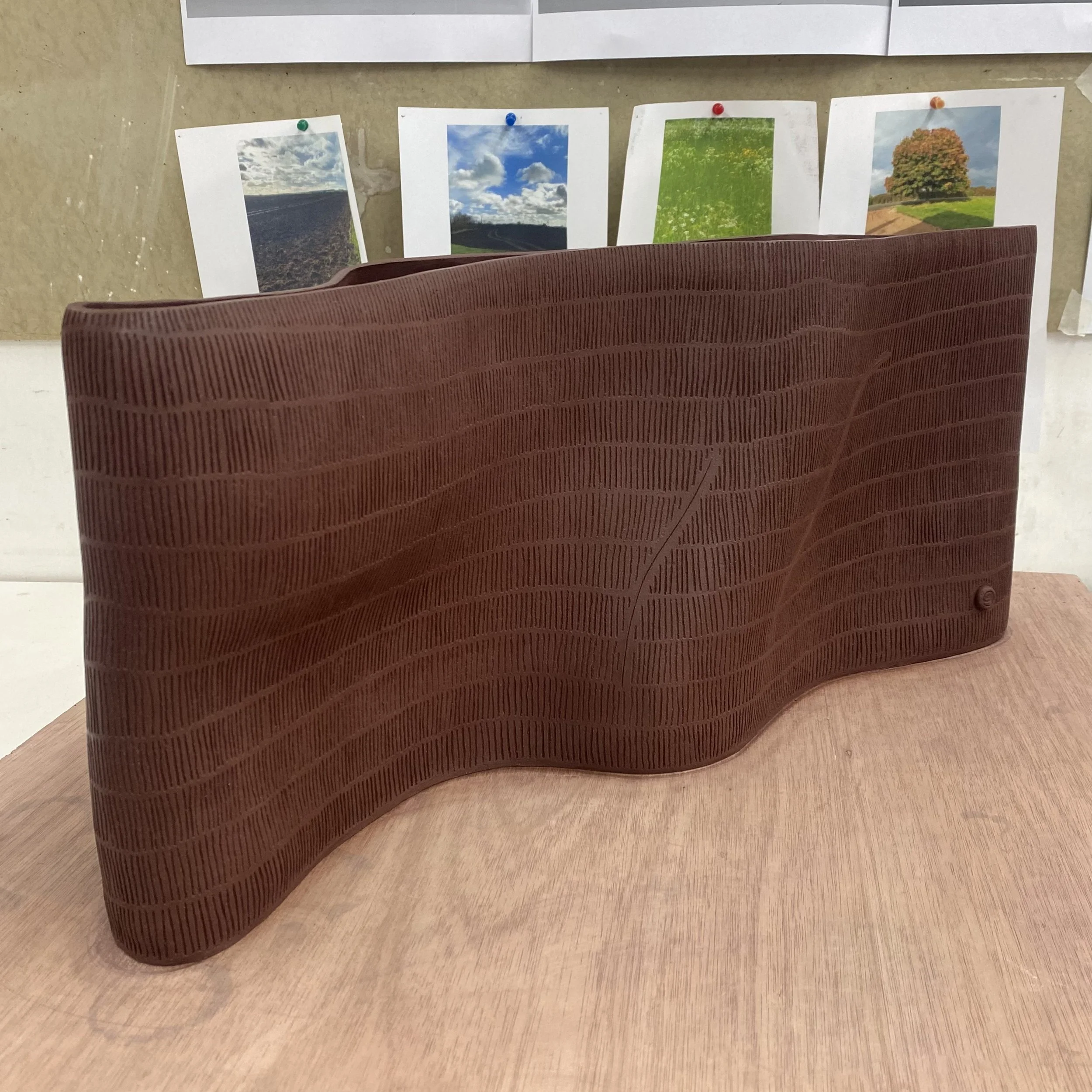
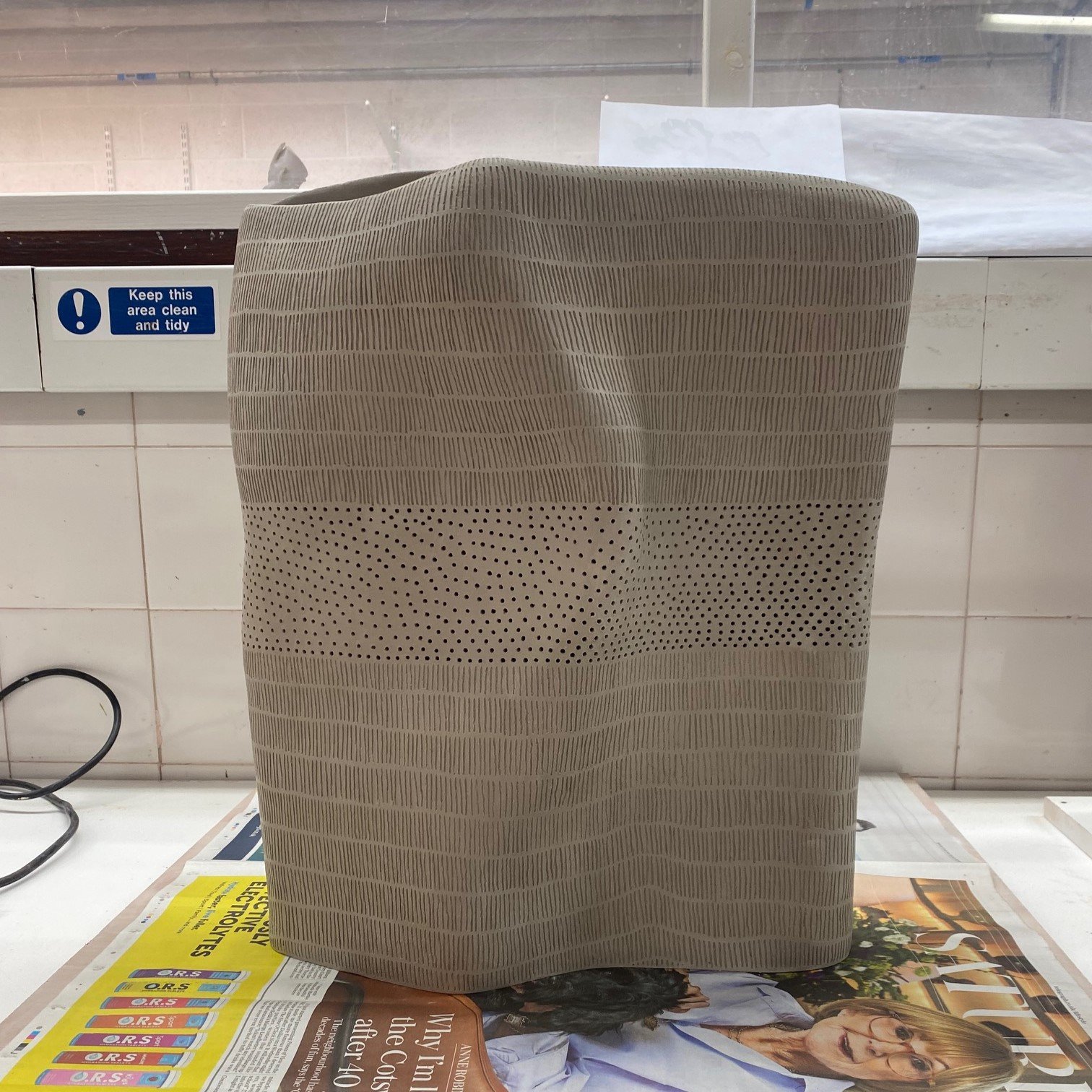
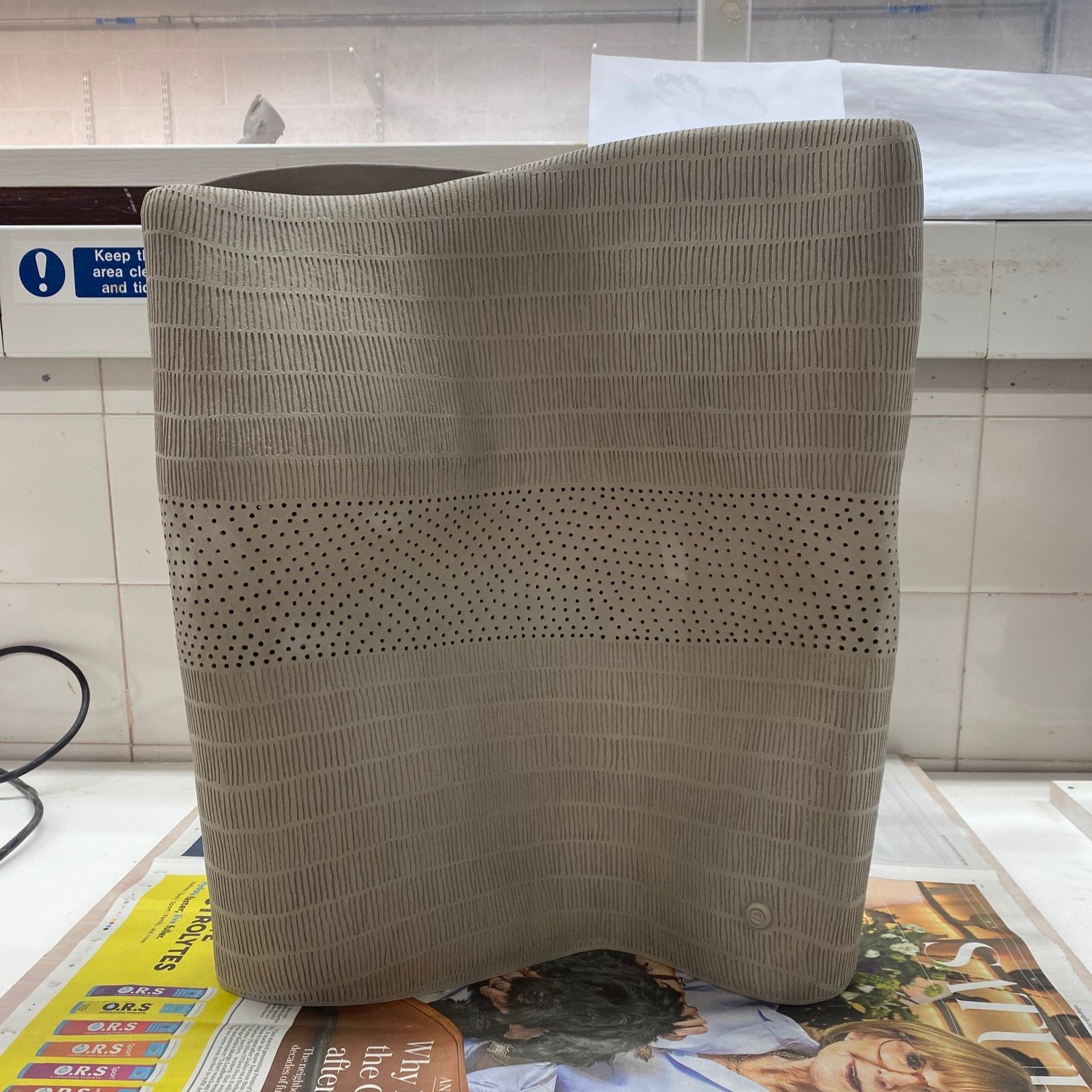
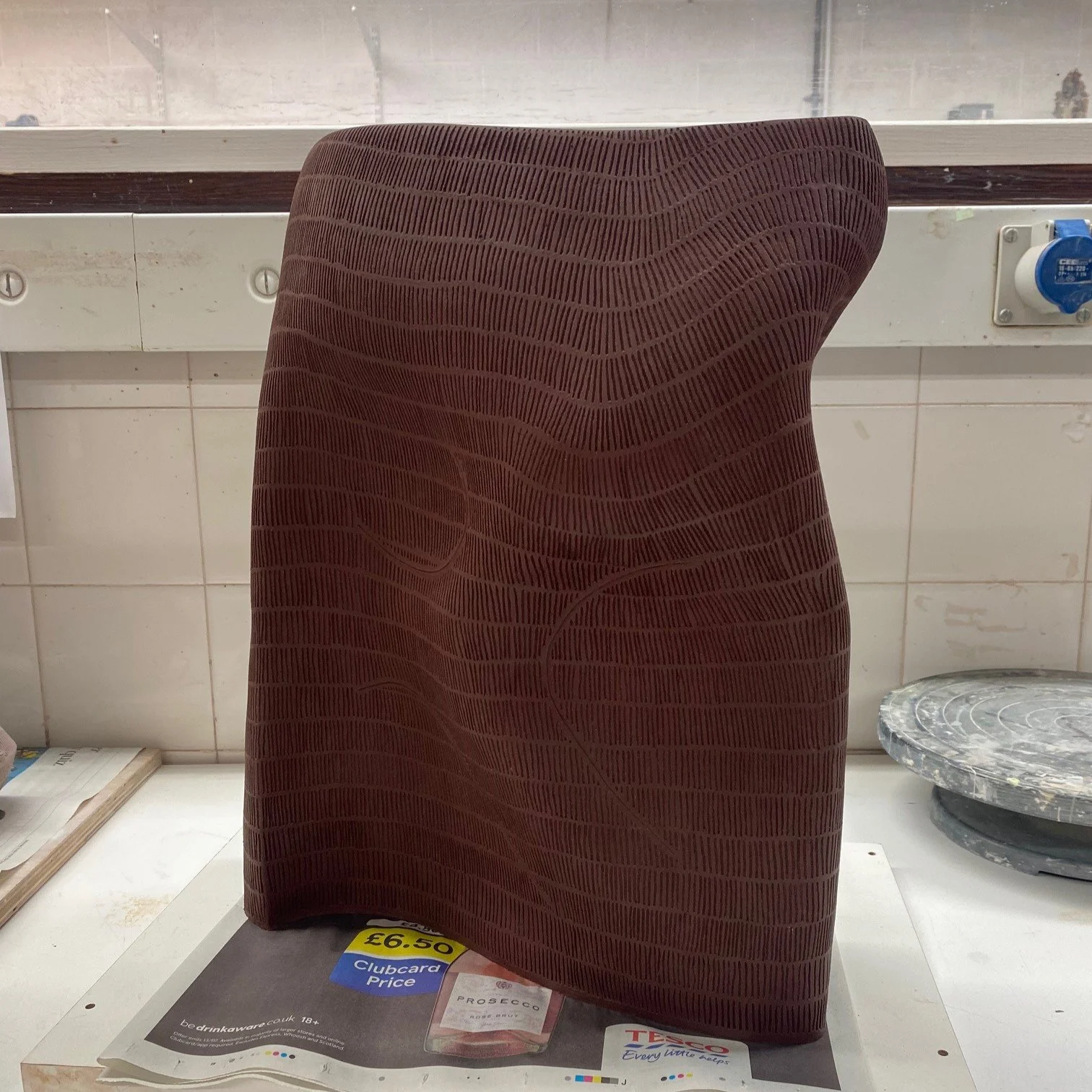
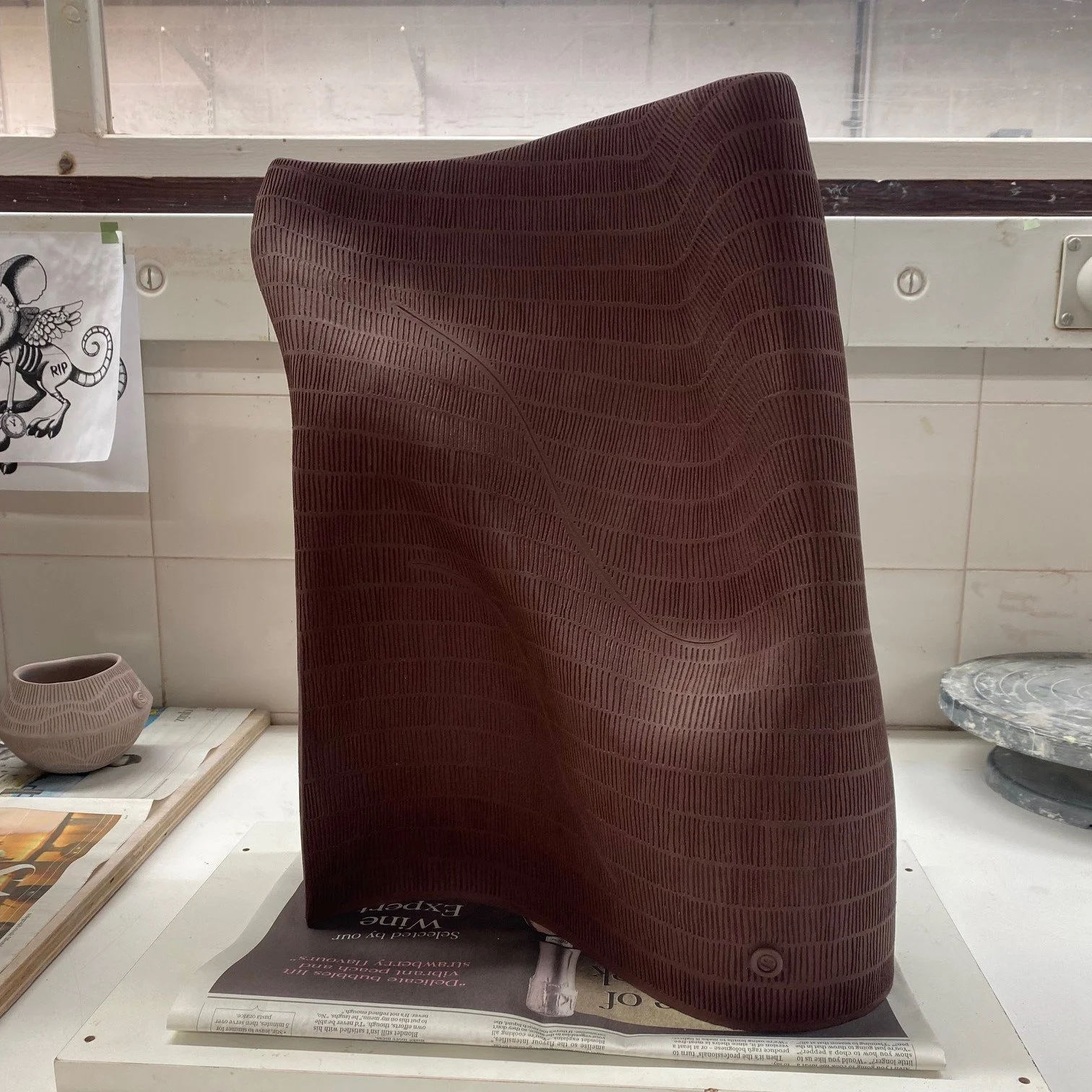
It has been another week of very long days in the studio, trying to get as much work done as is physically — and even mentally — possible within these final few weeks. I have finally finished two large Contour Vessels, approximately 38 × 46cm at leather-hard, although there will inevitably be some shrinkage through the firing process.
After the failure of my first large Contour Vessel, which cracked a few weeks ago, I approached these two builds differently, adapting my construction method in the hope of avoiding the same problem. The experience has really underlined the challenges of scaling up in clay. It is not simply a matter of making something bigger; a whole host of construction, drying, handling and firing issues need to be considered and carefully navigated.
Having said that, when I stood back and looked at these new vessels, my immediate thought was that I wanted to make them again — but even bigger. Perhaps that says something about where this work is heading. Scaling up will certainly present its own challenges for my future practice, both in terms of constructing the vessels and finding access to kilns large enough to fire them, but it is a challenge I would like to explore.
We really are now on countdown in the university studios, with the final bisque and stoneware firing dates set. To add to the pressure, I have started what will be my final build at university, with the intention of completing it next week so that it has enough time to dry before the final firing deadlines.
Talk about working up to the wire.
I have also started to gain a much better understanding of the time involved in making these larger vessels. I roughly timed the build of one of the recent black Contour Vessels at around 28 hours — probably a little more. That is a significant amount of time invested in a single piece, but it is useful information for my future practice when I begin to think more seriously about costing, pricing and the practical realities of making larger work.
For now, though, there is very little left to do other than keep making, keep my fingers crossed and hope that the kiln gods are kind. There is now no more time to make anything else for the final Masters Degree Show.
The work is made.
Now I just need it all to survive.
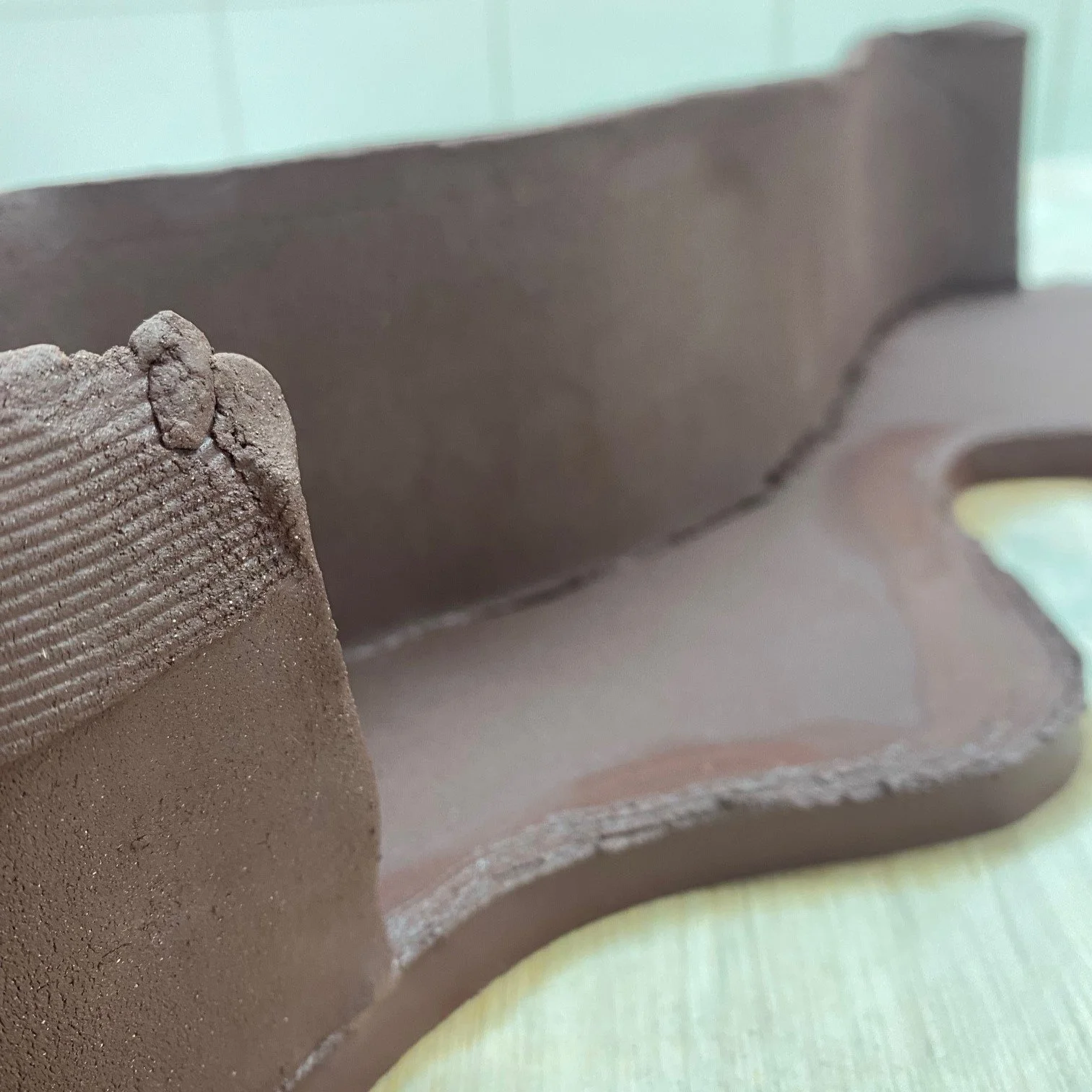
w/c 17 August 2026
Recognising the Path
Since starting to explore my own body of work in May 2025, I have made 67 exploratory forms and vessels along this path of discovery, with a few others which, for one reason or another, haven't made it into the count and are now probably lost in the midst of time. This week in the university studio felt strangely poignant as I completed my final build for the MA — exploratory form number 67 — although in my mind it is already becoming part of a new series, First Frost. It will be bisque fired early next week, followed by its final firing, hopefully just in time for installation of the final show.
There was something rather emotional about making that final piece. When I started this course, I had a vague idea in my head of the type of work I thought I might make during my Masters. That isn't what has happened at all. The work has emerged gradually from somewhere much deeper, through all the questioning, uncertainty, experimentation and, at times, considerable frustration along the way.
I have had to understand something about myself before I could begin to understand what I wanted my work to say. When I started the course, I wasn't even sure I was capable of feeling the kind of connection to my work that I had hoped for, let alone finding my own visual language. I certainly didn't dare to imagine that, somewhere along the way, I would begin to recognise a practice that felt so deeply connected to who I am and to the experiences and memories I carry with me.
Recognising this path has been the biggest revelation of the course, and perhaps the most important lesson I will take away from it. I don't believe I have arrived at a finished practice — far from it. This is really only the beginning, and I expect my work will continue to change, develop and challenge me. But I now feel I have something to build upon. I have found a connection to the work, and perhaps more importantly, I have learned to recognise when that connection is there.
So there was a definite sense of sadness in the studio this week. There isn't an exploratory form number 68 waiting to be built. No new form to think about, no fresh piece of clay to wrestle with, no new technical problem to solve before I leave the university studio for the last time.
There are still a few final jobs to complete next week before we begin installing the show, and I am sure the sadness will soon be overtaken by the excitement, nerves and inevitable last-minute panic that comes with exhibiting the work.
But for now, I think I will allow myself to acknowledge that this particular part of the journey is coming to an end.
67 exploratory forms.
67 opportunities to try, fail, learn, question, change direction and begin again.
And somewhere amongst all of those pieces, I finally recognised the path I had been looking for.