February 2026
w/c 2 February 2026
Finding the Ground Beneath My Feet
The last few days have been unexpectedly emotional, as a number of realisations about my work and how I am progressing, have quietly but firmly taken hold. Despite receiving a good mark in my most recent assessment, I am very aware that I am not where I had hoped to be at this point in the course. That disconnect has been difficult to sit with. I am beginning to accept that I need to focus on the work I am already making and build from that position, even if it does not lead me to where I once imagined my practice might be by September.
I feel strongly that I have found my message through Memories of Place, but I am still searching for my voice - or at least, that is how it feels. The pressure I have been placing on myself to uncover a definitive “technique” within my ceramic practice has become overwhelming. Rather than propelling me forward, it has begun to stall me. I now recognise the need to ease that pressure and move forward with what I do have, allowing the work to grow through making rather than expectation.
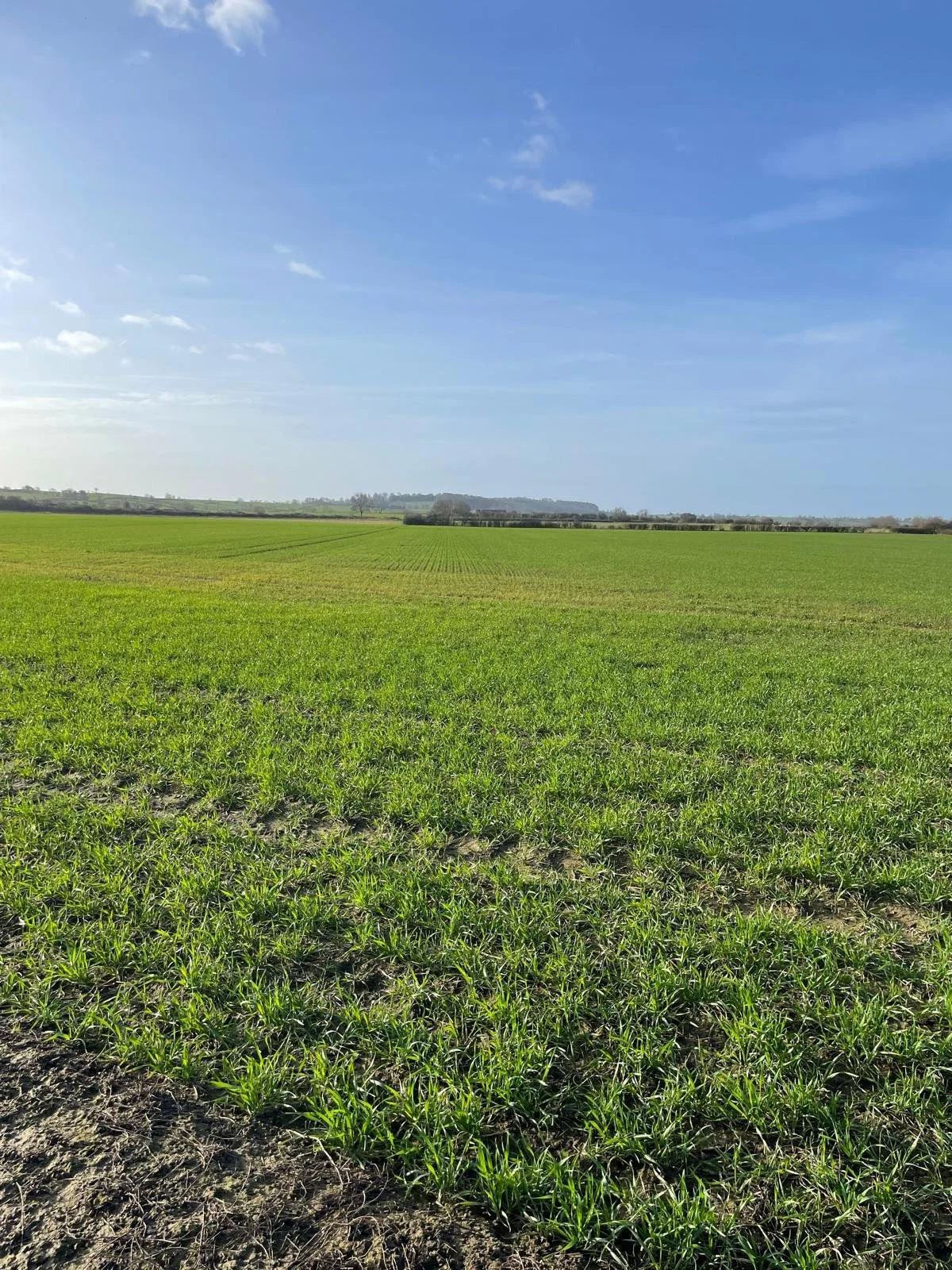
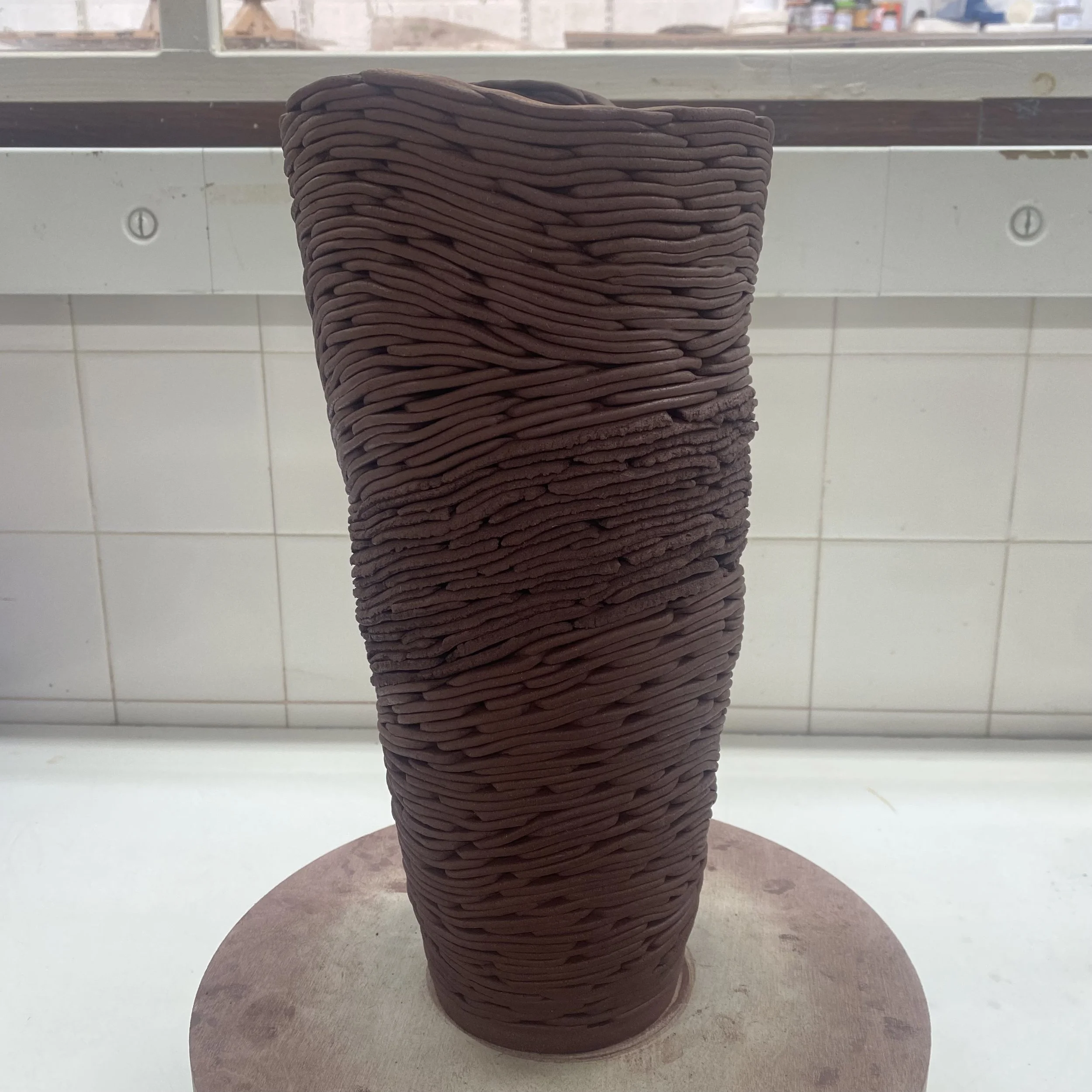
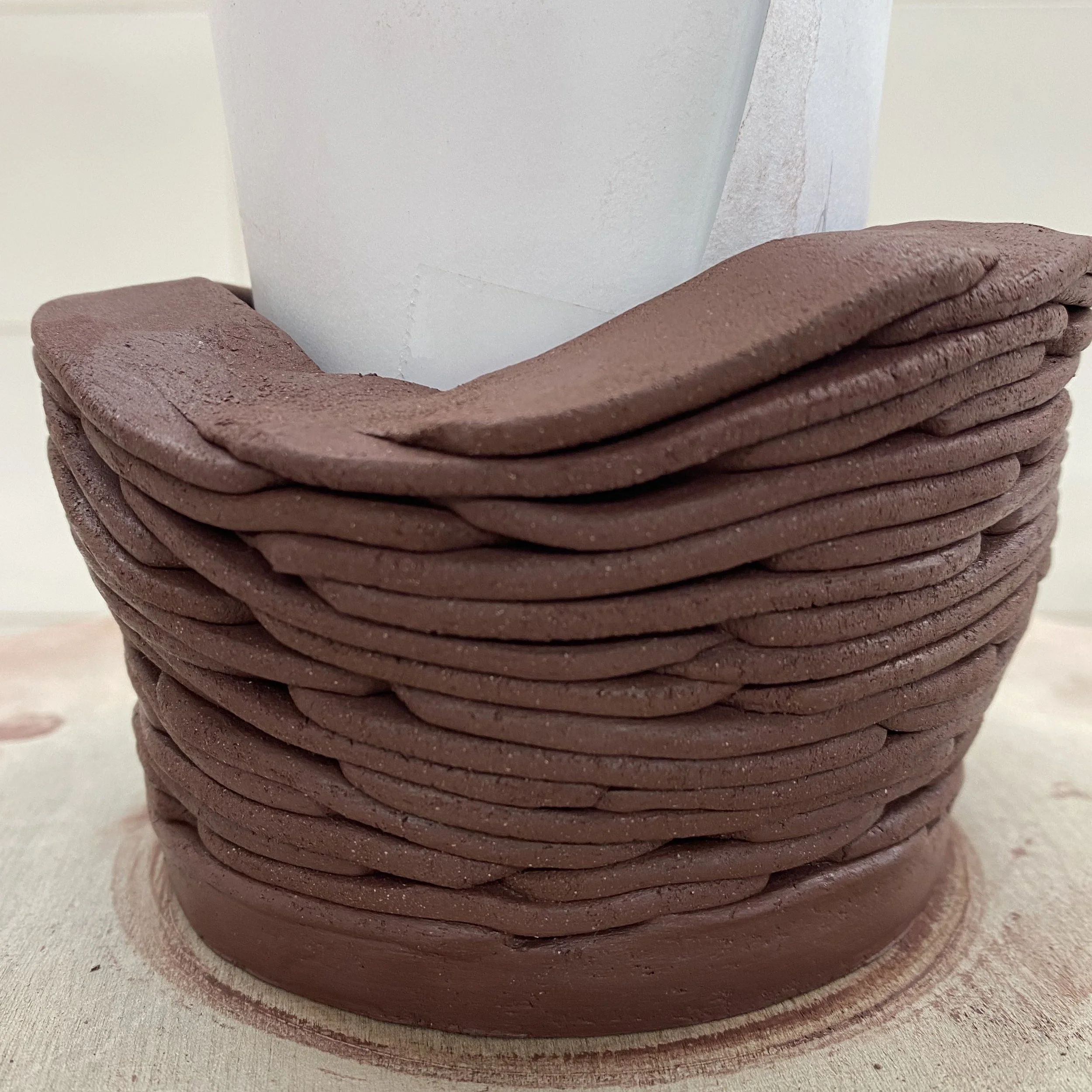
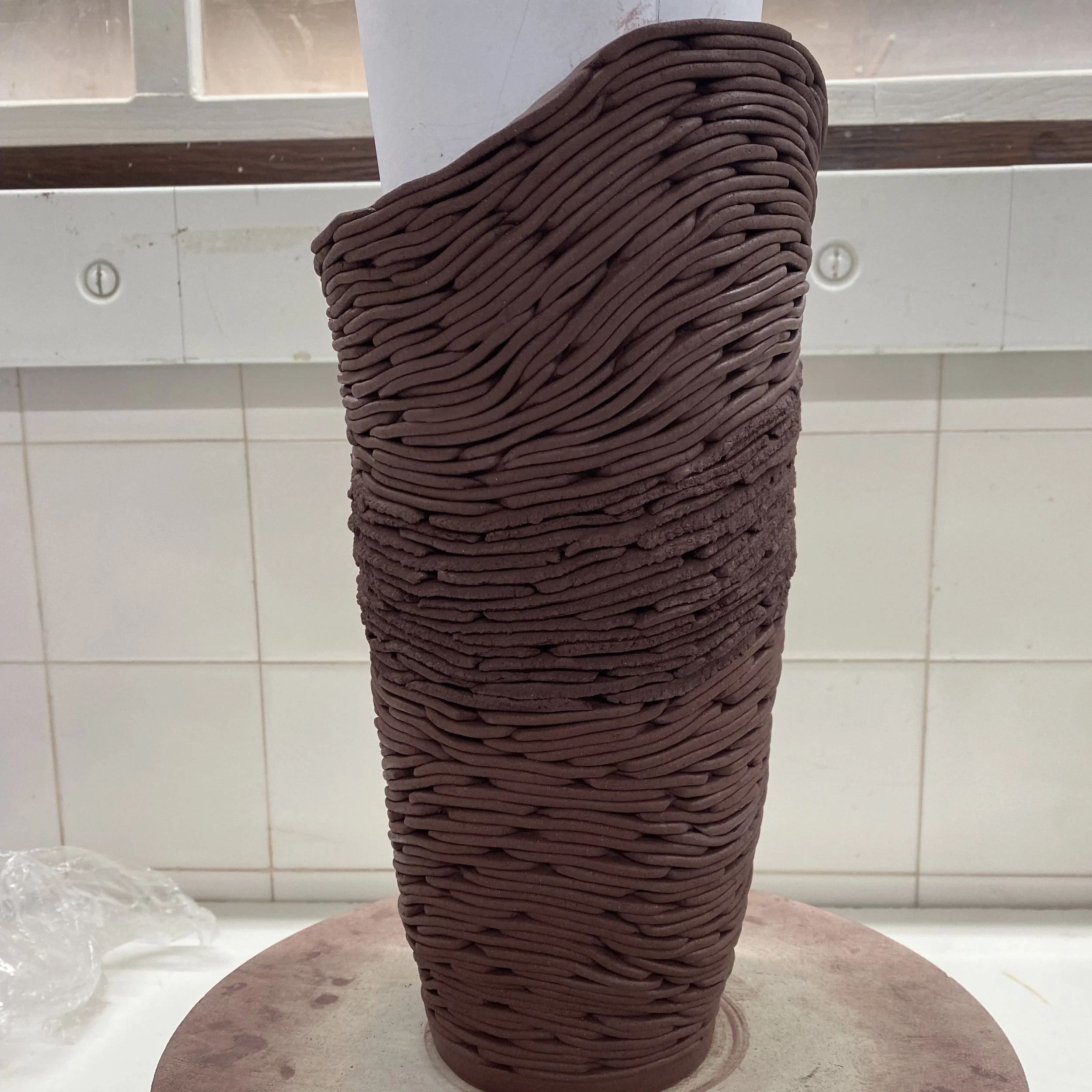
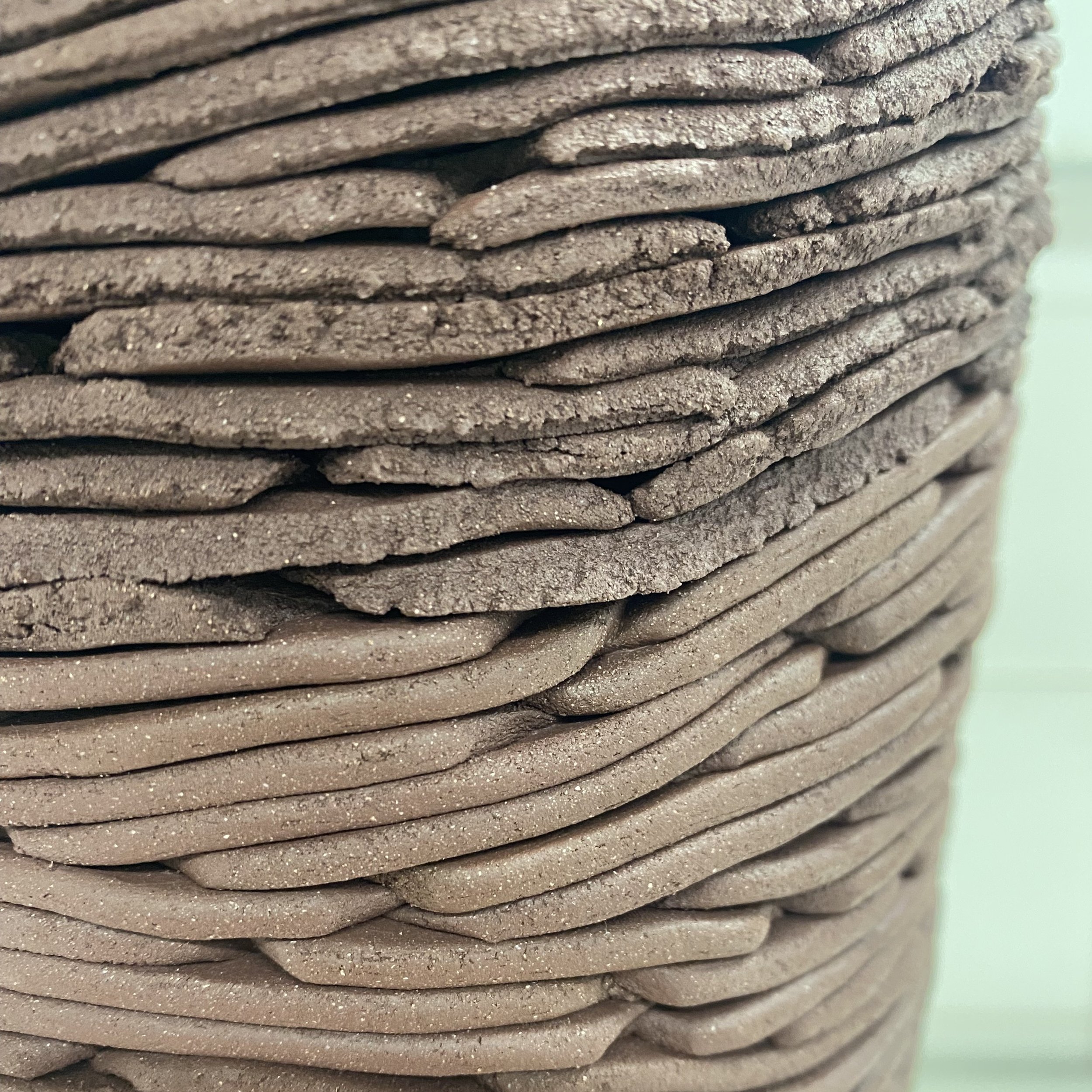
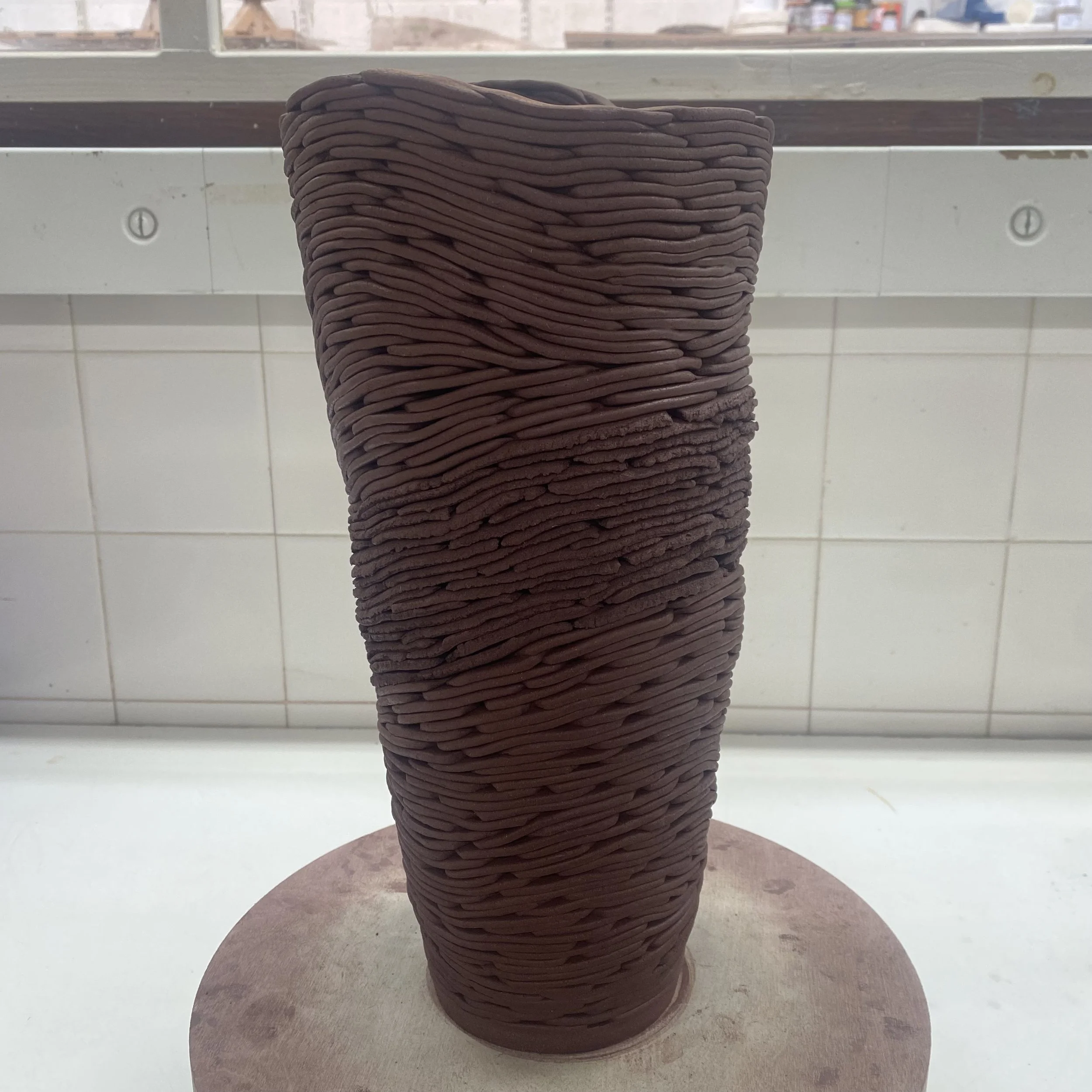
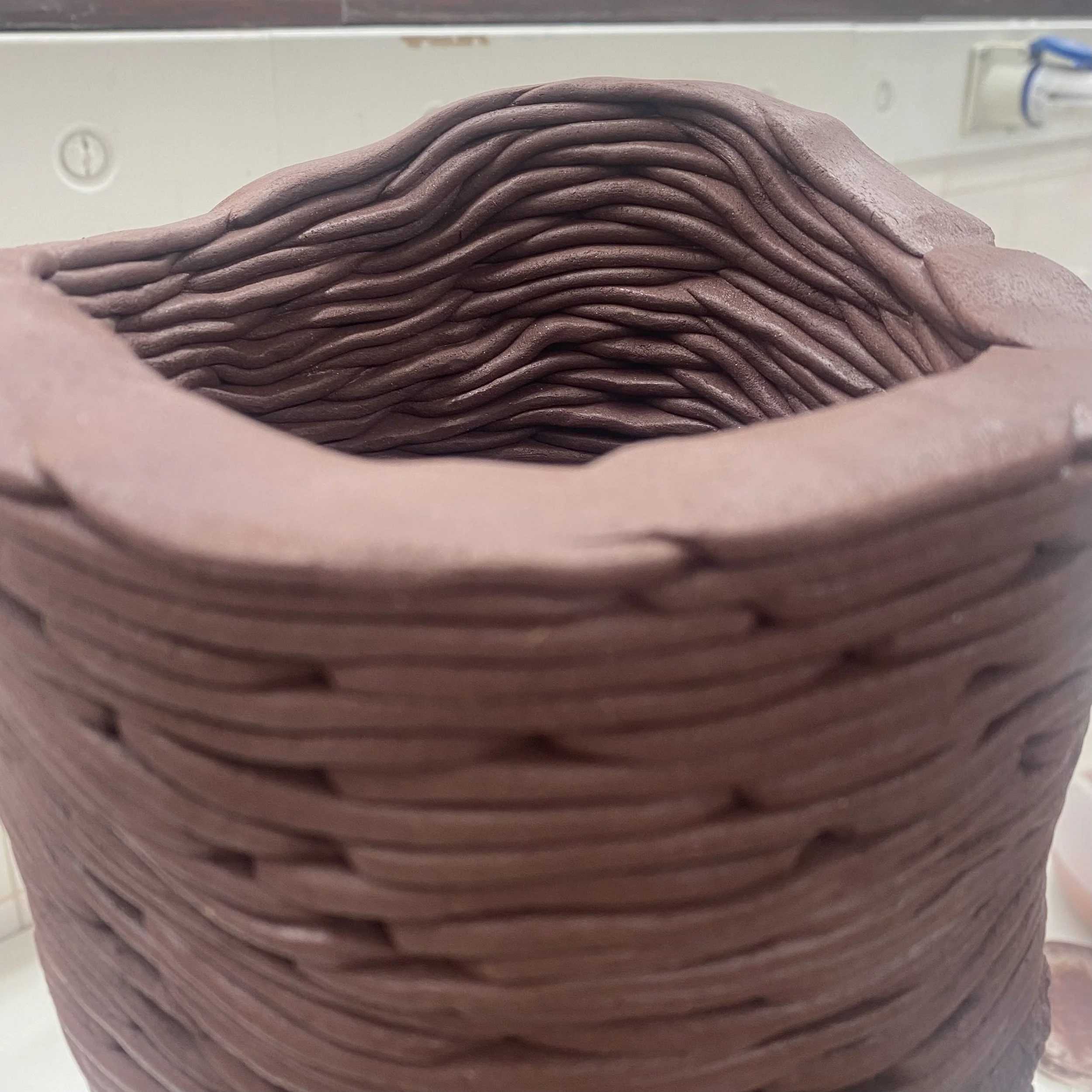
Building on last week’s exploratory vessel and the layered, flattened coil technique, I began a new form this week. This piece continues to explore the vessel as a container for holding and storing memories of place, rather than as a functional object in the traditional sense. I am consciously aiming for a more restrained overall form, creating space for the surface to carry the emotional weight of the work. Through the layered clay, I am attempting to convey the rhythm and quiet emotion of the winter fields around Sawbridge at this time of year. The piece is now covered, waiting for me to return to the university studio next week to complete the build.
While my working methodology for Memories of Place feels grounded and true, I am still grappling with how my sculptural language and surface decisions fully articulate that intent. Over the past few days, I have come to the difficult realisation that I no longer have the time to resolve this as fully as I had hoped, while also producing the work needed for the final degree show. This has made me deeply sad. Perhaps I have been expecting too much of myself, believing that everything would fall into place within this timeframe.
At the very start of the course, we were reminded that completing a Masters degree is not an endpoint, but the beginning of a longer practice. I am now trying to truly accept that for myself. I can see that my voice is still forming, and that this work is part of a much longer journey.
For now, my focus needs to be on developing the forms, materials and techniques I am already exploring into a cohesive body of work - one that responds honestly to Sawbridge, shaped by my memories, experiences and emotional connection to this very special place.
w/c 9 February 2026
Still Finding My Footing
Carrying on from last week, the ground beneath my feet still feels uneven and a little shaky. Who knew that undertaking a Masters degree in ceramics could be quite so emotional? Yet, in many ways, this is exactly the depth of connection I have been seeking through my practice. Perhaps that is why the direction I choose to take my work feels so important, and why I am attaching such weight and meaning to making sure it is right for me.
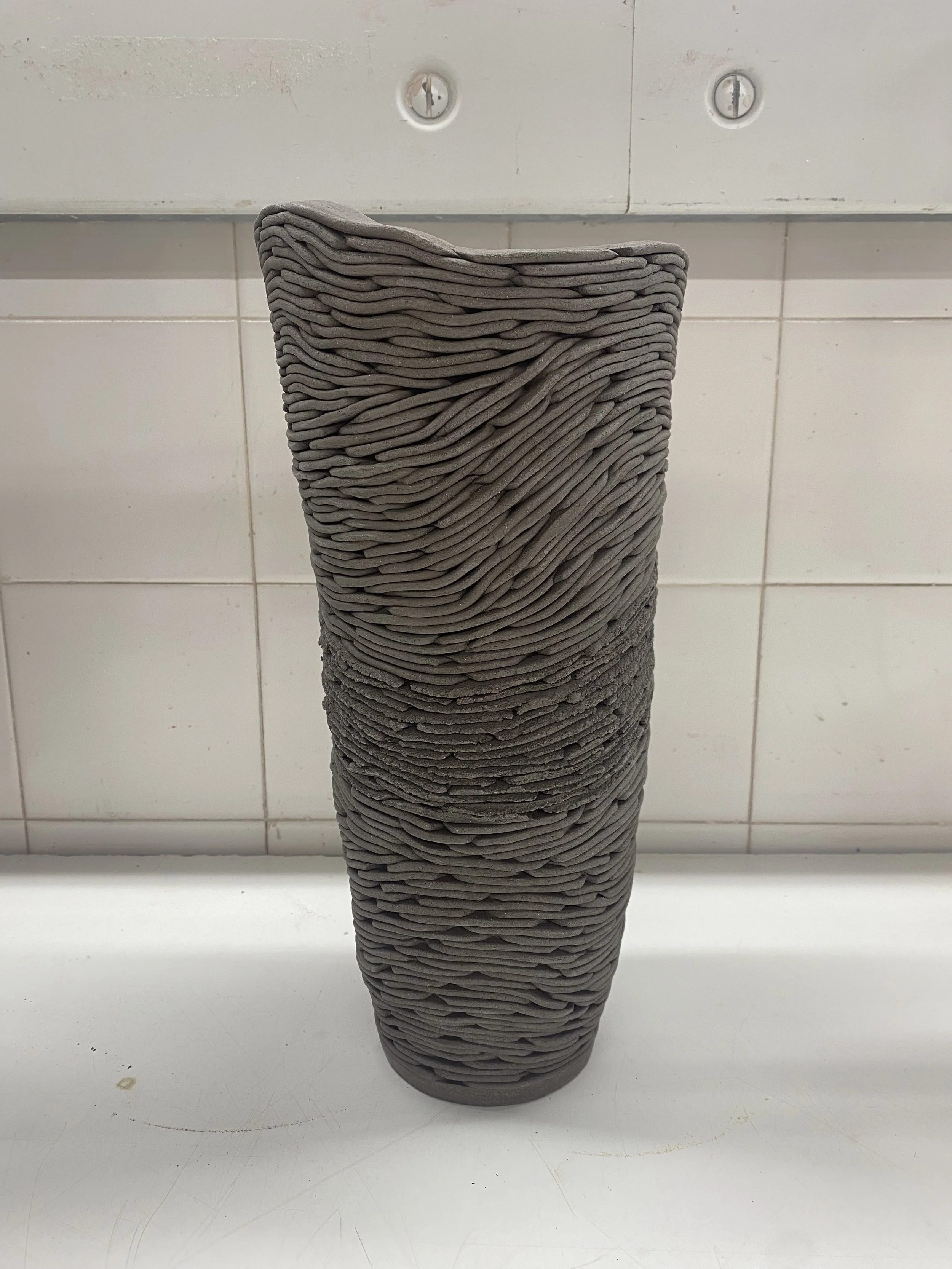
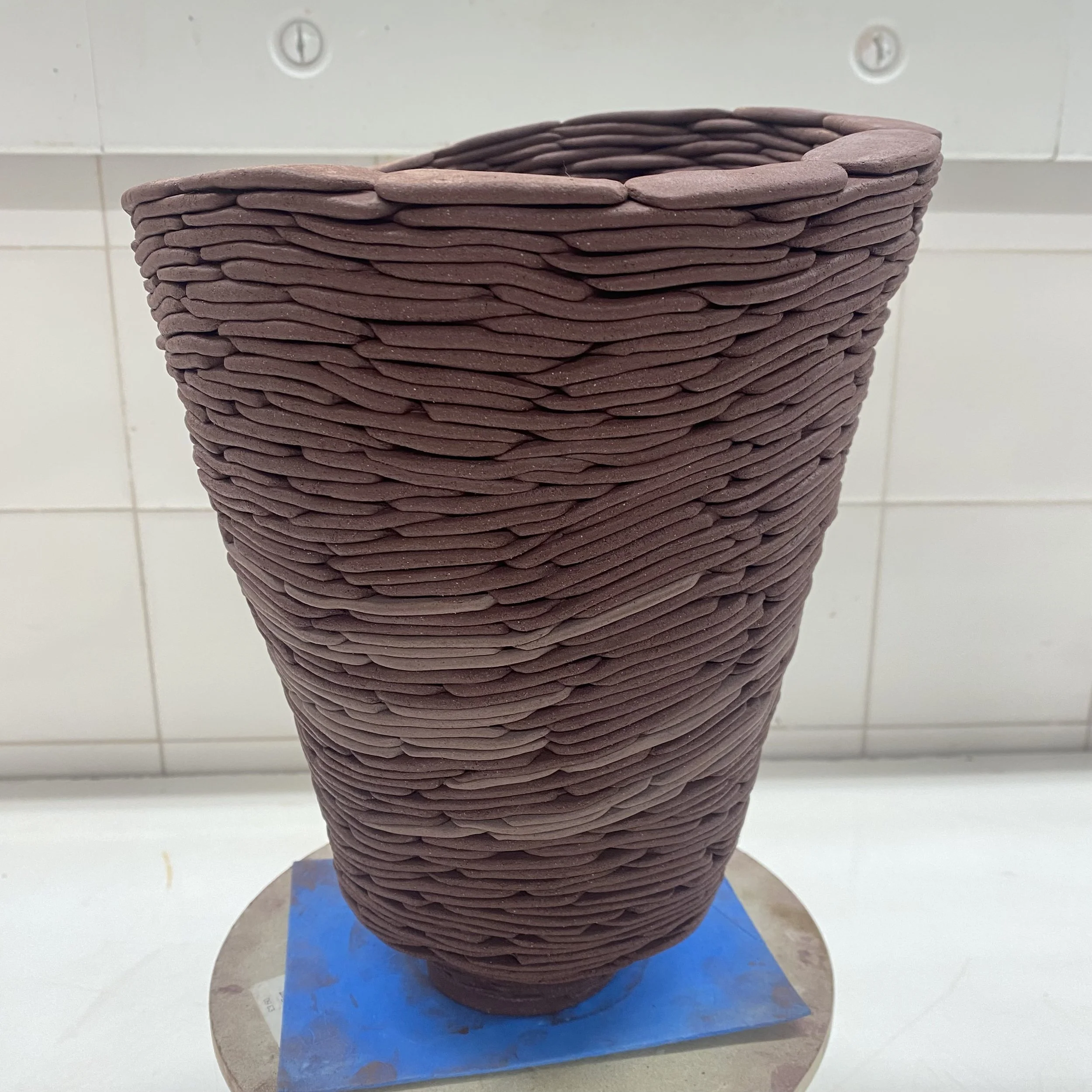
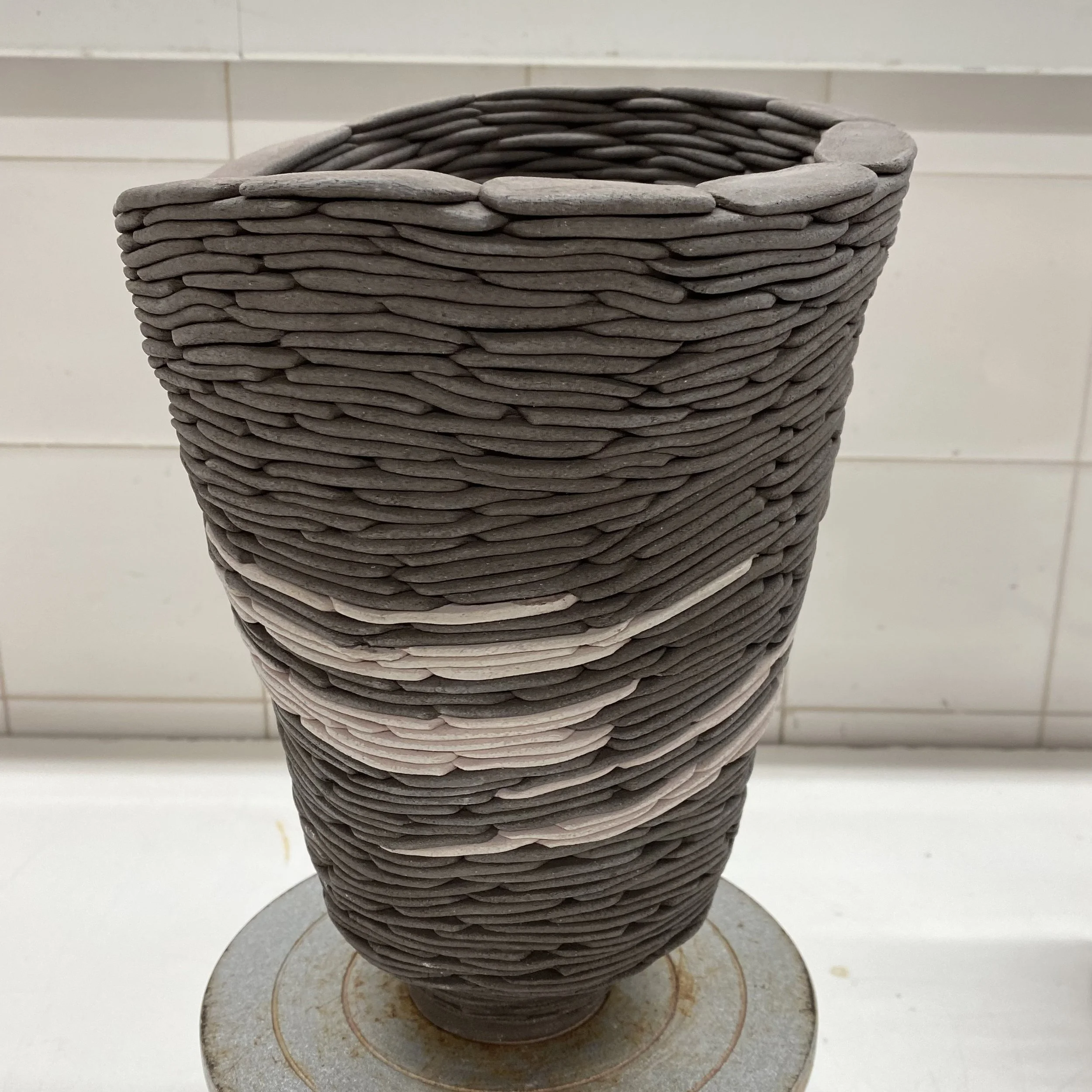
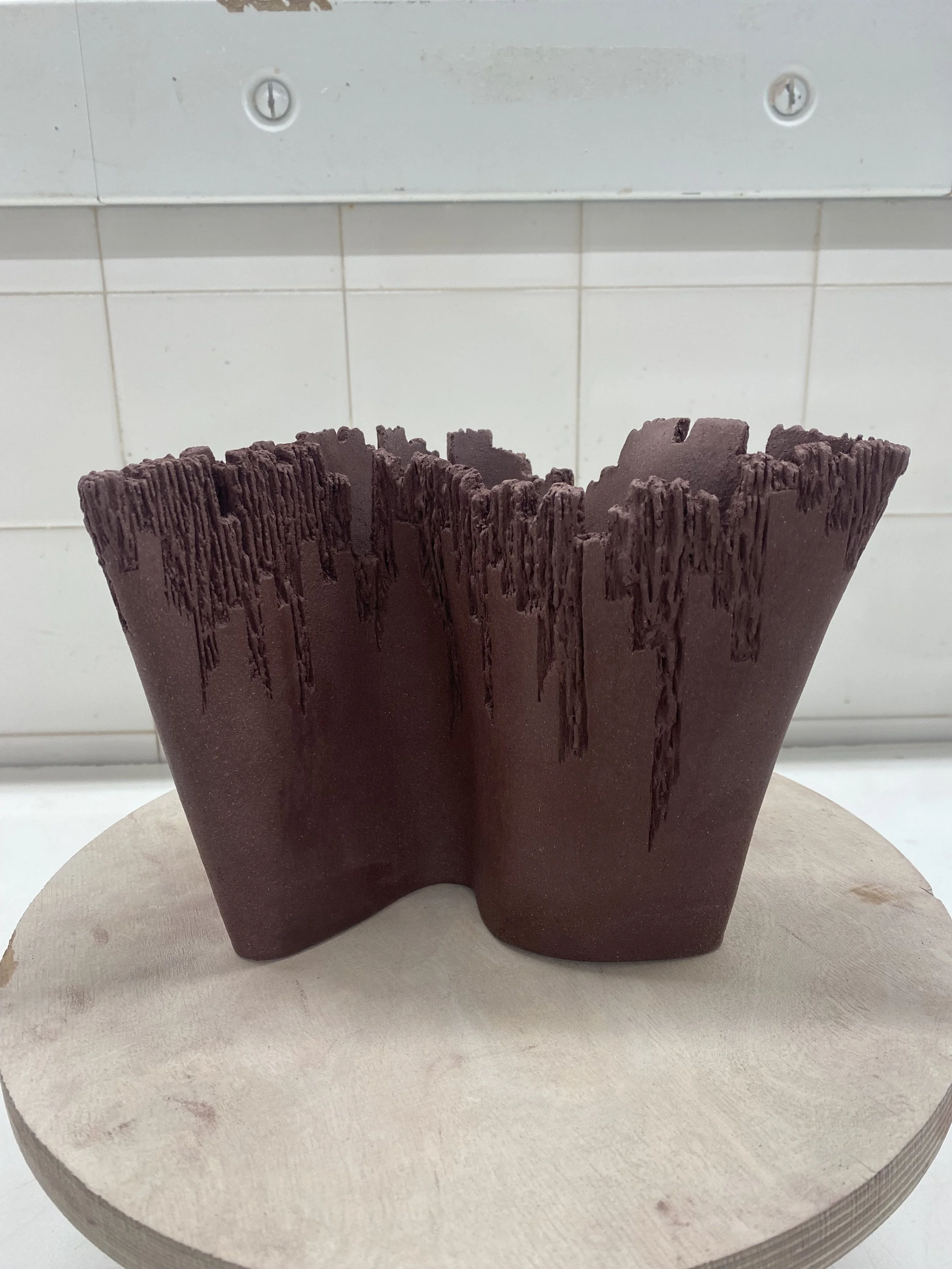
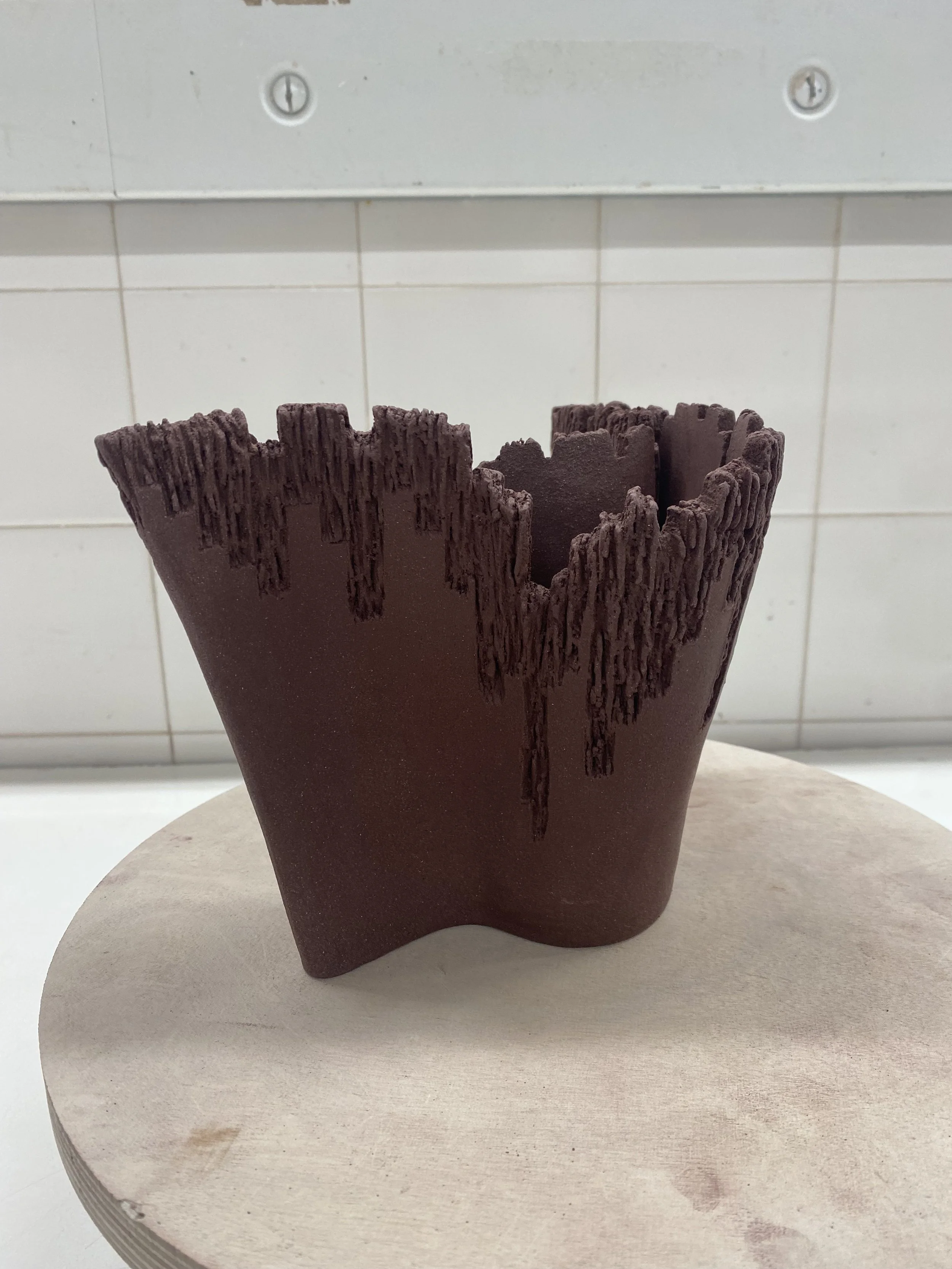
In the studio this week, I completed exploratory form number 28. Built using layered, flattened coils, its surface reflects the winter fields around Sawbridge as they are right now - furrowed, muted and quietly rhythmic. These fields will not remain like this for long; there are already signs that spring is approaching, and soon the same landscape will turn a lush chartreuse green. I have a strong sense that this technique marks the beginning of a new area of development for me. It is still a long way from where I feel it needs to be, and there is much work to be done to understand its potential. At the moment, this understanding is more instinctive than articulate - a gut feeling that is difficult to explain and even harder to visualise. For now, that may need to sit patiently on the sidelines, trusting that I will be able to return to it in the future. The form is currently drying, with the hope of firing it in the coming weeks - I’m quietly anticipating what the fired surface might reveal.
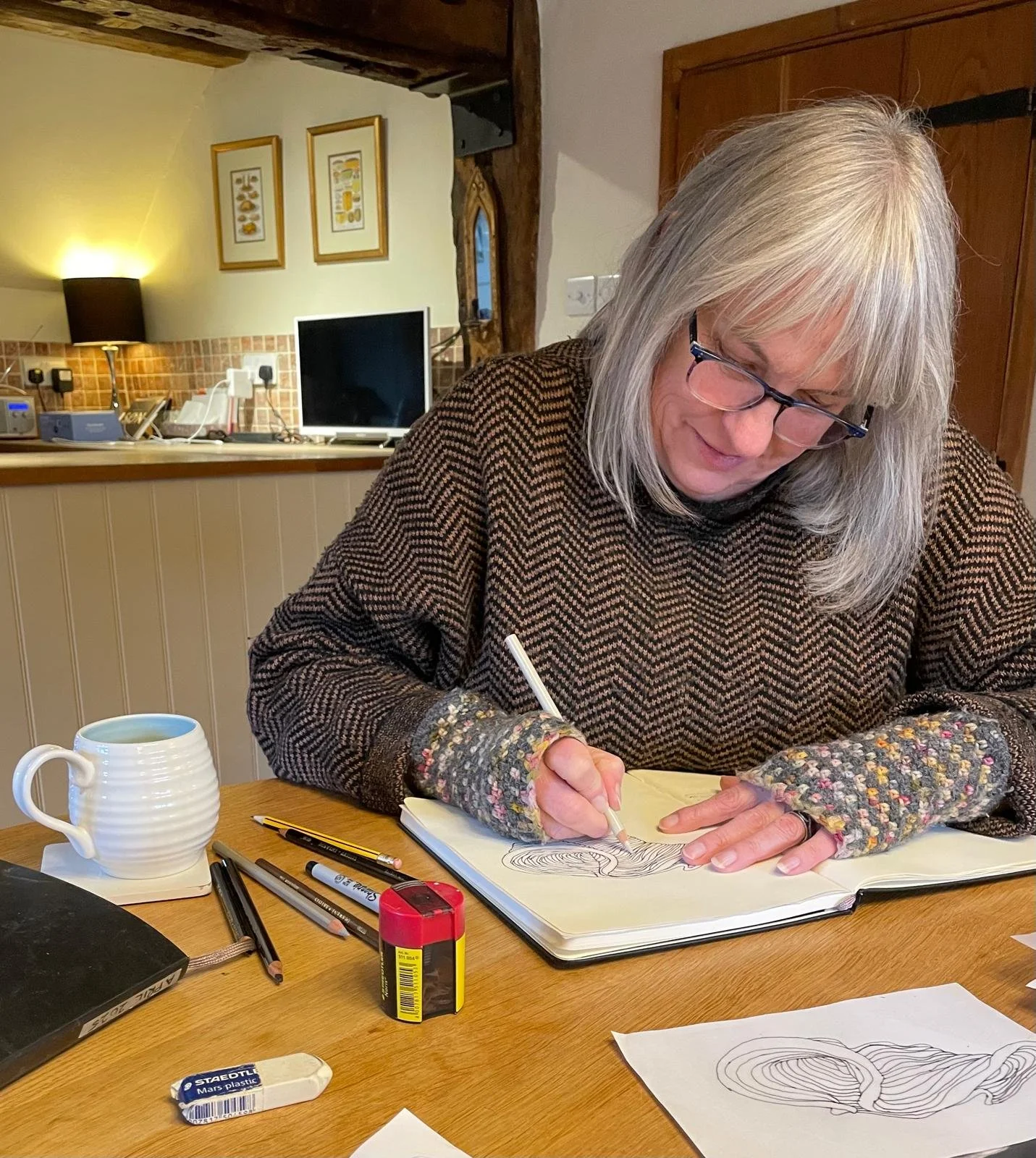
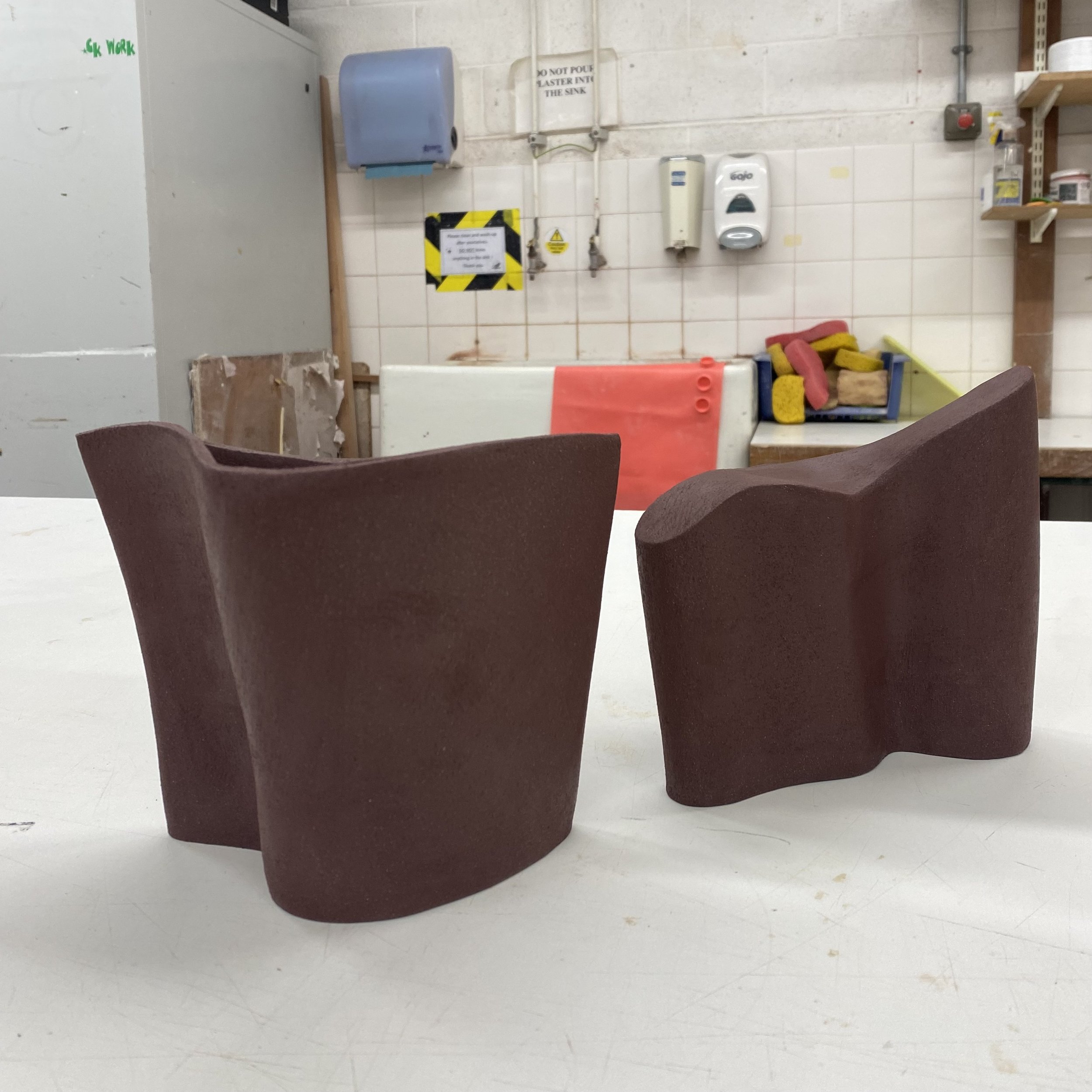
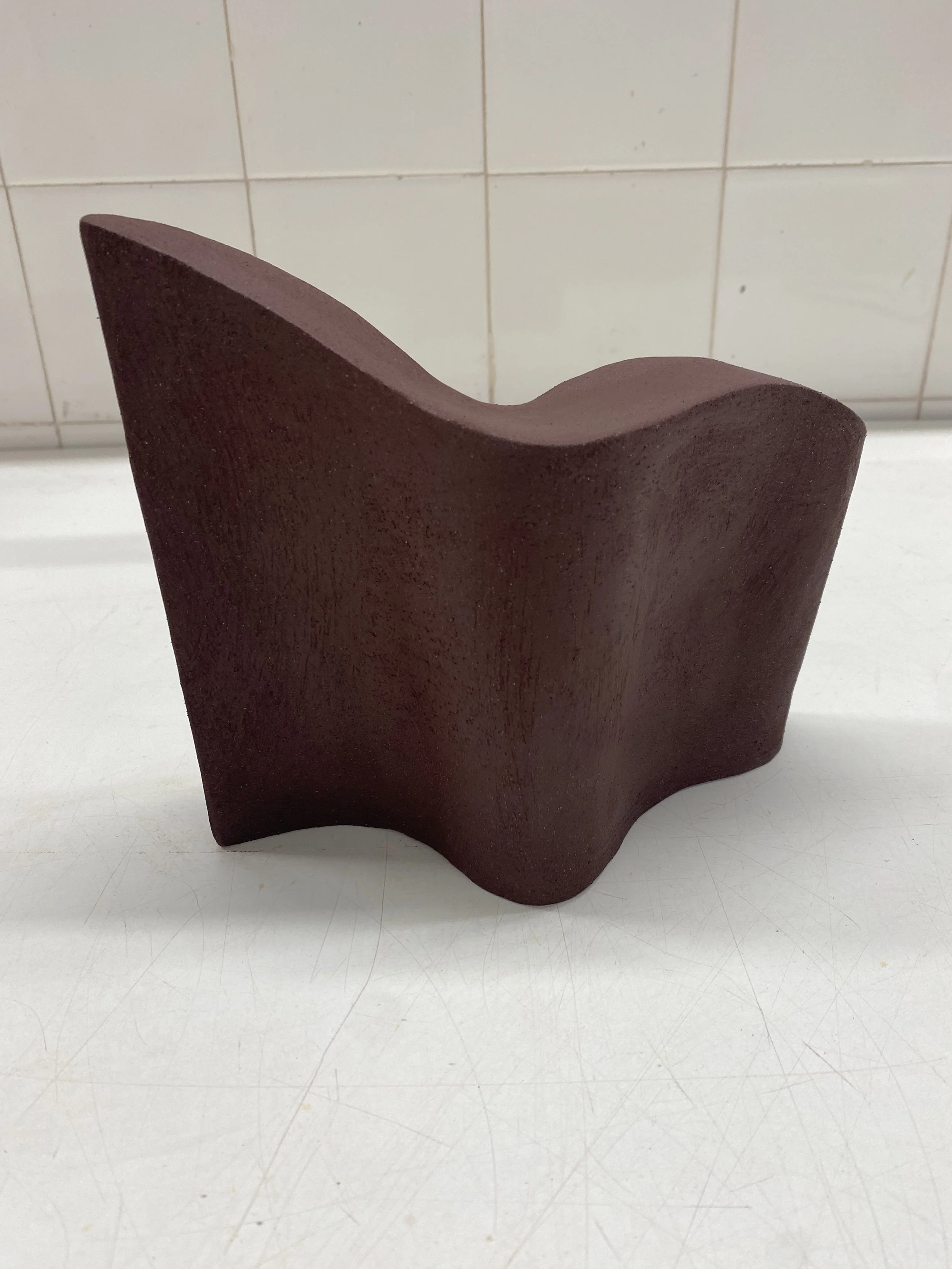
Alongside this, I have begun a couple of new maquettes, intending to test ideas around texture, pattern and mark-making on contour-informed abstract sculptural forms, again inspired by the winter fields of Sawbridge. This morning we woke to a light frost on the ground, which immediately sparked thoughts about how such fleeting surface conditions might be translated into clay. My sketchbook is filling with scribbles and half-formed ideas, and while it all still feels quite chaotic, a plan is slowly beginning to emerge.
It feels as though the most constructive way forward over the next month is simply to make - to produce as many maquettes as possible, exploring ideas quickly and intuitively, without overthinking outcomes. This approach will, I hope, allow me to become fully immersed in this direction, responding directly to the landscape around me on a daily basis. I’m not sure how many maquettes I’ll manage to produce in this relatively short time, but already this way of working feels positive - a means of engaging deeply with both place and process and allowing clarity to grow through the act of making itself.
Inspiration this week
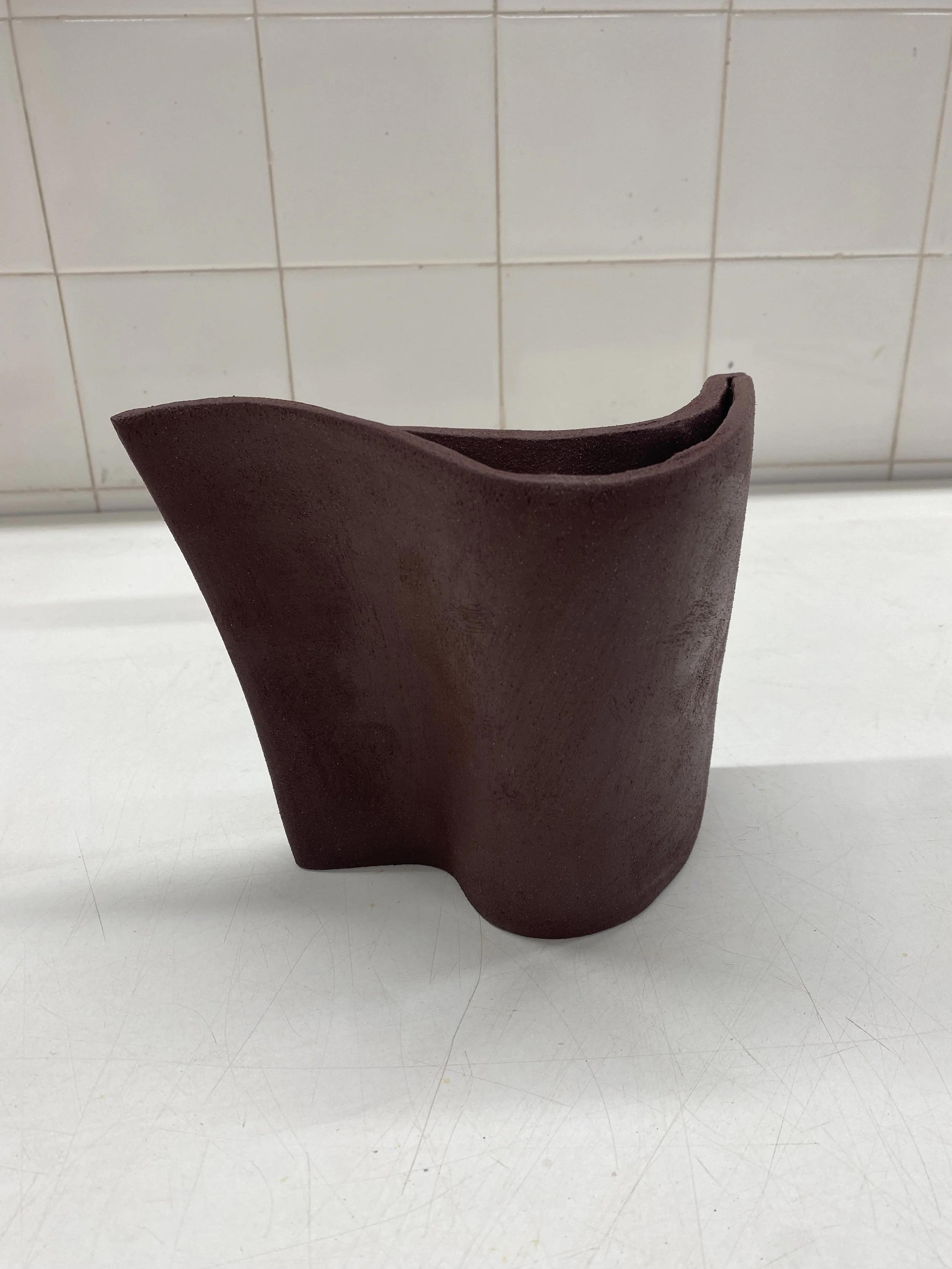
This week I’ve been spending time looking at the ceramic work of Liliana Rubio, whose sculptural vessels feel deeply connected to landscape, erosion and the passage of time. Her work carries a strong sense of rhythm and movement through surface and form, often appearing weathered, layered and quietly powerful. What resonates most for me is the way her pieces feel both grounded and vulnerable, there is a sensitivity in her surfaces that suggests memory held within material, something I find particularly relevant as I continue to explore how landscape, emotion and making can merge through my own work.
w/c 16 February 2026
Finding Rhythm Through Making
This week has felt noticeably calmer. In the studio, it felt as though I was slowly beginning to move forward again, regaining a sense of momentum after the uncertainty of recent weeks and months. I have decided to follow through on the approach I suggested last week: to spend the next few weeks creating a series of small maquette forms, allowing myself the freedom to test as many ideas as possible. Through abstraction, surface and form, I want to explore spatial, emotional and landscape narratives, before stepping back to review where I am once I have around ten maquettes. It feels like a measured and manageable way to let the work inform its own direction - endeavouring to settle into my process - not rushing, but listening.
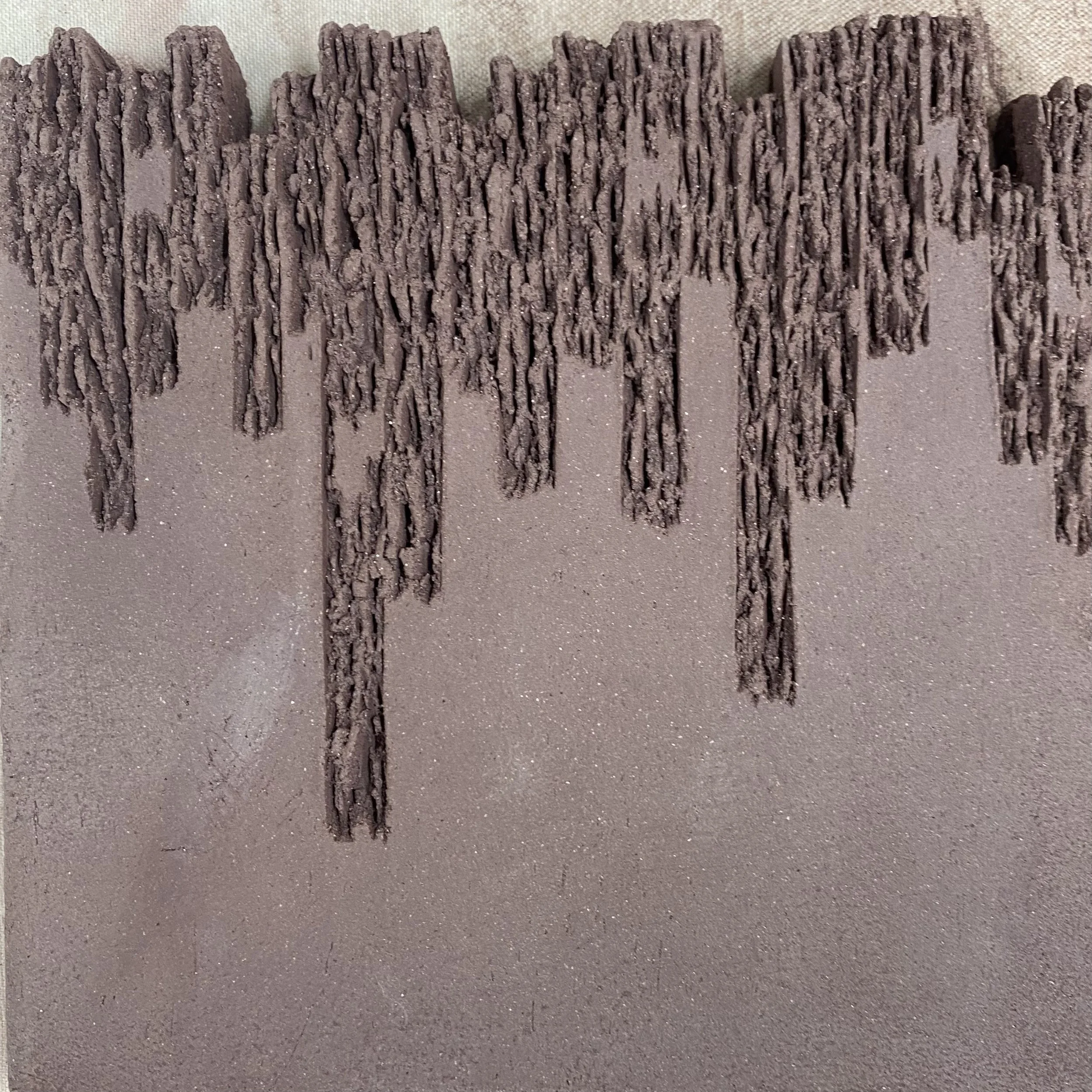
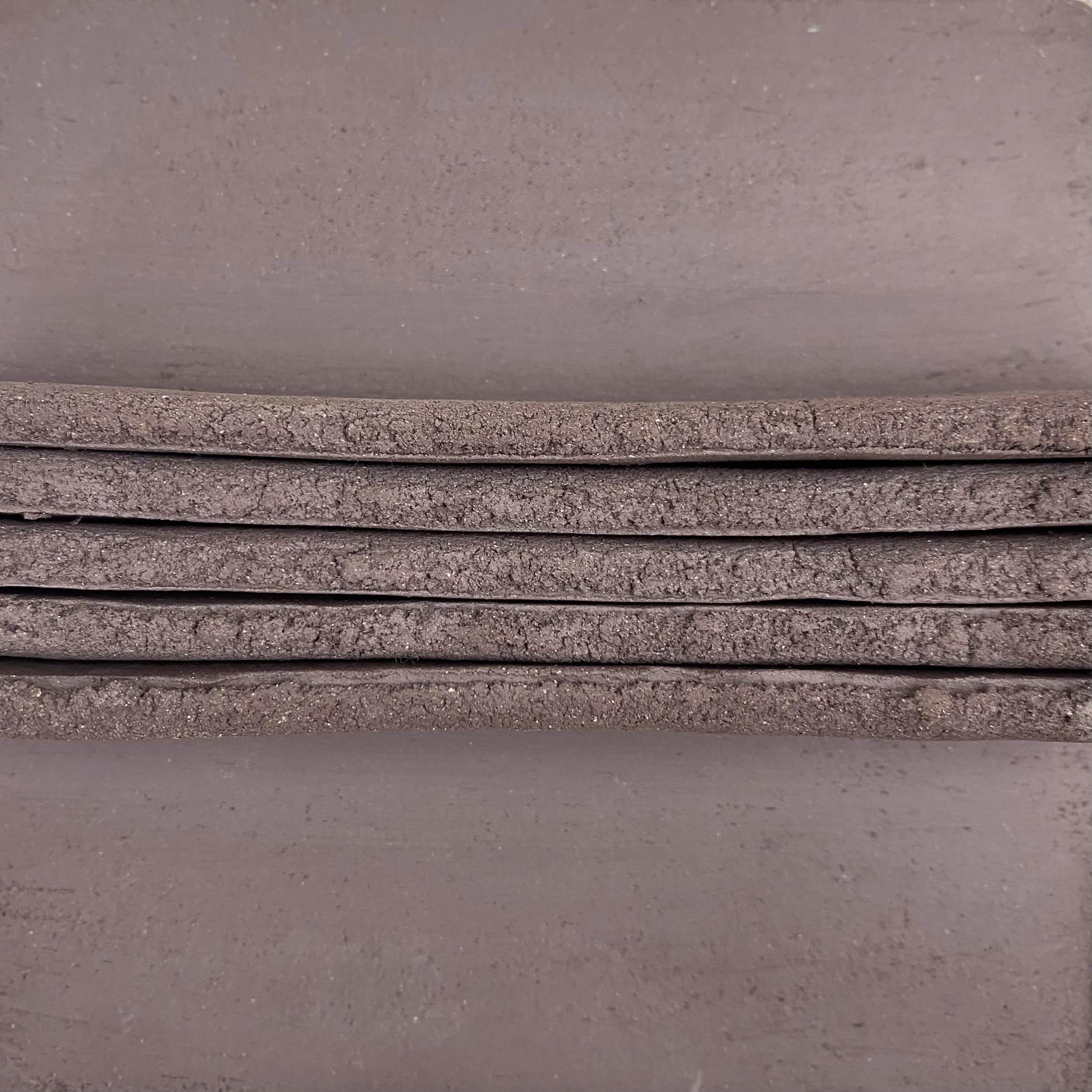
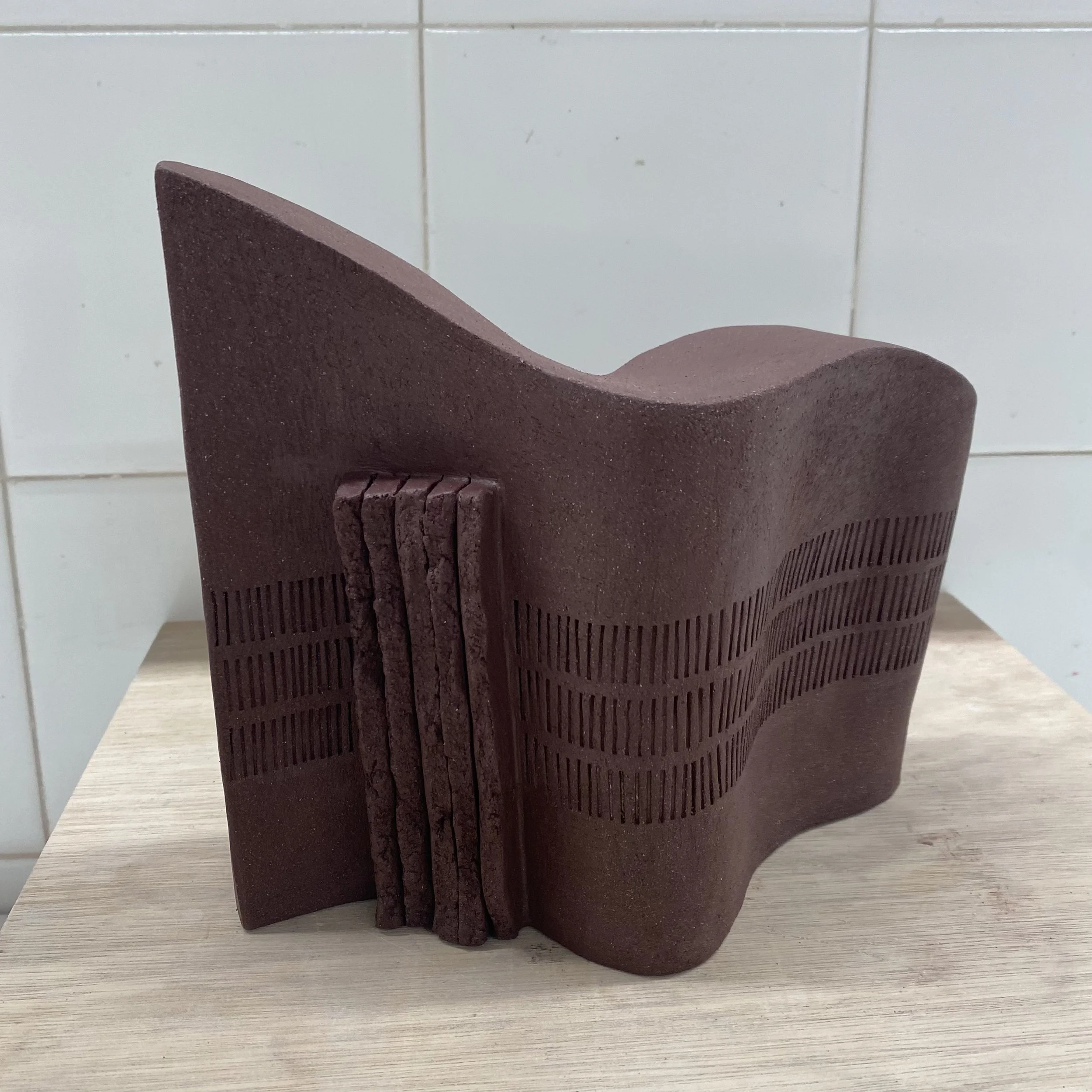
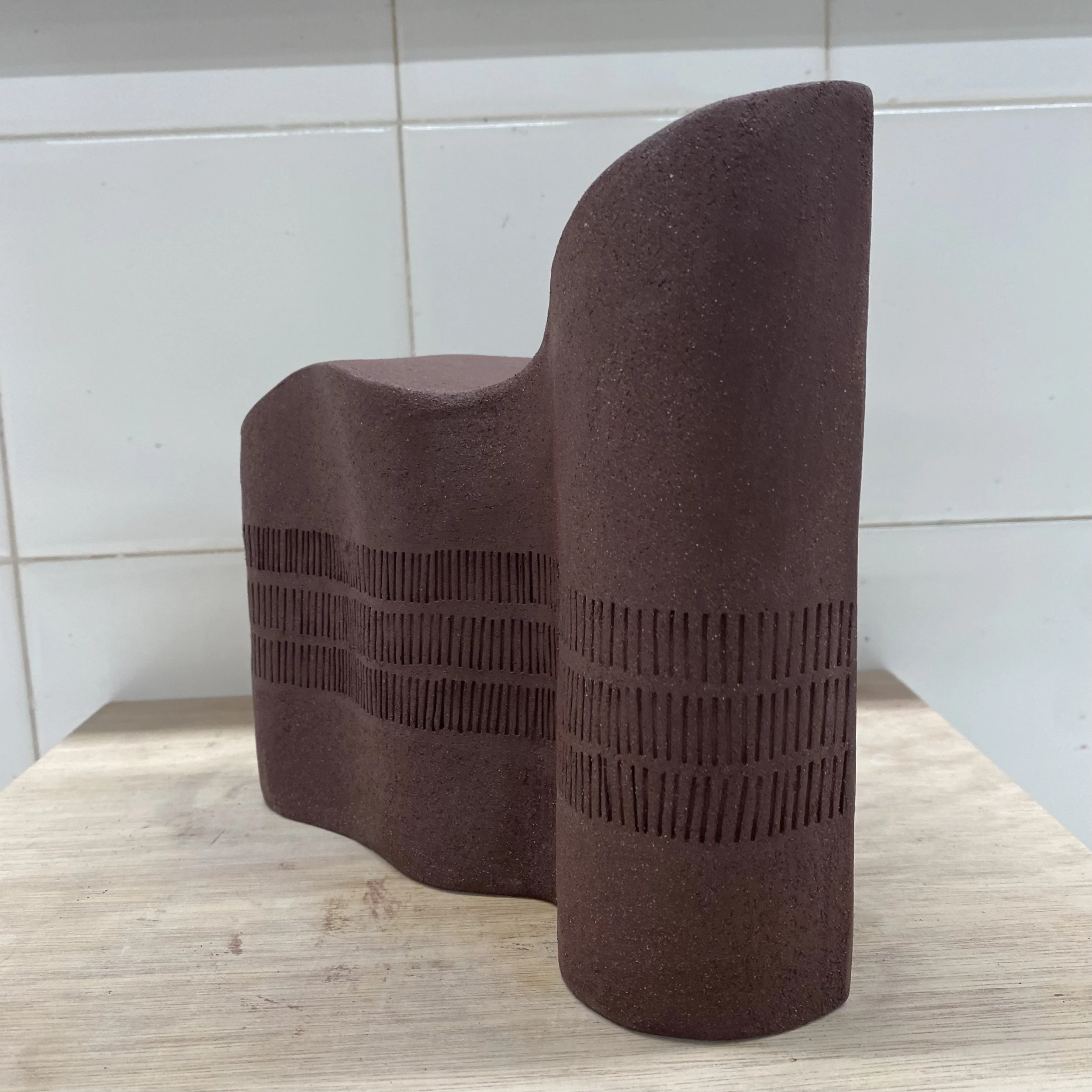
The first of my flattened coil vessels emerged from the bisque firing this week. After a light sanding, it went straight into its final high stoneware firing, where the clay will transform from its rich chocolate brown into a deep, matt black. Impatient to keep moving, I tested a few surface ideas quickly on some tiles, then went on to complete the two maquettes I had begun last week. As I carved and incised texture into Form 29, I felt a small but unmistakable surge of excitement - my mind racing ahead to the many ways this language of surface might be developed. I’m very much looking forward to seeing how this piece responds after its final firing.
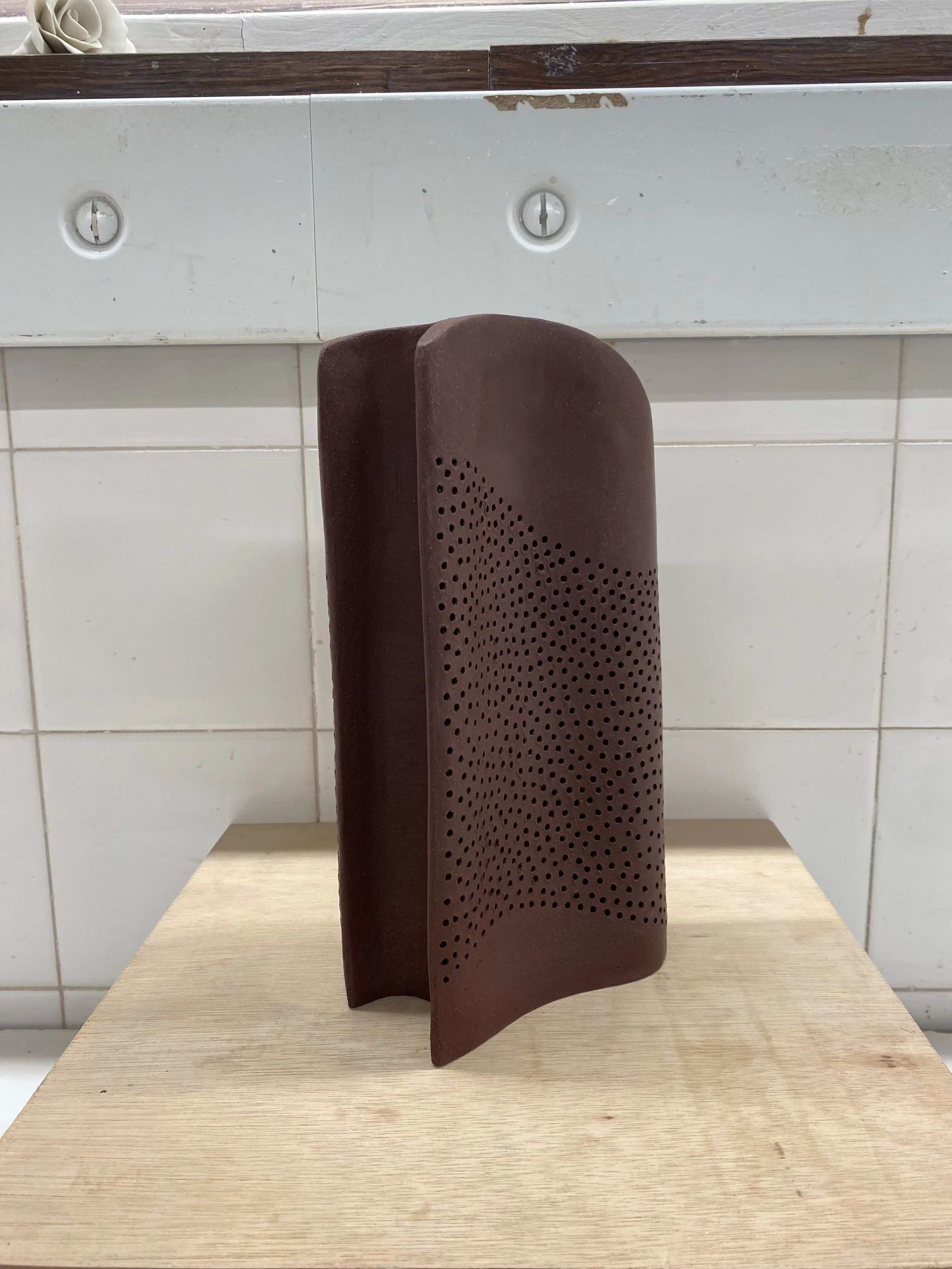
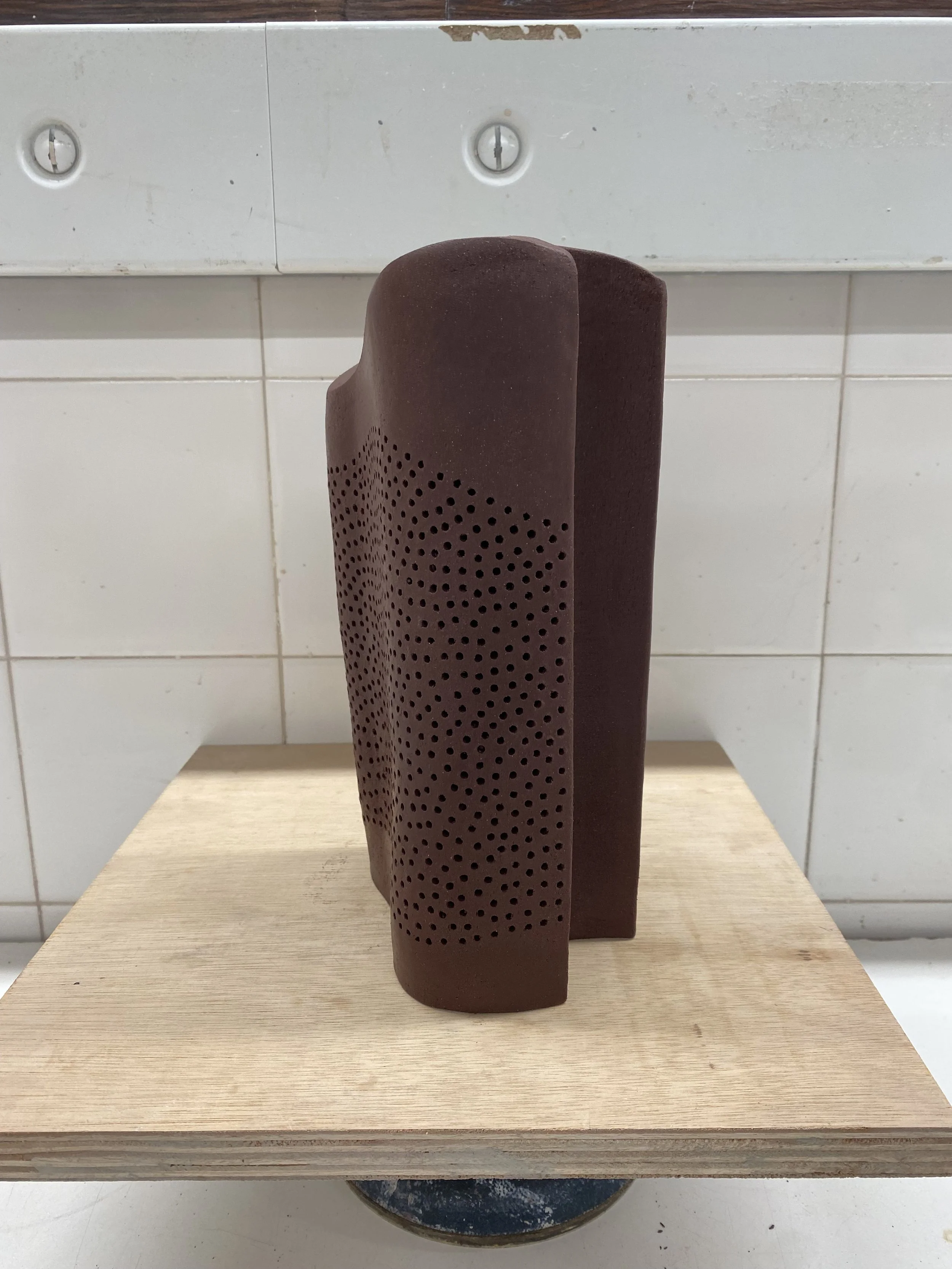
Winter fields, furrows and fence posts featured strongly in Maquette 30, informed by the immediacy of the quick test tiles. This way of working - fast, responsive and intuitive - feels particularly alive. Wanting to push the scale slightly taller and not entirely sure how best to achieve this, I built Maquette 31. This form feels clunky and unresolved, lacking rhythm or flow. While I was very tempted to reclaim the clay and start again, I decided instead to use it as a test piece for further surface experimentation. Sometimes the less successful forms can offer the most freedom - and my apologies to anyone affected by trypophobia.
Alongside the making, I have begun drafting my first version of the ‘poster’ that will form part of the final MA degree show. This will articulate my ceramic practice, methodology, context, intended outcomes and where I hope to position my work moving forward. Perhaps this task has arrived at exactly the right moment. Writing this content forces a careful consideration of every aspect of the work - the why, the how, the what and the where - and in doing so, it is helping to clarify the past eighteen months of research, testing, reflection and quiet persistence.
w/c 23 February 2026
Subtle Shifts and Open Questions
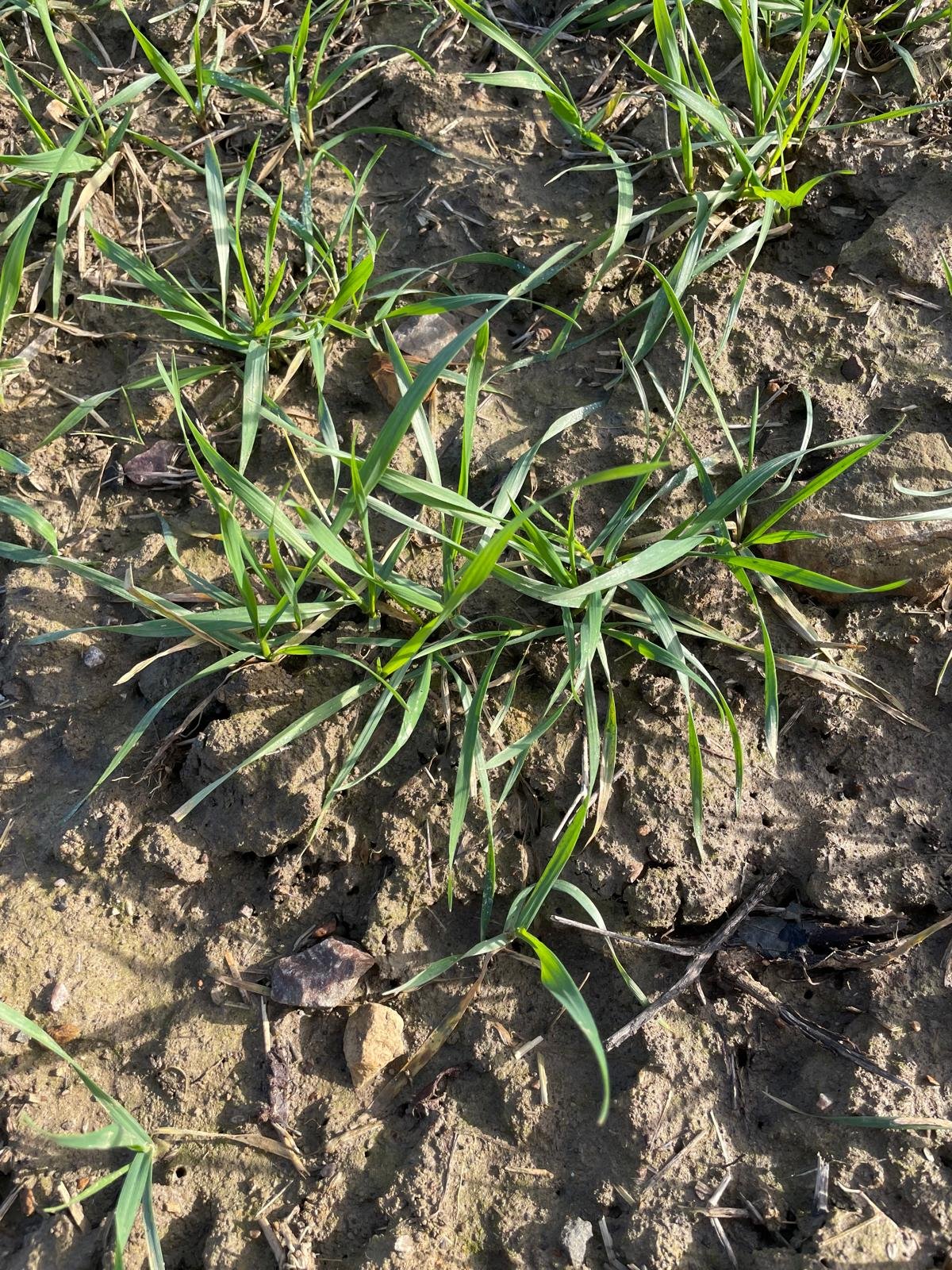
At the start of the week there were definite signs that spring is on its way. The surrounding fields are now covered with a carpet of new green growth, yet when you look more closely it is still very easy to see where the crops have been drilled. This creates an all-over punctured surface - a holed, rhythmic pattern - which has coincidentally informed the surface of exploratory Form 31, currently sitting quietly on the shelf, drying.
Exploratory Form 28 survived its bisque firing this week. As glazing is not really my natural territory, I felt quite courageous partially glazing the rough-textured area with a variegated black glaze. I applied this very thinly, hoping the glaze would sit subtly within the surface rather than overshadow the texture, although I may have been a little too reticent. It is now in the hands of the kiln gods for its final stoneware firing - we shall see the results next week. Fingers crossed.
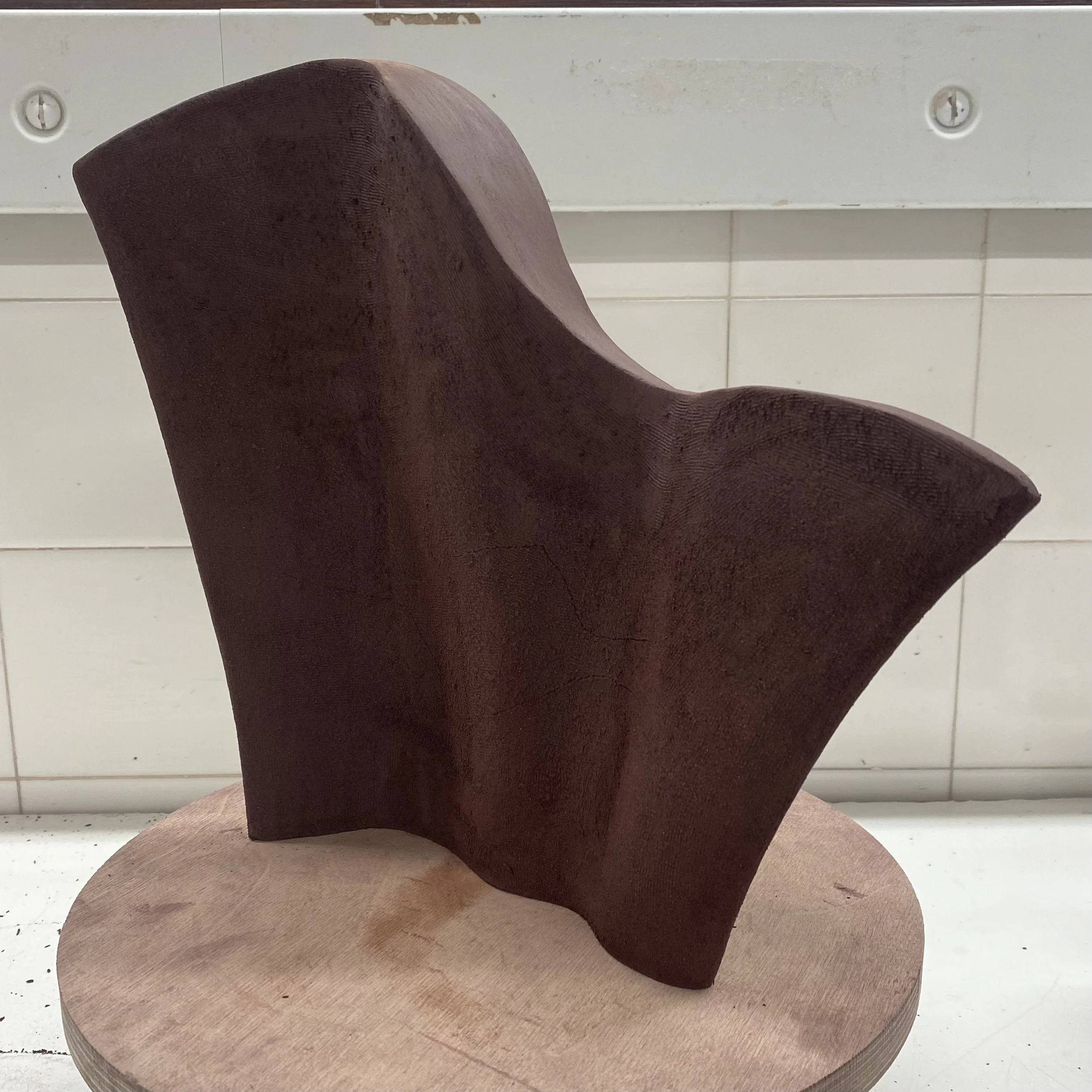
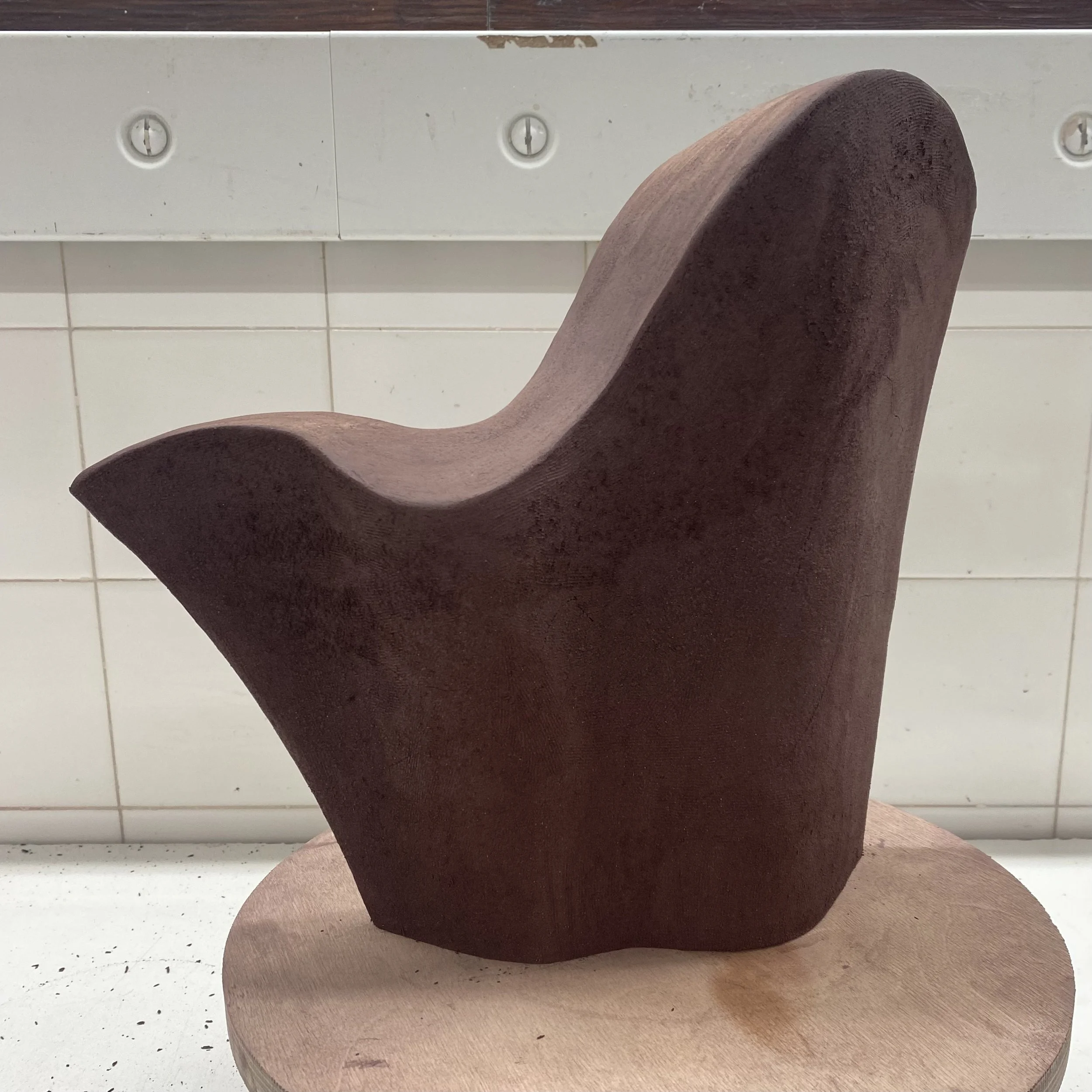
Still on a mission to create as many small maquettes as possible over the coming weeks, this plan went slightly awry when I began a new build in the studio. The form very quickly took on a life of its own and at one point, felt almost out of control. However, once I intervened - taking a knife to it and introducing a degree of restraint - the piece began to settle. I am actually quite pleased with how it is now progressing. The surface treatment is still undecided, though I am keen to develop the language explored on Form 29. Over the coming days I will be thinking carefully about the mechanics of this - the how as much as the what - hoping to return to university next week with a clearer sense of approach.
Alongside this, I have been thinking about how these abstract vessel forms might become more interactive, creating another dimension through additional texture. I’m particularly interested in how carving and incising could introduce depth through shadow and even small openings - moments that can be looked through or into - extending the viewer’s engagement with the form. This is something I am still working through in my sketchbook, but I’m hoping to use Form 32 as a way to explore these tentative ideas and see where they might lead.
In the meantime, another challenge has been set — one that currently feels slightly beyond my natural way of thinking. My tutor has asked me to take some of the intuitive mark-making responses I make in my sketchbook and explore how these might be translated into sculptural form. These marks are not intended as drawings of landscape, but as physical, instinctive responses to being within a place — recording rhythm, movement and emotional residue rather than visual description. Translating this kind of gesture into three dimensions has the potential to open my practice into a more abstract sculptural language, freeing the form from self-imposed conventions and allowing memory, rhythm and material to lead the way. While the ‘where to begin’ still feels uncertain and slightly baffling, I can see how this process sits firmly within my Memories of Place methodology, extending the act of remembering from mark, to material, to form.
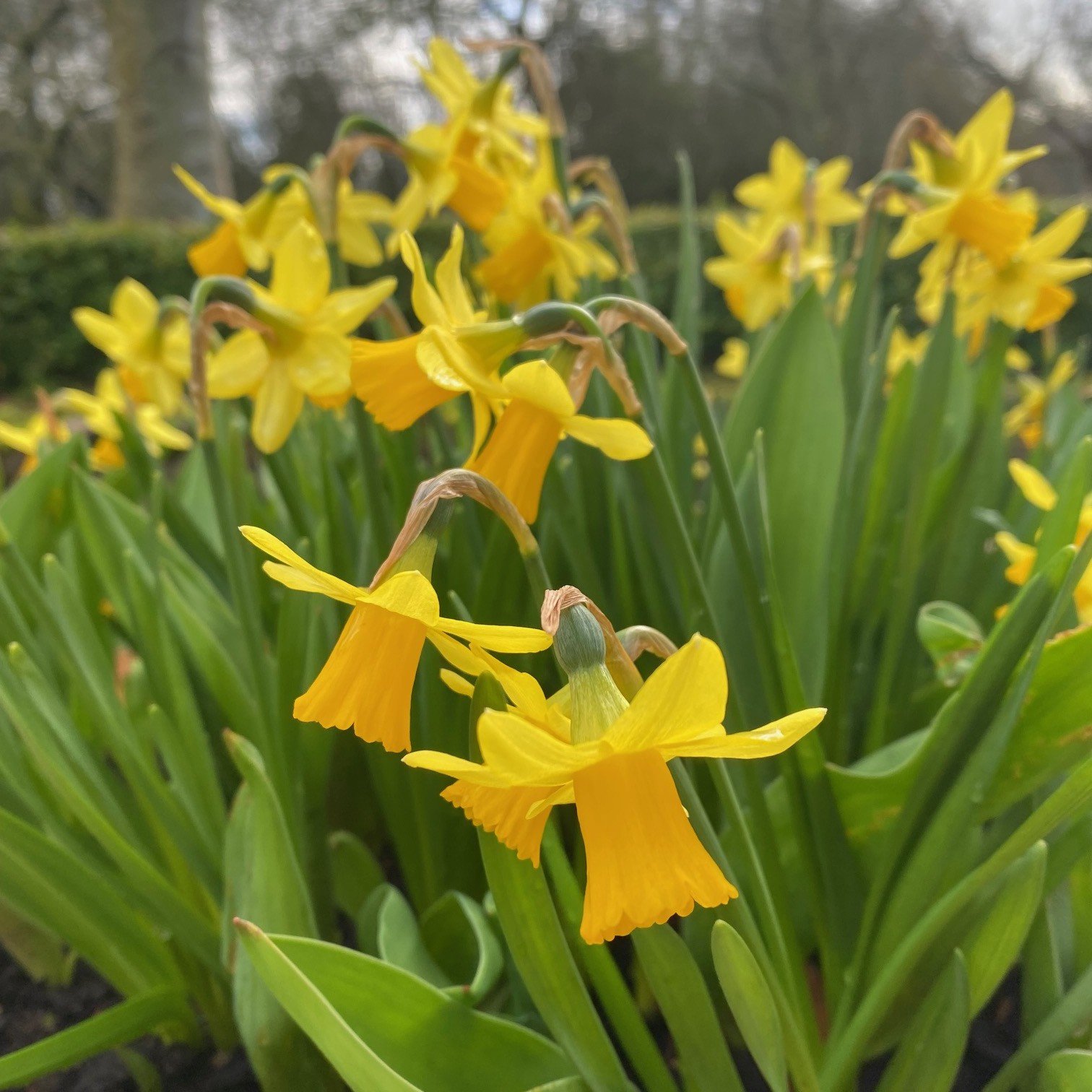
After a busy few days away at university, I returned home to a gentle welcome - the sight of nodding Narcissi in the garden, quietly marking the shift of seasons once again.