June 2026
w/c 1 June 2026
Listening to the work
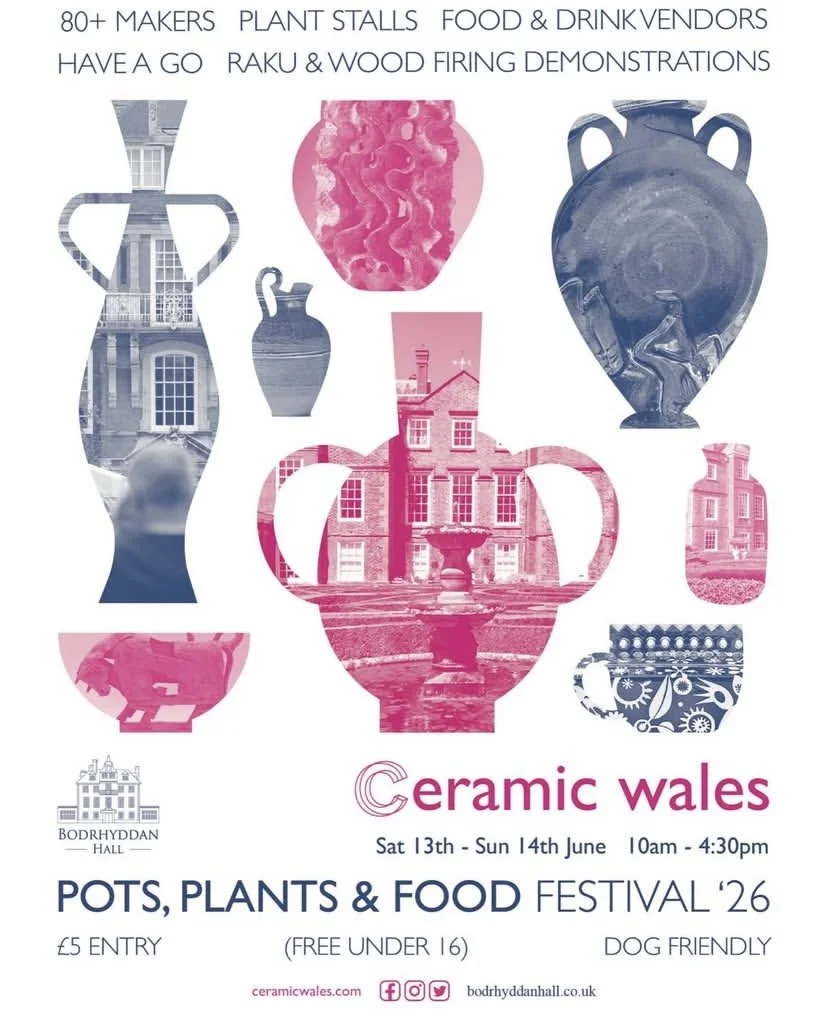
Continuing on from last week, I have been trying to maintain the momentum of making in the studio while preparations continue in the background for Ceramic Wales at Bodrhyddan Hall, near Rhyl, next weekend (13–14 June). This will be the first time I have shown my ceramic work at a dedicated ceramics fair and, while I am very aware that the work is not yet where I ultimately want it to be, I am looking forward to seeing how people respond to it. The opportunity to talk with visitors and receive feedback feels like an important part of the journey, particularly at this stage in the development of my practice.
Looking around the studio this week, I realised that every piece I have made over the past few months has played a part in guiding me towards the work I hope to be exhibiting in September. Some pieces have been more successful than others, but all have contributed something to the process of understanding how I want to communicate Memories of Place through form, surface and material.
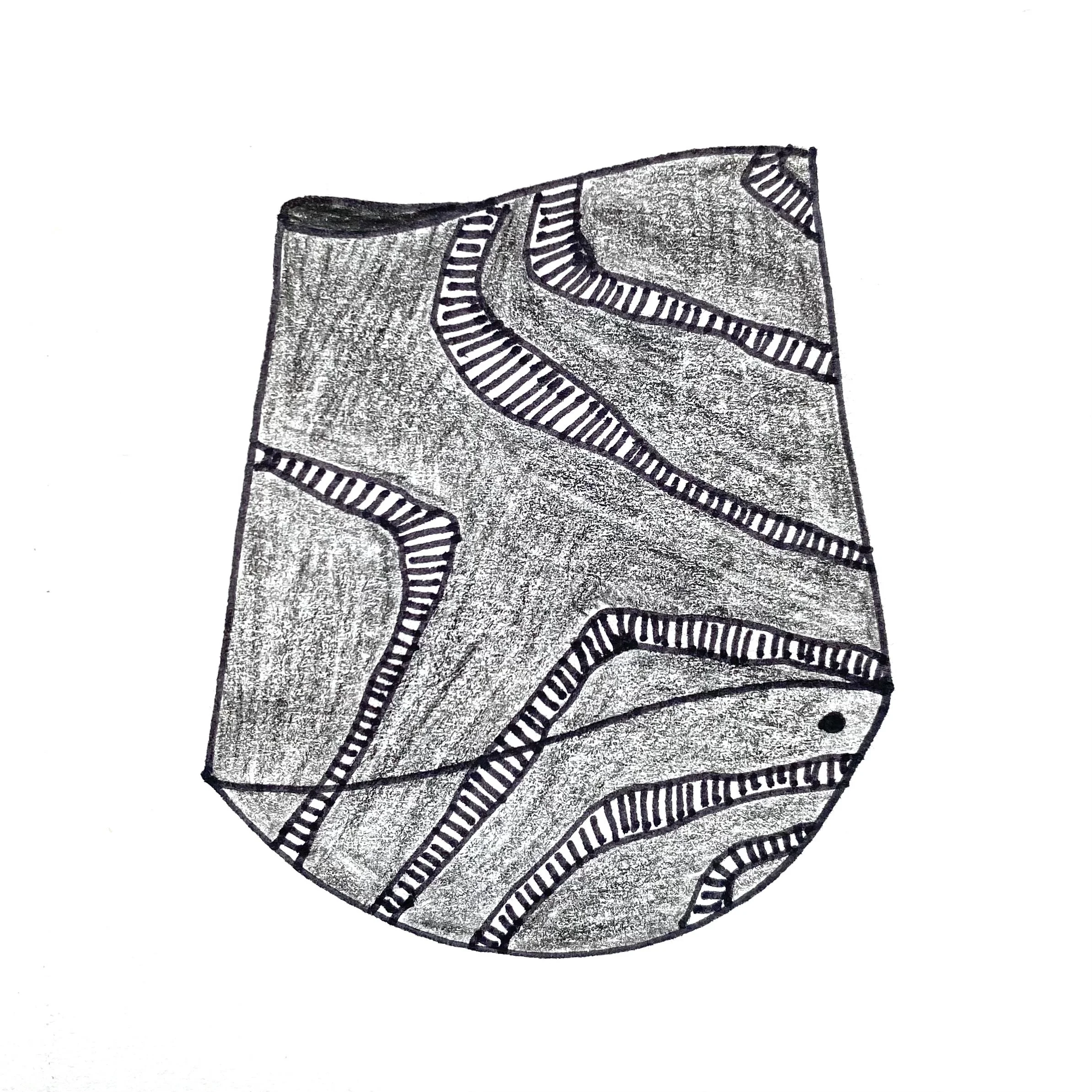
I have continued developing my vessel forms, searching for ways to subtly incorporate references to contour and landscape. These visual cues may never be consciously recognised by the viewer, but that feels less important than it once did. What matters is that they are embedded within the work — informing the form, guiding the rhythm and carrying traces of the landscape from which they emerged.
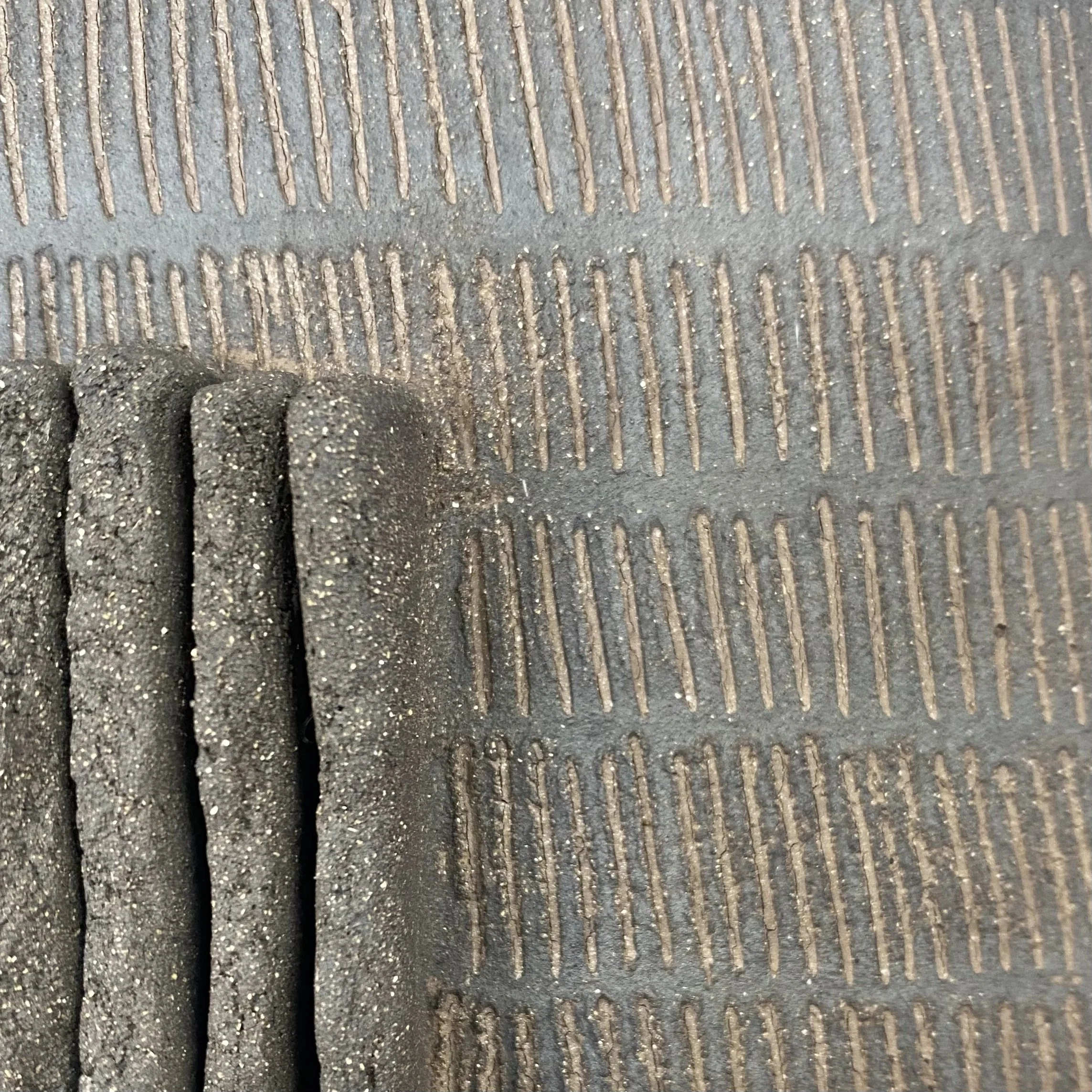
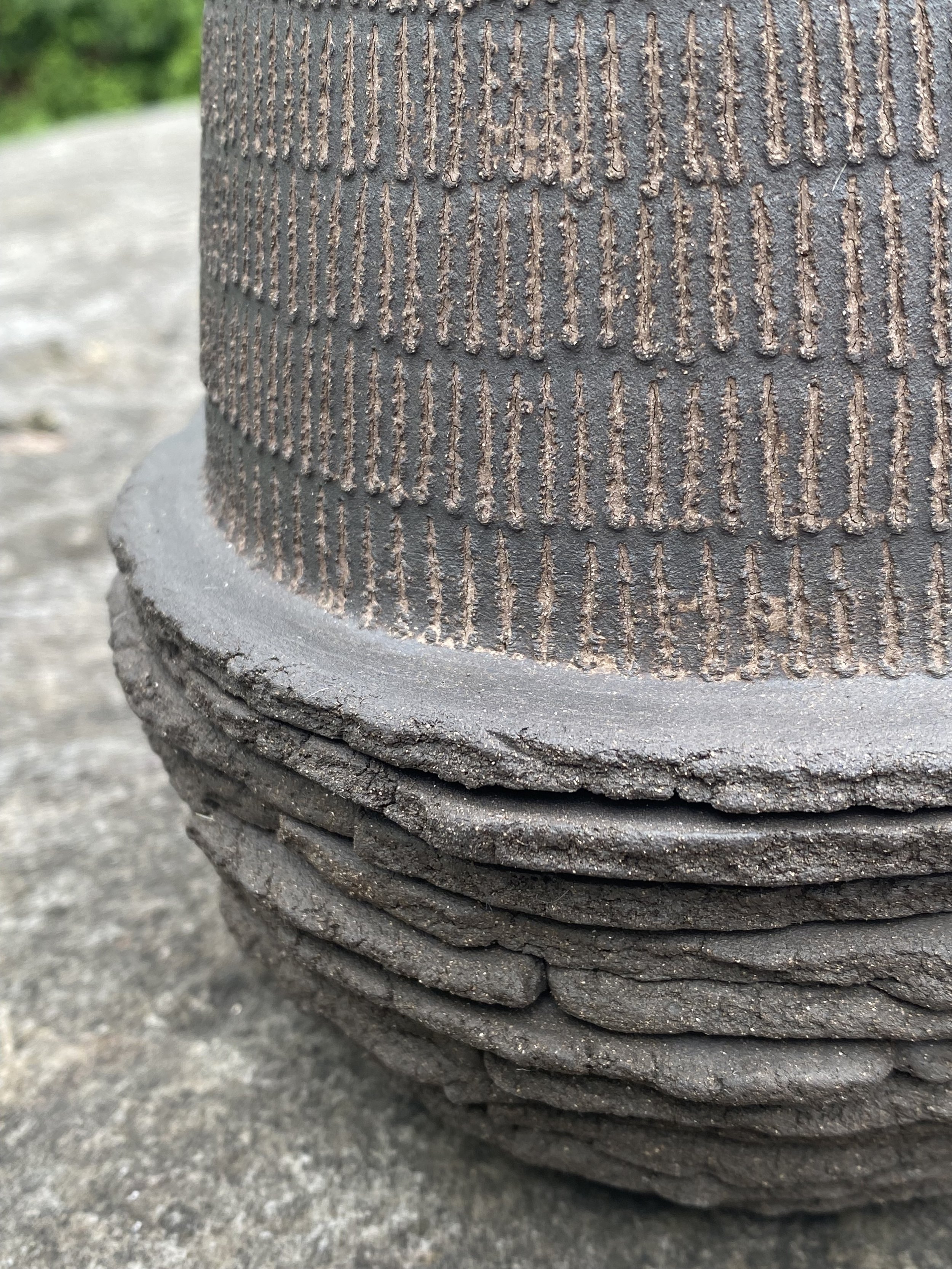
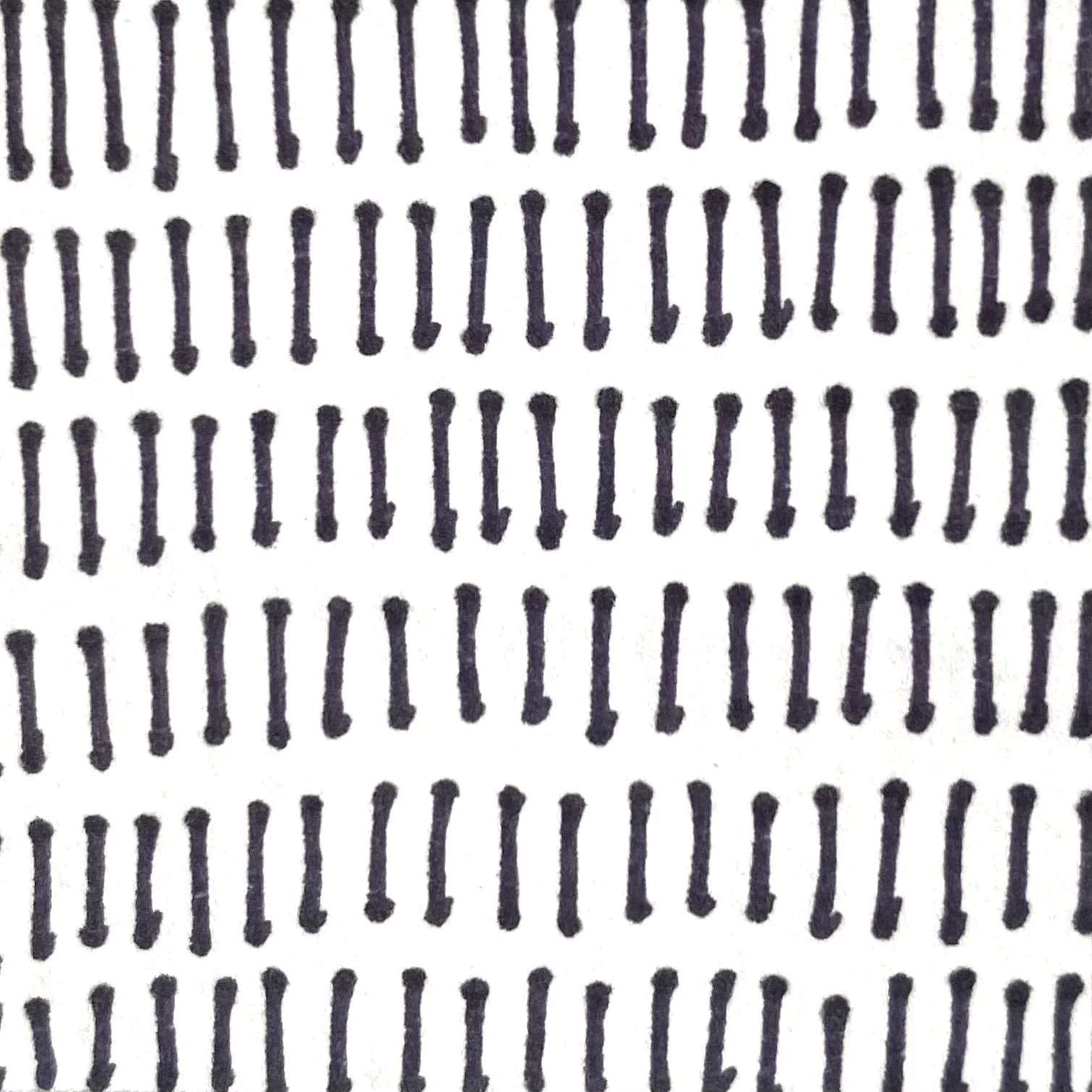
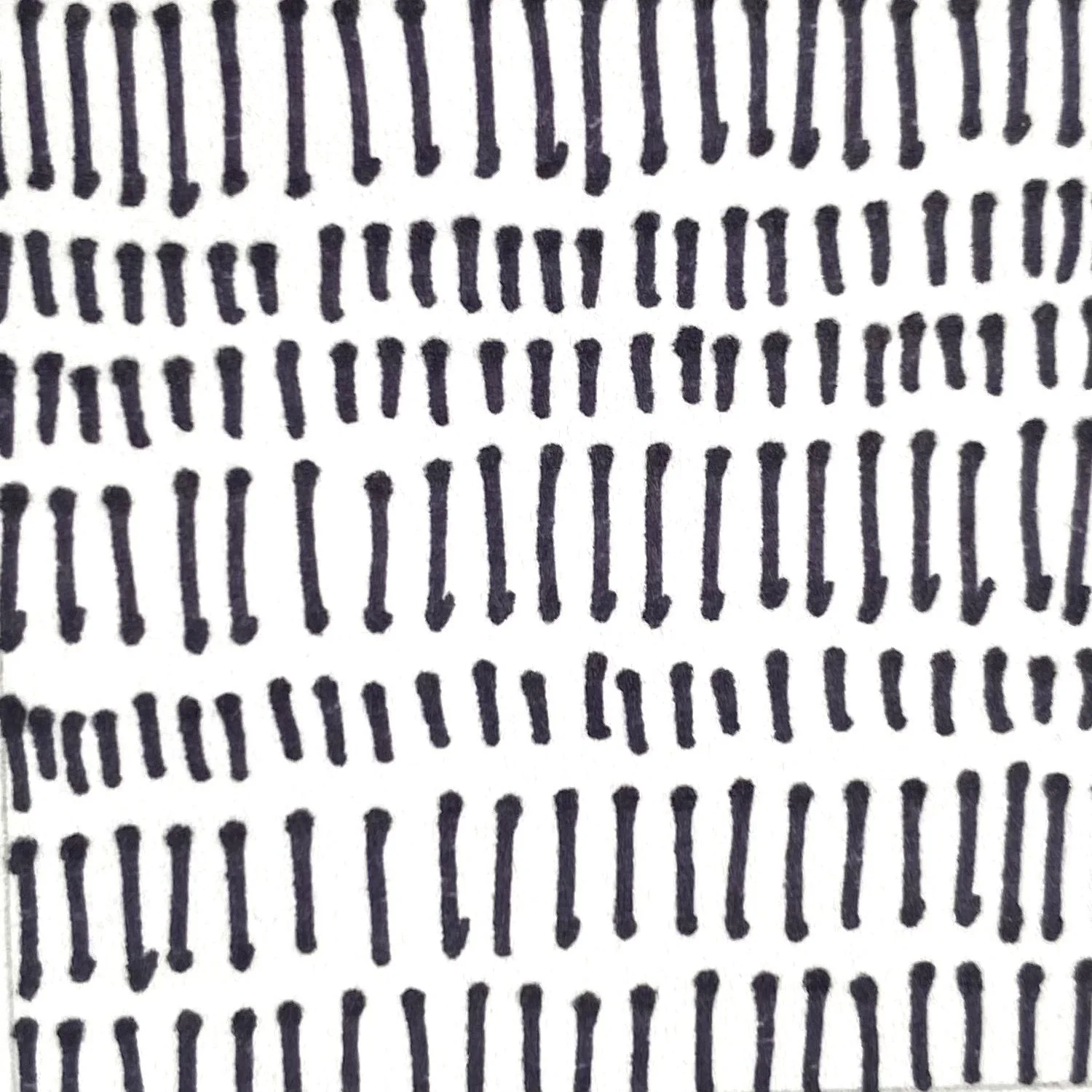
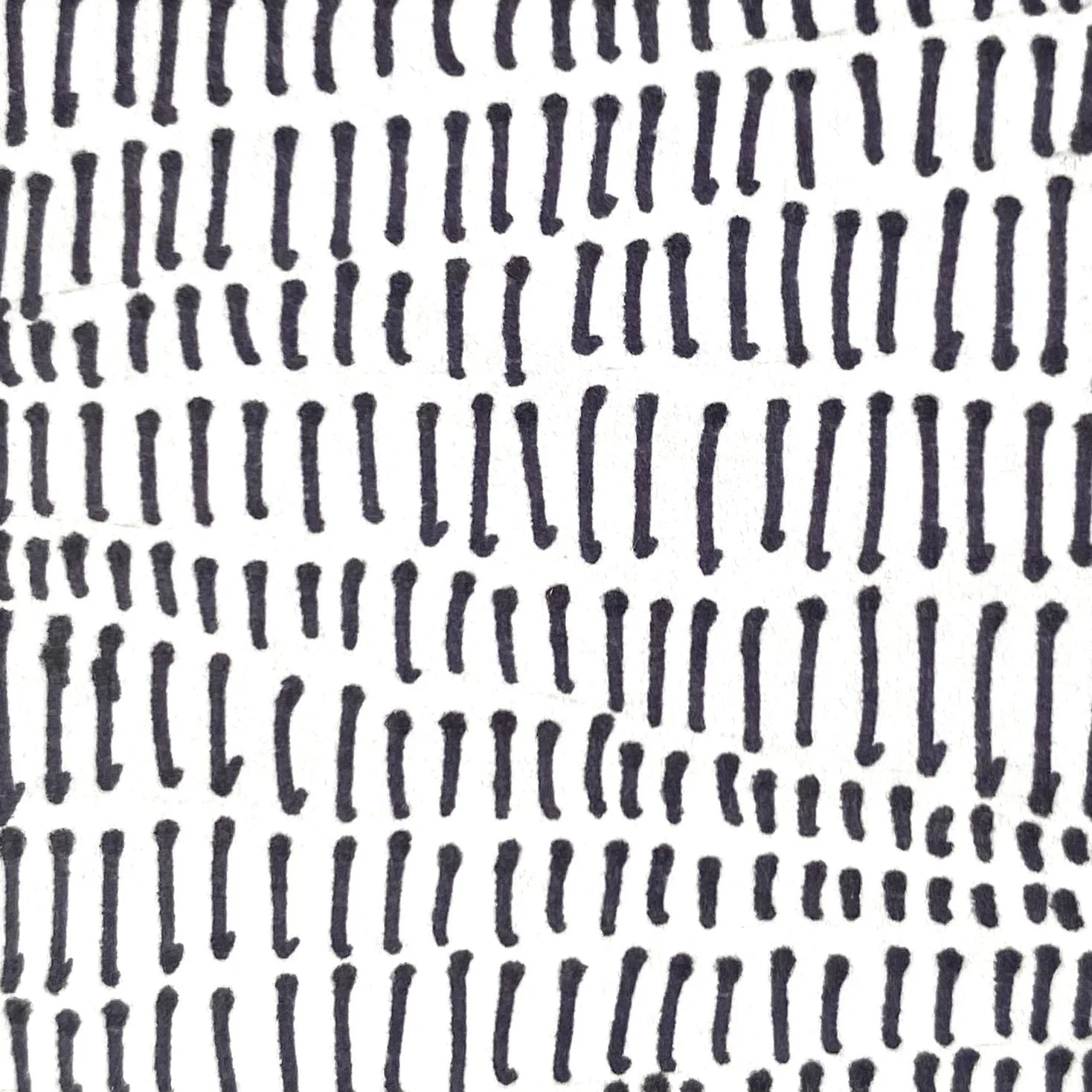
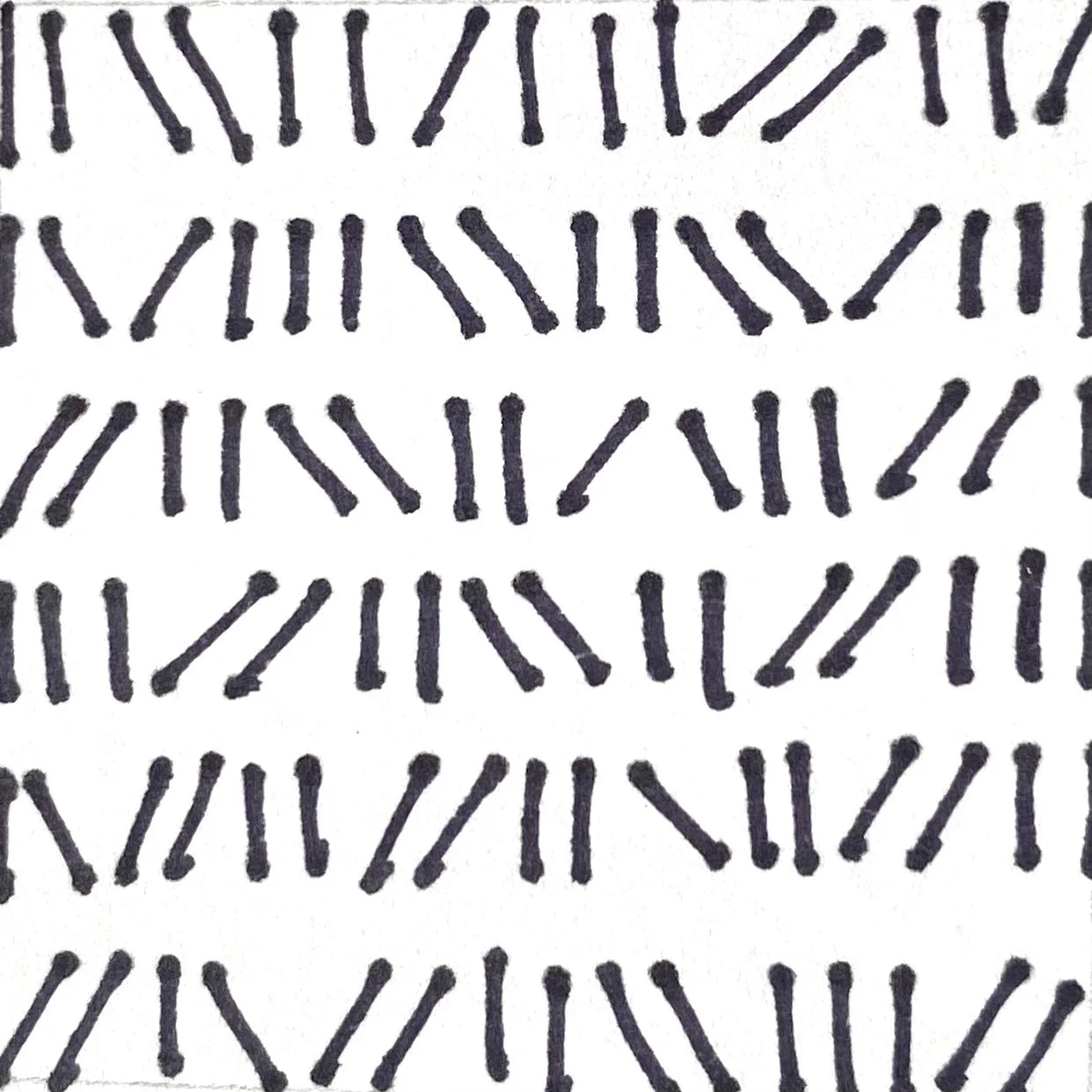
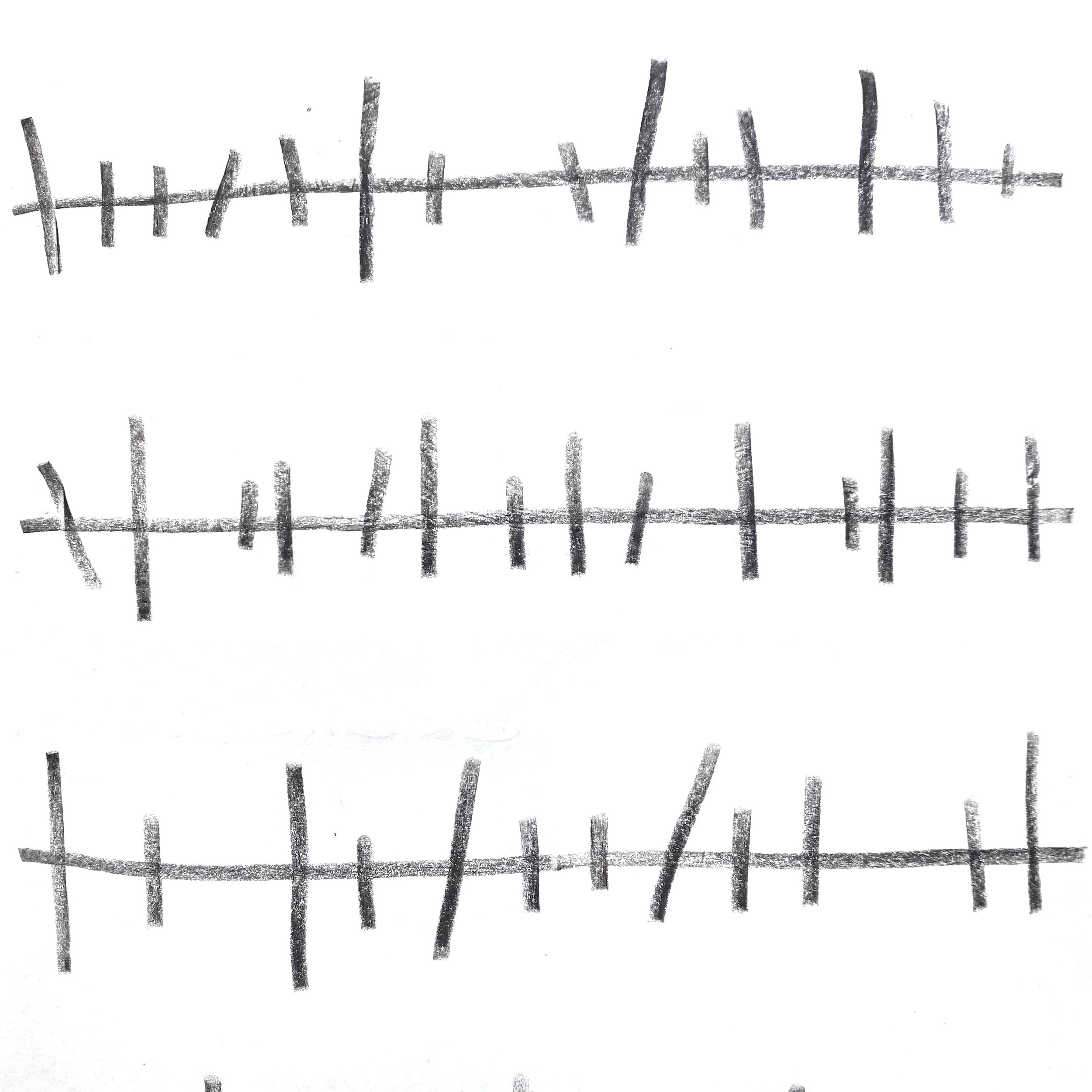
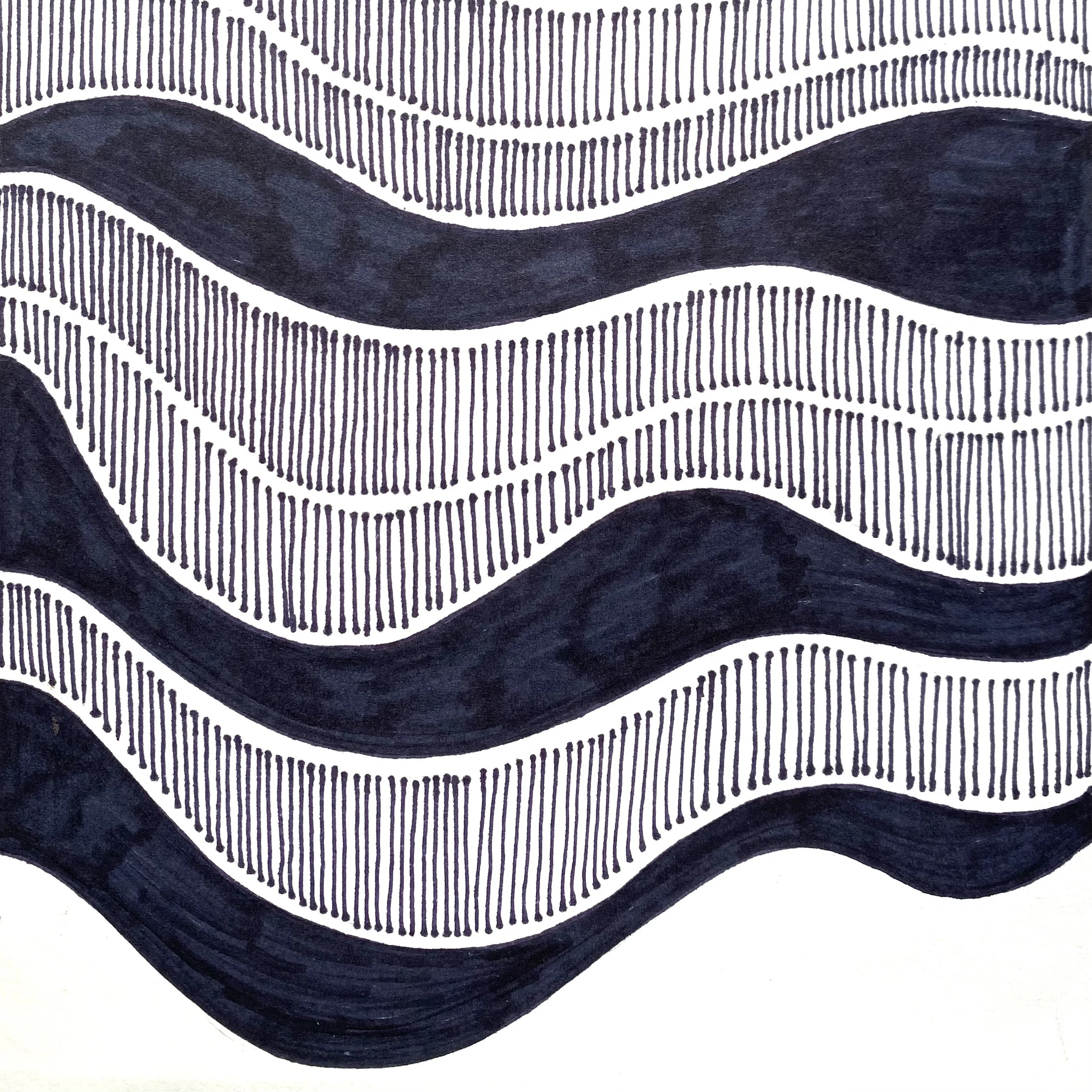
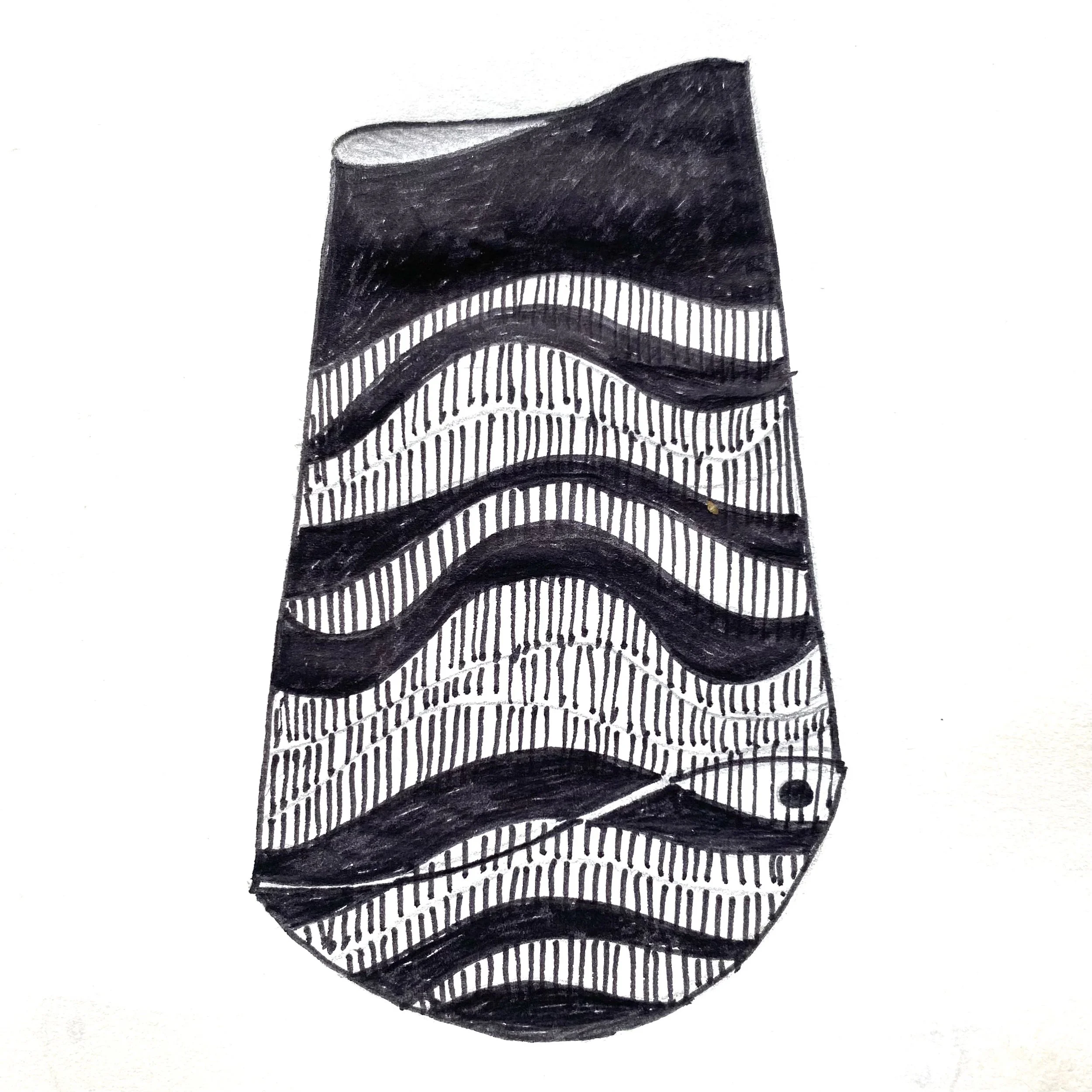
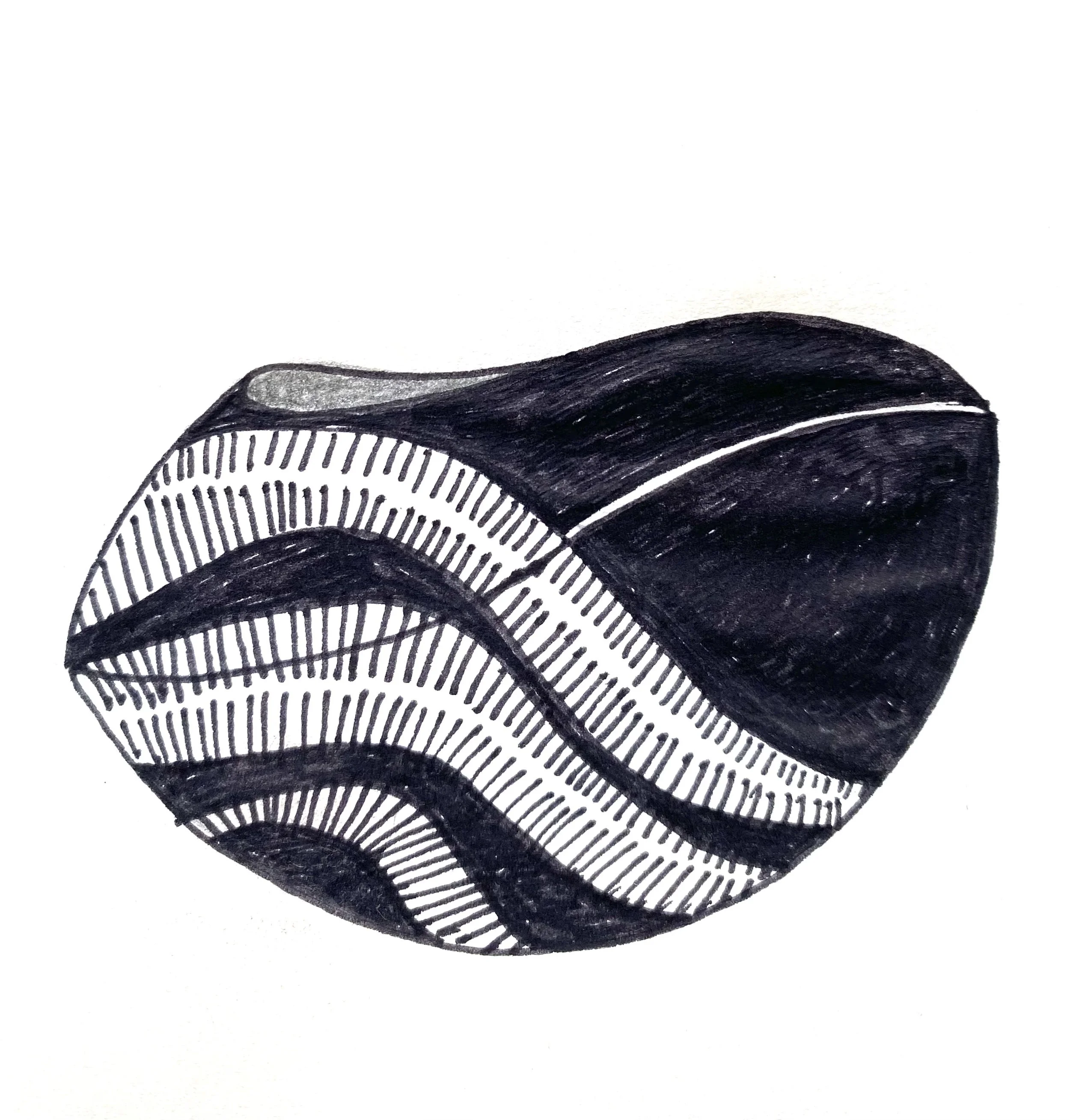
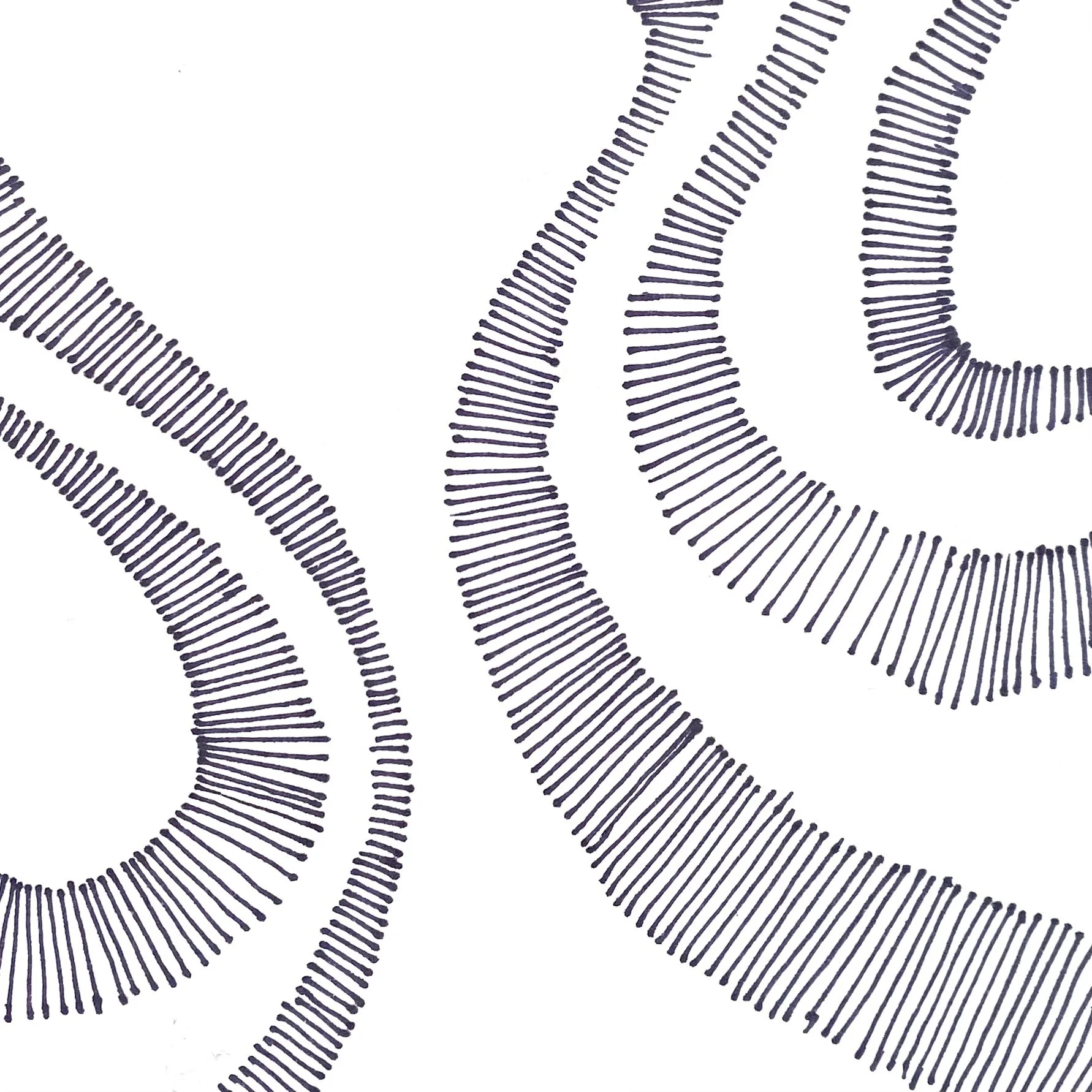
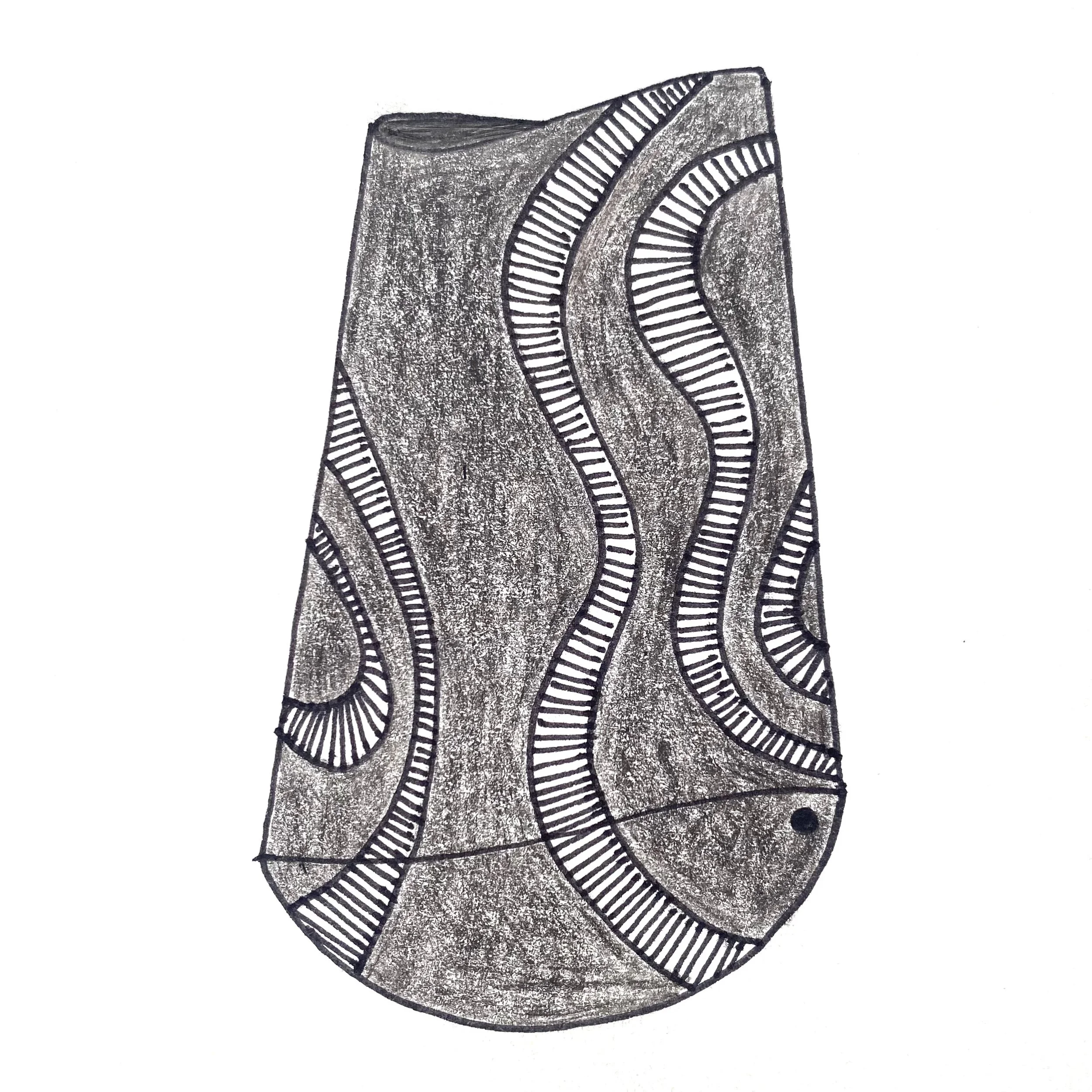
Returning to my sketchbook this week, I began developing a series of marks inspired by those that appeared on the surface of several vessels after their final firing. What interests me is that these marks are no longer functioning simply as decoration or texture. Through slight shifts in direction and repetition across the surface, they begin to create movement, rhythm and flow. Increasingly, I am seeing them as a visual language connected to landscape — one capable of carrying memory and embodying an emotional response to place.
As Ceramic Wales approaches, I find myself reflecting on the balance between making and refining. Over recent months I have focused on producing enough work to explore ideas, forms and processes. Looking ahead to the final degree show, however, I am becoming increasingly aware that the next stage may require something different: less exploration, perhaps and more resolution. The challenge now is not simply to make more work, but to identify the strongest ideas and develop them with greater clarity and confidence.
There is still a long way to go before September, but I feel as though the work is beginning to reveal what it wants to become. My task now is to listen carefully enough to follow it.
w/c 8 June 2026
Stepping Into the Wider World
Showing your work in public can be a daunting experience, particularly when you are still working towards a major exhibition in only a few months’ time and the work you are presenting — as I have said before — still doesn’t feel quite where you want it to be. The weeks leading up to Ceramic Wales felt somewhat overwhelming, with the pressure of making, firing and preparing all happening at once. Yet, once we arrived on Friday for the set-up, much of the nervousness quietly dissipated. In its place, my old Fosse House Gallery instincts took over — I had a job to do and needed to get on with it. That part, at least, felt reassuringly familiar.
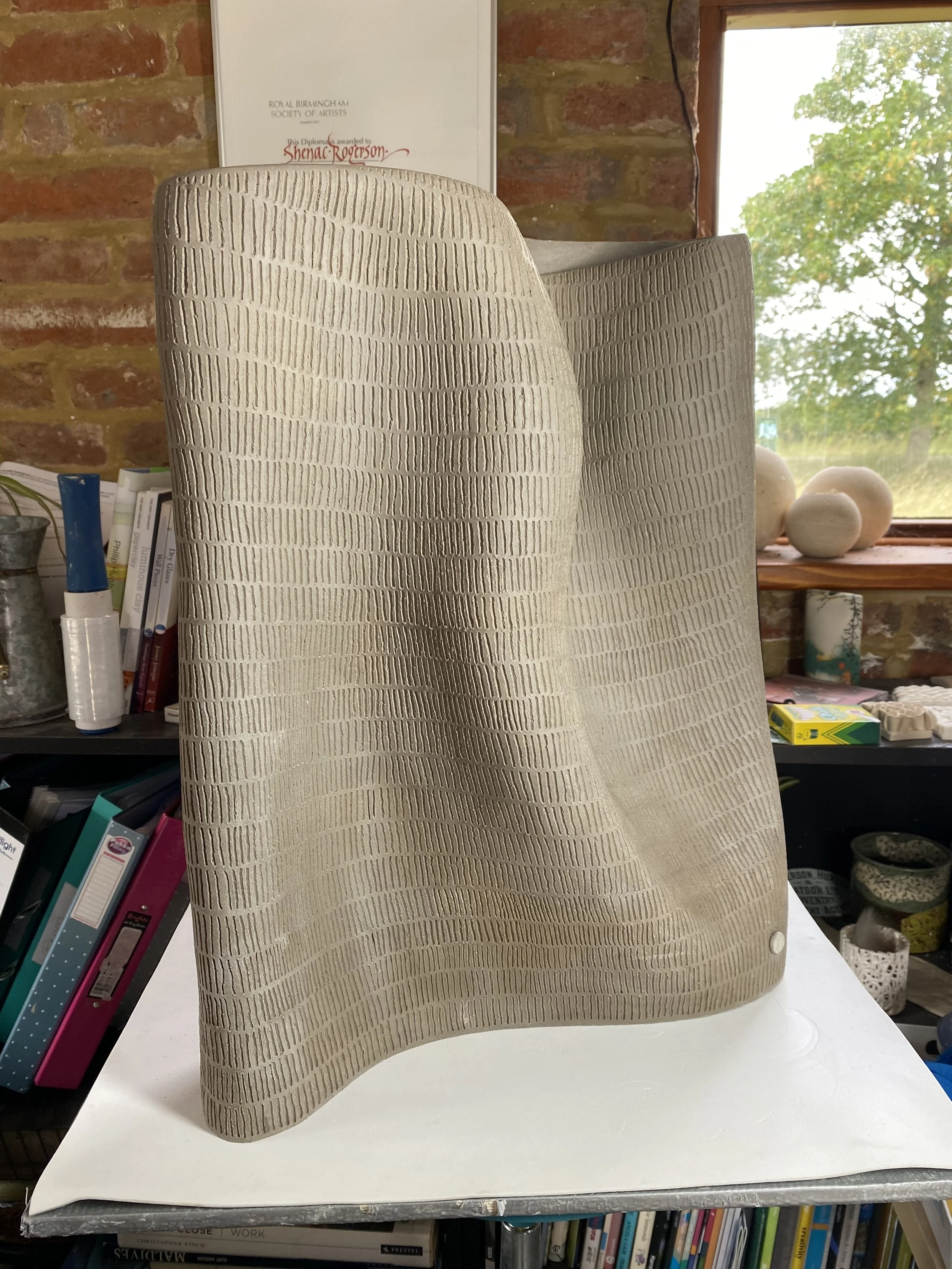
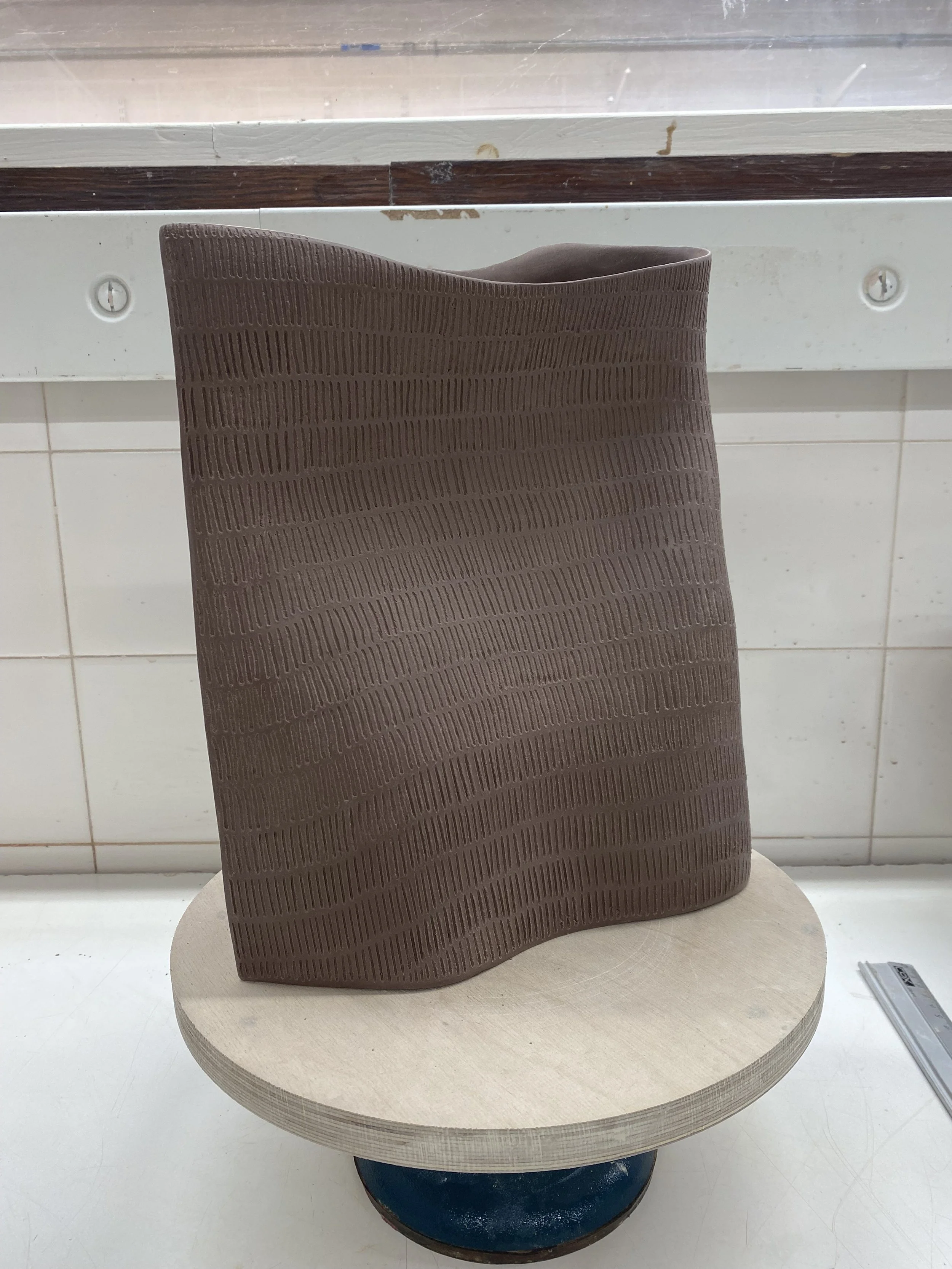
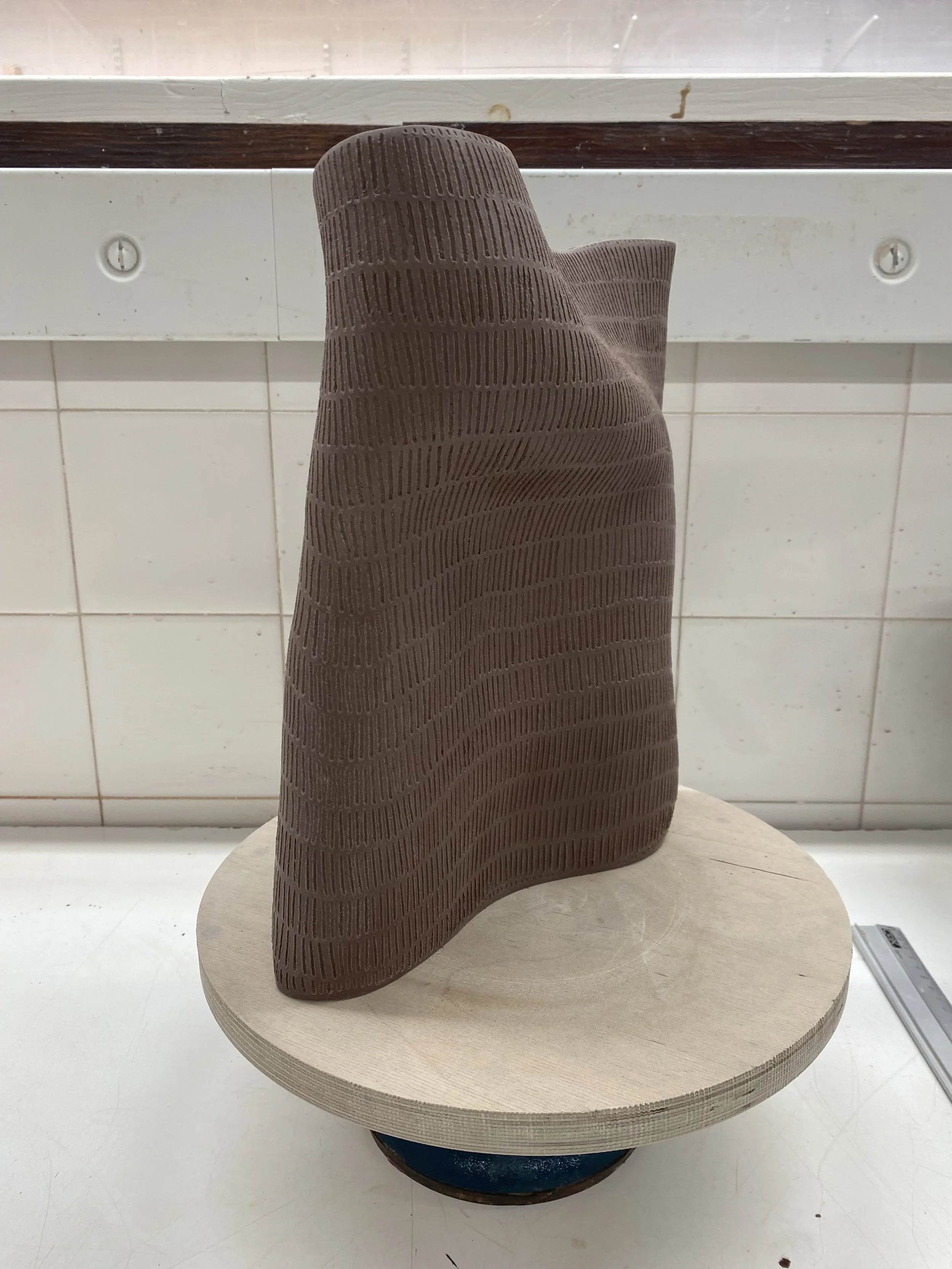
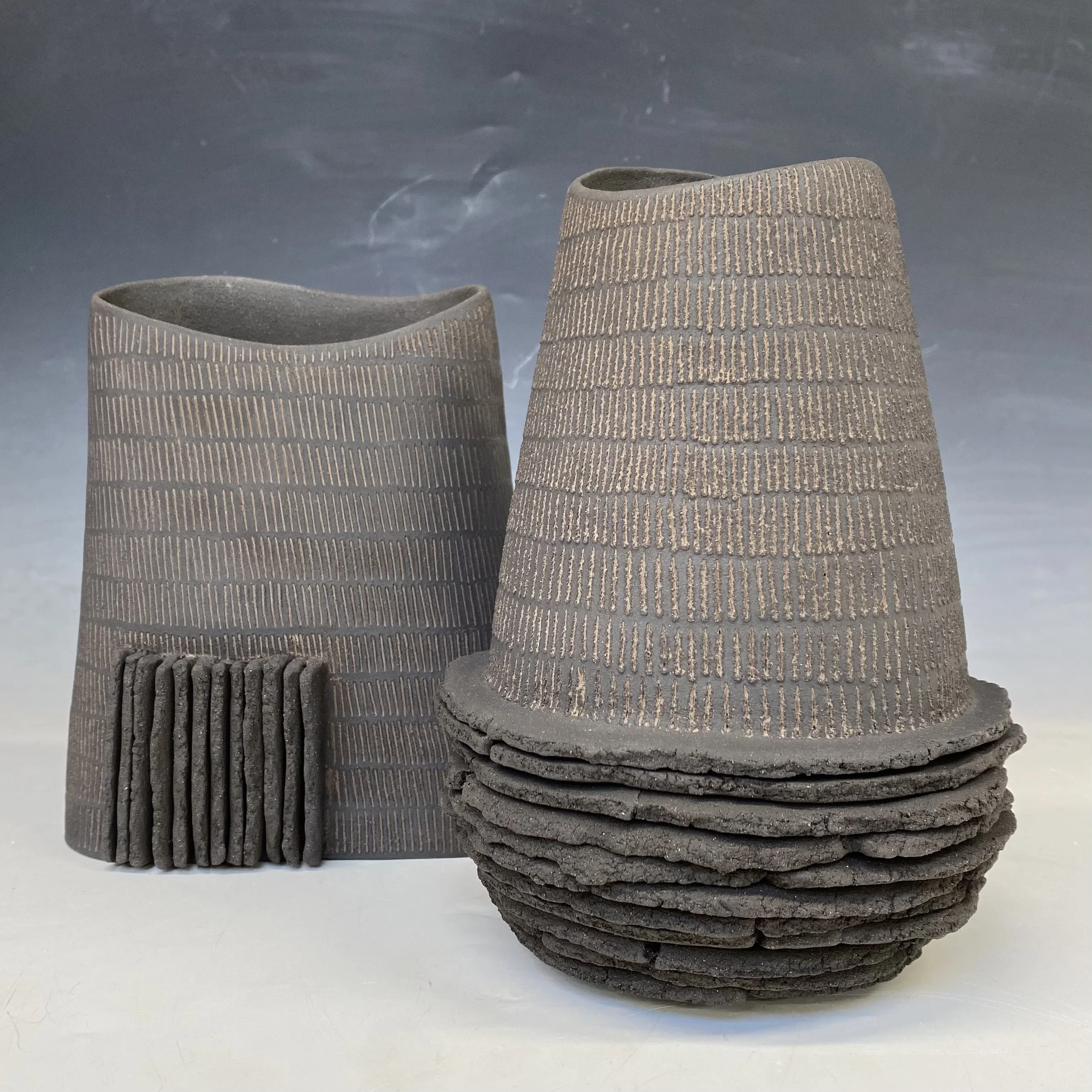
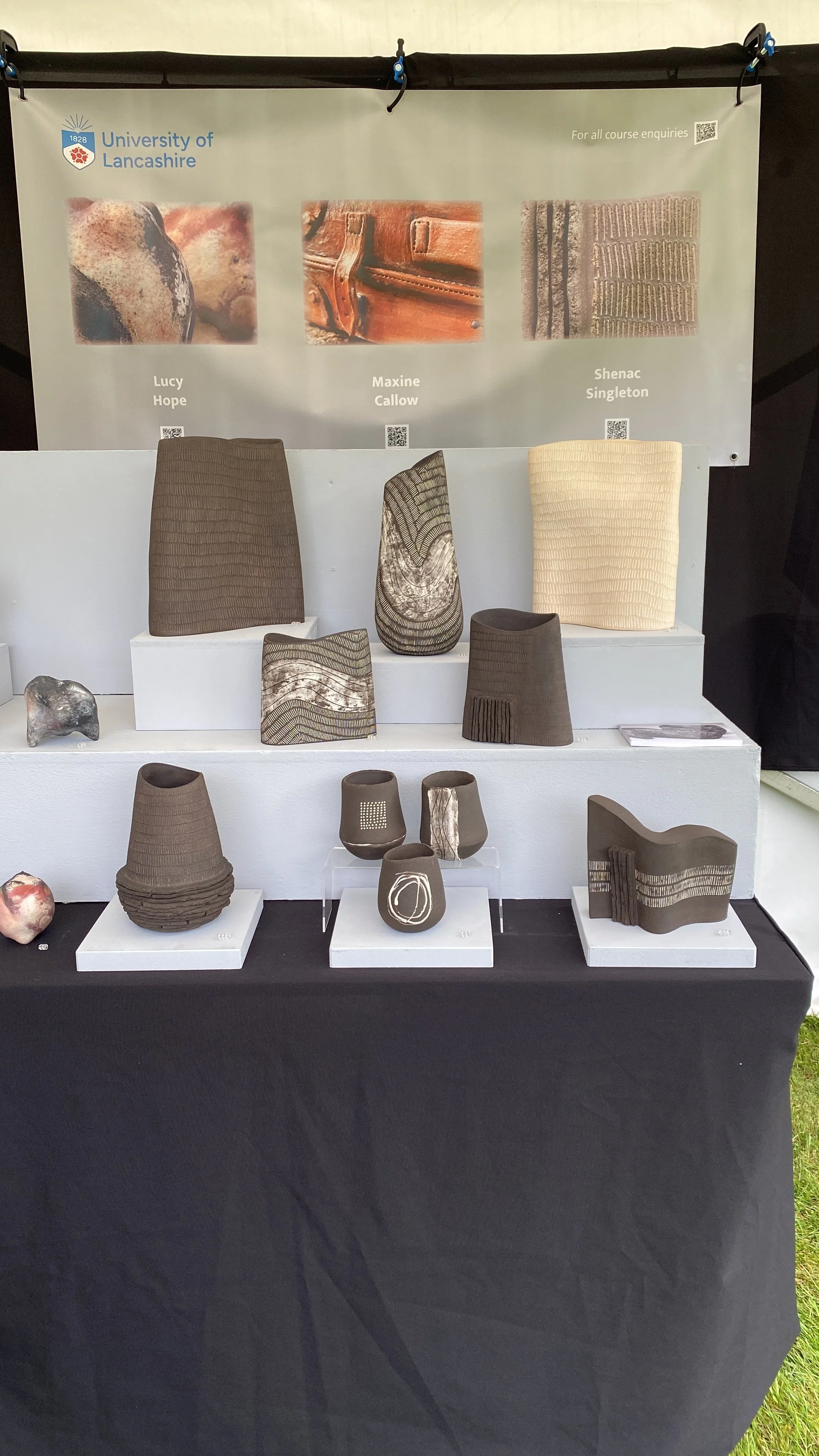
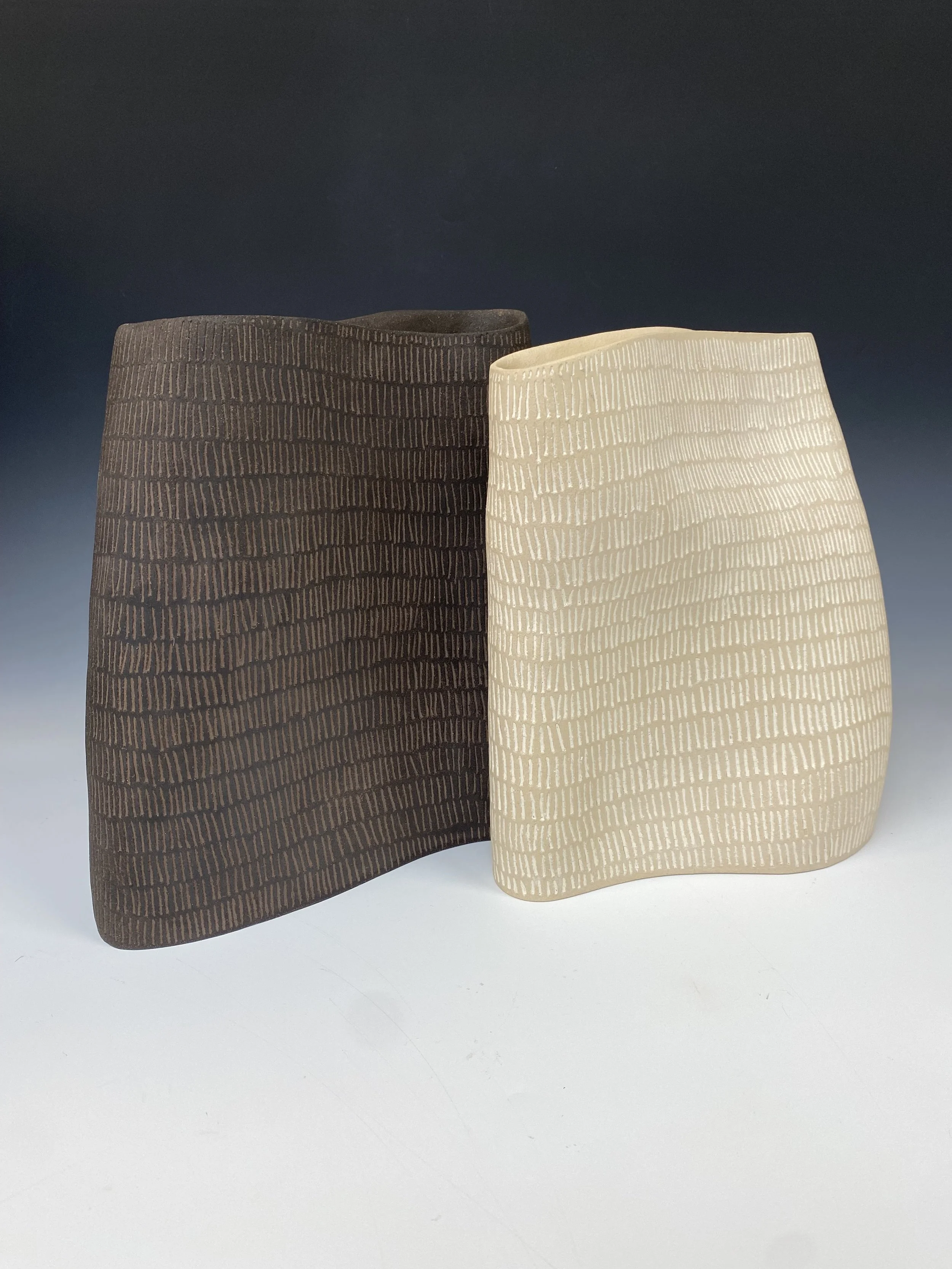
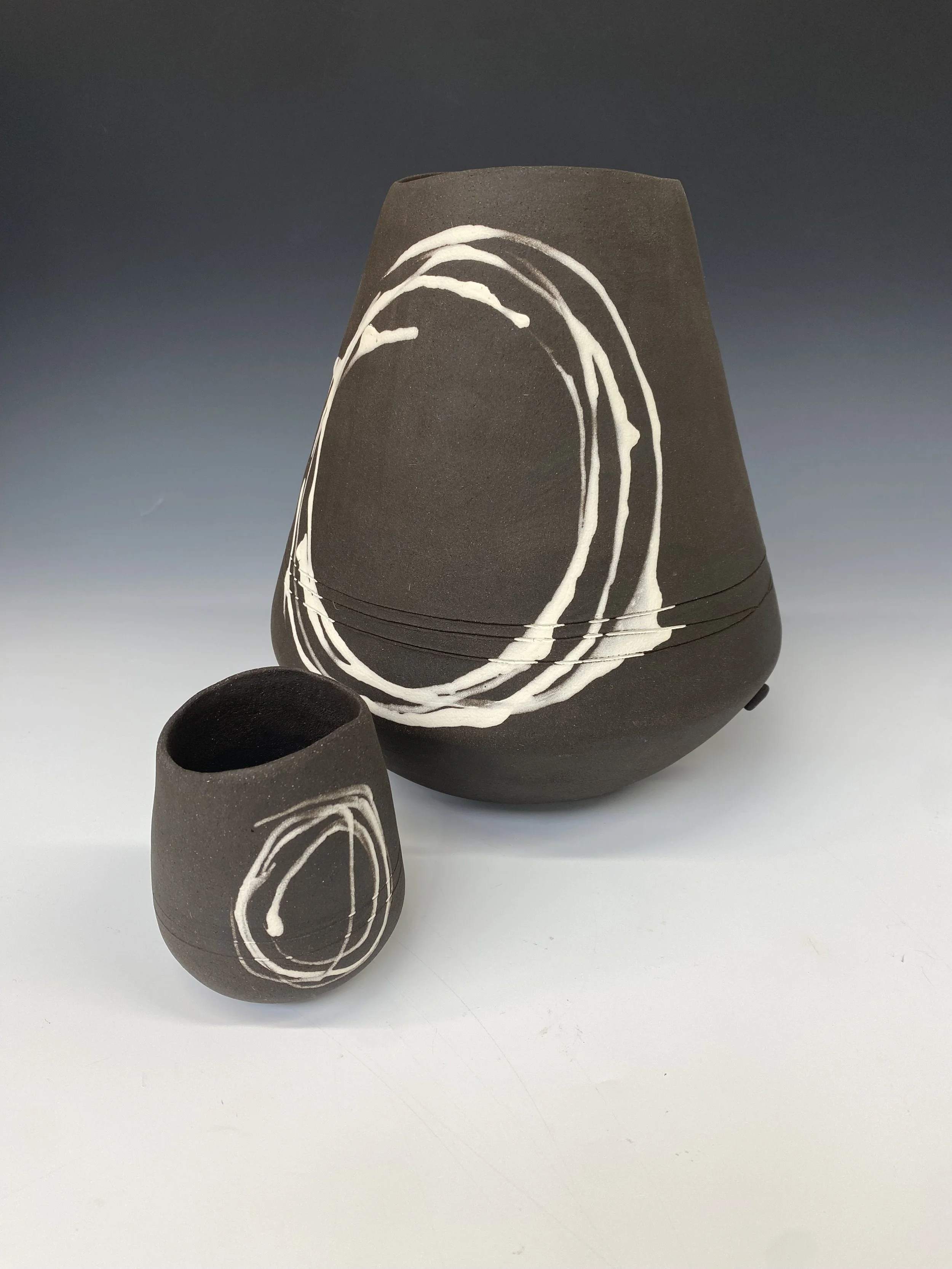
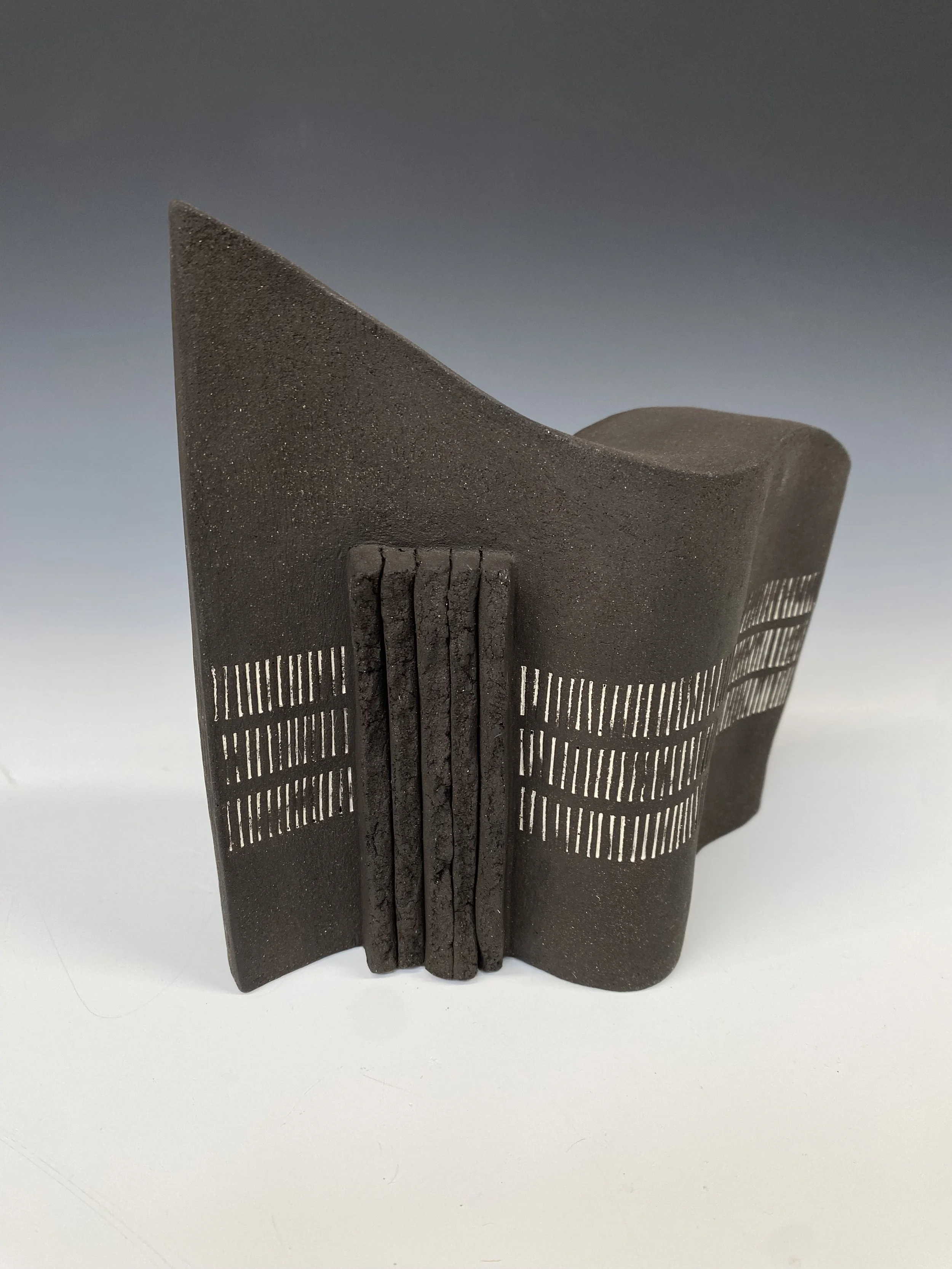
A couple of days before the event, the two new contour vessels emerged from their final firing. Quietly, I am very pleased with the results. They feel like an important step forward within my Memories of Place methodology — the contour line of Sawbridge translated into vessel forms that carry rhythm, flow and memory. These are the first two vessels in a planned group of five, and I was keen to use the experience of showing at my first ceramic fair as an opportunity to gather feedback and observe people’s response to the work. Unsurprisingly, my immediate instinct is already to remake them on a much larger scale, allowing them to occupy space with greater presence and confidence.
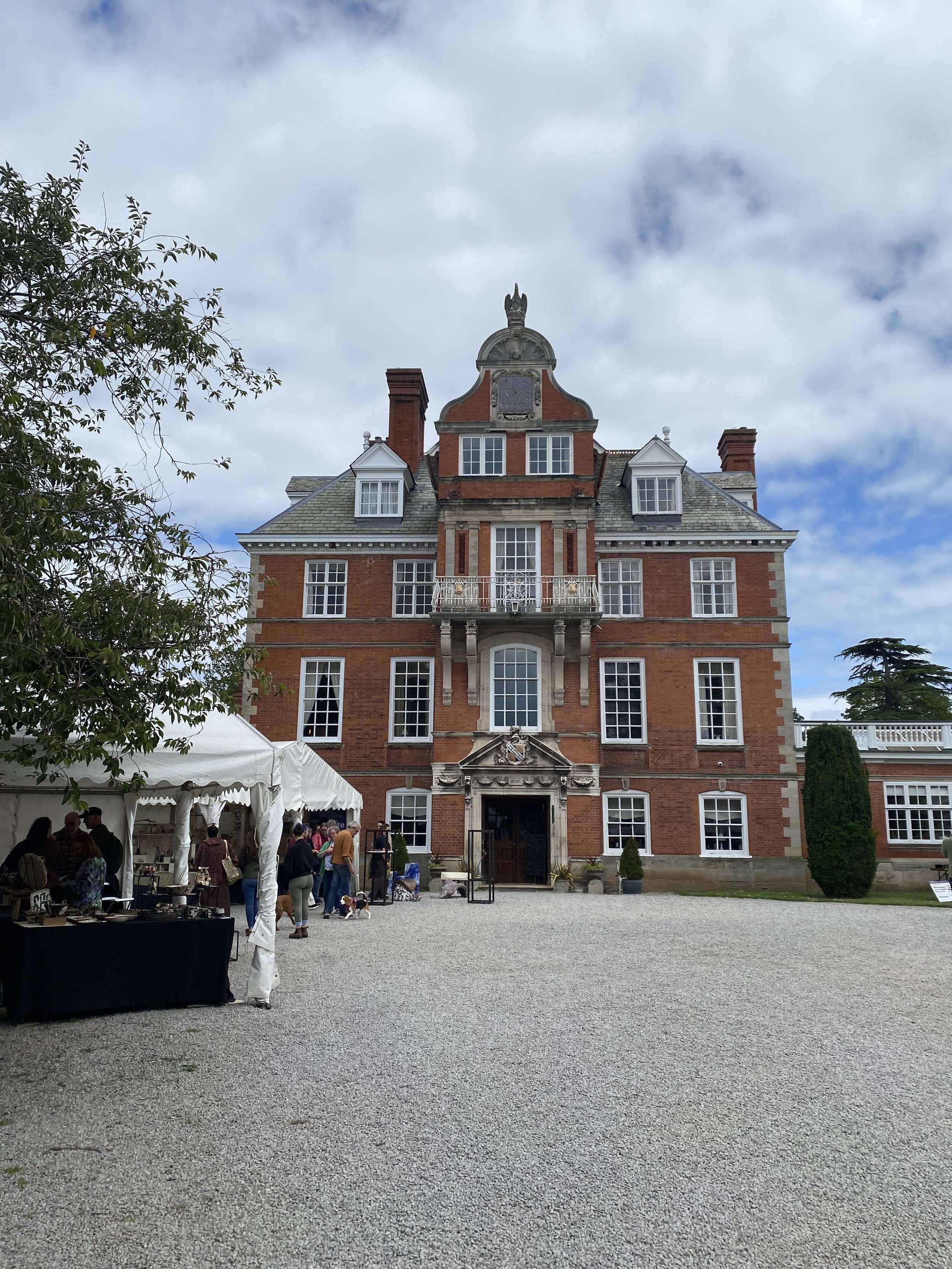
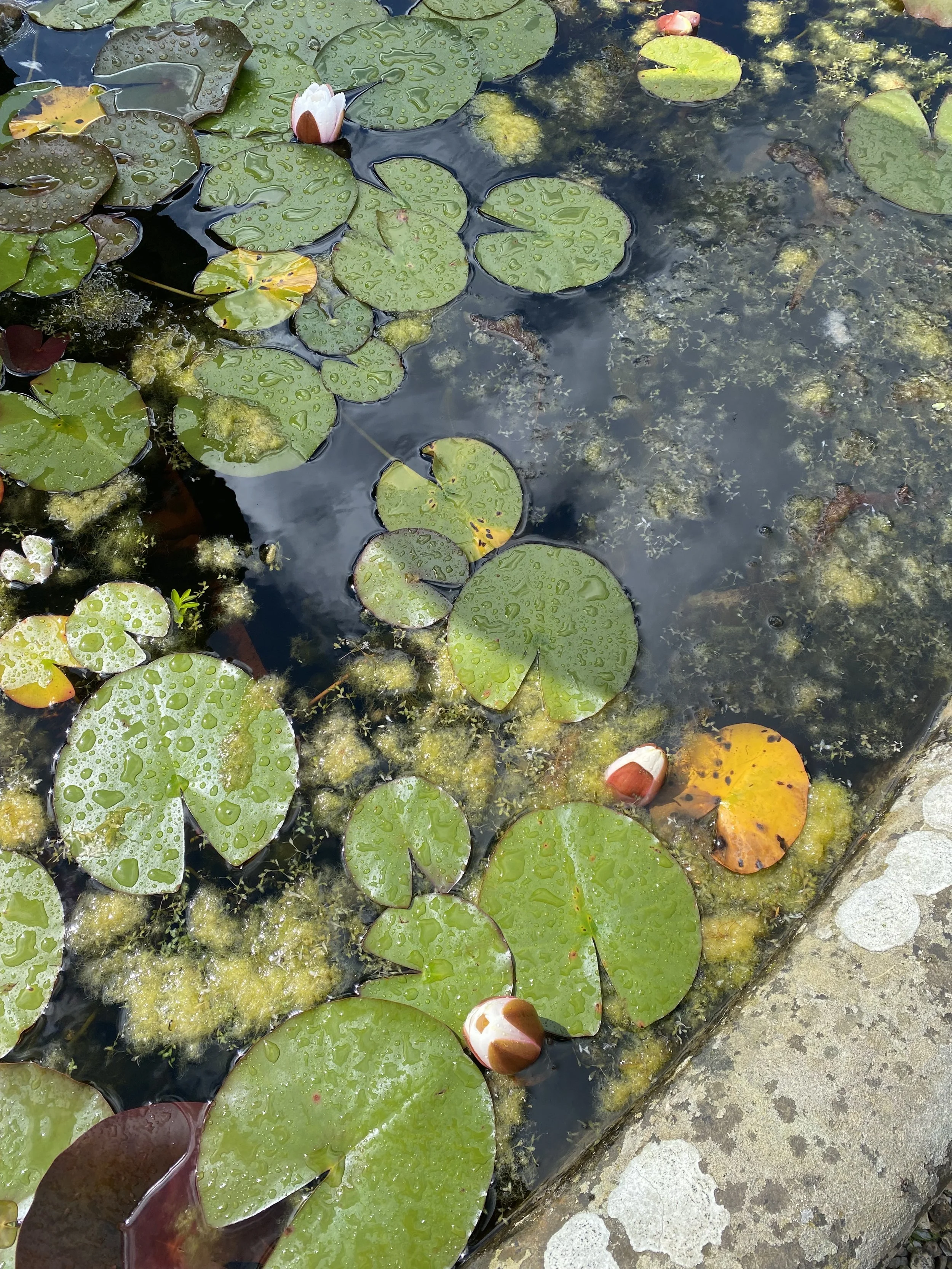
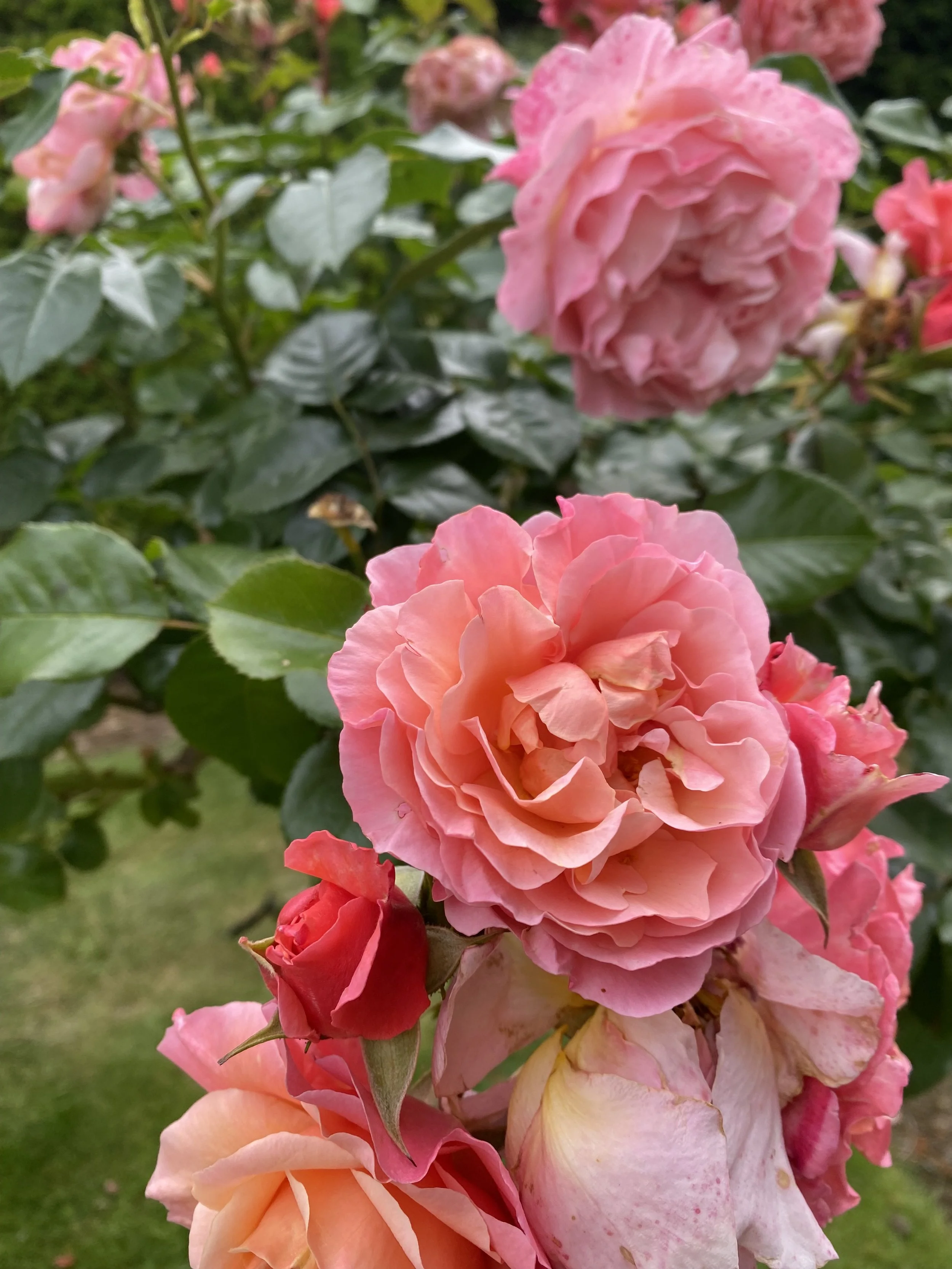
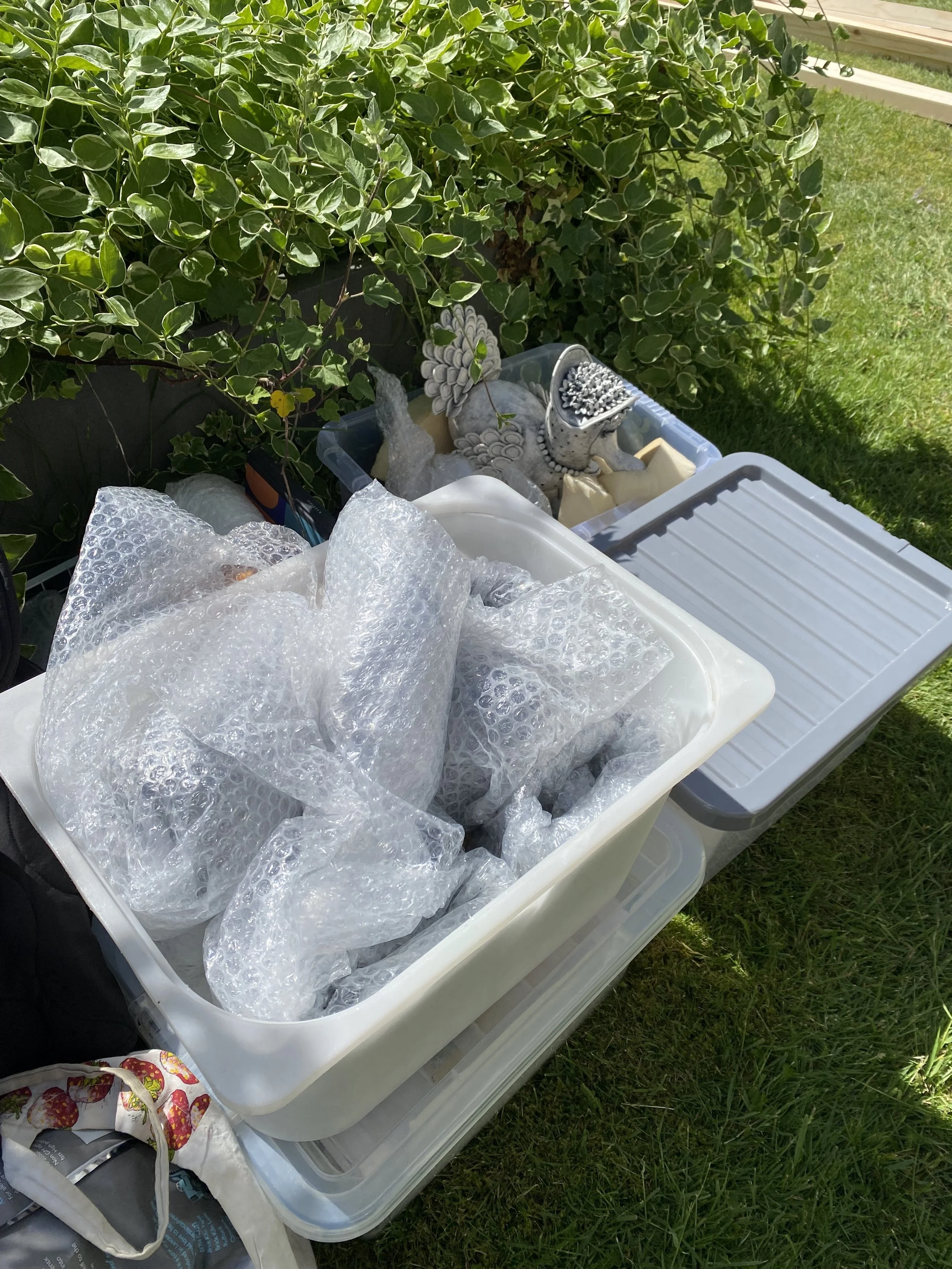
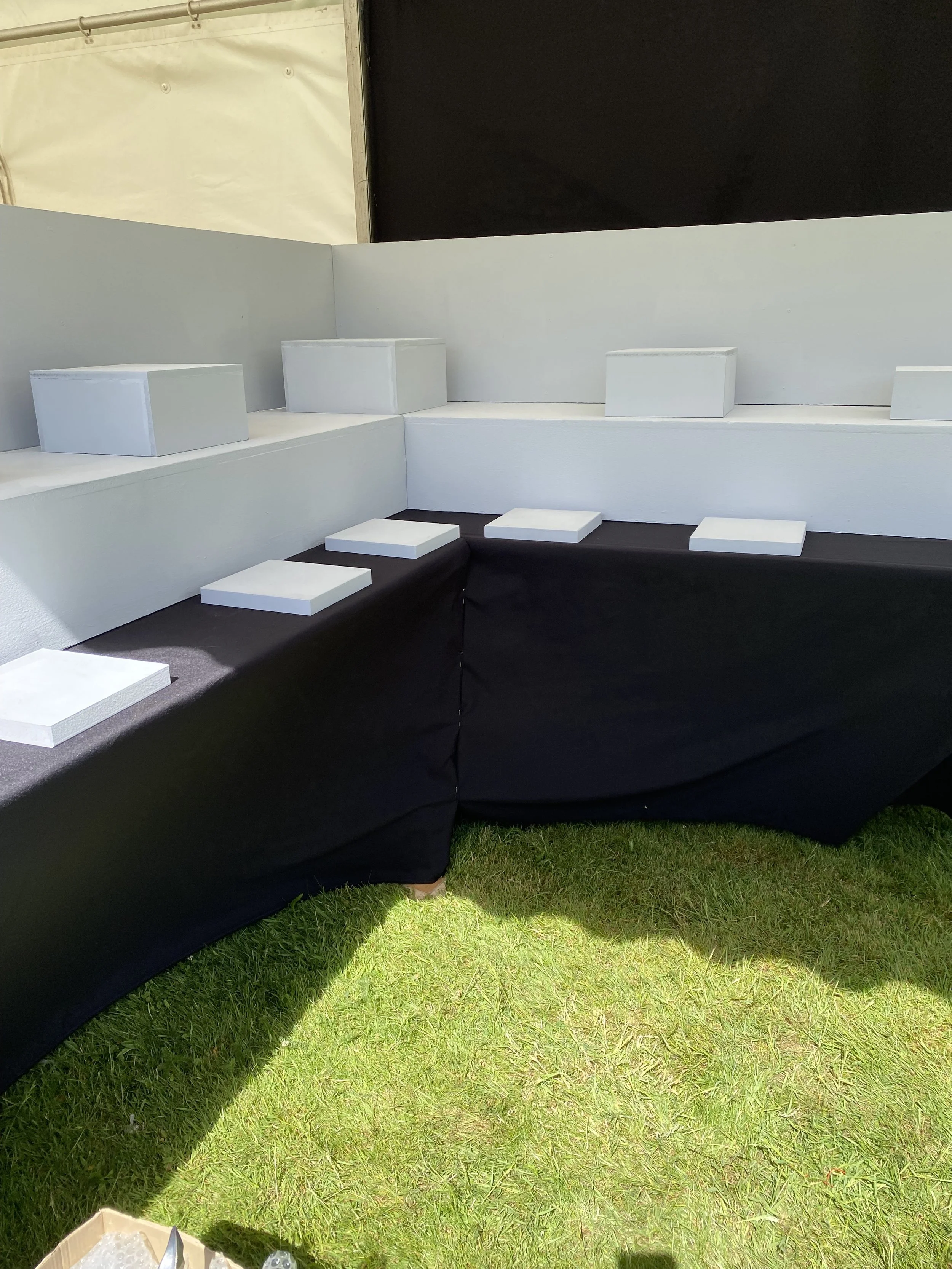
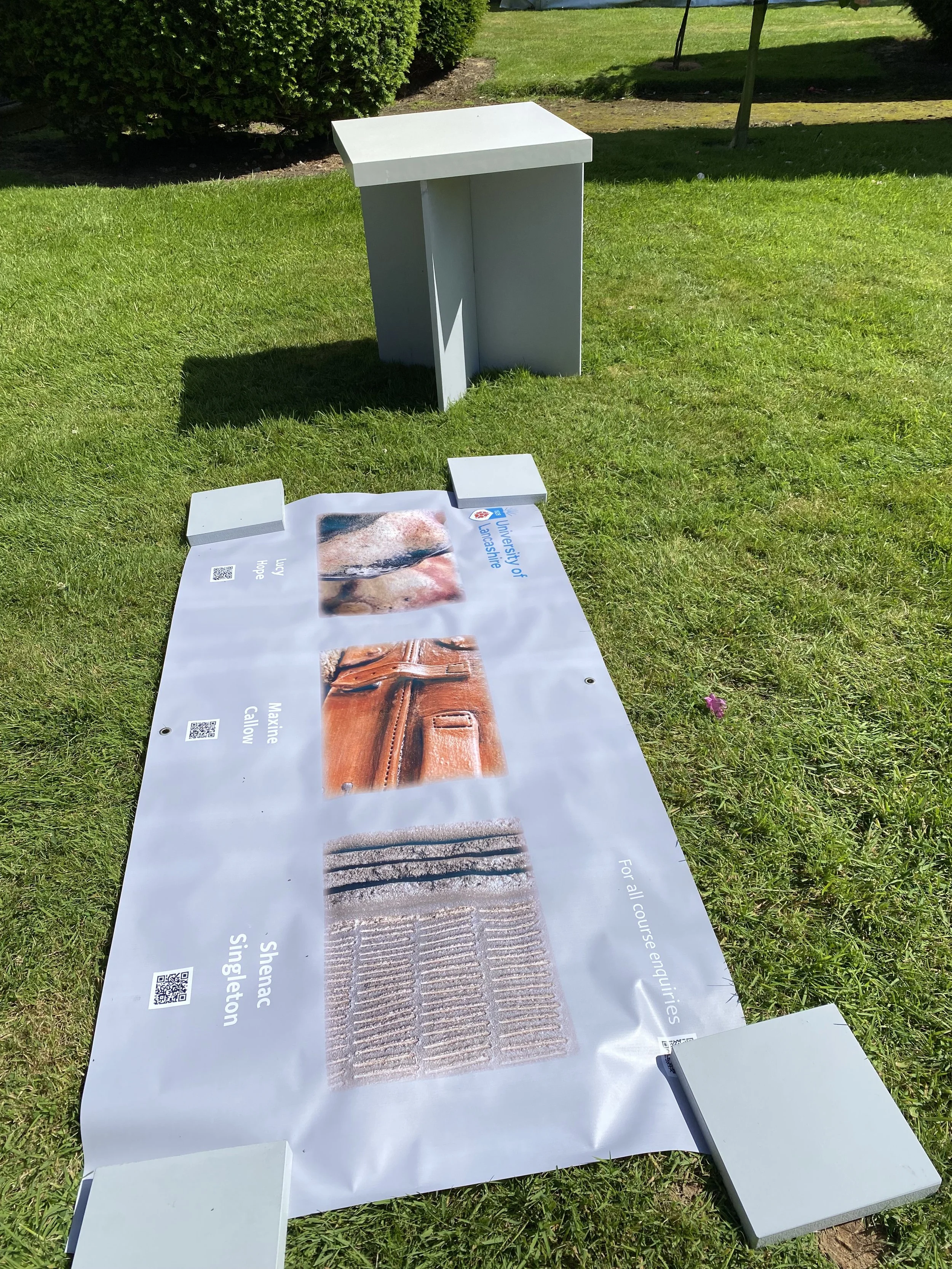
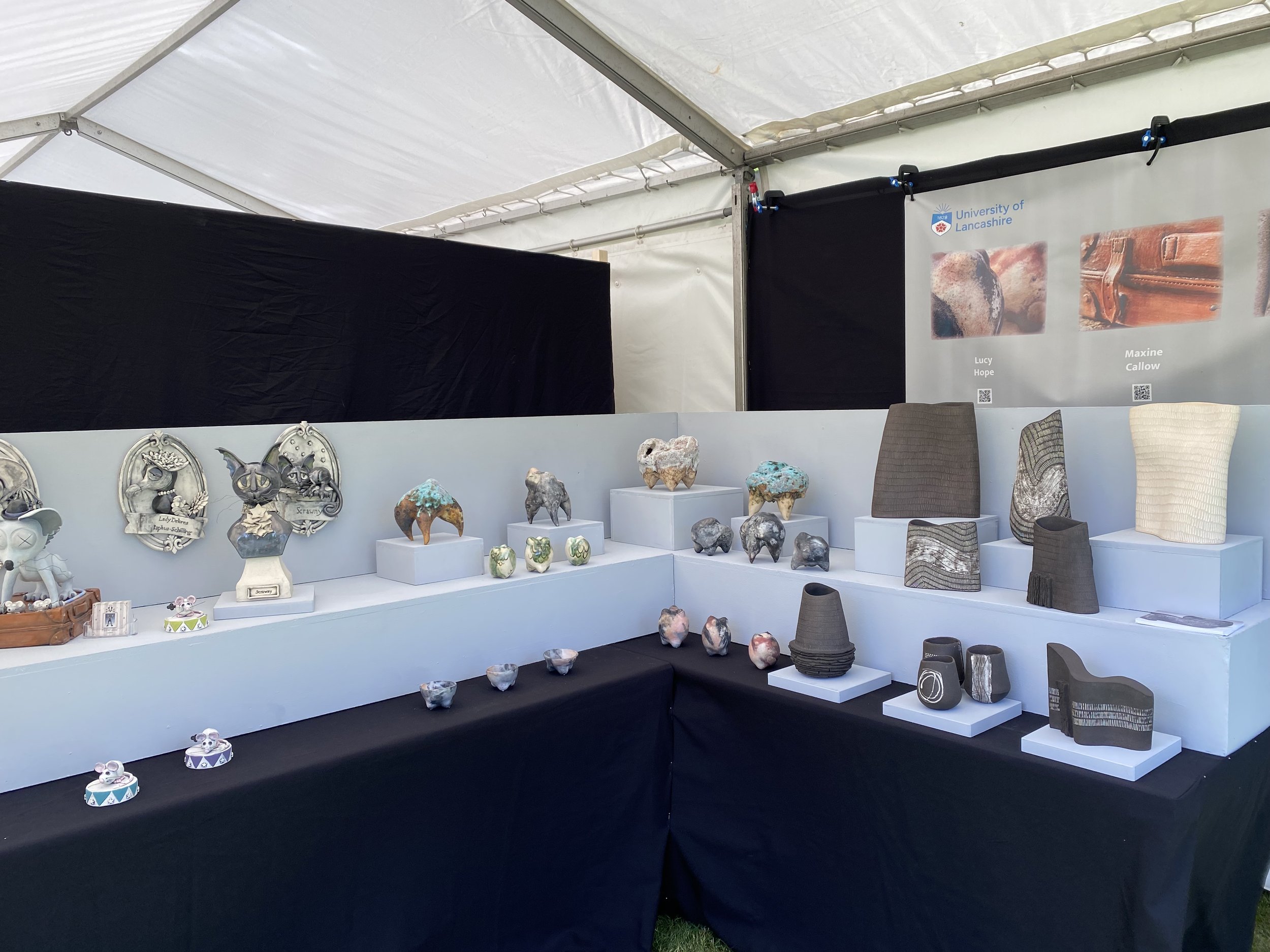
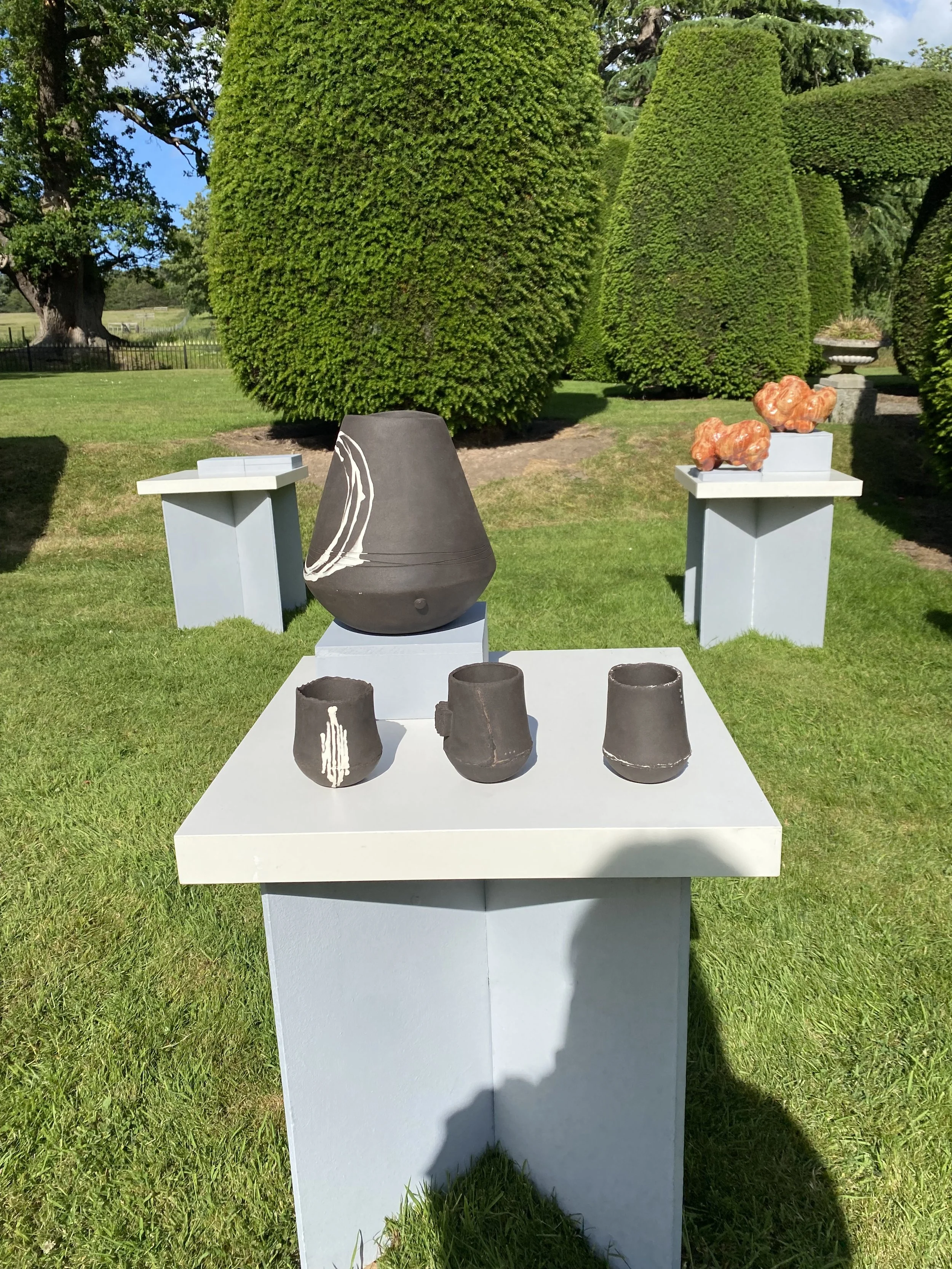
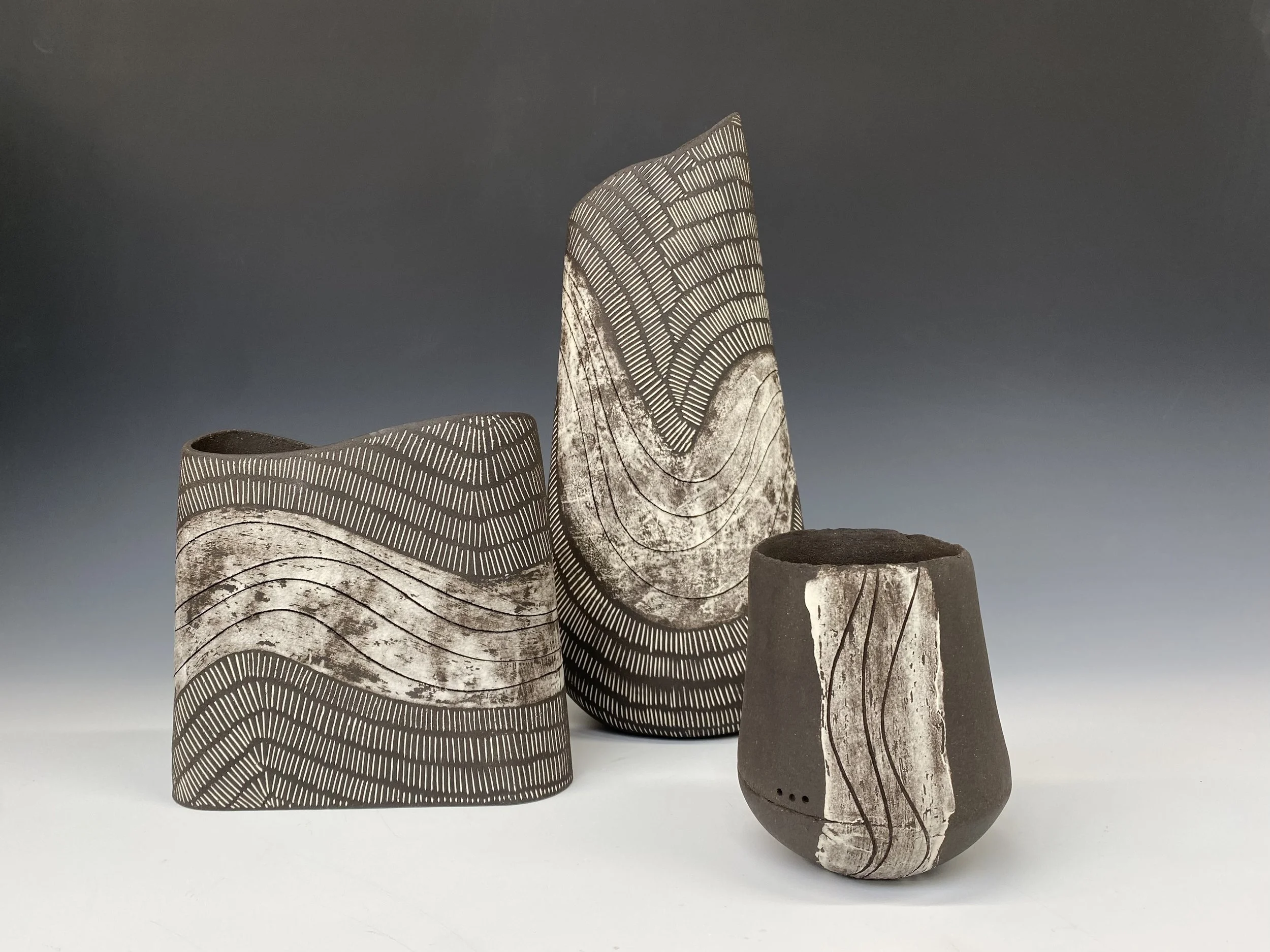
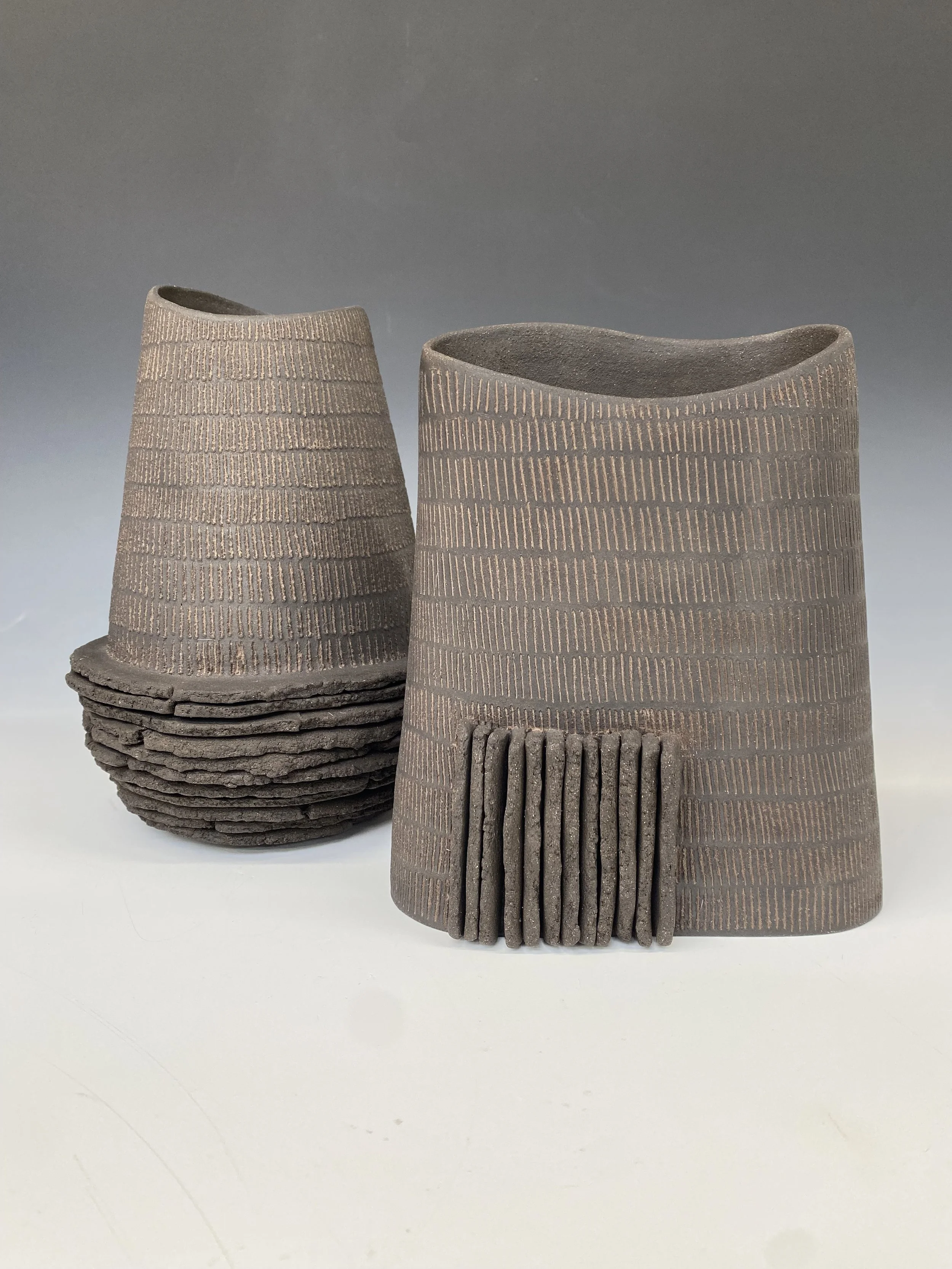
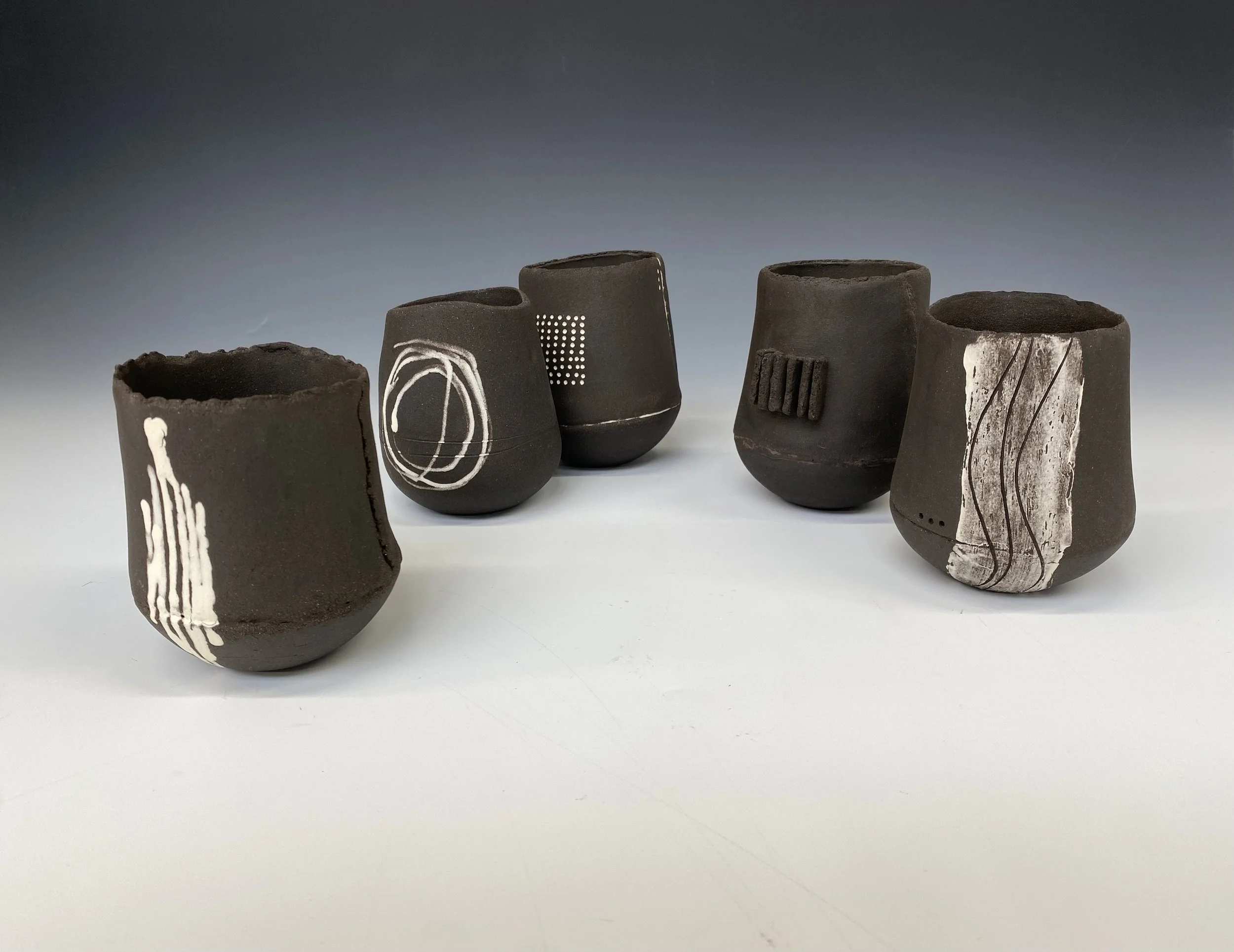
The weather over the weekend was beautiful — dry and far sunnier than expected, though at times rather windy, which is never ideal when surrounded by ceramics. The setting of Bodrhyddan Hall was simply stunning. Its beautiful gardens and gentle atmosphere seemed to imbue the whole event with a sense of calm. Once the practicalities of erecting tables, backboards and plinths were complete, came the more challenging task of deciding which pieces to show and how best to present them visually — with a little valued help from our Course Leader, Rob Parr.
The weekend brought a steady flow of visitors and, with them, some wonderful conversations, generous feedback and encouraging responses to the work. Comments from professionals within the ceramic world were particularly affirming, as was the warmth and enthusiasm shown by many visitors. One message I received afterwards simply said: “Bowled over by your contour pieces. Best in show.” High praise indeed, and something I am still quietly absorbing.
Watching the new contour vessels receive such a strong response gave me an unexpected opportunity to reflect on my recent work and, in particular, on Where Winter Breathes, the piece I sold last October. I began to realise that these new vessels share many of the same qualities — the organic flow of the form, the rhythm held within the surface mark-making, and the methodology behind them, where the contour of Sawbridge informs but does not dictate the beginning of the form. It felt like something of a full-circle moment. After a year of exploration, experimentation and at times considerable uncertainty, I seem to have returned to a visual language that was quietly present much earlier in my journey. The difference now is that I understand far more clearly why this work resonates so strongly with both myself and the viewer.
The combination of ceramics, plants and food created a wonderfully welcoming feel to the event, with many talented ceramic artists showing and selling their work. It was a hugely enjoyable weekend, and one I suspect all involved will remember fondly.
Going forward, my intention has never really been to focus on direct selling through ceramic fairs, my ambitions lying more with exhibitions and galleries. However, this weekend gave me something unexpected — the quiet realisation that my work did not feel out of place here. I could genuinely imagine, at some point in the future, returning to Ceramic Wales with a stand of my own amongst these professional makers.
Now that is a thought I hadn’t quite expected to leave with.
w/c 15 June 2026
Thinking Beyond the Making
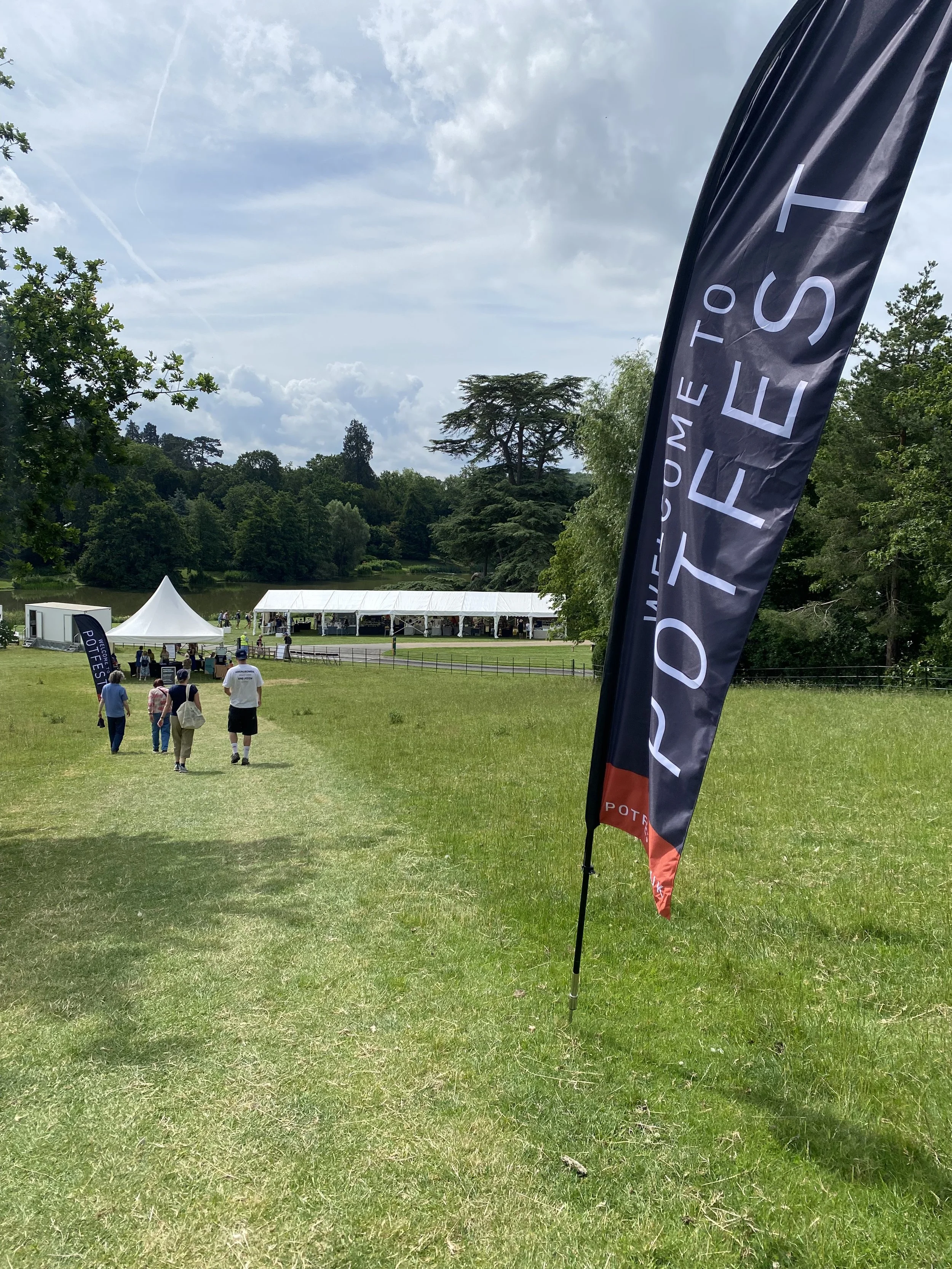
After being at Ceramic Wales the previous weekend, and leaving with the unexpected thought that perhaps I might apply for my own stand next year, I decided to visit Potfest at Compton Verney on Sunday, especially as the venue is only around thirty minutes from home. I have always enjoyed Potfest. It consistently brings together some wonderful ceramic artists and potters, and I always leave feeling inspired.
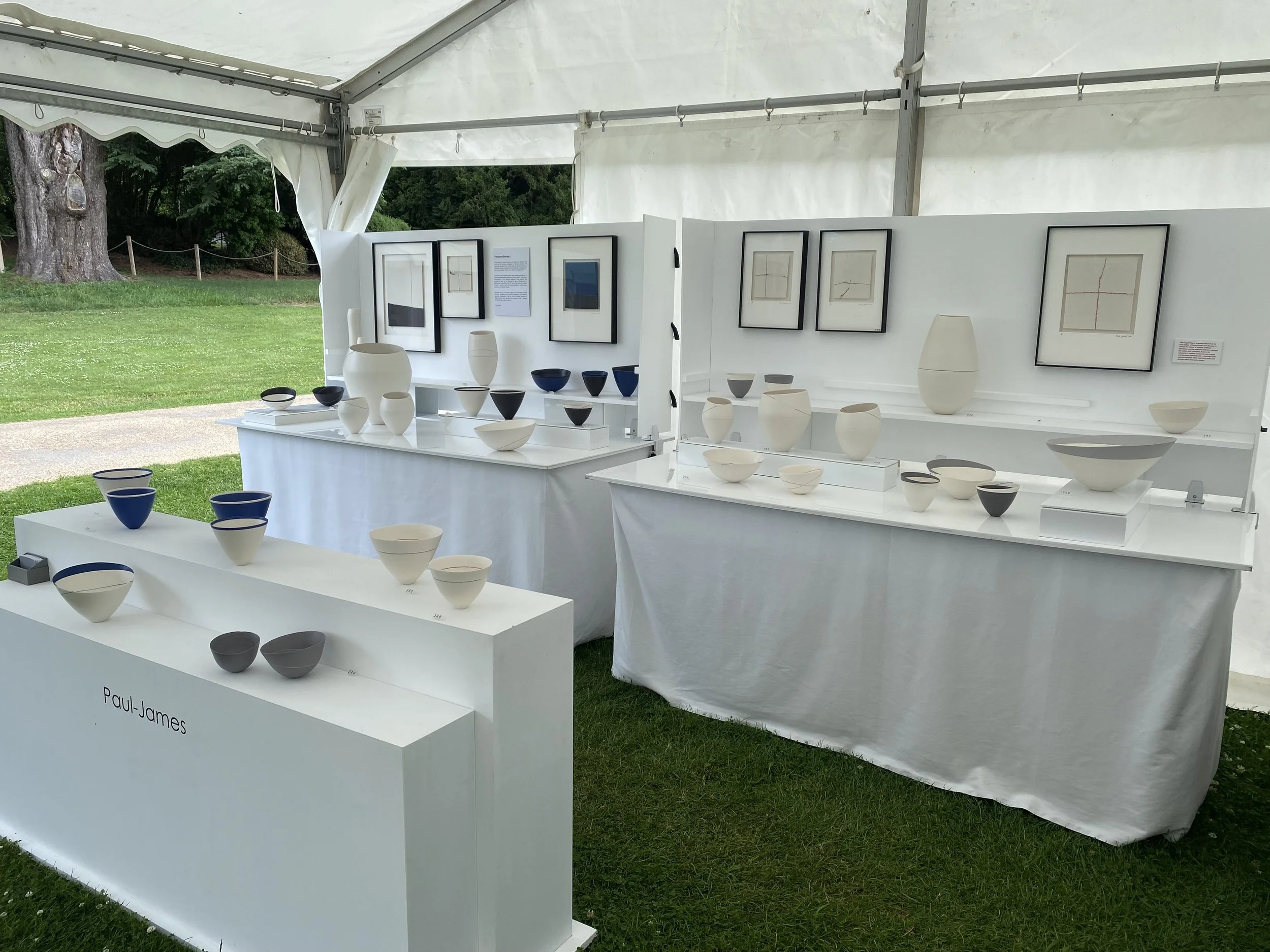
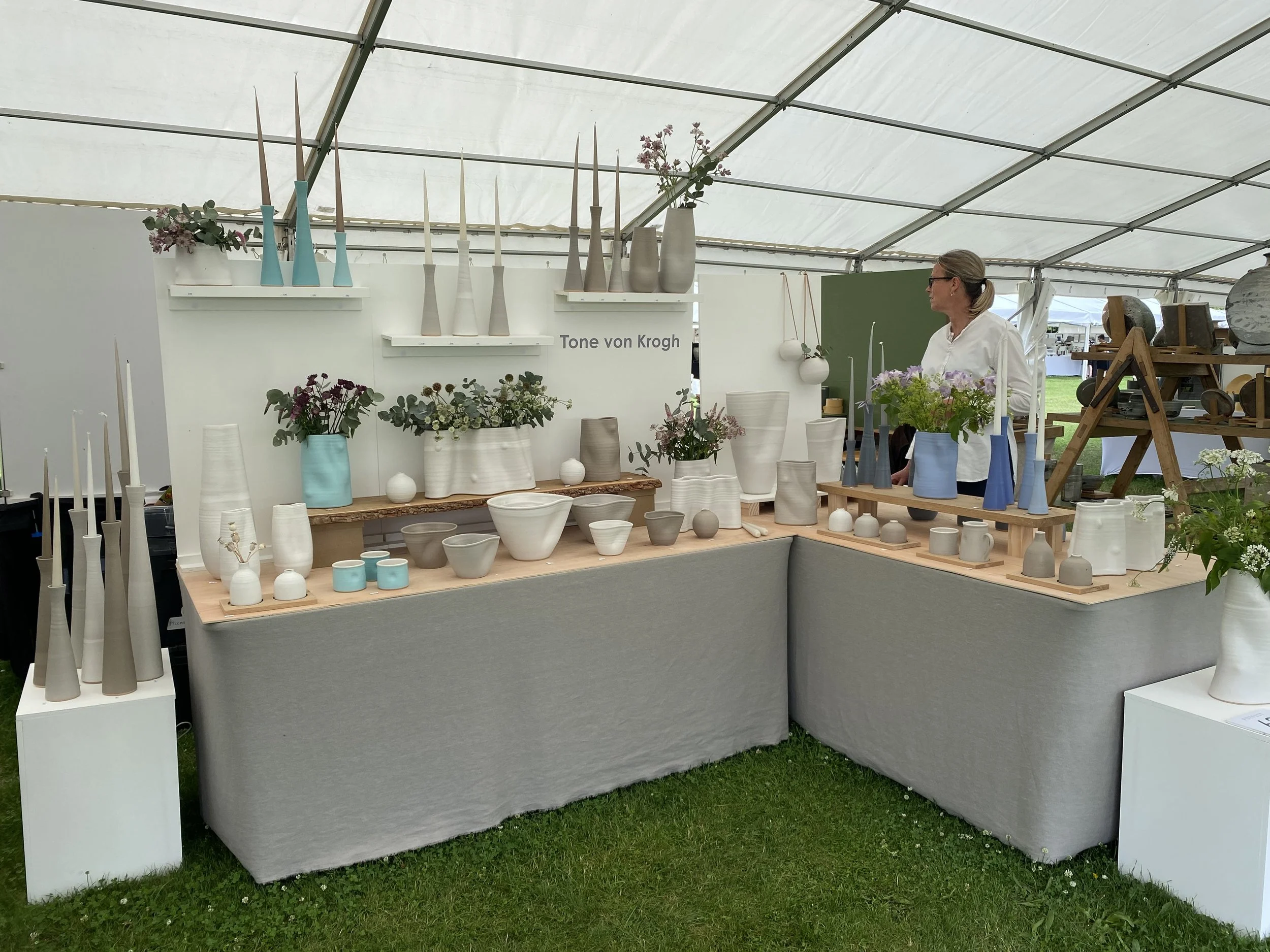
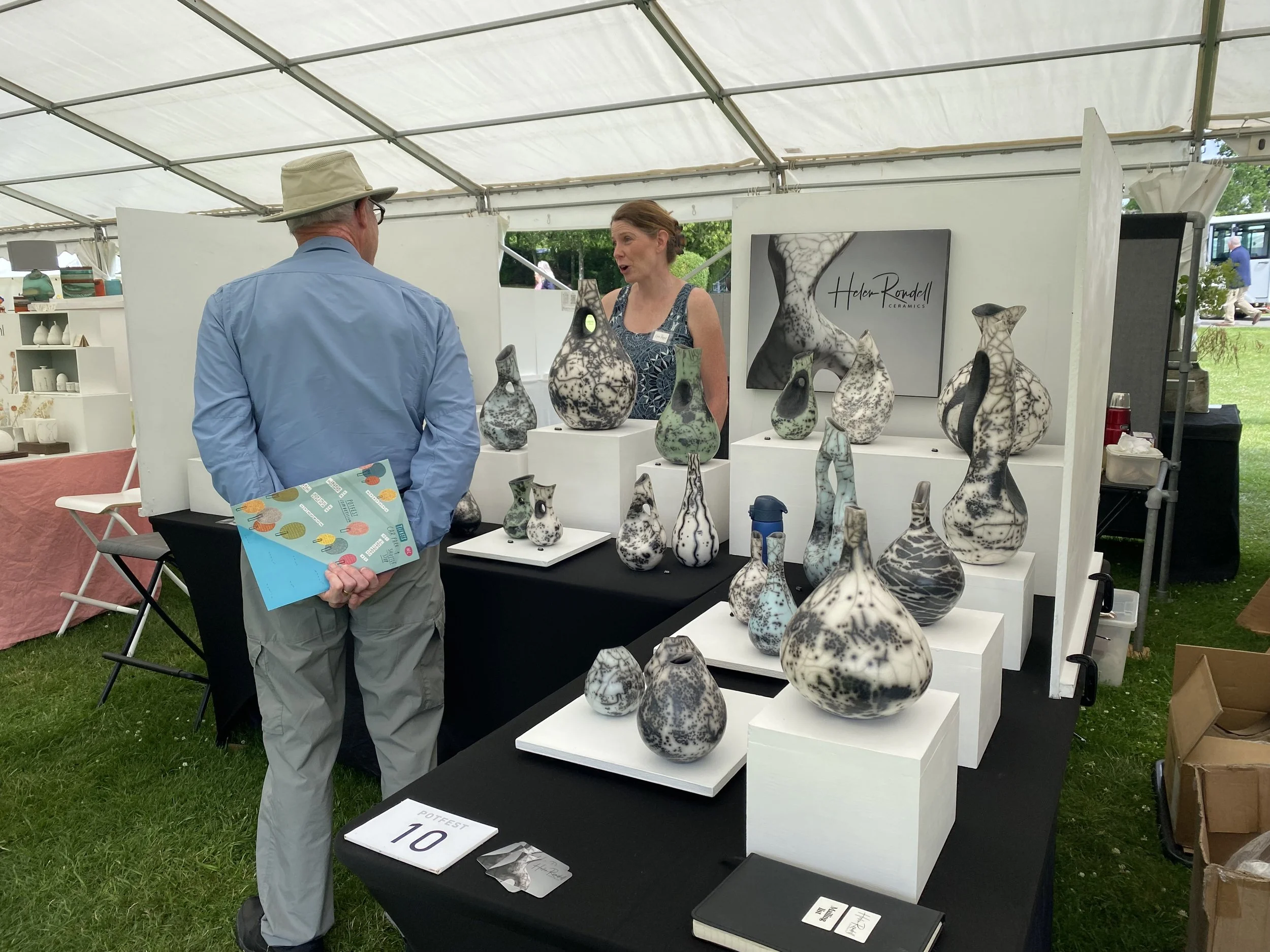
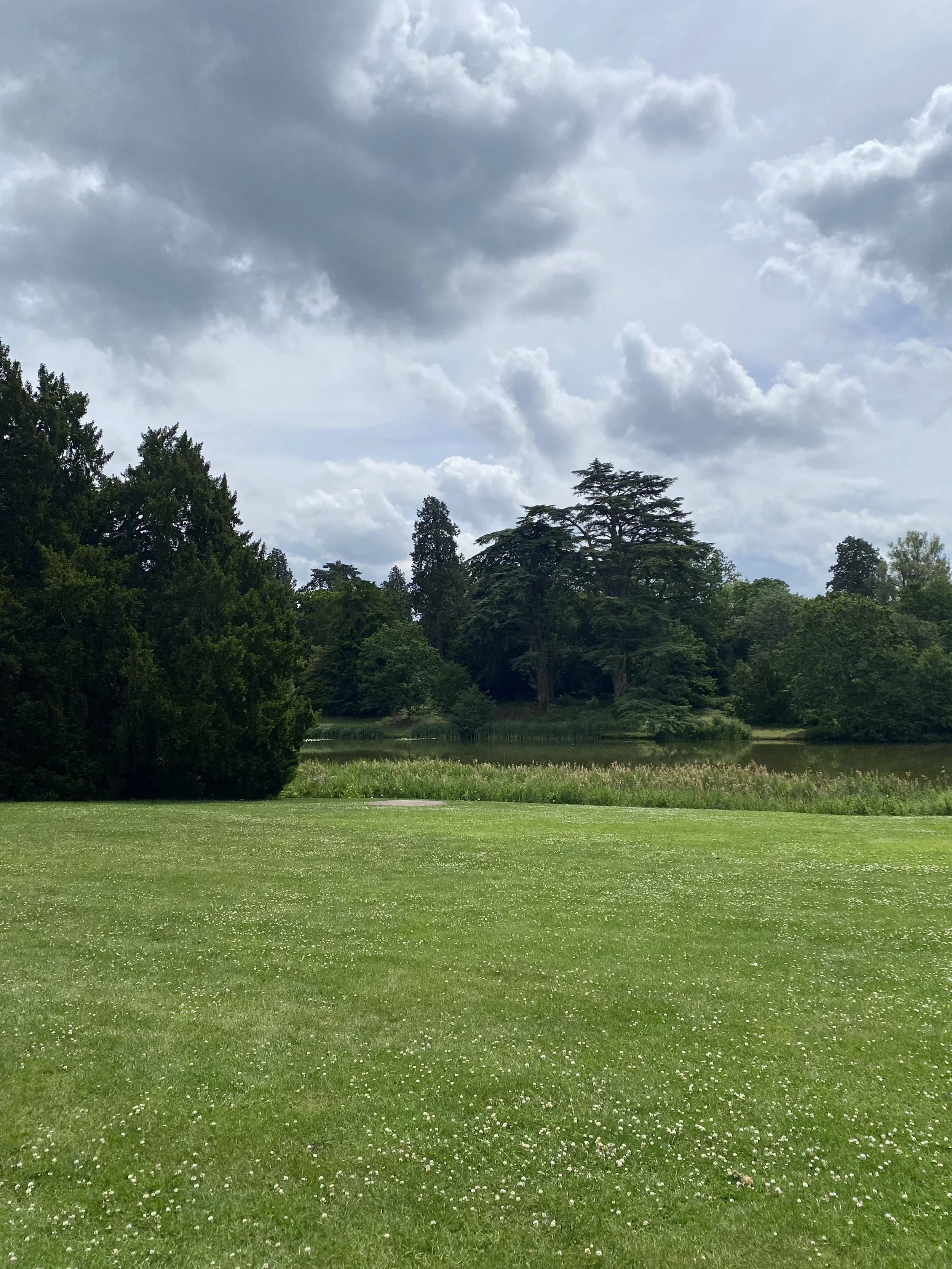
Set within the idyllic Compton Verney grounds designed by Capability Brown and overlooked by the magnificent house built in the mid-1700s, it is a beautiful setting for a ceramics fair. This time, however, I arrived with a very specific purpose. Rather than focusing solely on the ceramics themselves, I wanted to study the stands — how artists displayed their work, how they used the space and ultimately what appealed to me and why.
It very quickly became clear that the stands which stood out most were those that displayed their work with intention and restraint. They used their allocated space almost like a gallery window — carefully curating an overall aesthetic, selling not only ceramics but a brand, a lifestyle and an aspiration. These stands were not packed full of pots. Instead, the work was thoughtfully arranged to showcase the range and character of each maker’s practice.
The temptation to fill every inch of a table you have paid dearly for — after spending months making enough work to justify the cost — must be enormous. Yet the real skill, I think, lies in understanding that your six-foot table is not simply a table, but a small curated slice of gallery space. Owning and running Fosse House Gallery for eight years hopefully gave me some understanding of how to curate and present work within a limited space. However, I also realise that curating your own work is infinitely more difficult. Distance and objectivity become much harder to find. It has certainly given me much to think about.
Here in the UK we are experiencing another heatwave, and my goodness it is hot. Despite the soaring temperatures, I have spent time reflecting on the work I want to show in September and have come to the realisation that it is now time to stop overthinking and simply get my head down and make the work.
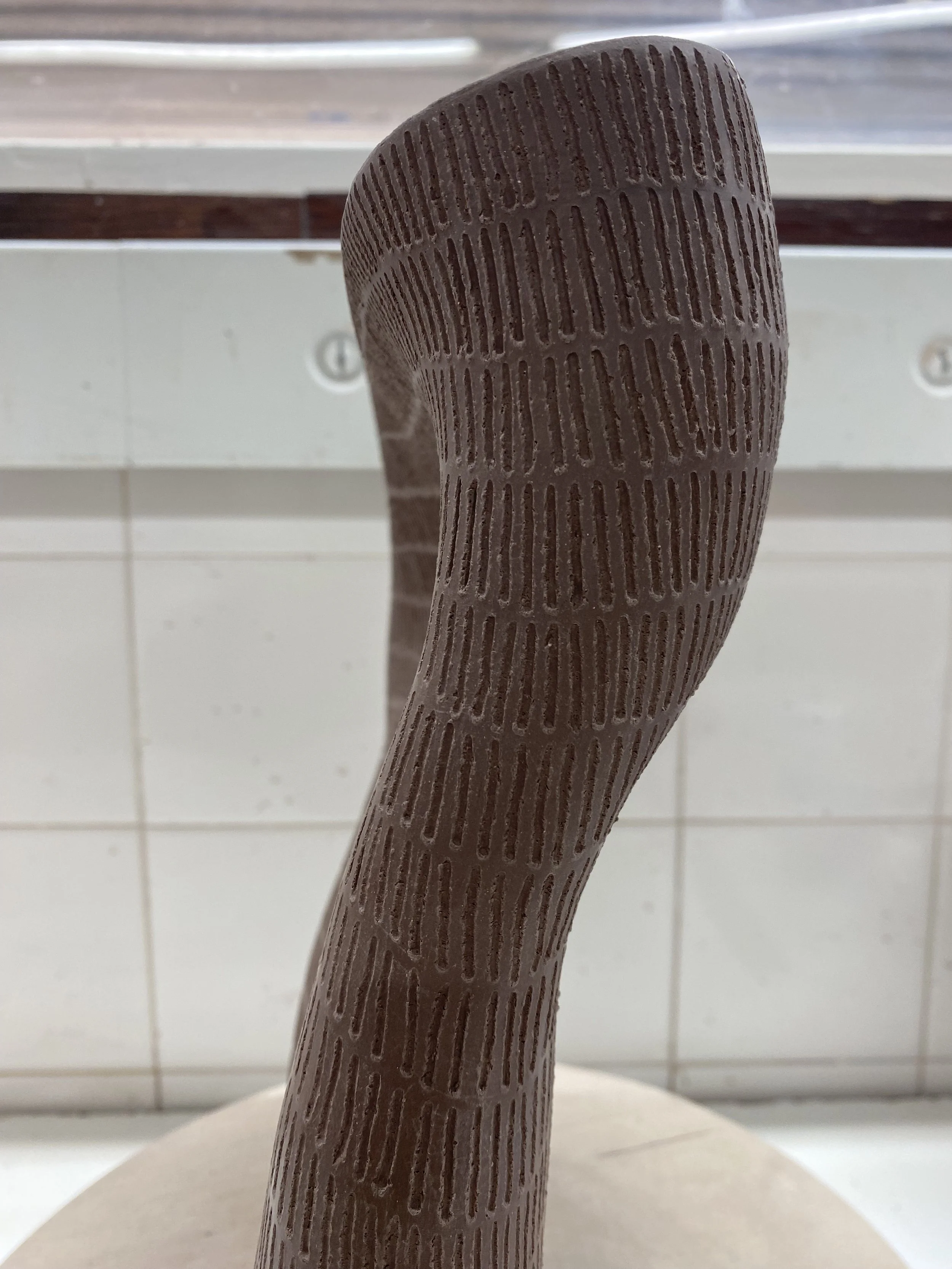
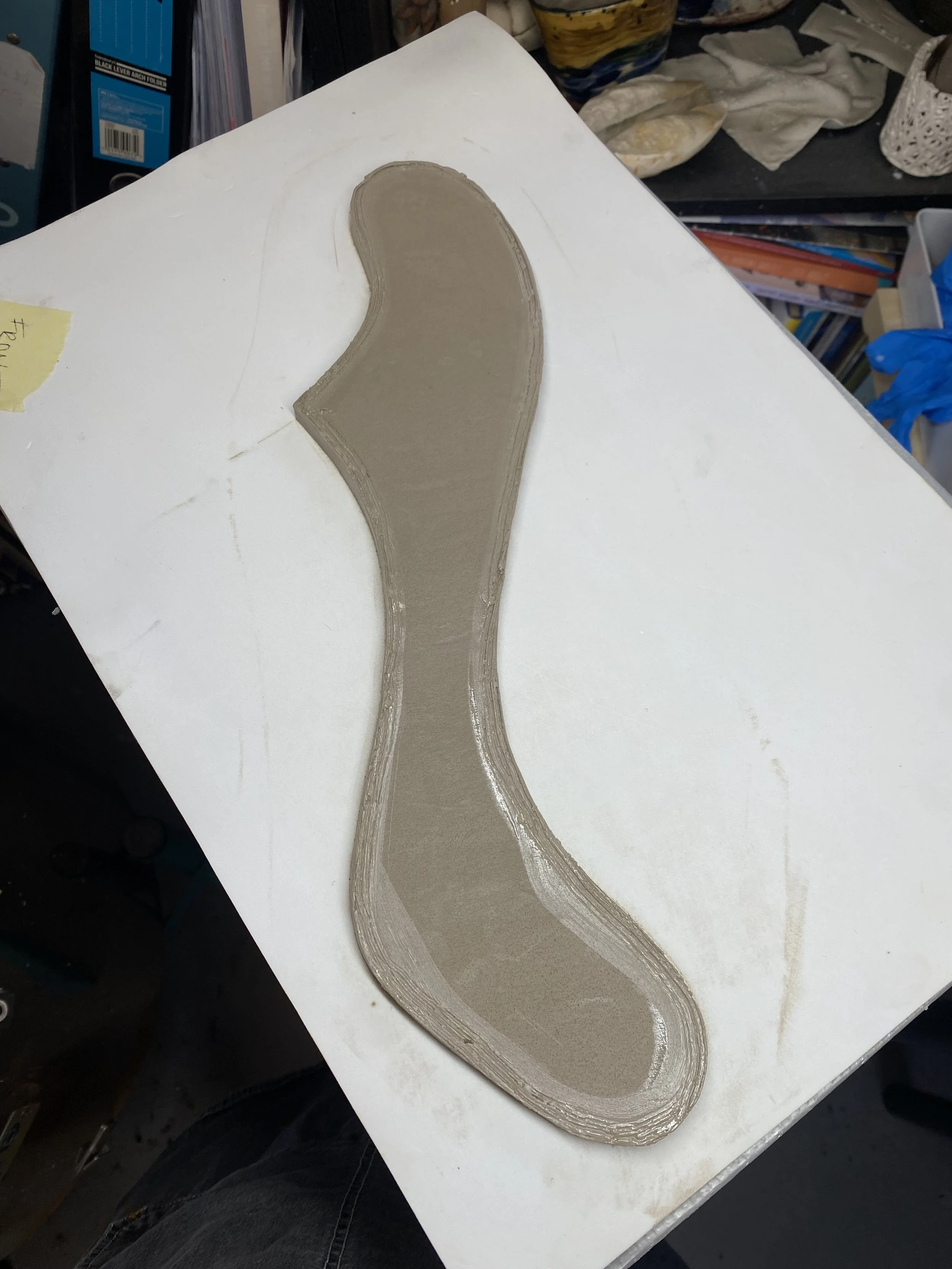
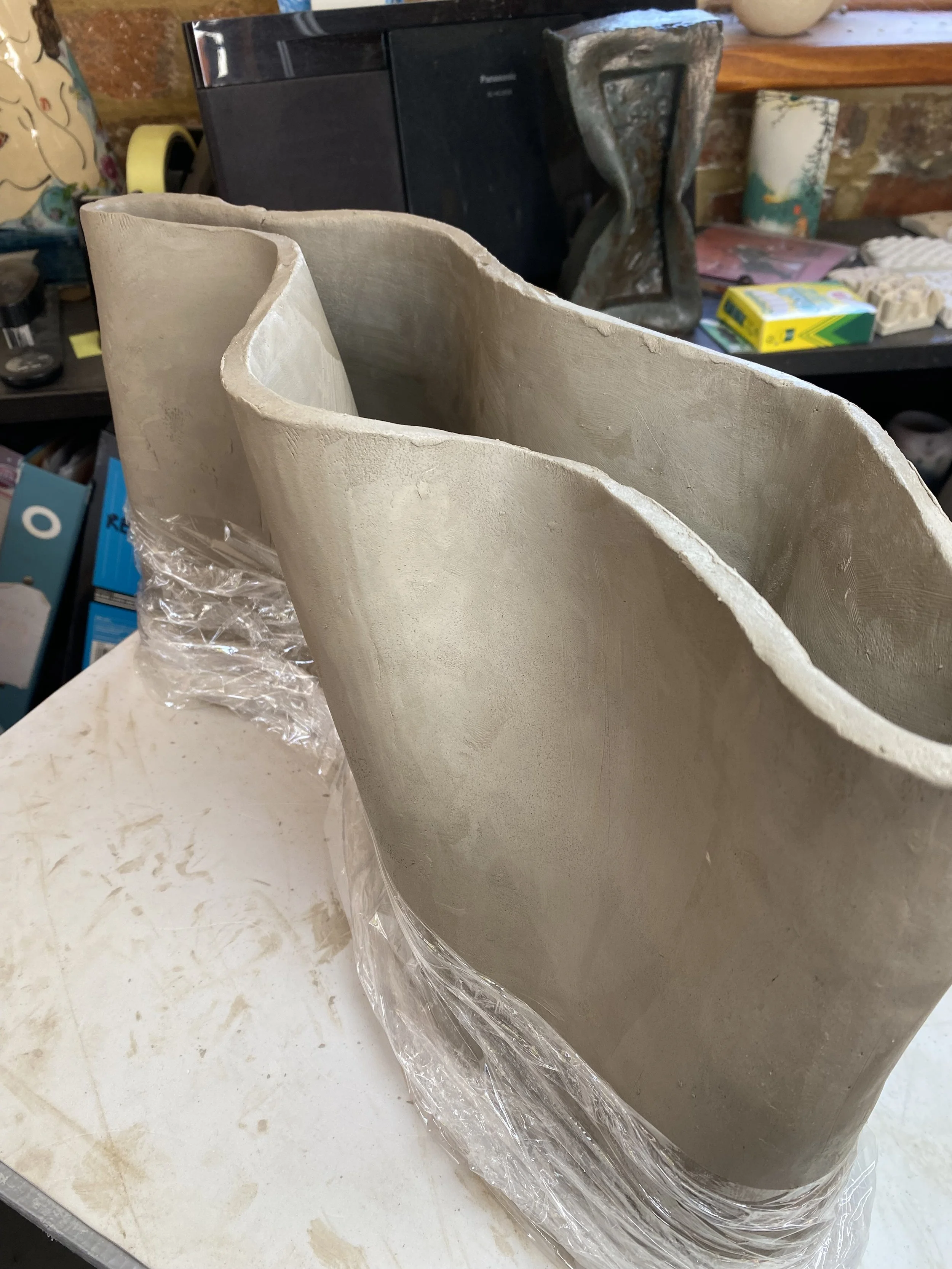
Following the response to the contour vessels at Ceramic Wales, my first instinct was clear — remake a contour vessel, but bigger. Increasing the scale by around 50%, I began a new build this week. I am sure working at this larger scale will bring a whole new set of challenges, but instinctively it feels right. These vessels need to occupy space with greater confidence and authority, holding their own presence within the exhibition space. Fingers crossed I can successfully navigate the build over the coming week.
Alongside the making, I continue working through ideas, possibilities and decisions in my sketchbook for the remainder of my degree show work. Slowly, the pieces are beginning to come together. More than ever, I want the final exhibition to present as a truly cohesive body of work — one that visually and conceptually embodies my Memories of Place methodology.
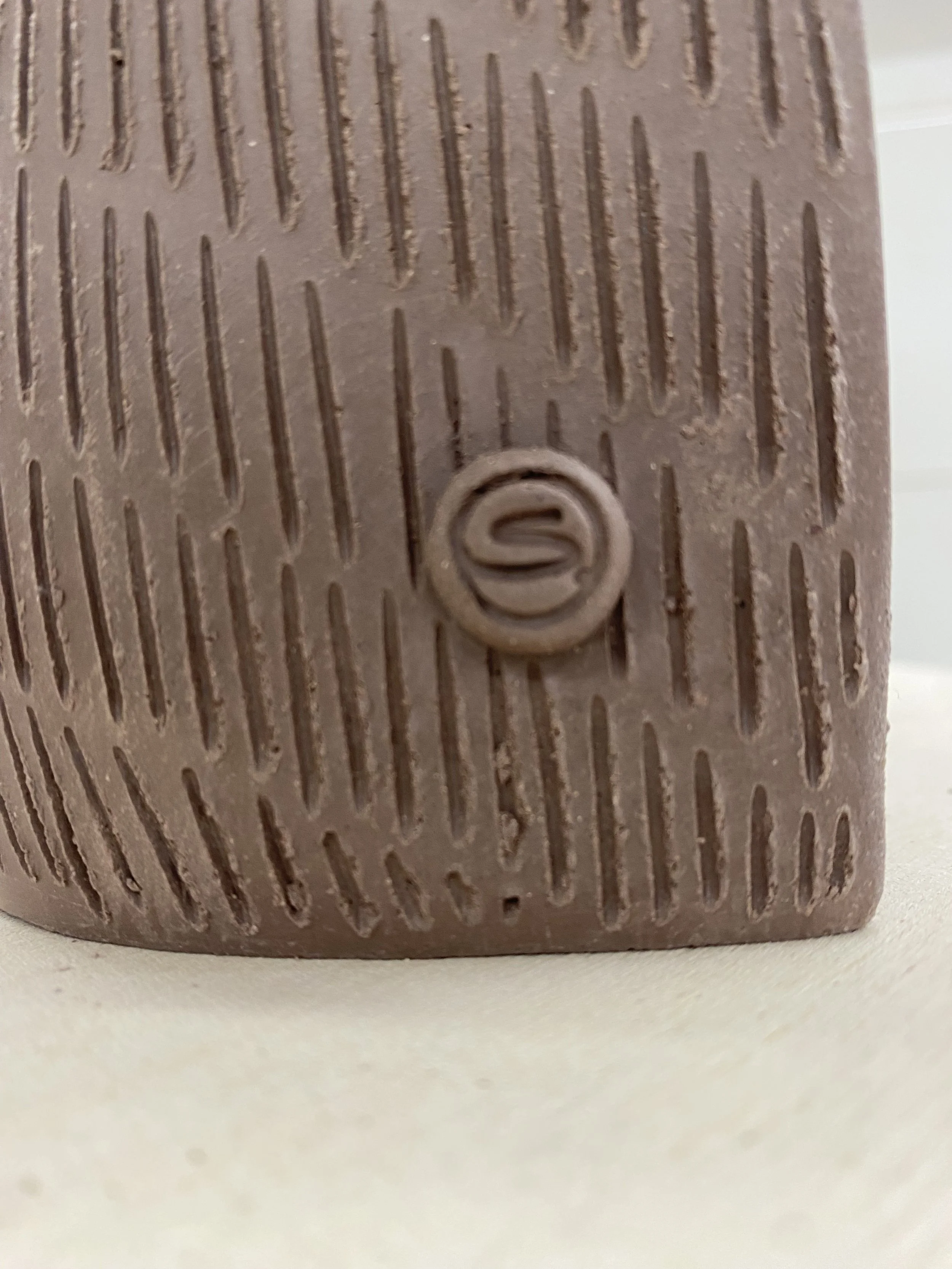
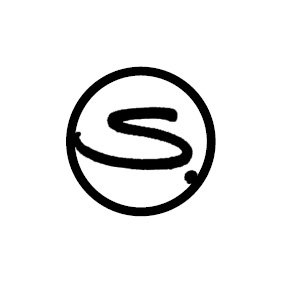
Up until now, I have never had a maker’s mark for my ceramics, choosing instead simply to stamp Shenac on the underside of each piece, trusting that my name is distinctive enough to act as its own identifier. Recently, however, I realised that if I want to elevate my practice further, it felt like the right time to introduce a maker’s mark. A few weeks ago, using my own handwritten “S”, I ordered a new stamp from The Stamps Workshop. It arrived this week, and I am absolutely thrilled with it.
It may be only a small detail, but it feels surprisingly significant — another quiet step towards seeing this not simply as study, but as the beginning of my professional ceramic practice.
w/c 22 June 2026
Rhythm, Time and Trust
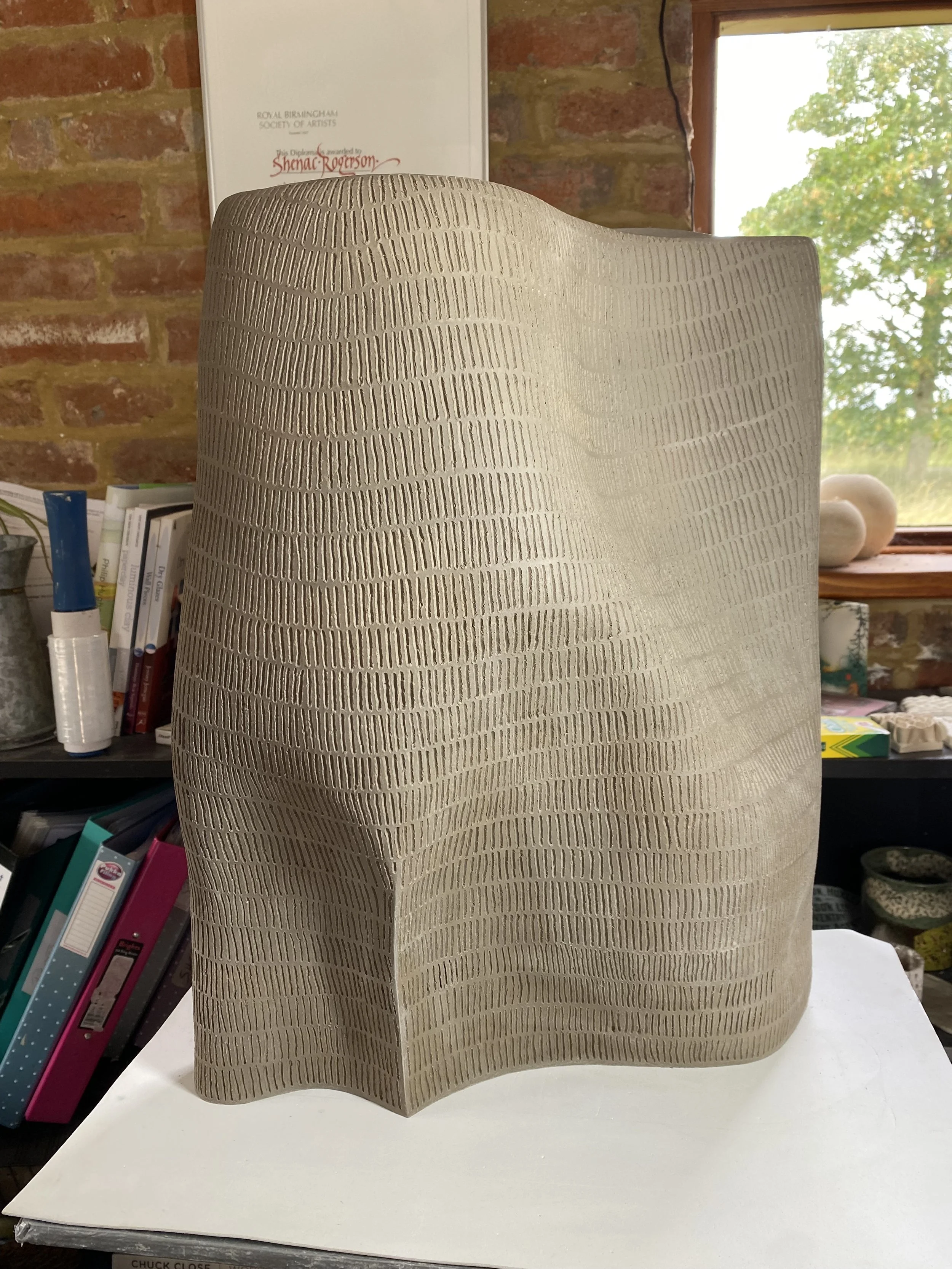
This past week has carried a slow, methodical rhythm, no doubt influenced in part by the heatwave we have been experiencing here in the UK. Progress in the studio felt steady rather than fast, with much of my time focused on building a larger version of one of the contour vessels.
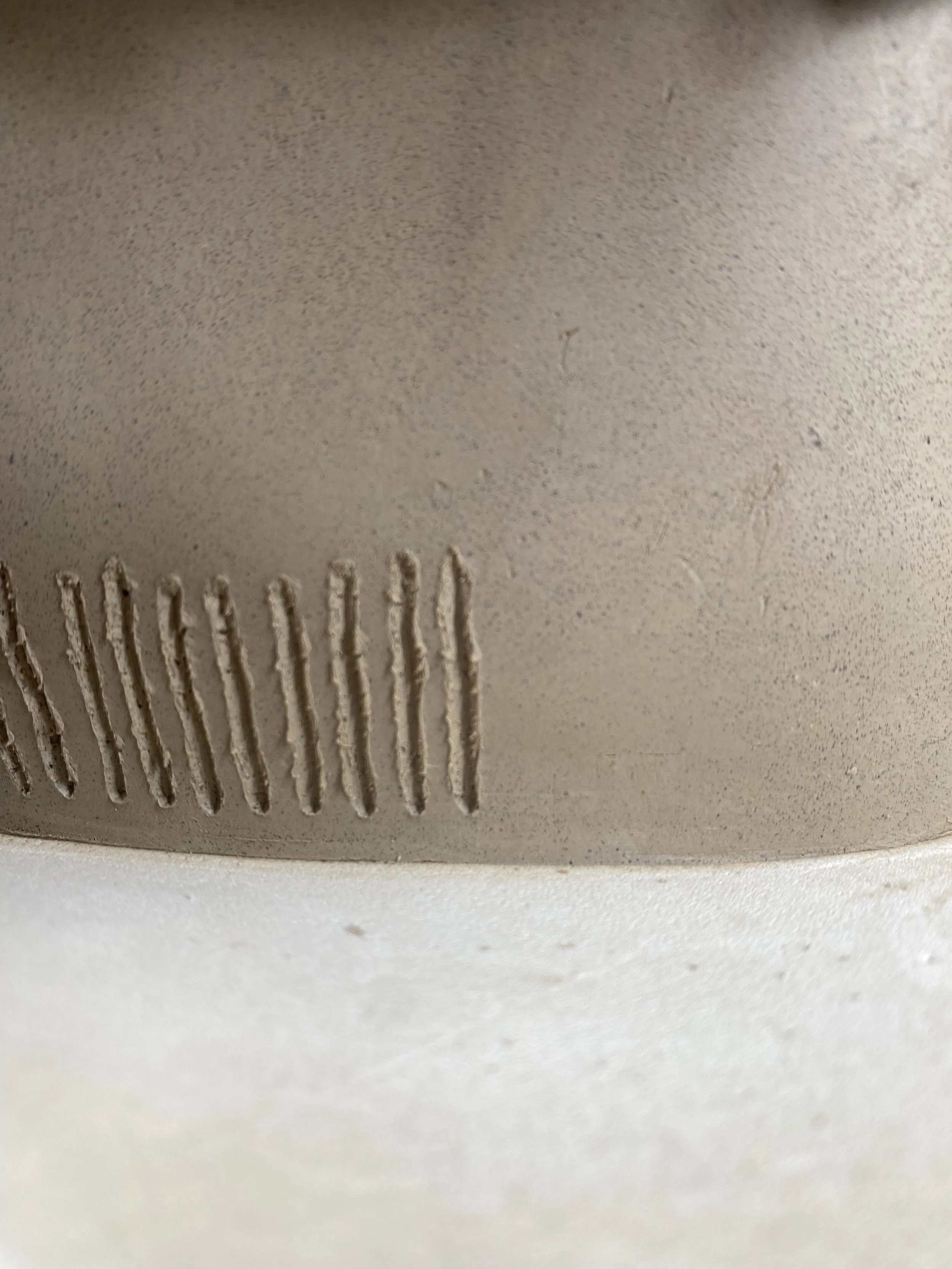
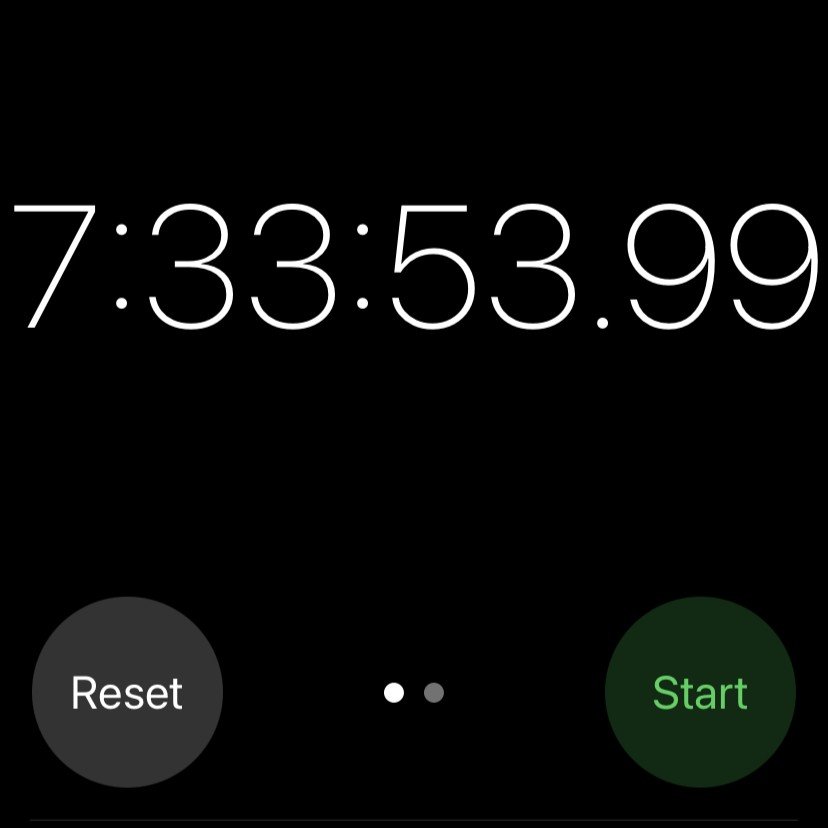
This build took considerably longer than I had anticipated. Incising the surface marks alone took a total of seven and a half hours — I know this because I timed it. I had optimistically estimated around four hours, so I was rather wide of the mark. It was a useful lesson, however, and one I need to take seriously moving forward. Developing a realistic understanding of how long pieces actually take to make is vital for my future practice, particularly when it comes to pricing finished work and calculating commission quotations.
Despite the longer build time, I thoroughly enjoyed the process. It felt good to work slowly, responding to the flow of the clay and to the form as it gradually revealed itself. Most importantly, the connection I felt while making this piece felt true and authentic. That sense of connection has become increasingly important to me, as it often signals when the work is moving closer to something that feels honest and aligned with my practice.
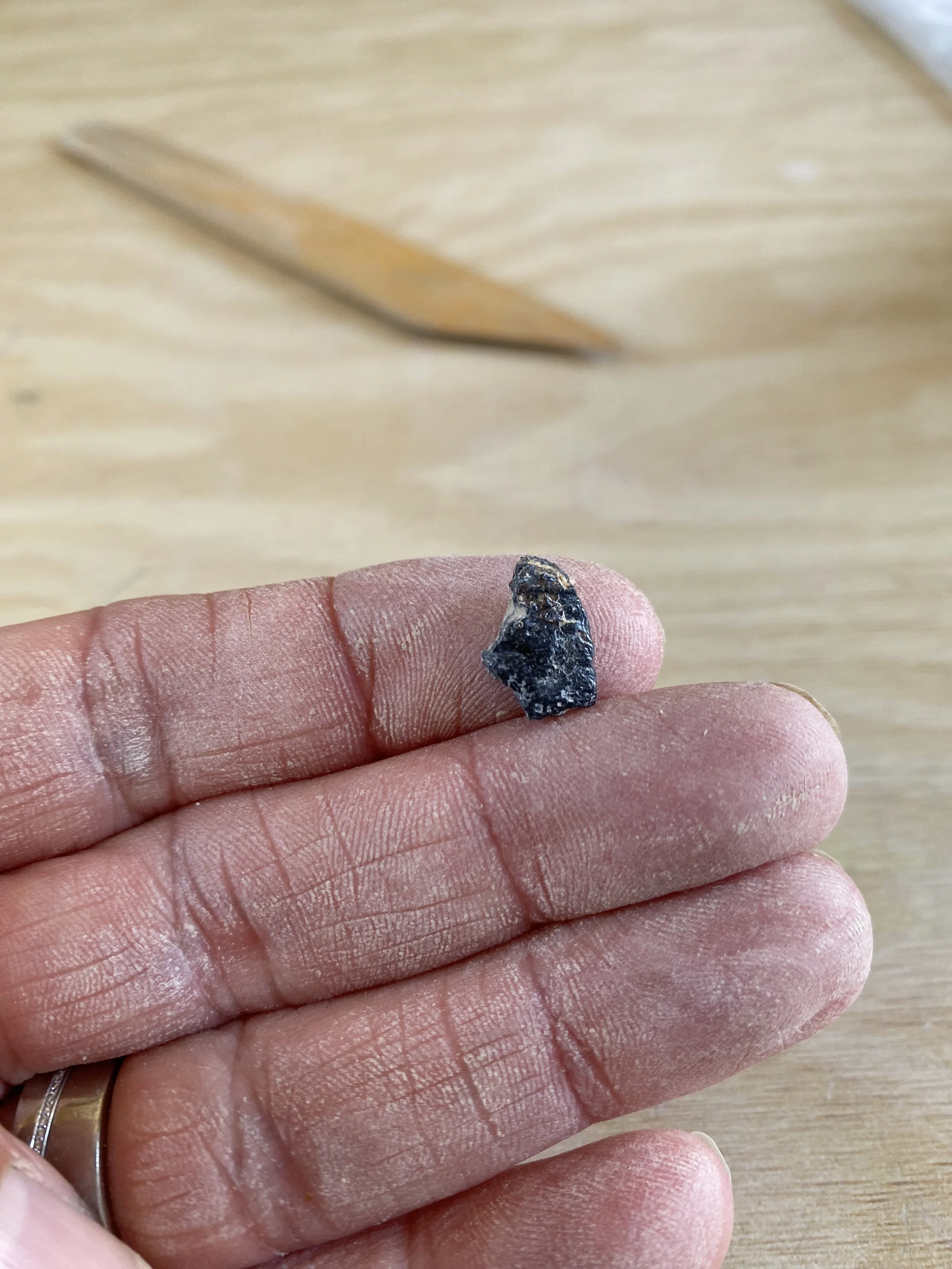
This new contour vessel measures approximately 38 × 46 cm, making it a much more substantial statement piece. Scaling up has brought a greater sense of presence and authority to the form, which feels right for where the work is heading. I do, however, have some concerns about how it will behave in the firing. This is a clay body I have used extensively in the past, yet while working I noticed a number of small black flecks throughout the clay, and at one point discovered a fairly sizeable dark inclusion. I chose to continue and complete the piece, which is now drying and waiting to be bisque fired. I am hoping the kiln gods are kind.
I am still committed to completing the five contour vessels which together map the contour line of Sawbridge. Vessel four of five is due to be bisque fired this week. This piece uses a pale buff clay with an additional 15% black clay added to the body. My intention is for the five vessels to create a gradual tonal transition across the series — from deep black on the left through to pale buff on the right. The three intervening vessels will gently shift between these extremes through the blending of the two raw clay bodies, creating a subtle movement of tone across the group. Two more vessels still remain to be built.
Work also continues in my sketchbook, where ideas and thoughts about how to bring everything together for the final degree show are slowly evolving. The path ahead feels clearer now — still not fully resolved, but more focused. Piece by piece, the vision is beginning to emerge.
I head back to university this week hoping to start and complete another piece, bringing me one step closer to the body of work I am striving to realise for September.