May 2026
w/c 4 May 2026
A Day of Inspiration and Quiet Revelation
This week once again brought the anticipation and excitement of visiting Ceramic Art London at Olympia — one of the UK’s leading contemporary ceramics fairs, bringing together makers from across the UK and beyond. Although this was only about my fourth visit, each year I seem to leave carrying something different home with me: renewed excitement for the ceramic medium, a new line of thought, or a technique that quietly lingers in my mind, asking to be explored within my own developing practice.
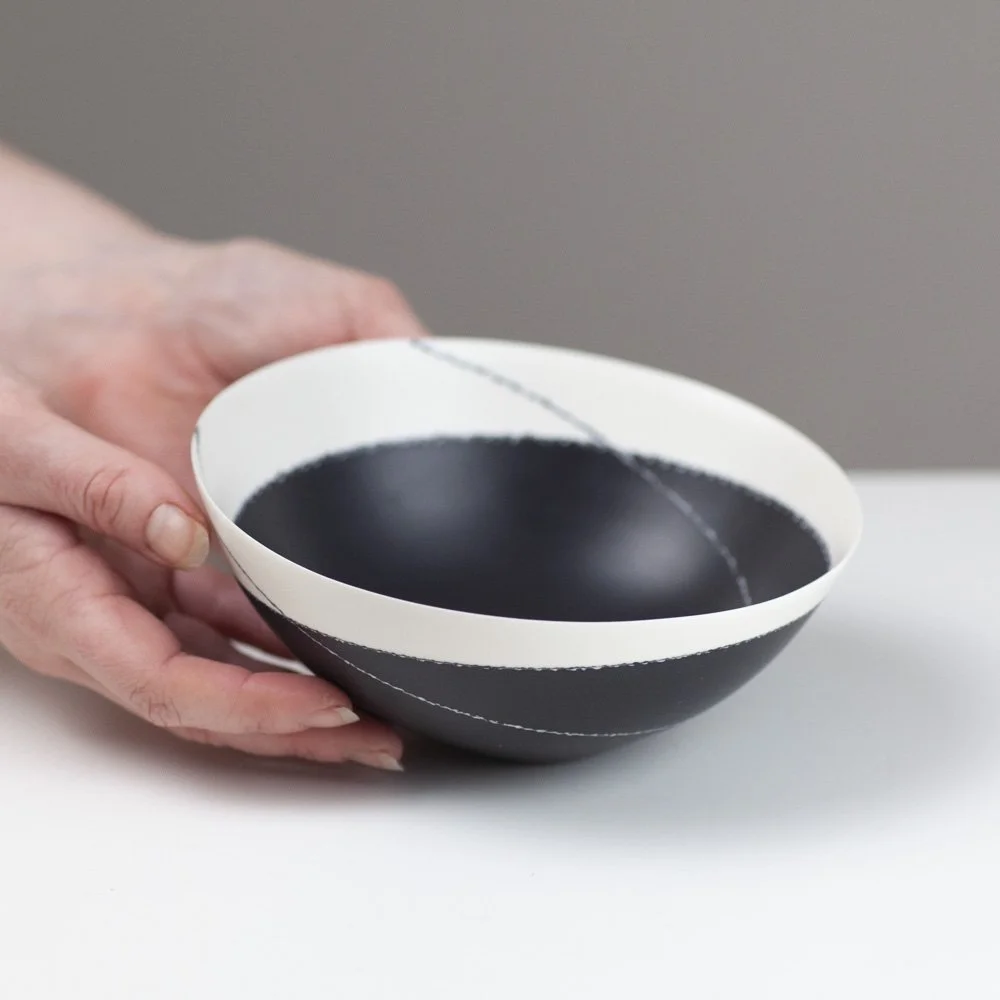
I also seem unable to leave without a small piece that truly connects with me — not because I wish to emulate the artist or their technique, but because I deeply admire and respect the individuality of their work. This year it was a small tea bowl by Kyra Cane — exquisite, delicate yet bold in its execution and an absolute delight to hold. Another small but meaningful addition to my growing collection.
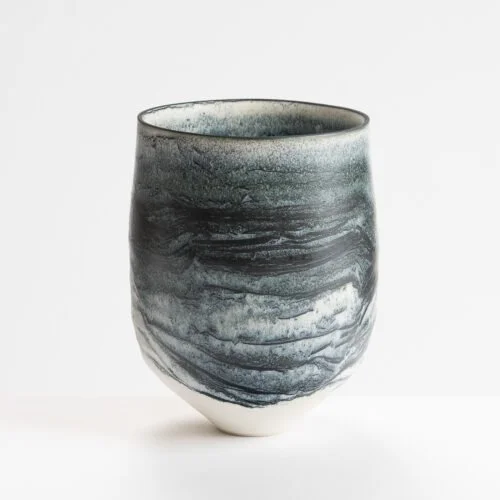
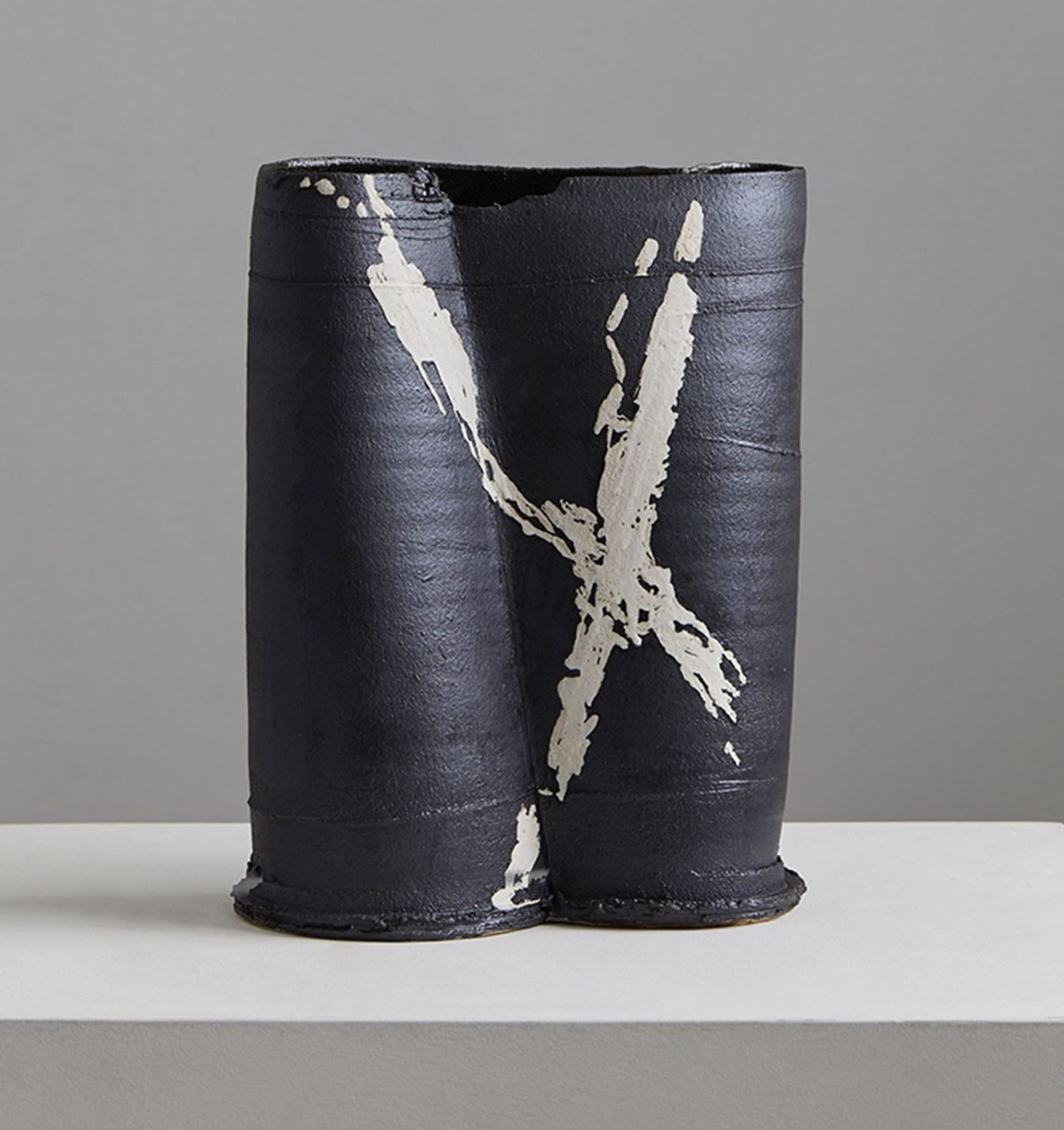
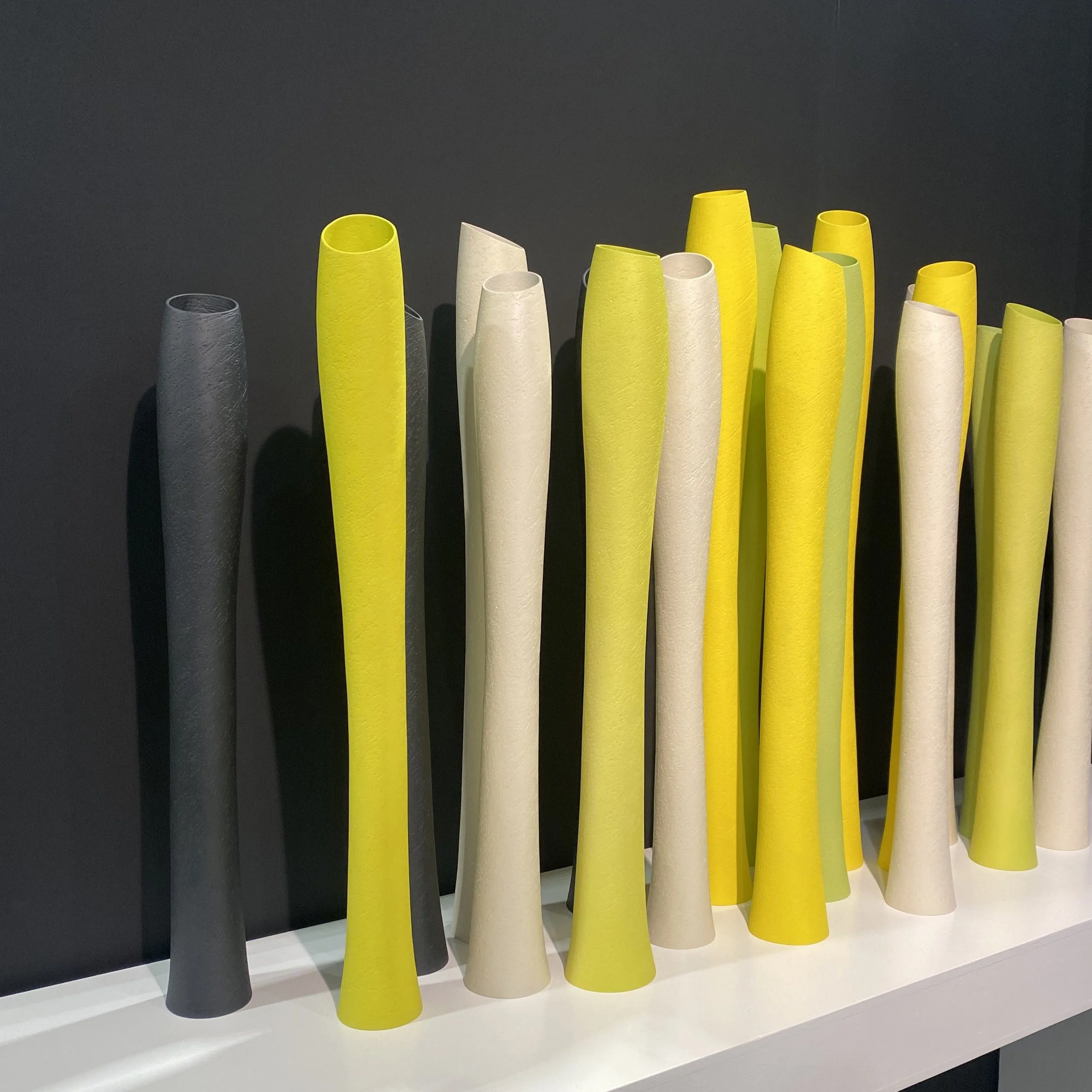
The work that resonated most strongly with me this year was by Dan Kelly. Seeing his vessels felt like a genuine moment of revelation. Suddenly I could clearly understand the direction my course tutor, Rob Parr, has been gently encouraging me towards through my own landscape-inspired mark-making. While I had perhaps resisted this idea initially, over recent weeks I have been applying these marks to the new vessel forms emerging within my Memories of Place methodology — though still feeling uncertain about where they were leading. I think I had been trying too hard to force the vessels into becoming more abstract or dynamic, without fully understanding what was necessary. Seeing Dan Kelly’s work made me realise that sometimes restraint carries far greater power. Less really can be more. His vessels held such quiet confidence and clarity that they stopped me in my tracks. The Emmanuel Cooper Prize felt entirely deserved.
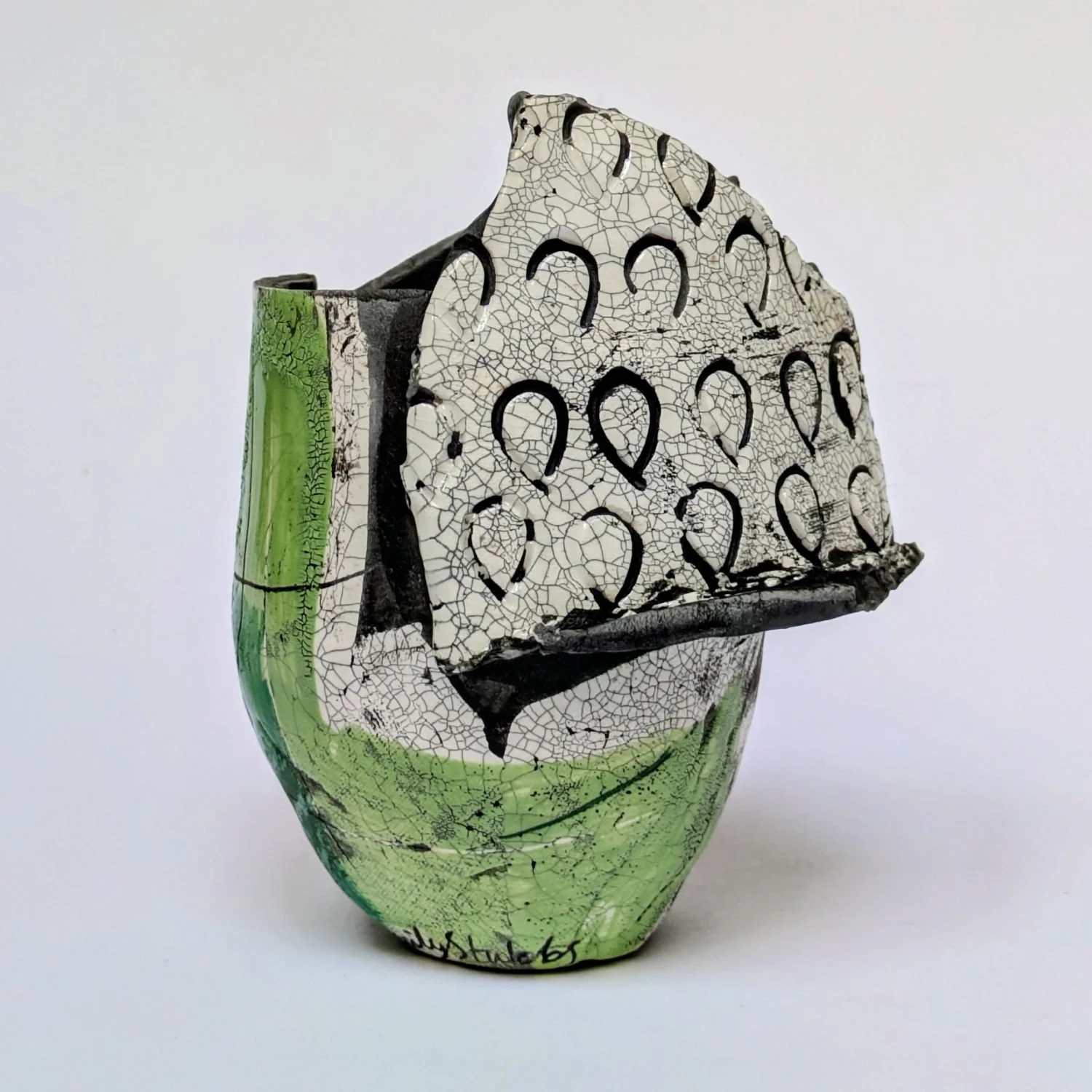
The work of Emily Stubbs also strongly appealed to me. Her expressive surfaces, bold use of colour, graphic lines and mark-making felt incredibly alive. While the vessels initially appear playful and almost haphazard in construction, every element is in fact carefully resolved, each part connecting and communicating with the next to create a cohesive and visually striking whole. There is a joyfulness in her work that feels deeply rooted in her abstract collage process, translated directly into ceramic form.
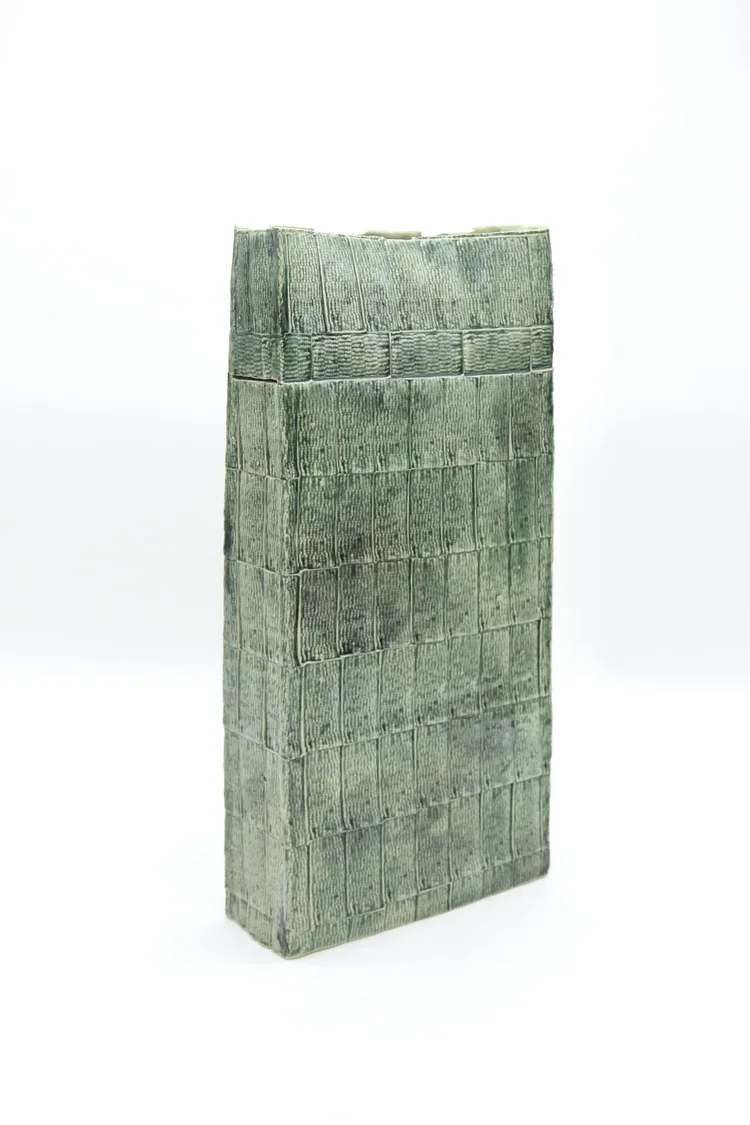
At the opposite end of the spectrum, I found the work of Ella Porter quietly stunning. The apparent simplicity of her forms only serves to emphasise the extraordinary level of skill and restraint within the work. Her box forms seem to whisper rather than shout, yet carry a remarkable presence — delicately balancing references to both architecture and landscape within each piece.
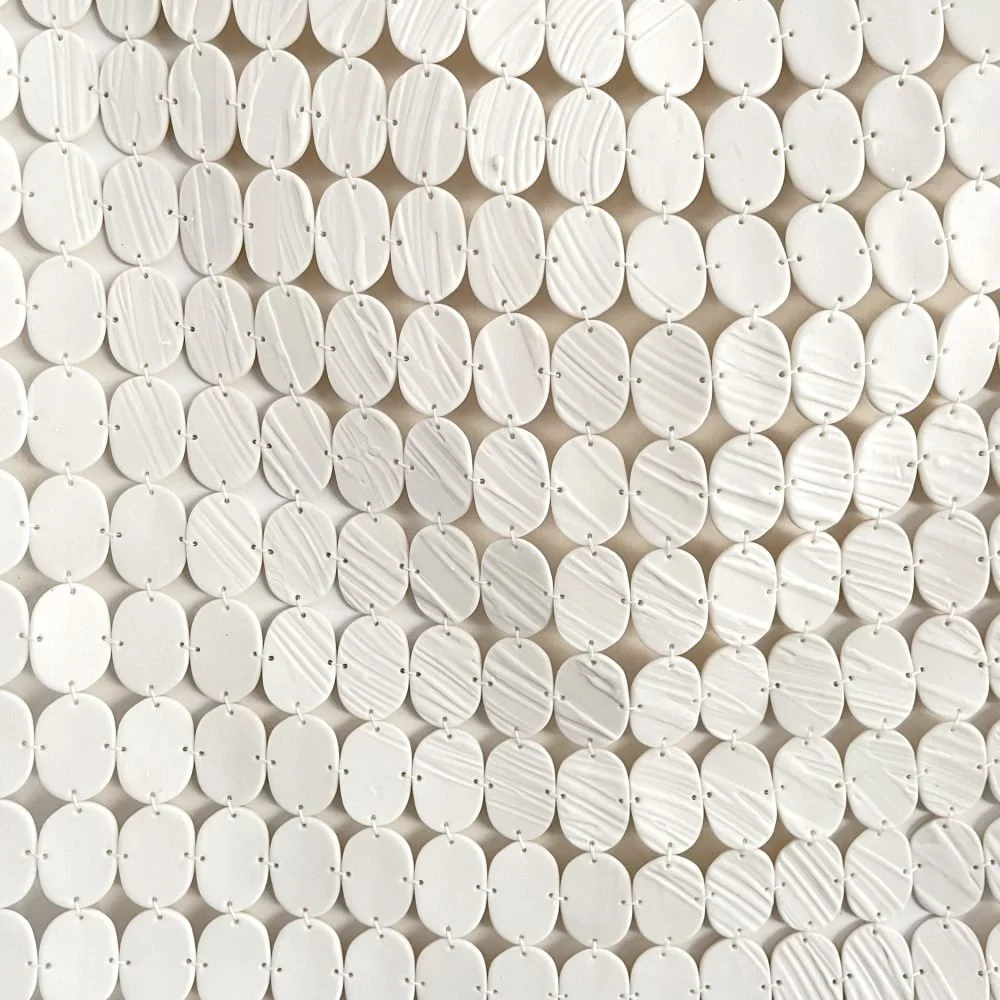
Finally, the unique porcelain work of Sophie Manessiez captivated me. Through her woven wall pieces, she transforms the rigid nature of porcelain into something flowing, fragile and interconnected. The layered surfaces slowly reveal textures, patterns and subtle shifts through movement and observation, inviting the viewer into a process of gradual discovery.
And lastly, but certainly no means least - Ashraf Hanna, whose work I find stunning in it’s simplicity and exquisite execution - mind blowing.
As always, Ceramic Art London was an inspiring and energising experience. Quietly, somewhere in the back of my mind, sits the hope that one day my own work might feel strong enough to stand alongside these incredible makers — and perhaps, if I am brave enough, that I might one day apply to exhibit there myself.
w/c 11 May 2026
Learning to Whisper
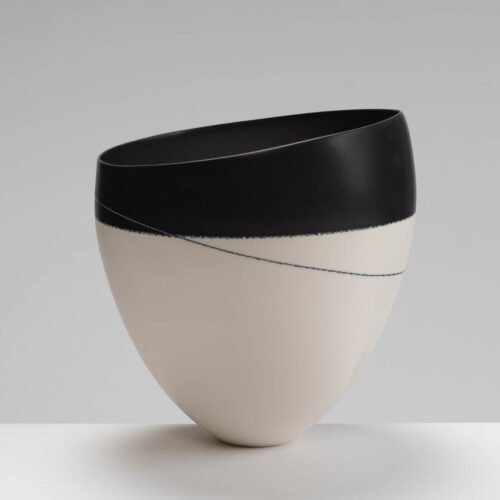
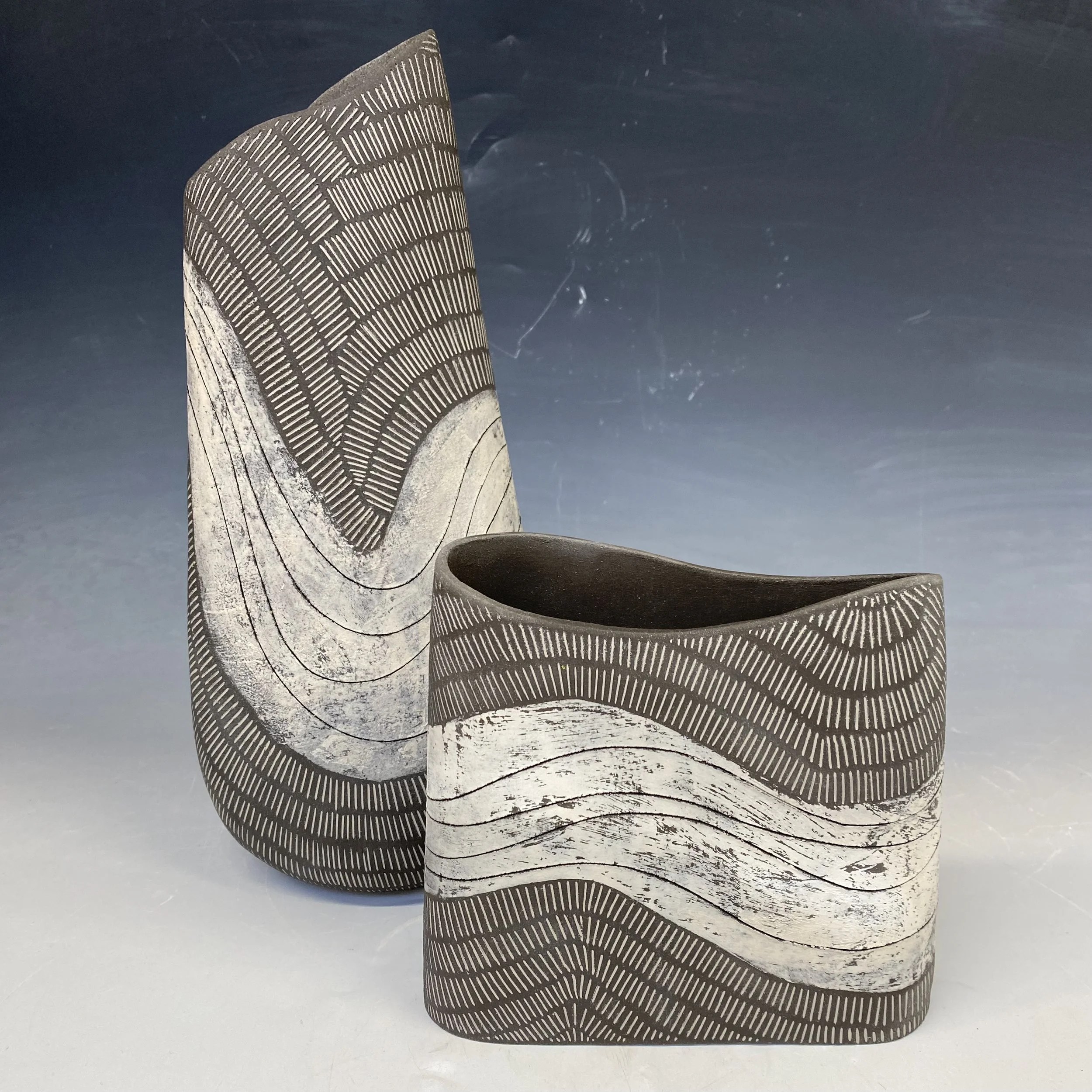
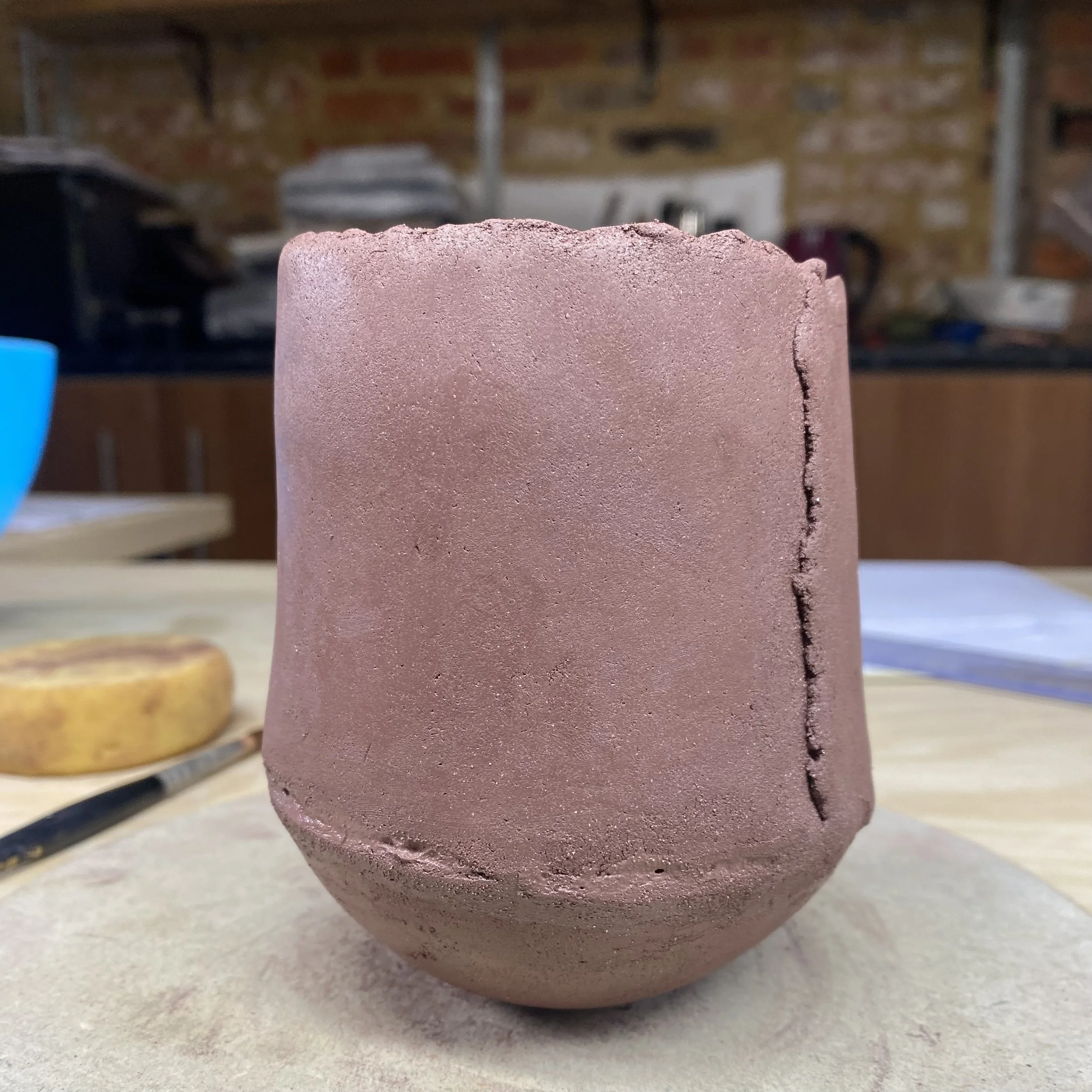
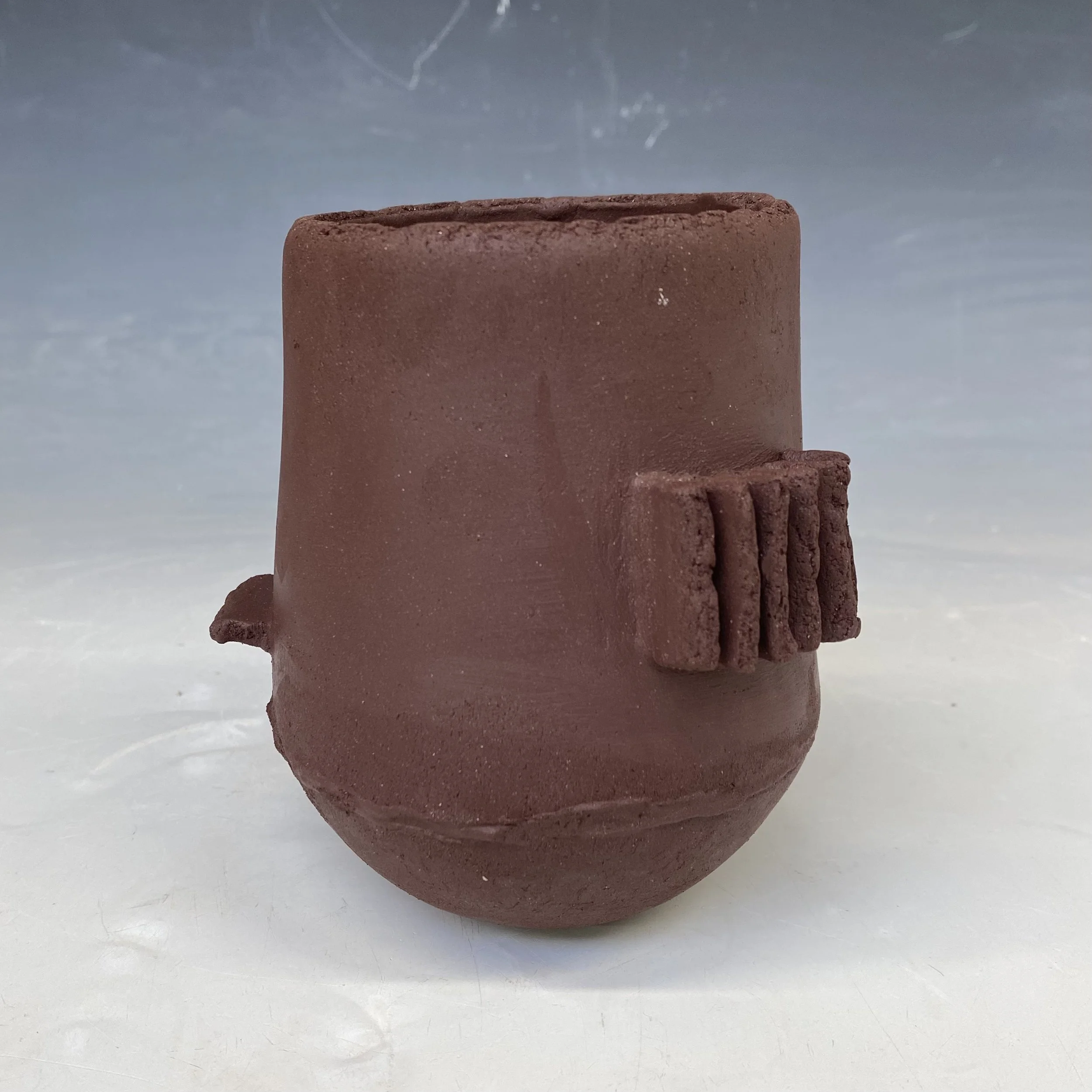
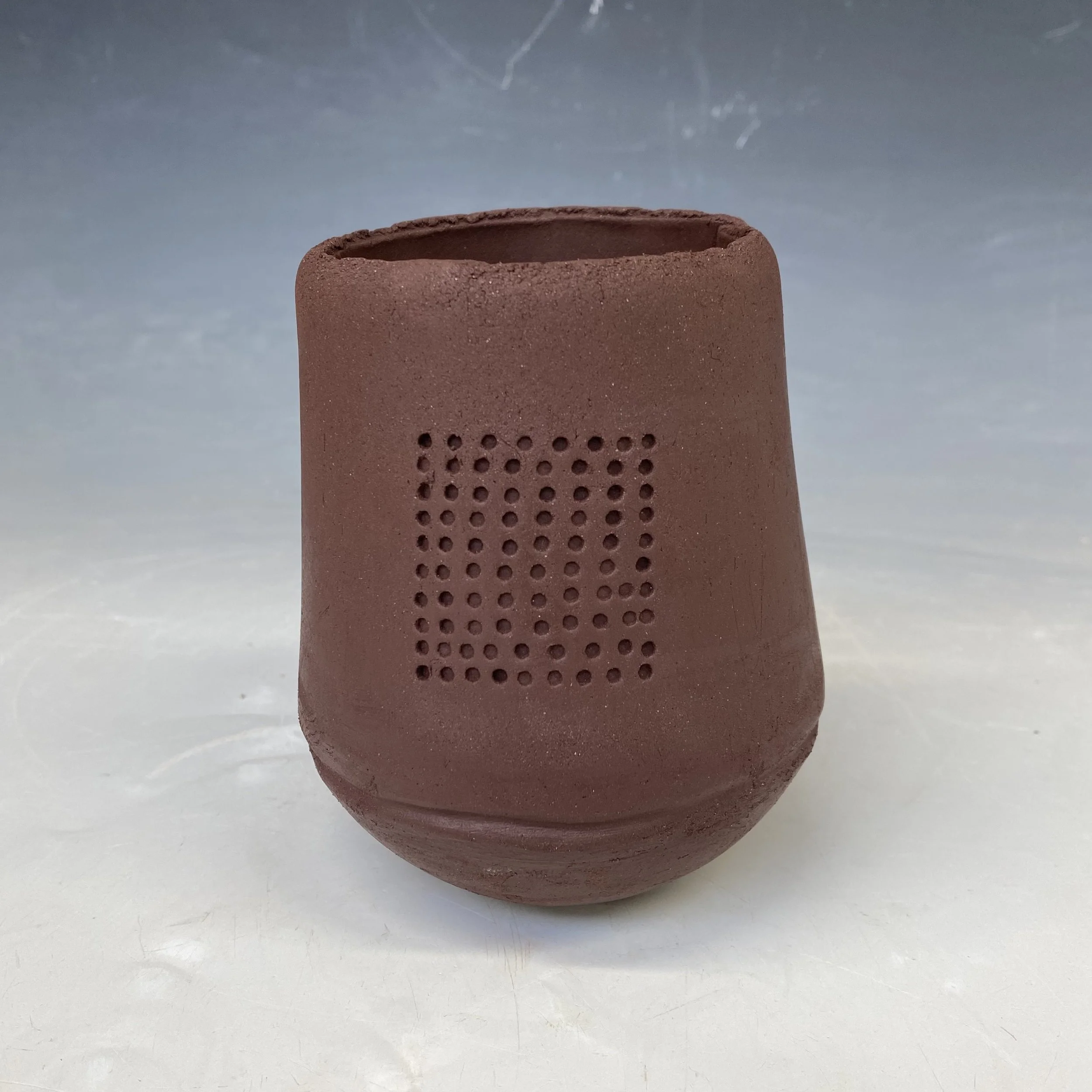
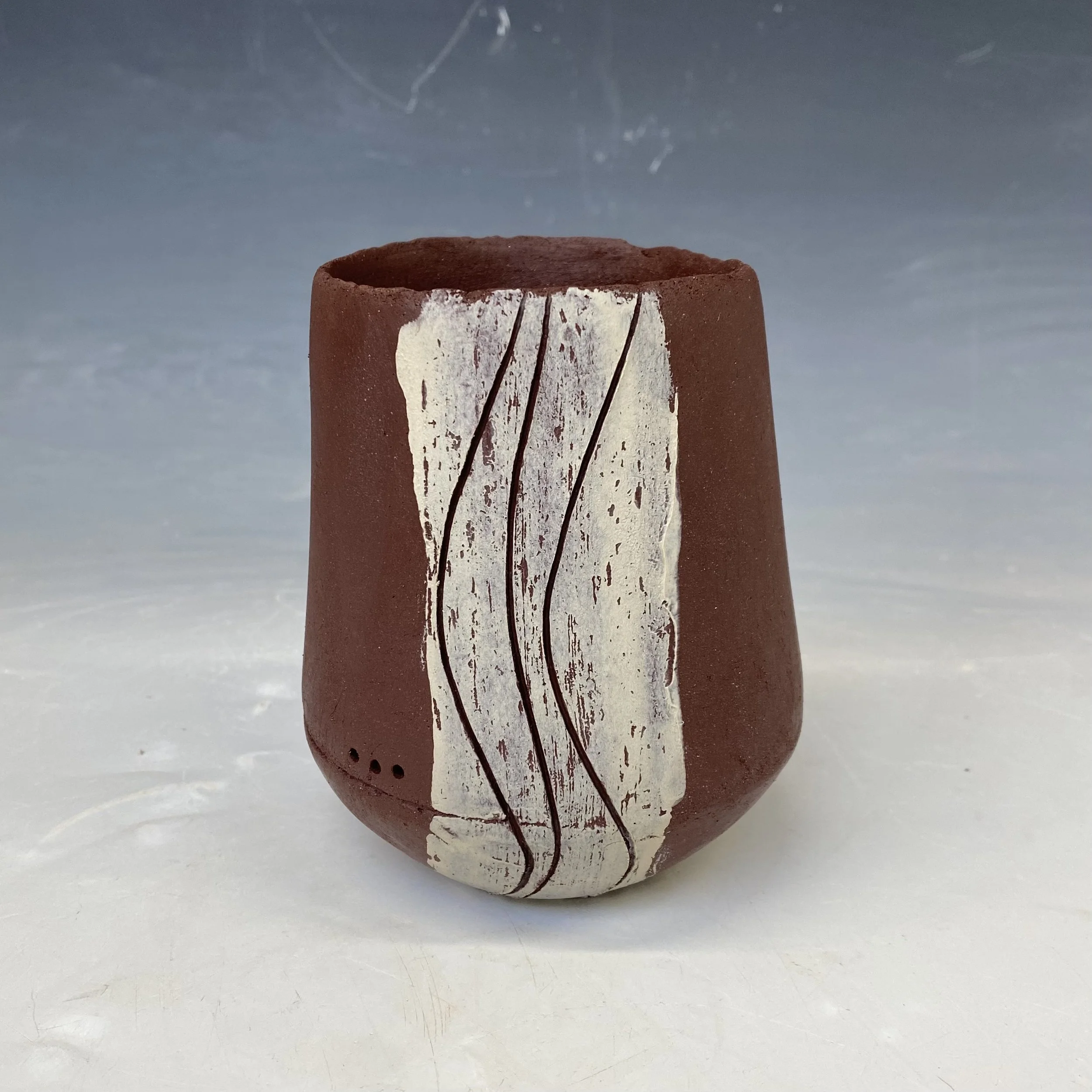
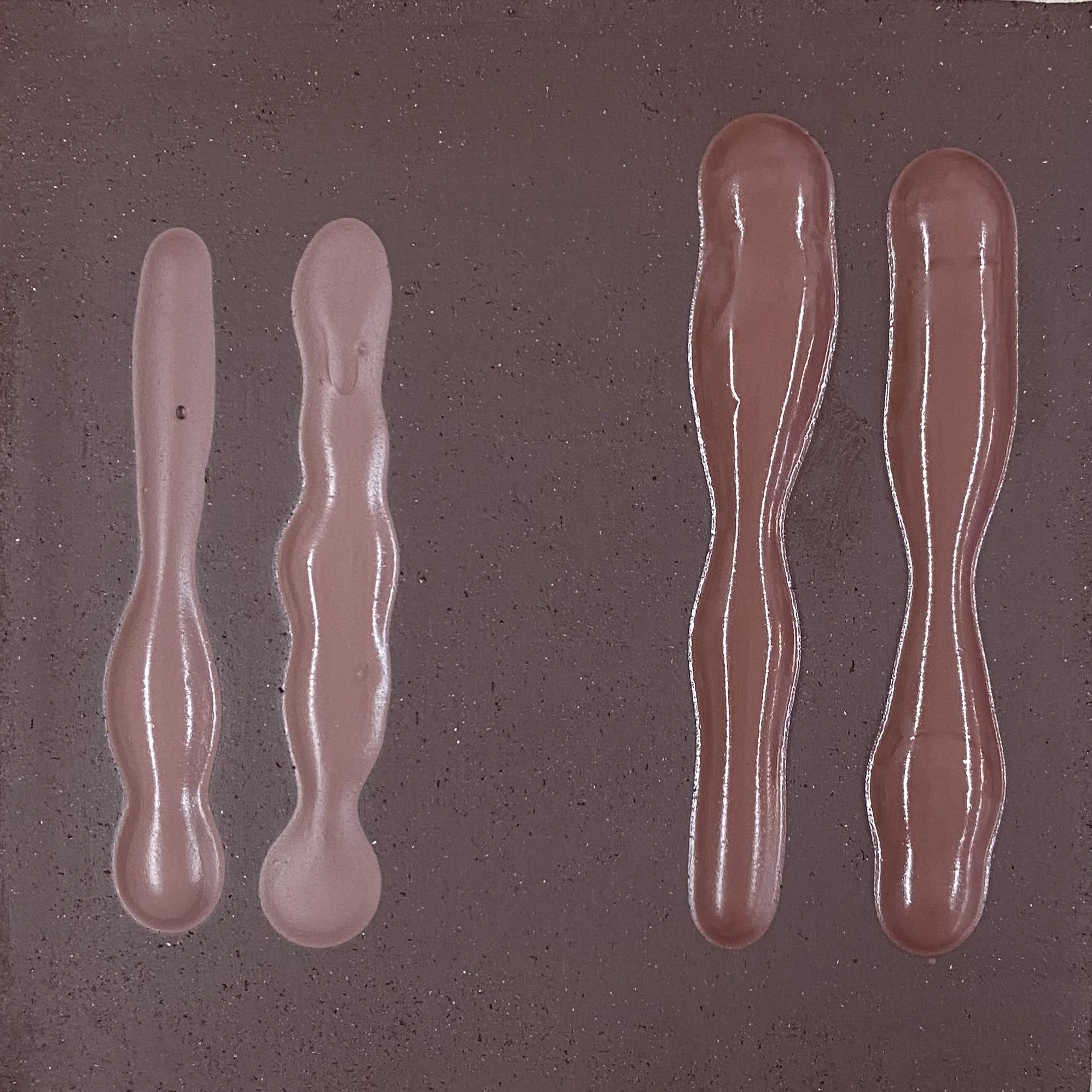
Following last week’s visit to Ceramic Art London, the strongest understanding I brought home with me was the quiet realisation that less can often mean far more. With the work of Dan Kelly, Paul James, Ashraf Hanna and Kyra Cane still very much imprinted in my mind, I have spent this week looking again at my recent work in the university studio through a different lens.
In my previous life as a graphic designer, the ethos of “less is more” was a visual language I embraced wholeheartedly. Yet, reflecting on some of my current ceramic work, I am beginning to realise that in my enthusiasm to communicate meaning through surface, pattern and texture, perhaps I have occasionally lost sight of that restraint. There is a growing sense that some of the surfaces now need to be pared back — not abandoned, but distilled.
I still want to continue using the visual language that has emerged through my sketchbook work and exploratory forms: the marks, rhythms and textures inspired by the landscape surrounding Sawbridge and the emotional resonance I experience within it. However, I feel increasingly drawn towards using these elements in a quieter, more restrained way — allowing the work to whisper rather than shout.
Strangely, this realisation feels both exciting and deeply meaningful. The idea that memory, connection and emotional resonance might be conveyed through subtle shifts of surface, rhythm and form feels far closer to the direction I have been searching for within my Memories of Place methodology. Perhaps the work does not need to explain itself so loudly after all.
w/c 18 May 2026
When Does a Vessel Become Sculpture?
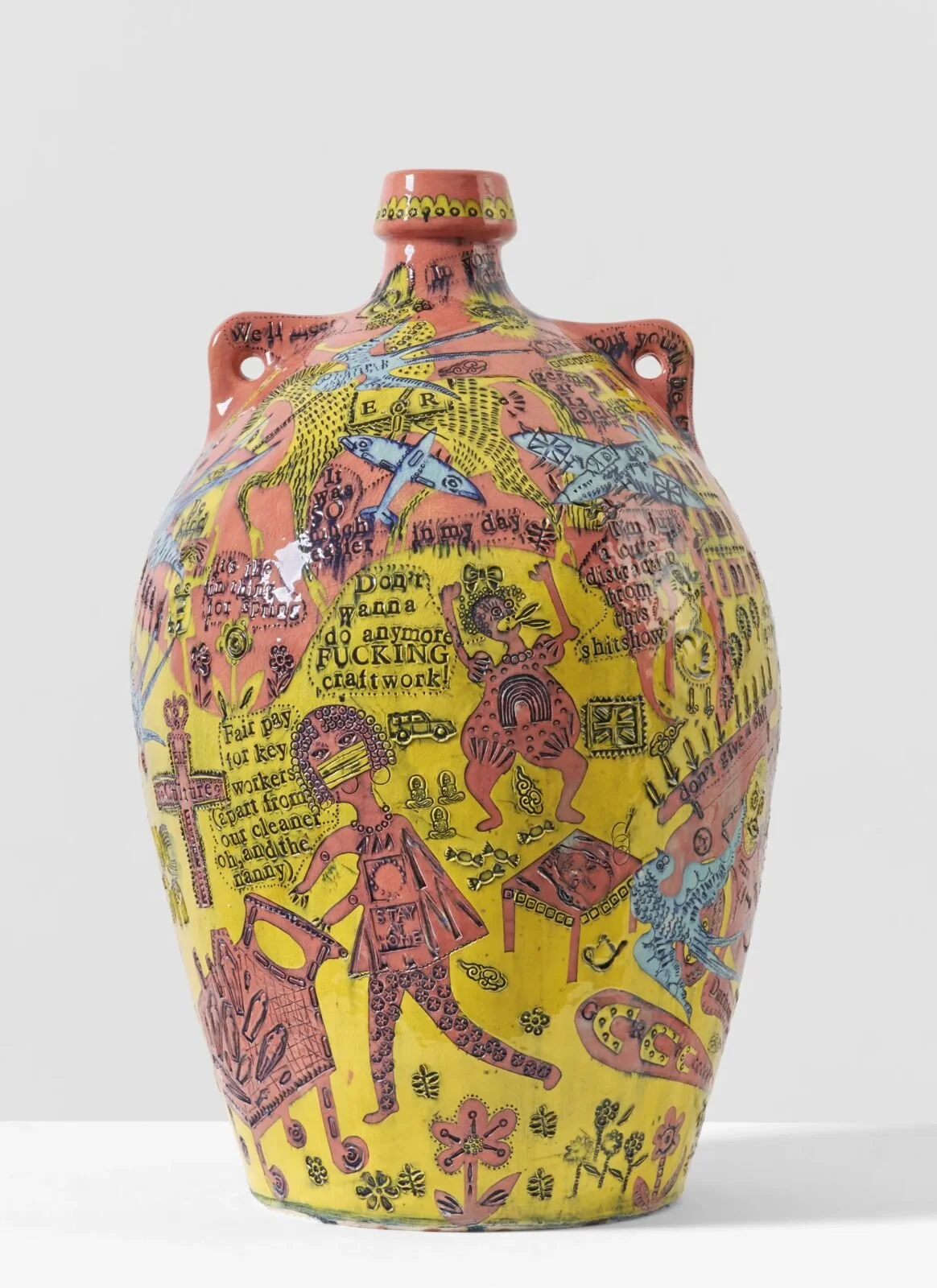
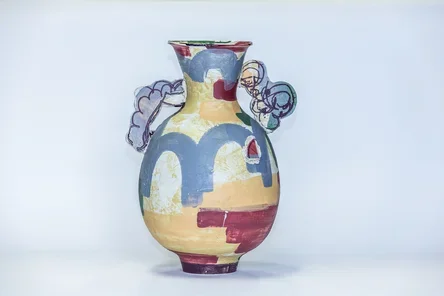
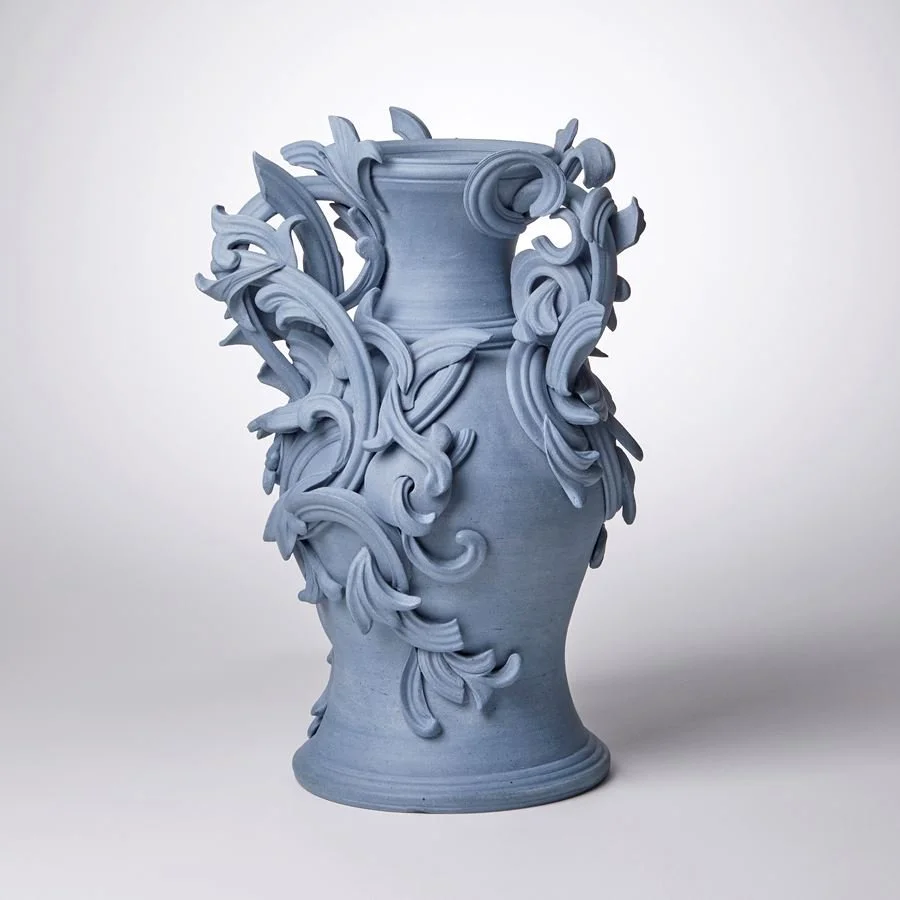
Within the context of my own work, I have recently found myself thinking deeply about the place of the vessel within contemporary ceramics and the wider art world. At what point does a recognisable ceramic form, such as a vase or vessel, shift from being an object of utility into a statement of art? Is that transformation dictated by the artist, by the perception of the viewer, or perhaps by a subtle negotiation between the two?
Traditionally, the vessel implies containment and function — an object designed to be used within everyday life. Yet for me, the moment a vessel begins to move into sculptural territory occurs when function becomes secondary, or disappears altogether. Instead, meaning, context and emotional resonance begin to take precedence. The vessel no longer asks simply to be used, but to be experienced — occupying space through its presence, materiality and the ideas it carries.
Perhaps this is why the vessel form continues to hold such significance for so many contemporary ceramic artists. Its familiarity allows the viewer an immediate point of recognition and connection. The traditional form of the vessel provides an accessible visual language, enabling the viewer to engage more instinctively with the work before considering the deeper conceptual layers beneath the surface. In this sense, the vessel can become a quiet invitation into more abstract or emotional territory.
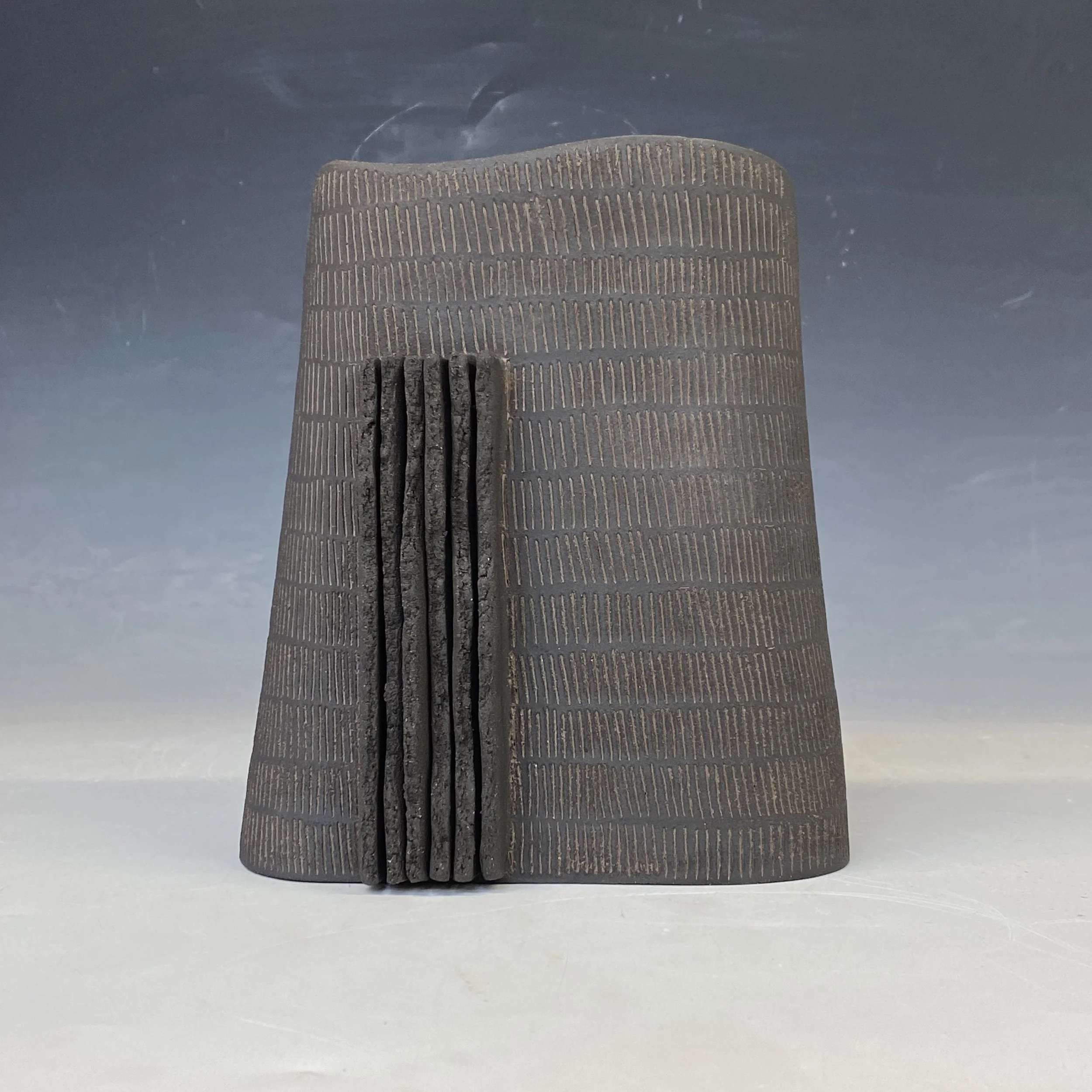
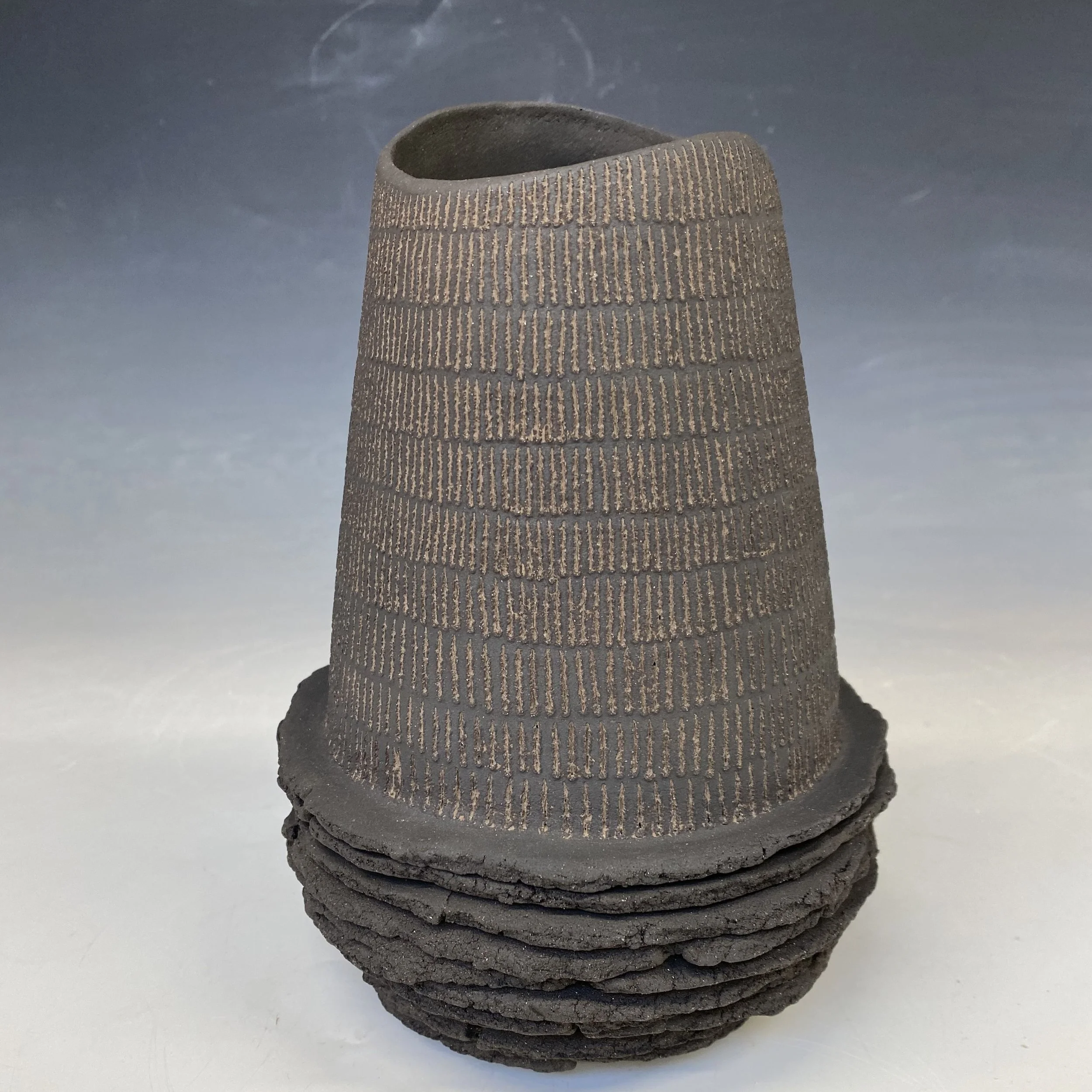
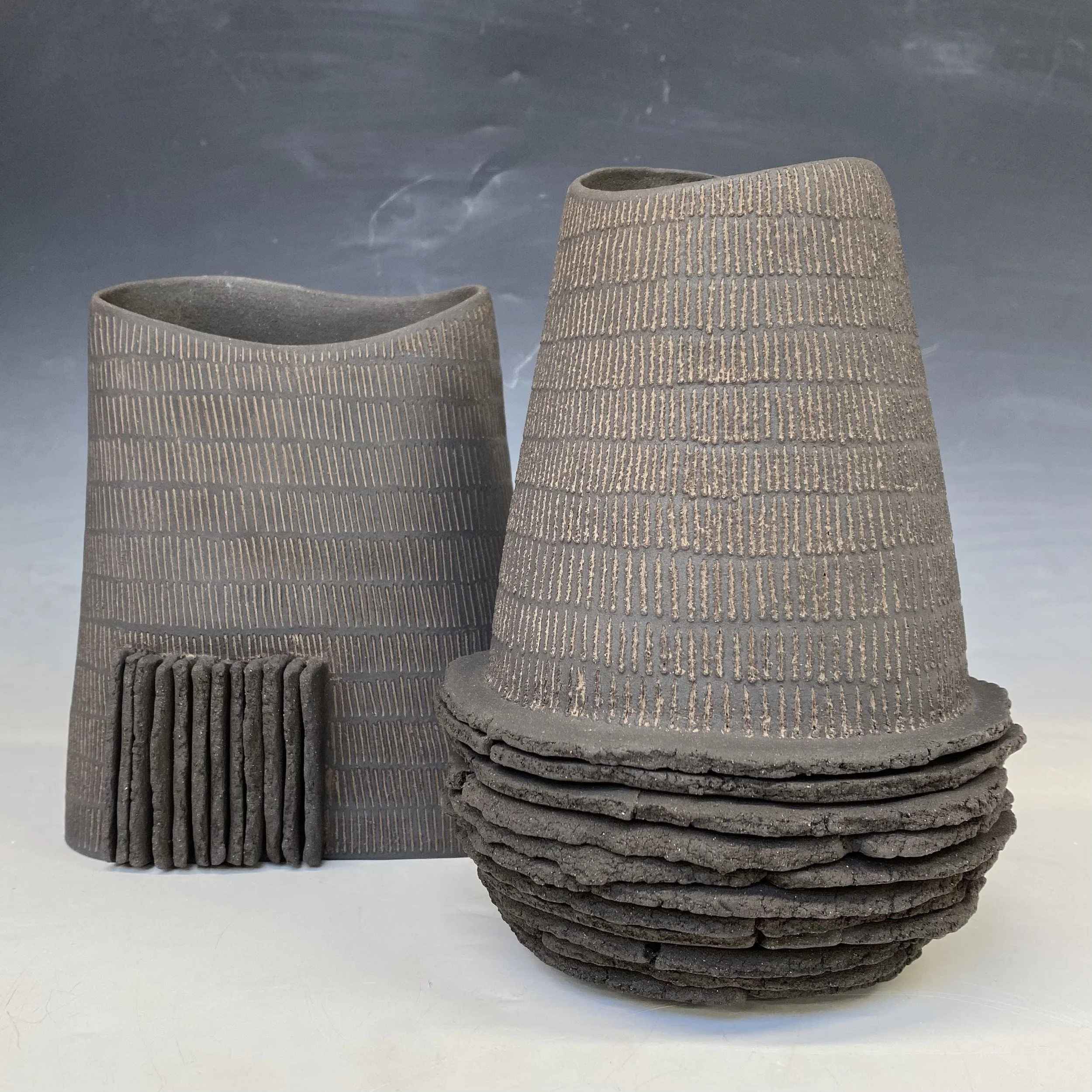
My own recent work has been exploring the vessel as a non-functional form — a holder and carrier of Memories of Place. These vessels are not intended for practical use, but instead act as containers for translated experiences of landscape, rhythm, memory and emotional connection. Through surface, form and material, I am attempting to distil the lived and remembered experience of Sawbridge into objects that ask to be contemplated rather than utilised.
Function plays no role in the purpose of these forms. Instead, I am increasingly interested in how abstract sculptural vessels might destabilise the perceived boundaries we place between vessel and sculpture through convention and expectation. By using the recognisable language of the vessel to carry conceptual and emotional meaning, the relationship between object, function and sculpture begins to shift. The familiar becomes something less certain — no longer defined by utility, but by presence and experience.
Reflecting on my recent work, I realise that I have perhaps unintentionally been using the vessel form as a way of gently breaking down that initial barrier for the viewer — offering a recognisable starting point from which a deeper engagement with the work might unfold. In this way, the vessel begins to transform: from traditional container to carrier of memory, from utilitarian object to holder of emotional resonance, from object to experience.
Perhaps the vessel finally becomes sculpture when what it holds is no longer physical, but emotional, spatial or remembered.
w/c 25 May 2026
Finding Flow
It was a relatively quiet week at university, with only a handful of people around due to Achievement Week — or half-term, as most of us would know it. With only two weeks remaining until Ceramic Wales, however, the quieter studios proved something of a blessing, allowing uninterrupted time to focus on the work.
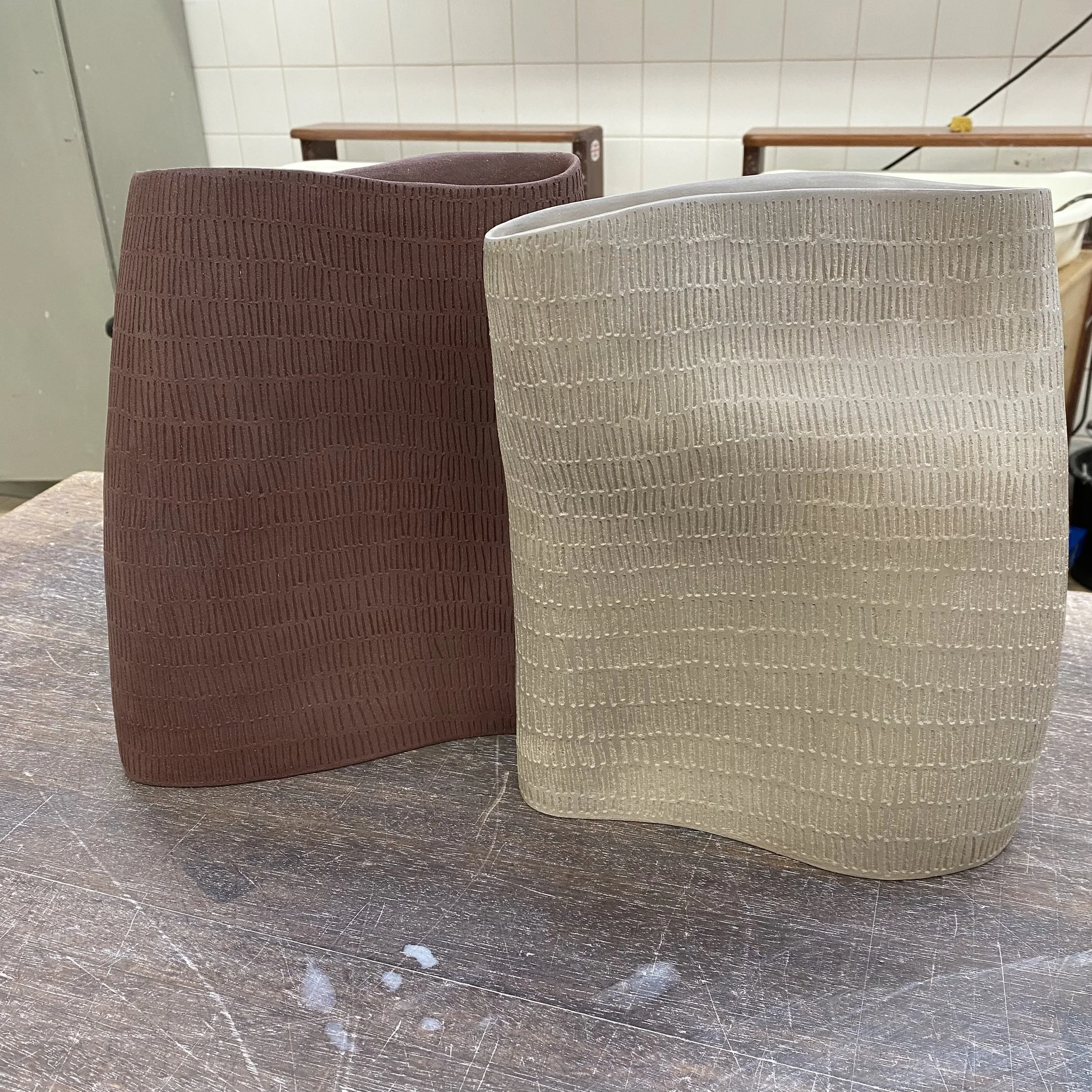
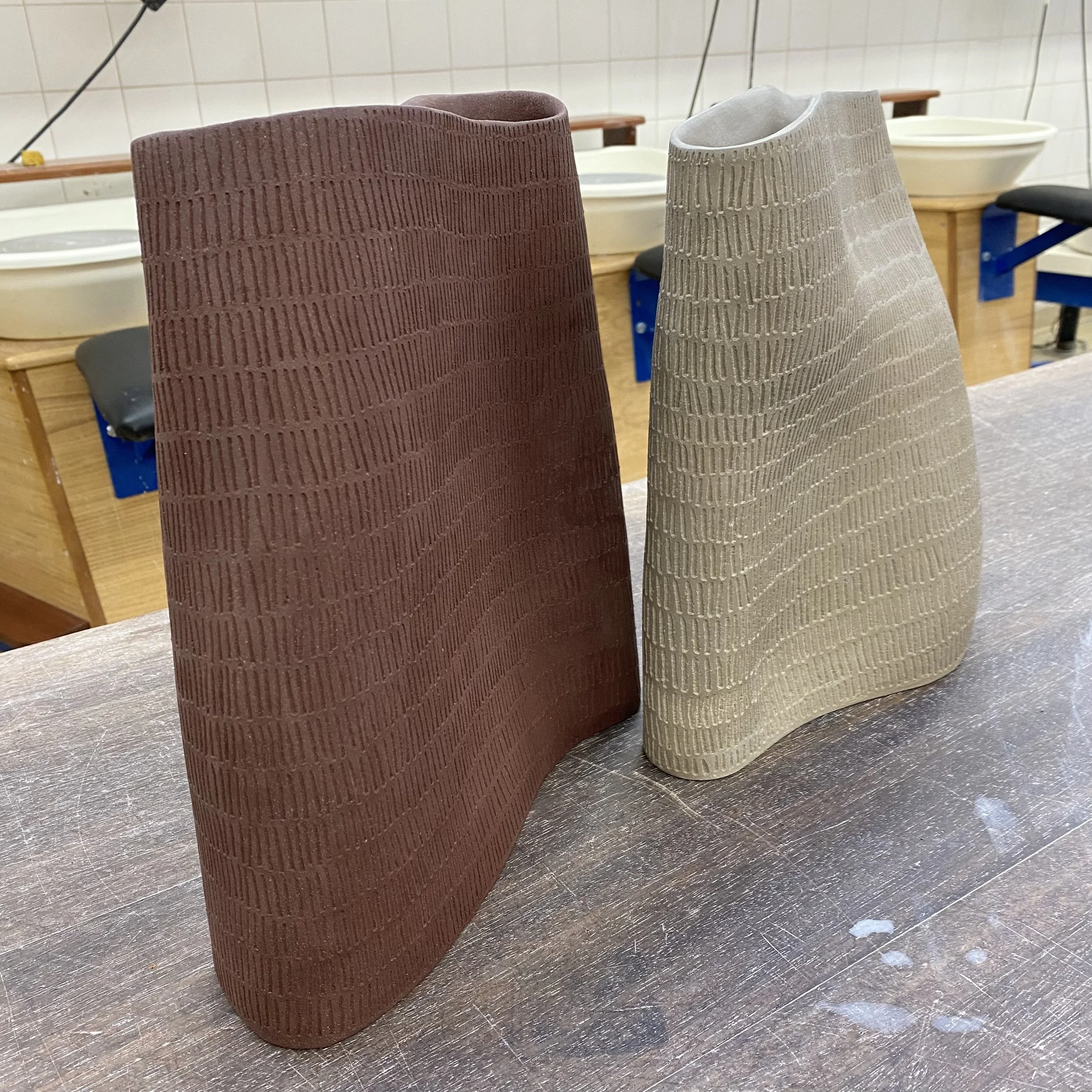
Several pieces emerged from their final firing this week. Unfortunately, a small crack appeared in the platter form, meaning that particular idea will need revisiting in the coming weeks. Alongside this, a number of newer forms came through their bisque firing, allowing me to begin experimenting with engobes and the use of a squeezy bottle to apply surface marks. As always, there is a degree of anticipation — and uncertainty — while waiting to see whether these experiments will translate successfully through the final firing.
With many of these pieces still awaiting their final outcome, I found myself reluctant to spend too much time analysing work that has not yet fully revealed itself. Instead, I wanted to maintain momentum and continue making. Returning to my sketchbook research and the contour line that has underpinned much of my Memories of Place methodology, I began revisiting the idea of forms generated from the contour itself.
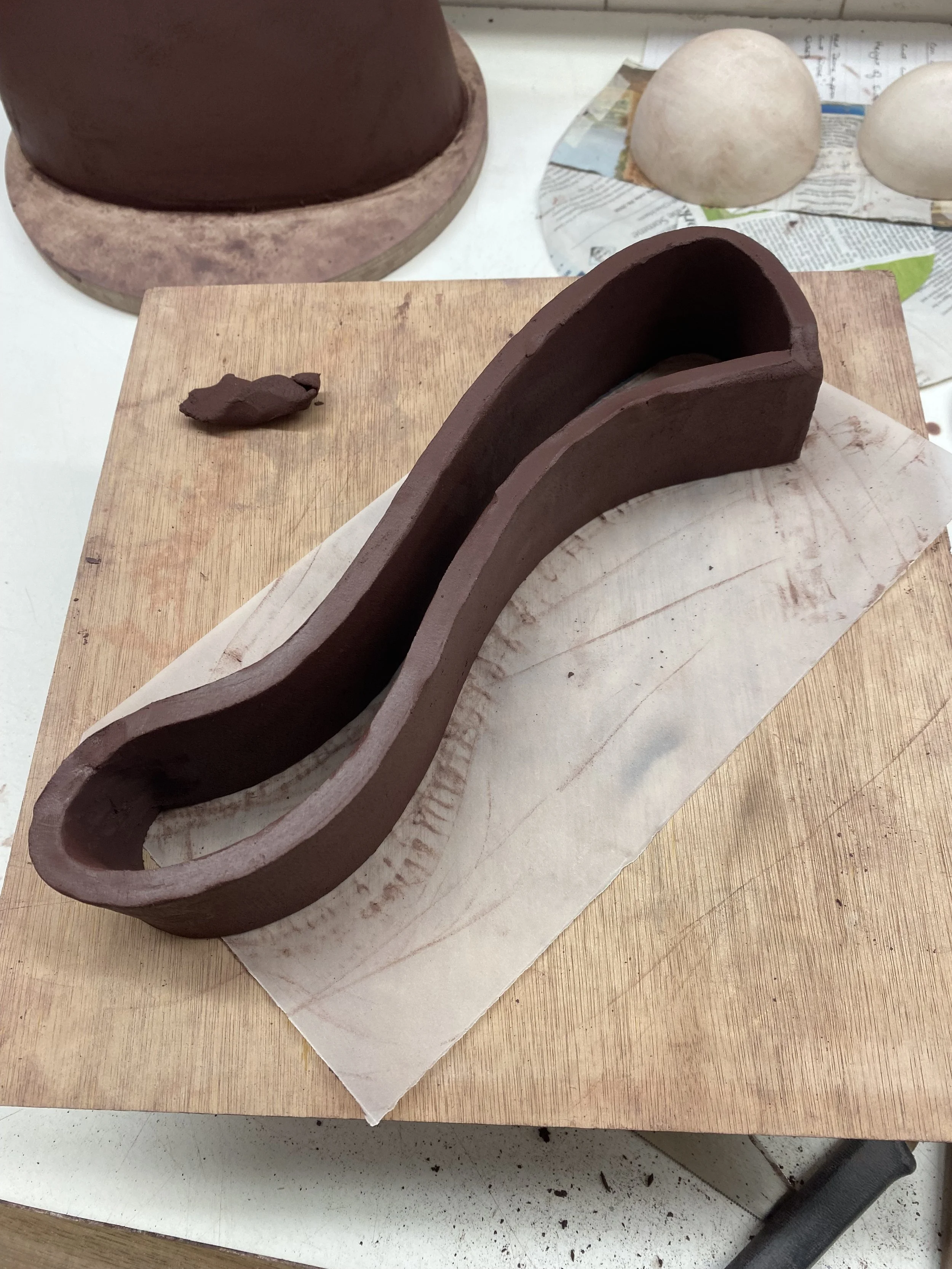
This time, however, I wanted the contour line to act less as a strict instruction and more as a point of departure. Rather than dictating the form, I wanted it to suggest a direction, allowing the vessels to become more fluid and organic while still retaining something of the rhythm and character of place. The contour line is no longer generating a direct response to the landscape, but instead acting as a catalyst for forms shaped by memory, rhythm and lived experience.
Using the section of contour line from Sawbridge that has informed much of my recent work, I divided it into five segments. My intention is for the first vessel to be constructed in black clay and the final vessel in a pale buff clay. The three intervening forms will gradually transition between the two through the blending of raw clay bodies, creating a gentle shift in tone across the series.
What interests me is not simply the individual vessels, but the relationship between them. Each form responds to the next, creating a conversation across the group while still retaining its own identity. Together they begin to form something larger than themselves — a flow of forms, materials and memories.
I am particularly encouraged by these early developments. The first two vessels are now drying and, with a little luck, will be ready for bisque firing next week. It feels as though they are opening up another possible avenue within the work, one that I am keen to explore further.
Once Ceramic Wales is over, I intend to take a brief pause from making to review where the work currently stands. Beyond that lies a very intense period of development leading towards the final degree show. The date for the Private View is now firmly in the diary — Friday 4 September at 5pm — and there remain many threads to pull together before the work reaches the level of cohesion I am striving for.
Yet, for the first time in a while, those threads feel as though they are beginning to connect. There is still much to resolve, but I can sense a clearer flow emerging between form, material and memory — and that feels like an encouraging place to be.