April 2026
A historical context
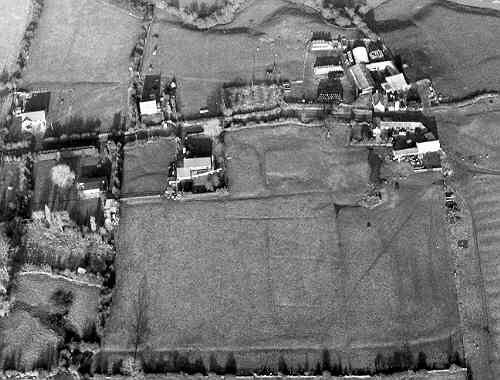
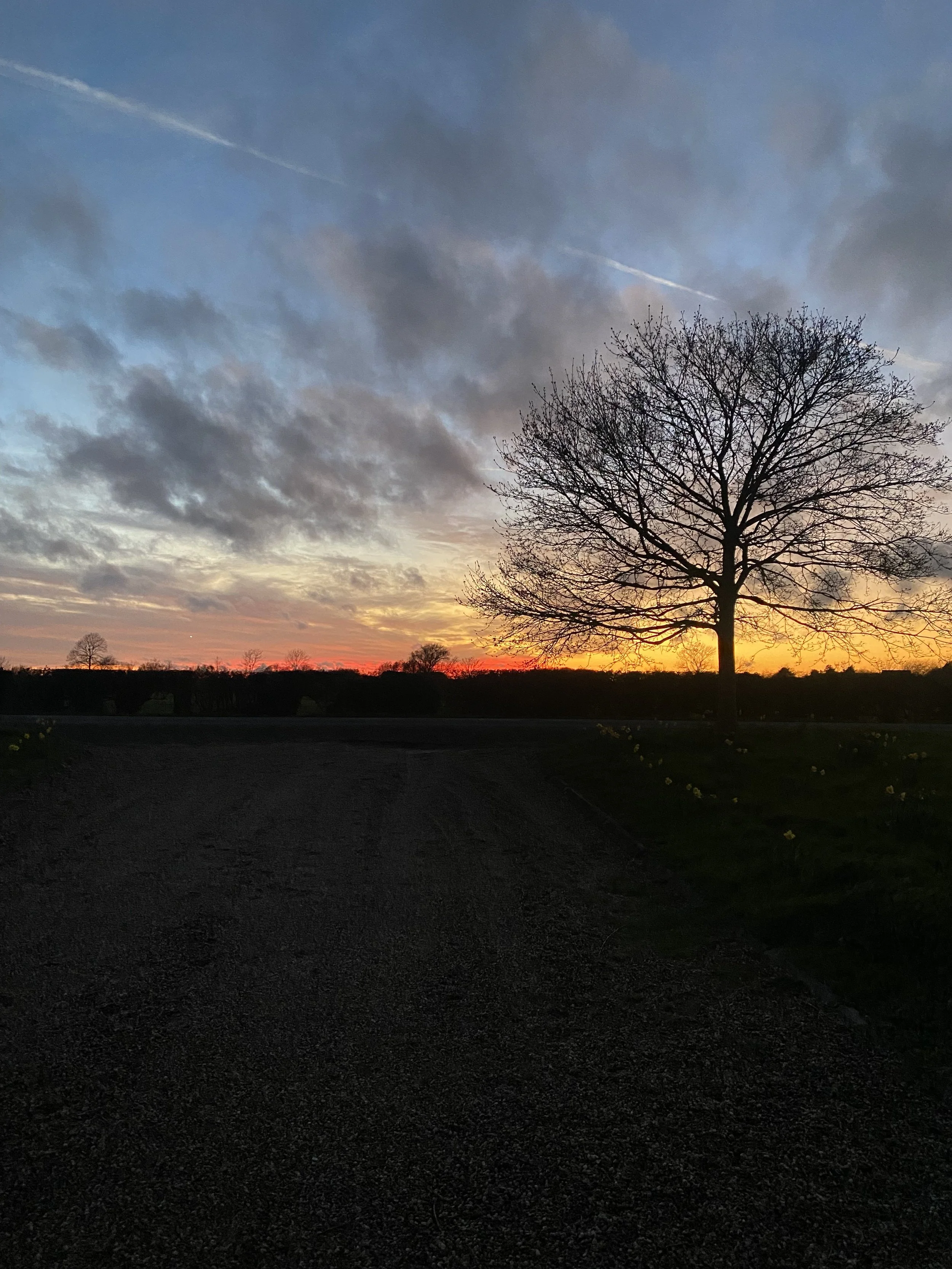
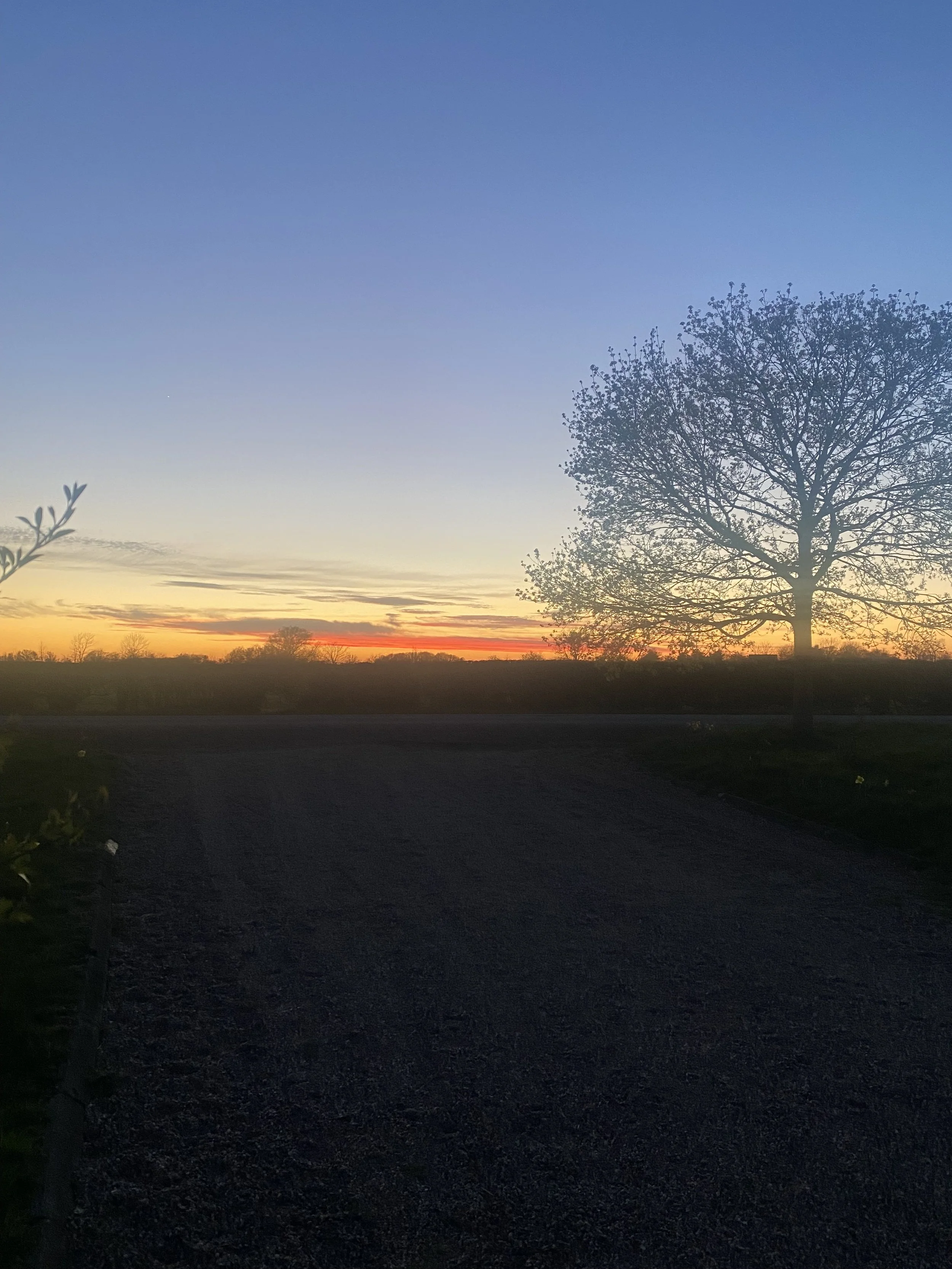
Sawbridge recorded in the Domesday Book of 1086 as Salwebridge, carries its history quietly within both name and land. Derived from the Anglo-Saxon for “the bridge by the sallows” it speaks directly of willow trees once gathered along the crossing of the River Leam - a name rooted in close observation of the immediate landscape. There is something in this that resonates deeply with my own way of working: a reading of place through what is present, felt and held rather than overtly declared.
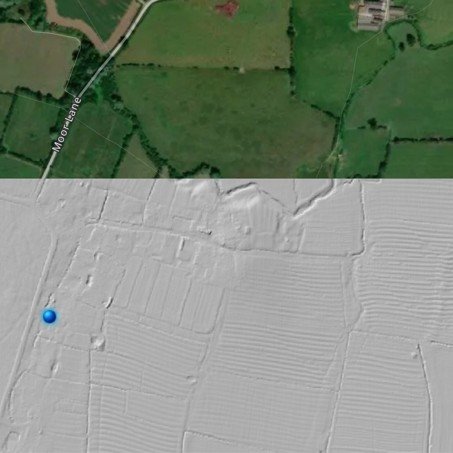
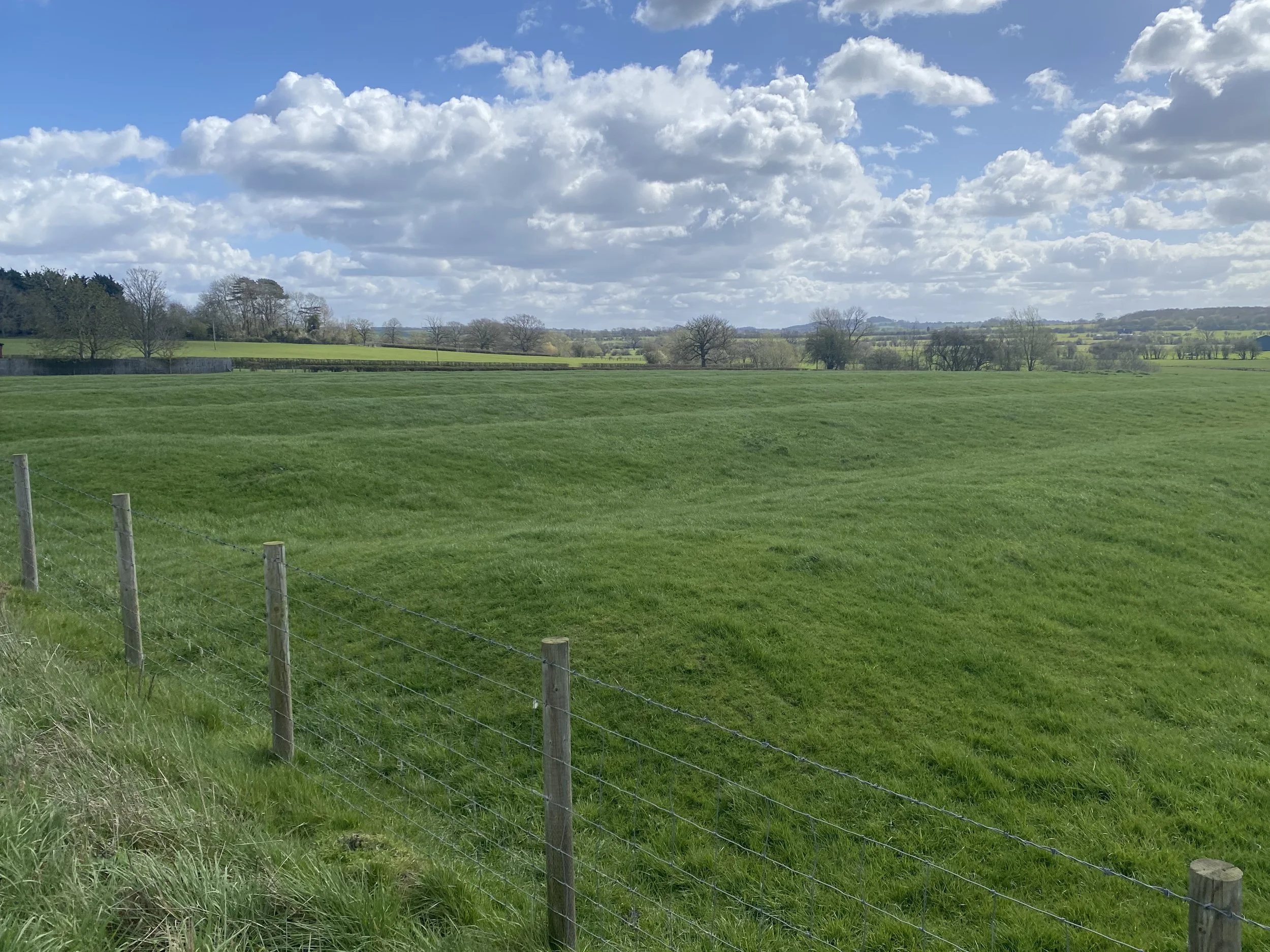
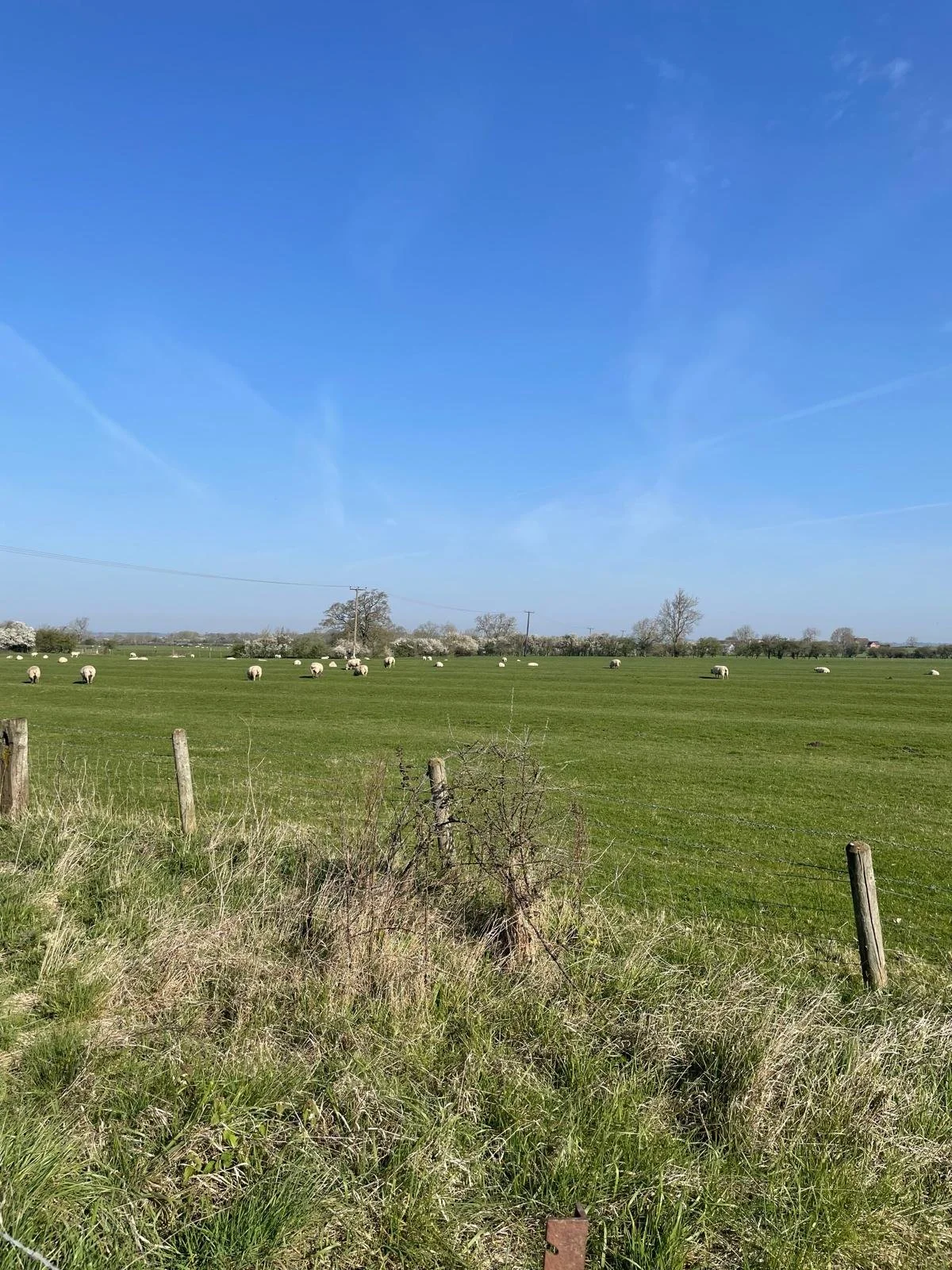
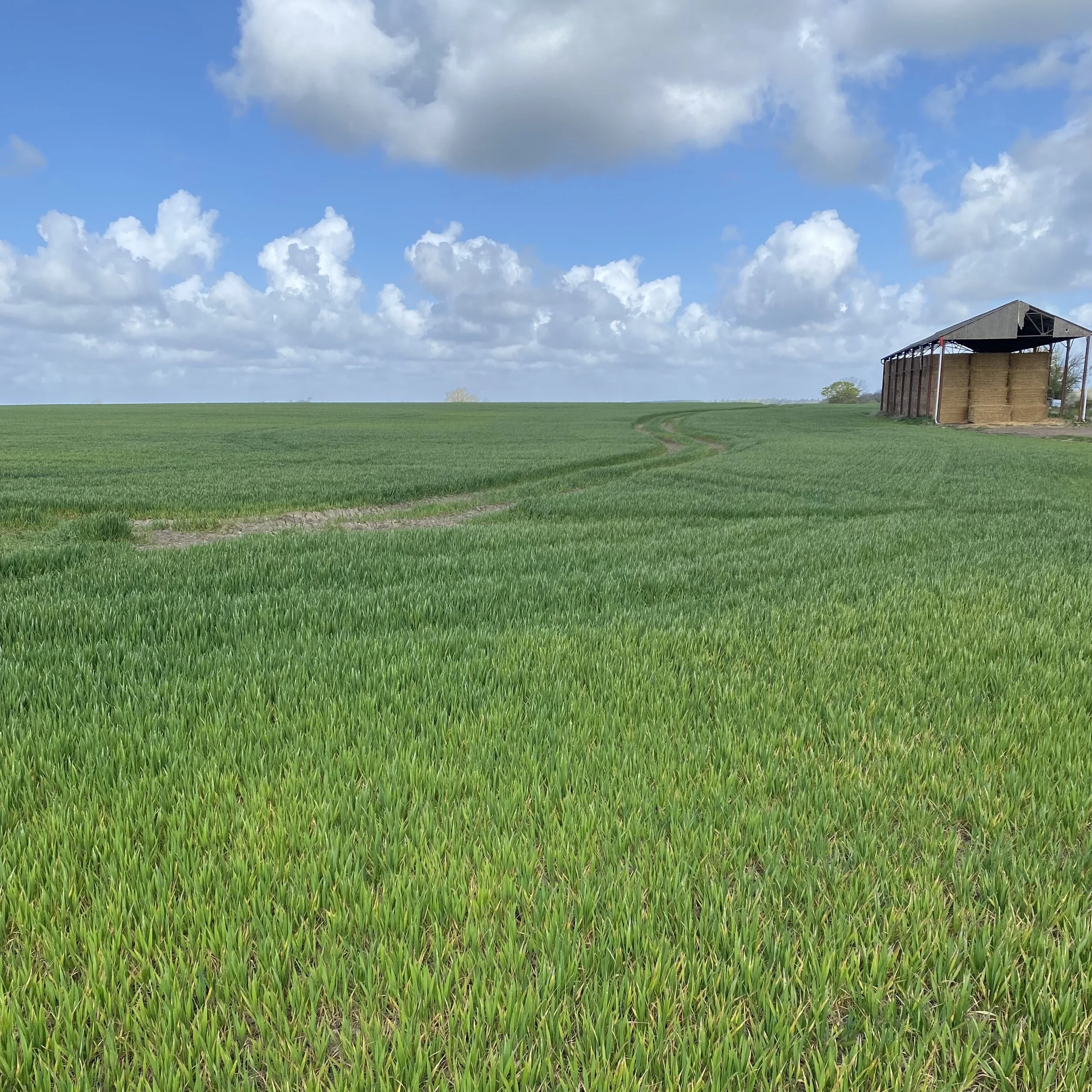
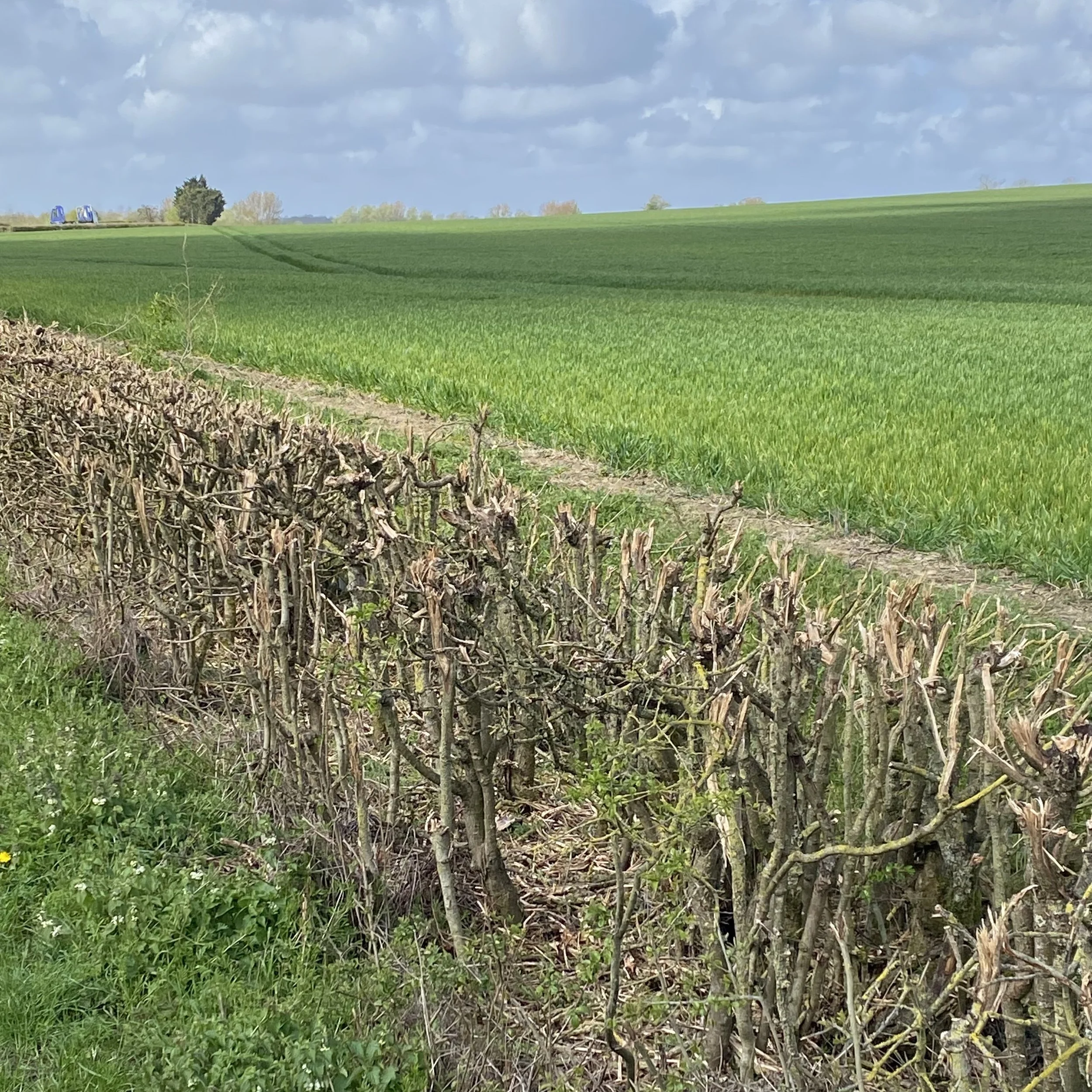
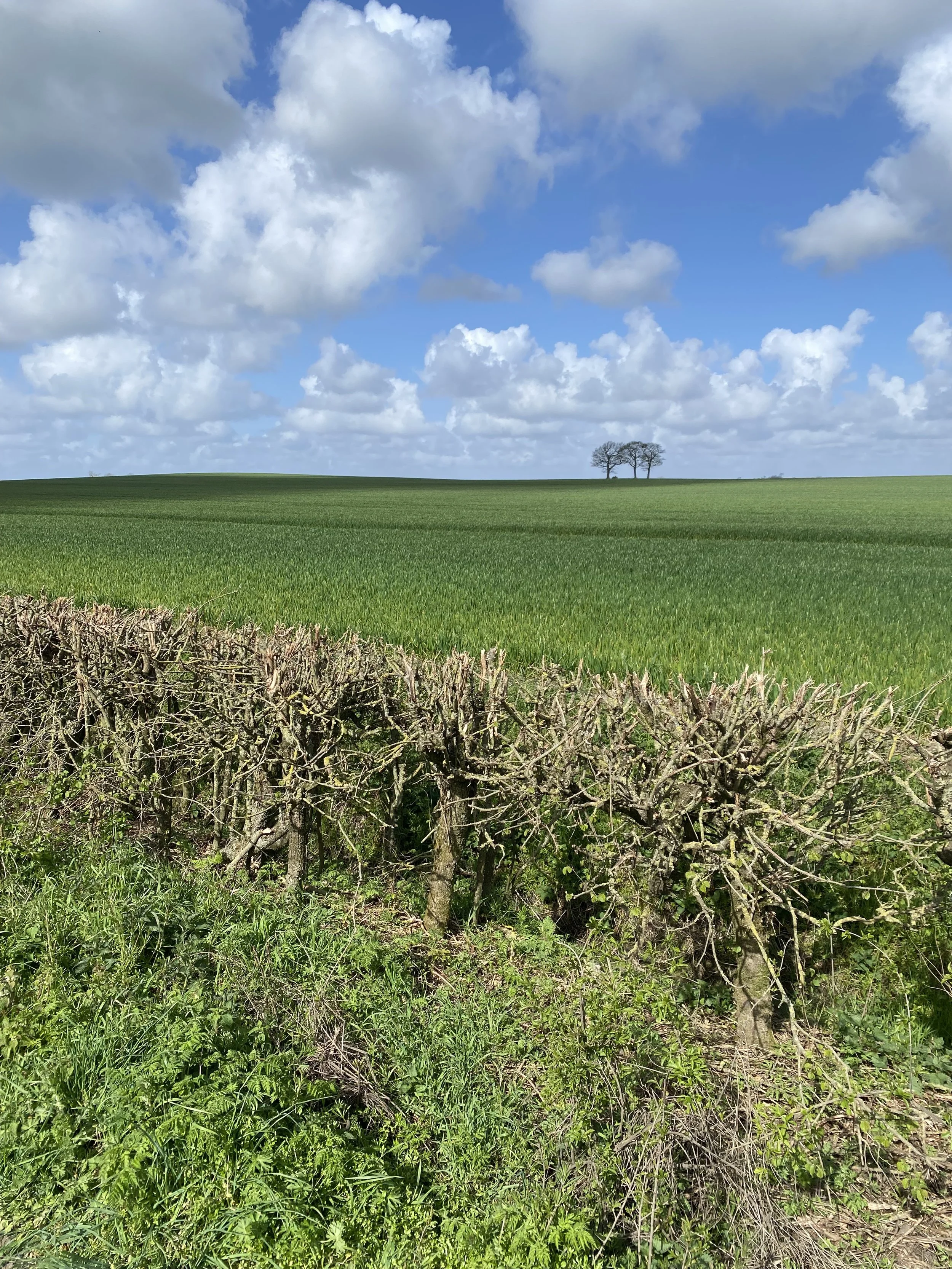
At its peak around 1730, Sawbridge is thought to have comprised 29 homes; today, fewer than ten remain. What endures more visibly than architecture, however, is the land itself. To the north and particularly to the east, the fields retain the distinct imprint of ridge and furrow - an expansive, rhythmic system that speaks of sustained, communal agricultural life.
These ridges and furrows - raised earth separated by ditches - were formed over centuries through the repeated action of oxen-drawn ploughs within the medieval open-field system, resulting in a gently corrugated surface. Functionally, the ridges provided drier ground for crops, while the furrows allowed water to drain away - an adaptation to the often heavy and waterlogged soils of the area. Even now, during wetter winters, certain fields are prone to flooding, quietly reaffirming the logic of this historical intervention.
They are not imposed gestures but accumulated ones - formed through repetition, labour and time. In walking the fields, I am increasingly aware of their quiet rhythm: the rise and fall, the soft flow that moves across the land like a held breath. These patterns do not simply describe past activity; they carry it. They hold memory in their contours.
In my current work, I find myself returning to these undulations - not to replicate them directly, but to understand how such subtle shifts in surface can hold both physical and emotional resonance. The ridge and furrow becomes less a literal reference and more a language: of repetition, of gentle disruption, of continuity. Much like the vessels I make, where form is built slowly by hand, these landscapes are constructed through time, each pass leaving a trace.
There is a quiet conversation here between land and making - between what is shaped and what is remembered.
w/c 13 April 2026
Tracing Memory Through the Landscape
Over the past few weeks, researching the origins of the hamlet of Sawbridge has led me to question whether my deep connection to this place is shaped, at least in part, by the quiet, rhythmic ebb and flow of the surrounding landscape. The ridge and furrow patterns, still clearly visible in many of the fields, hold a subtle but persistent presence — a historical topography that continues to shape how the land is experienced today.
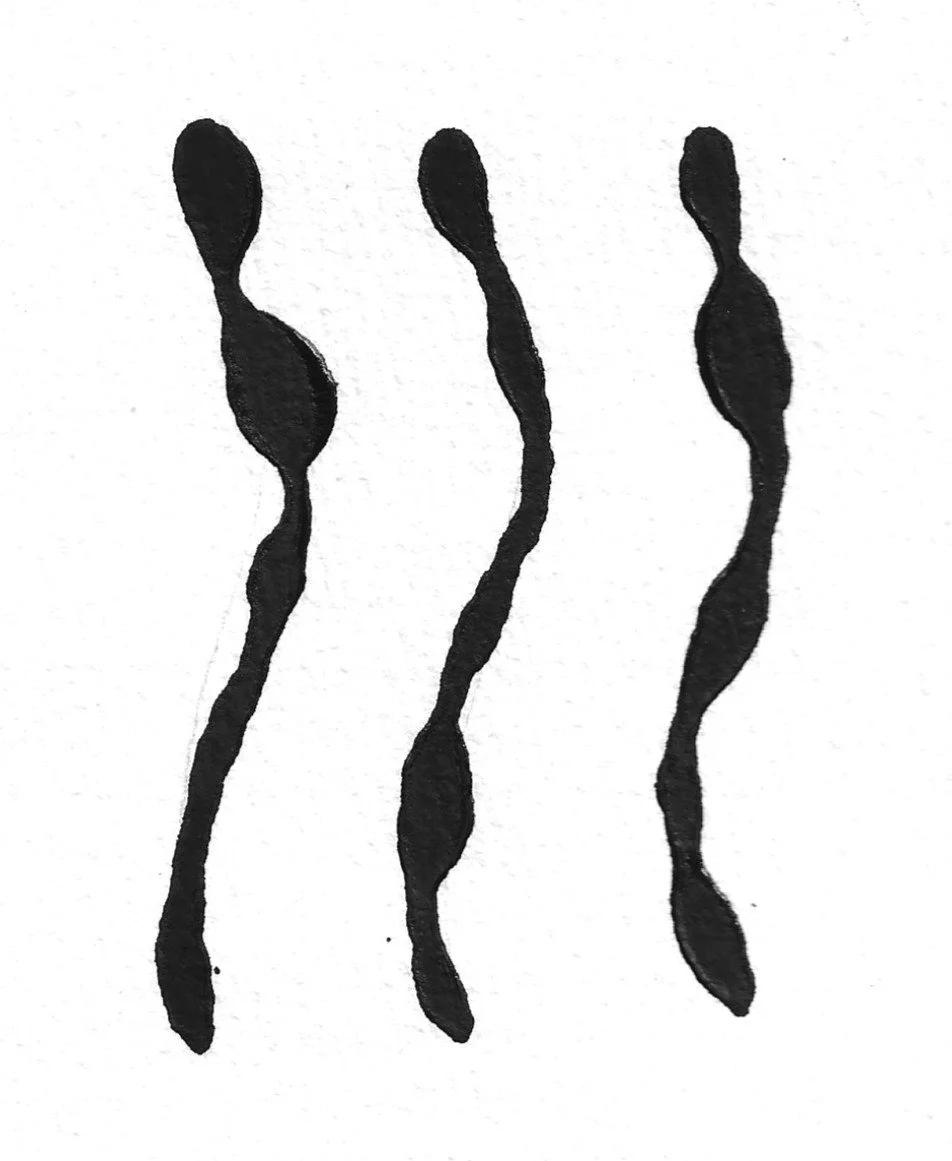
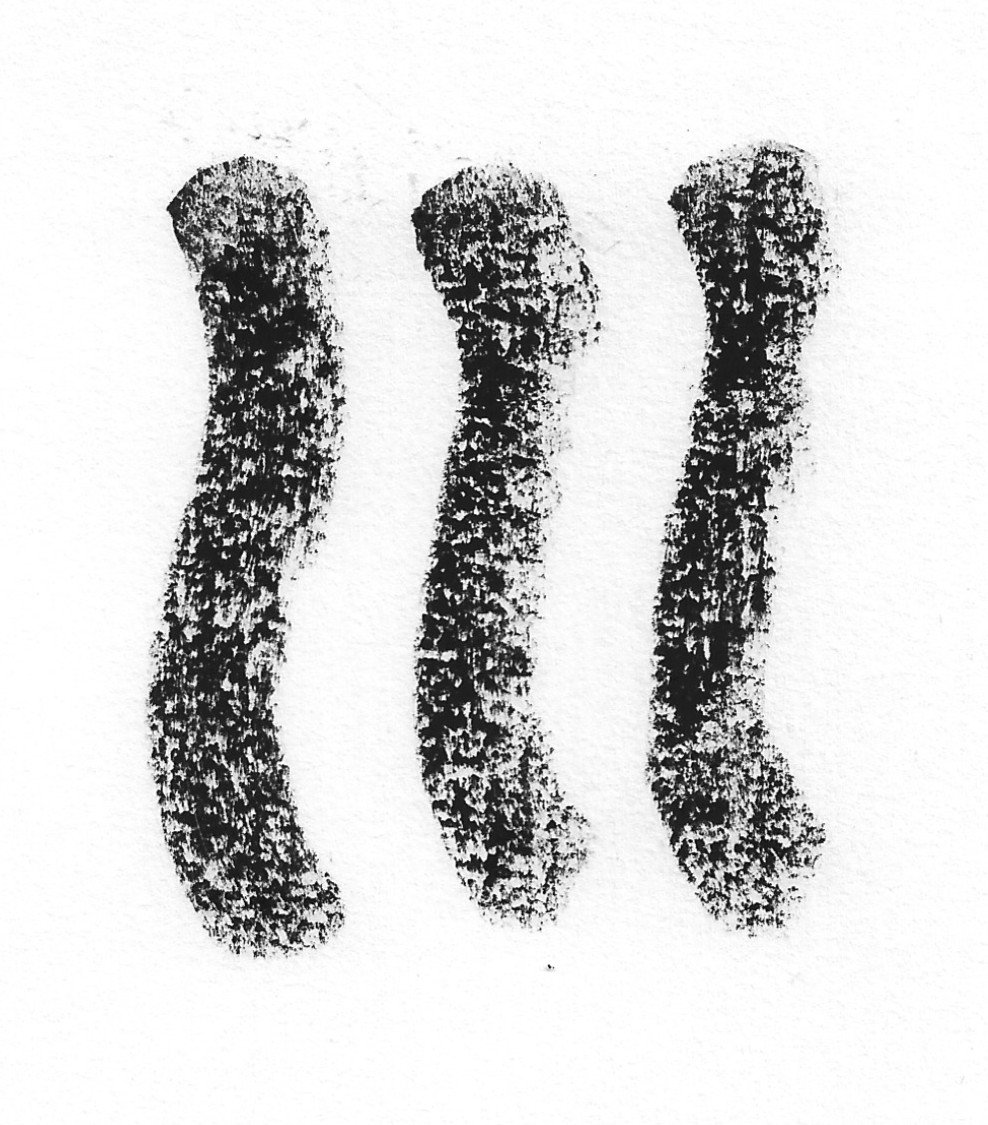
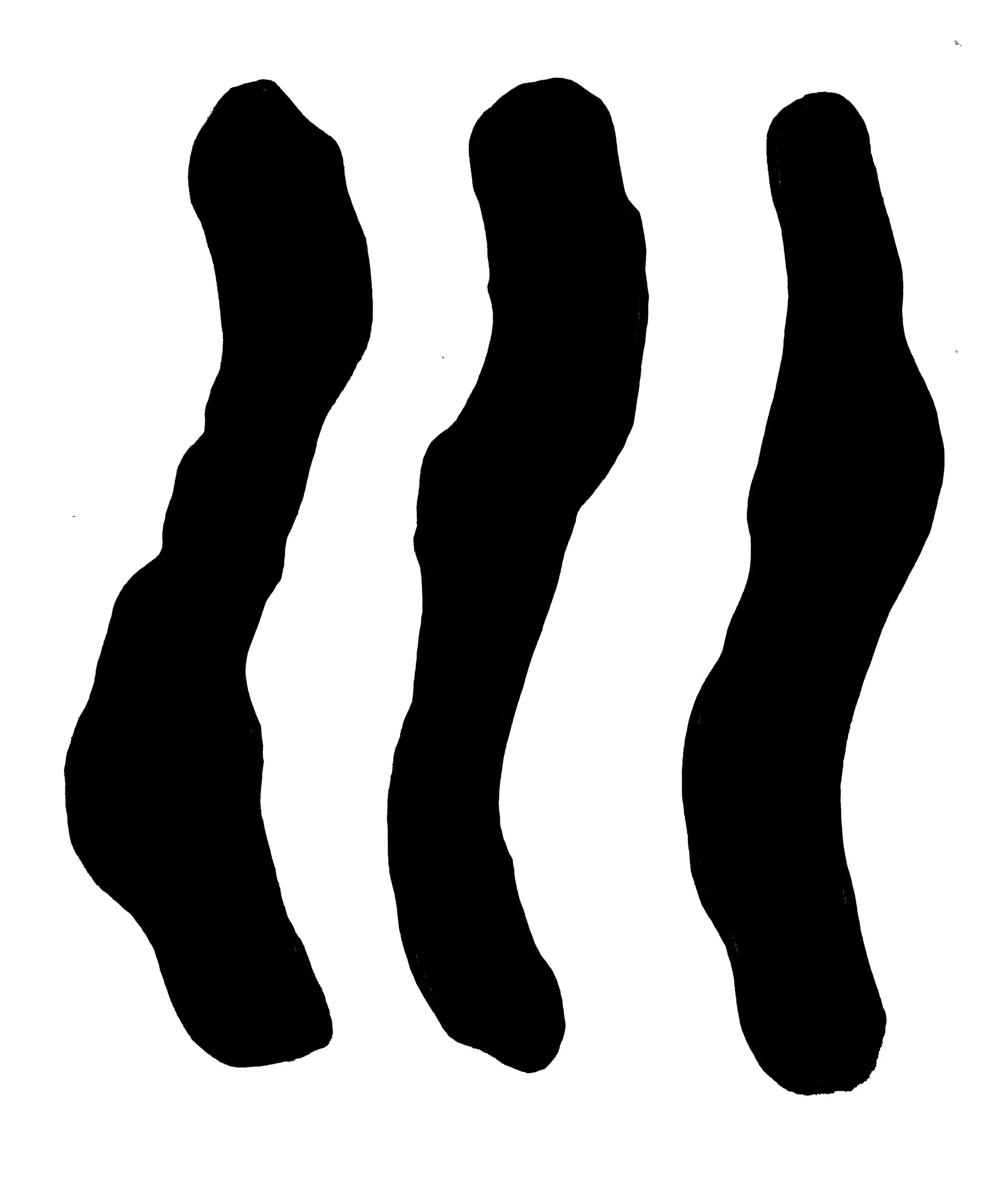
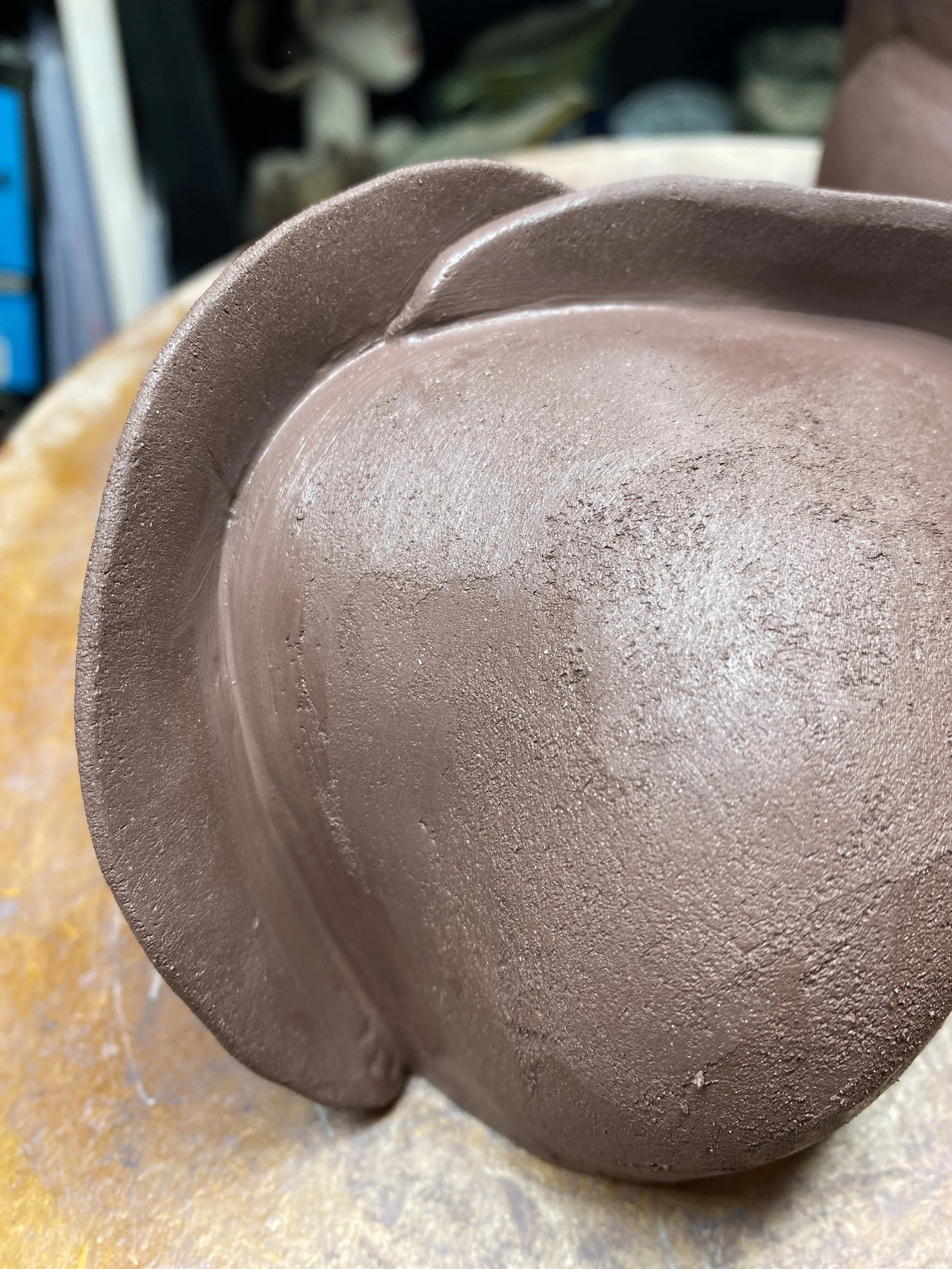
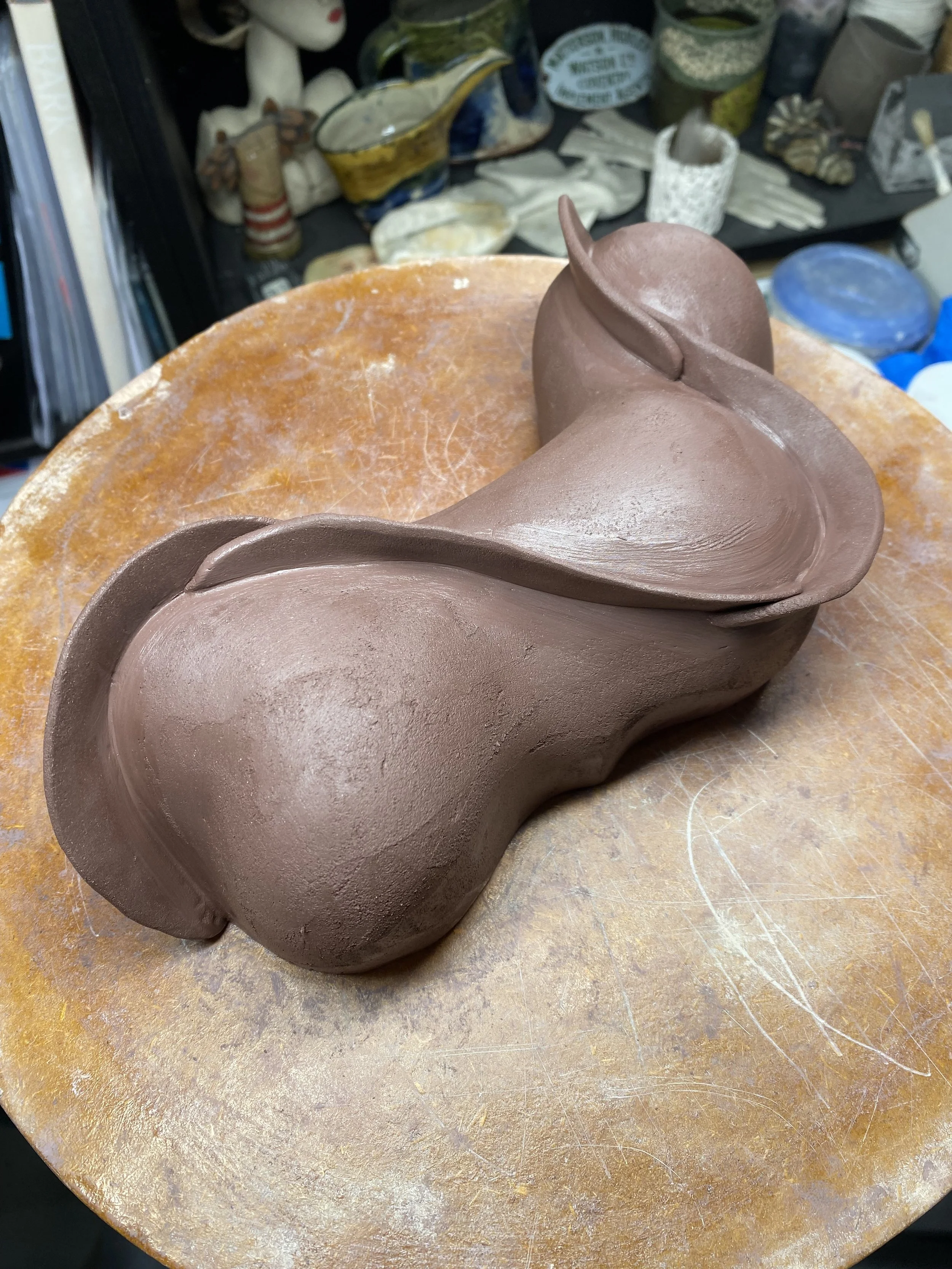
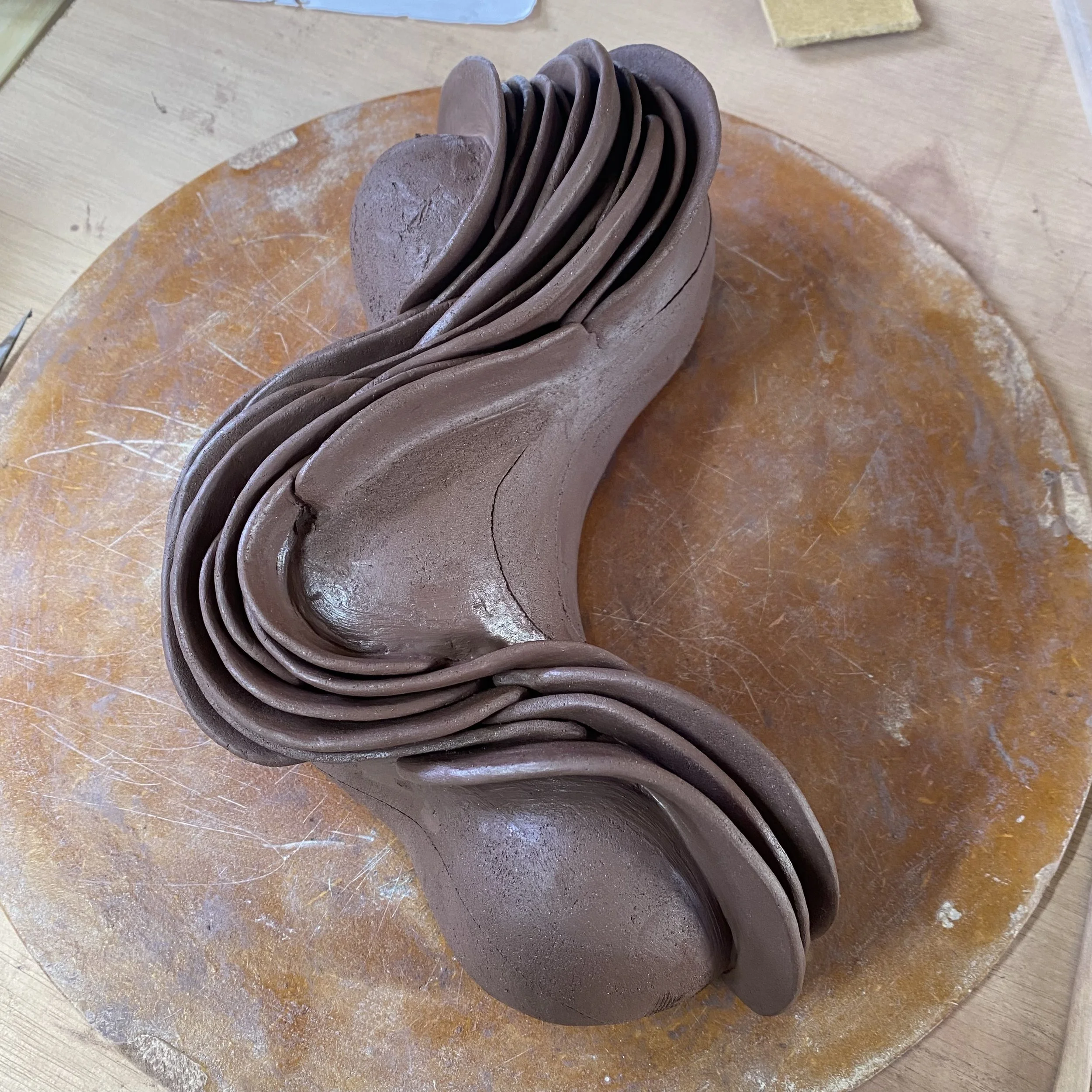
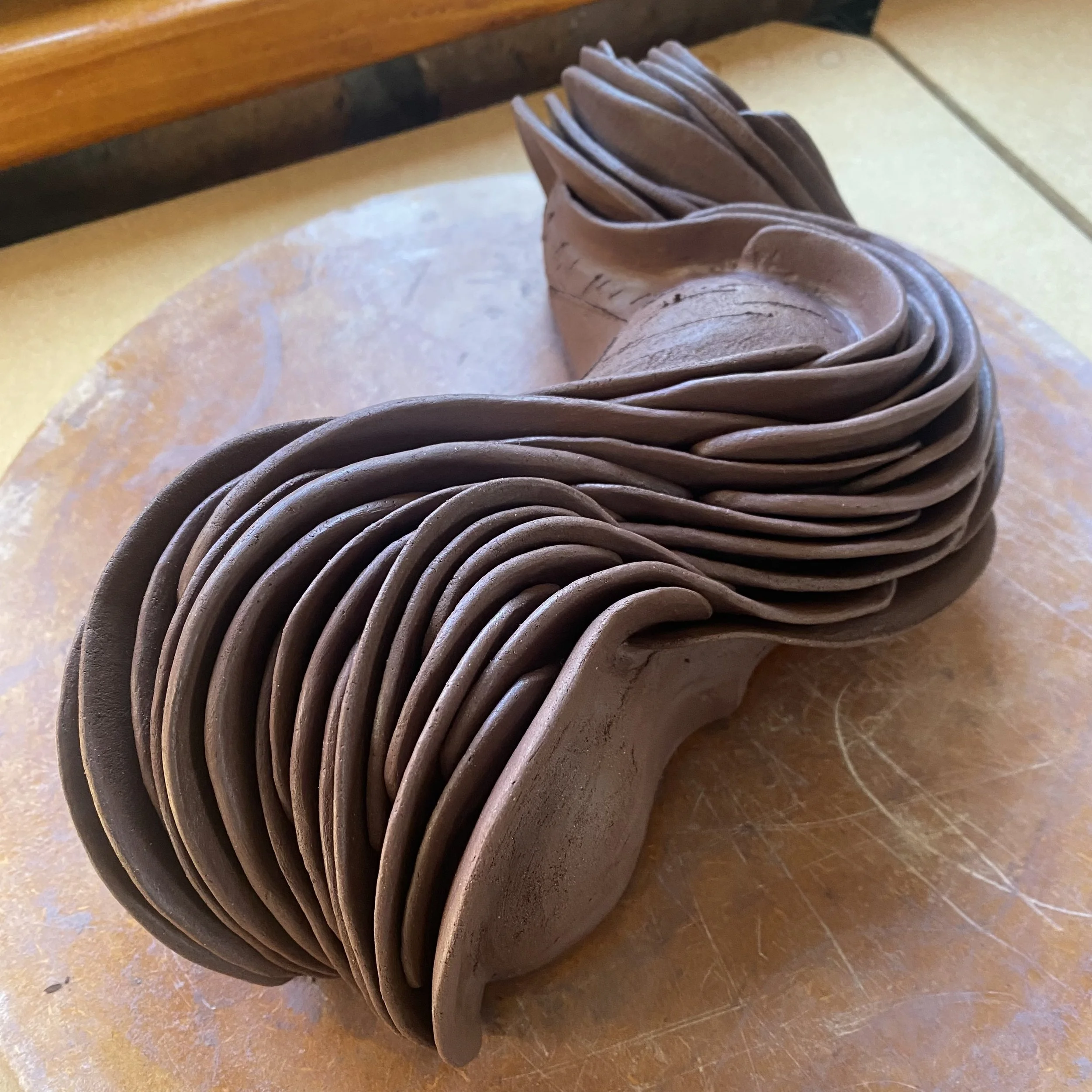
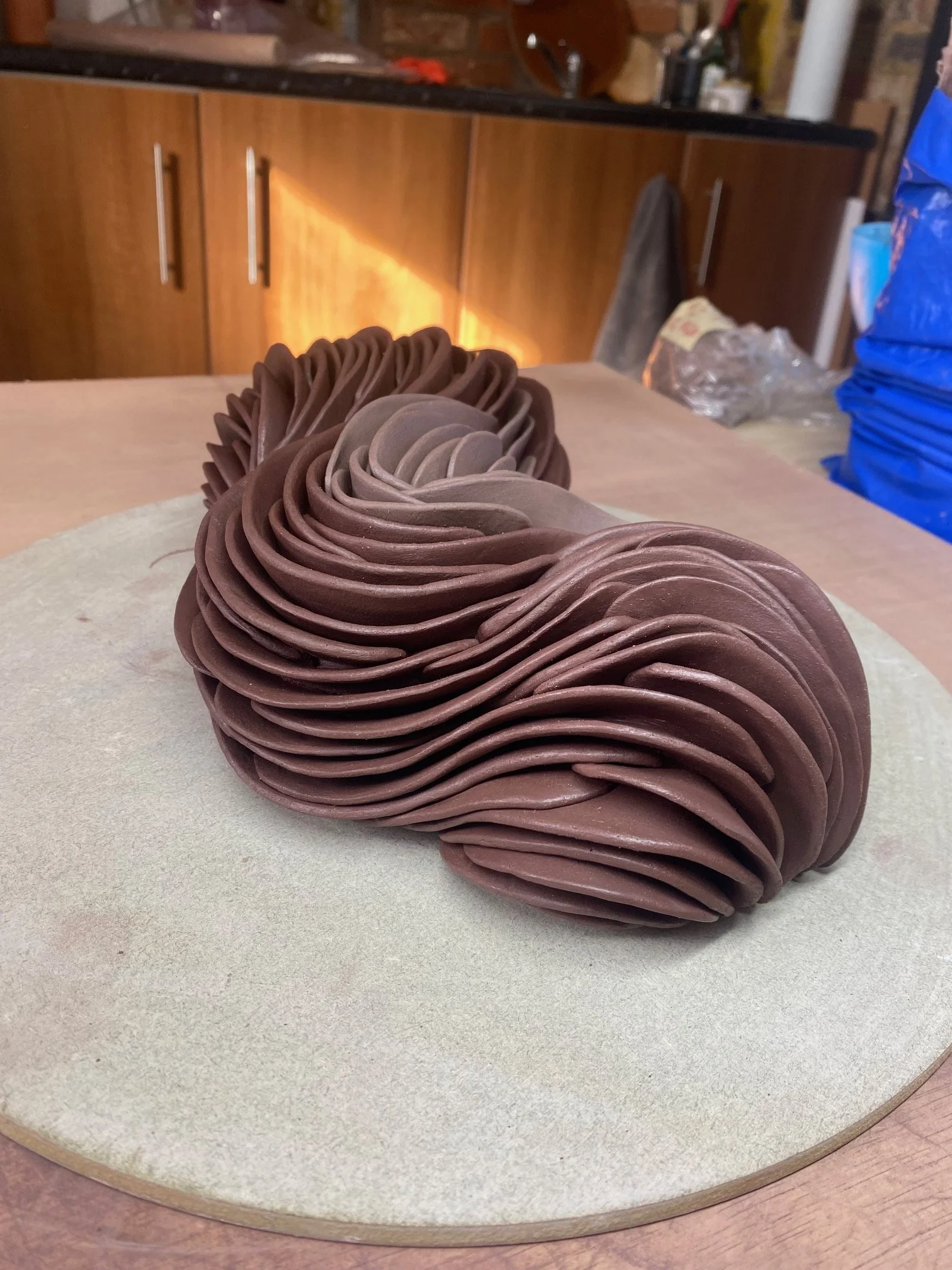
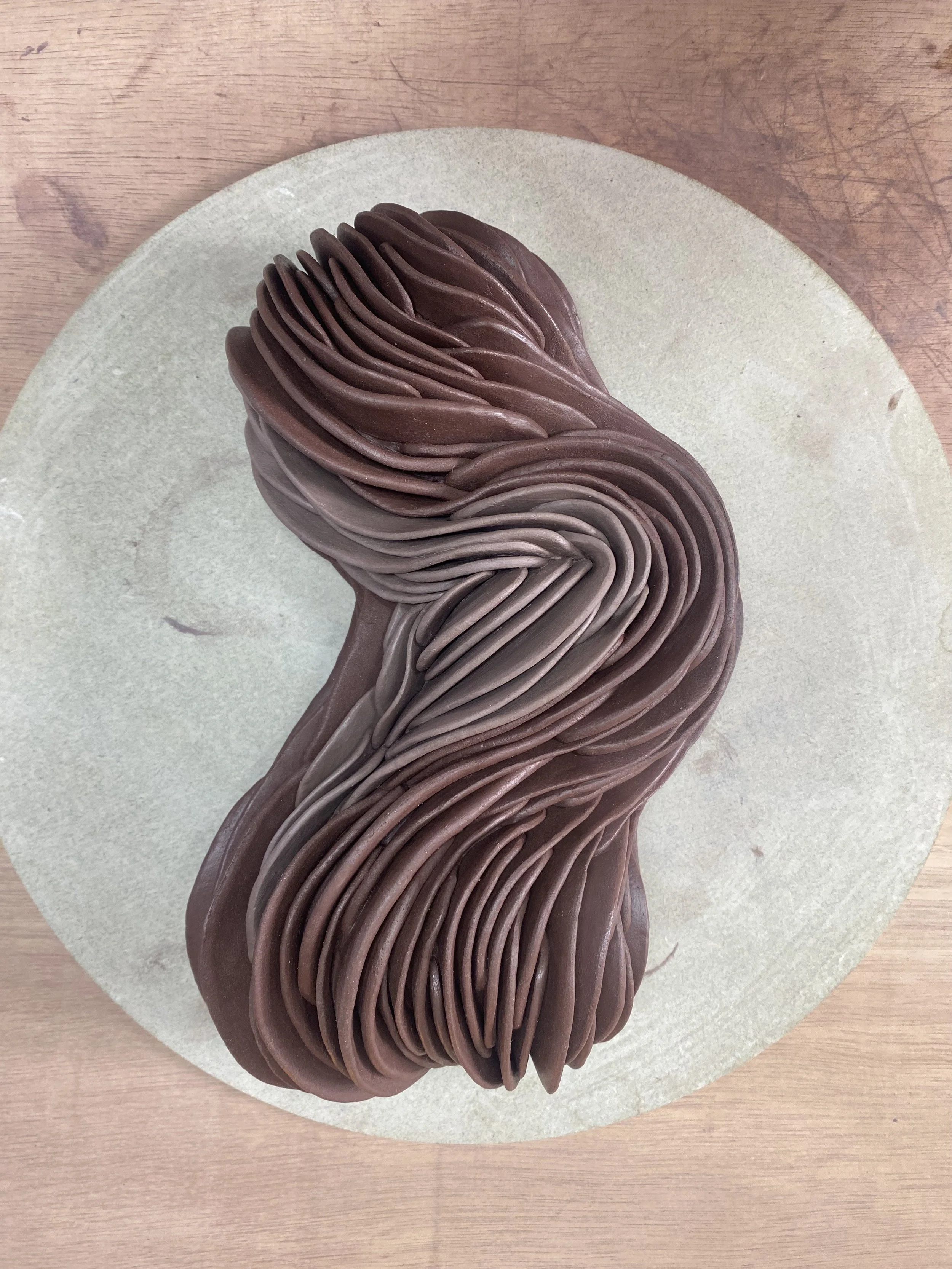
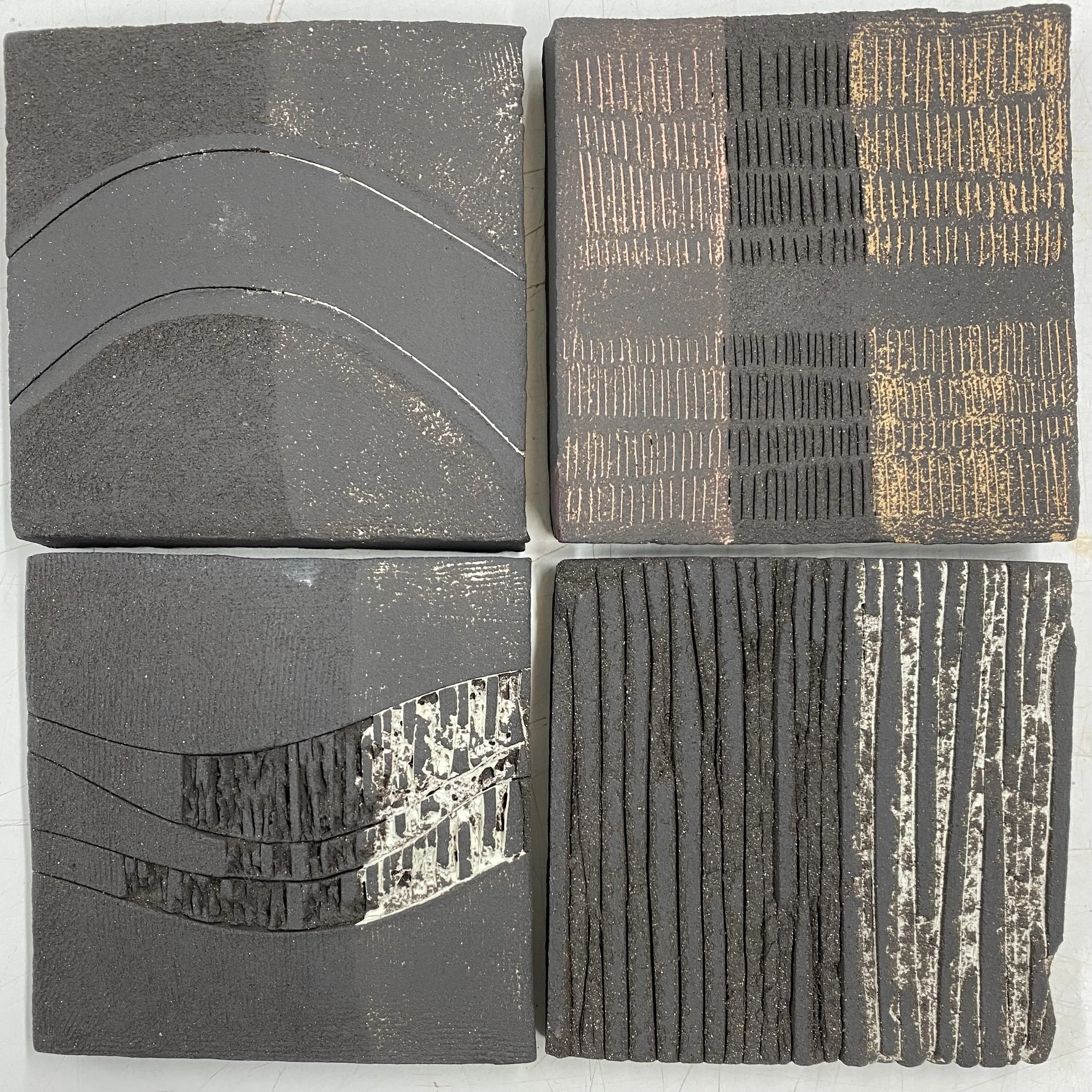
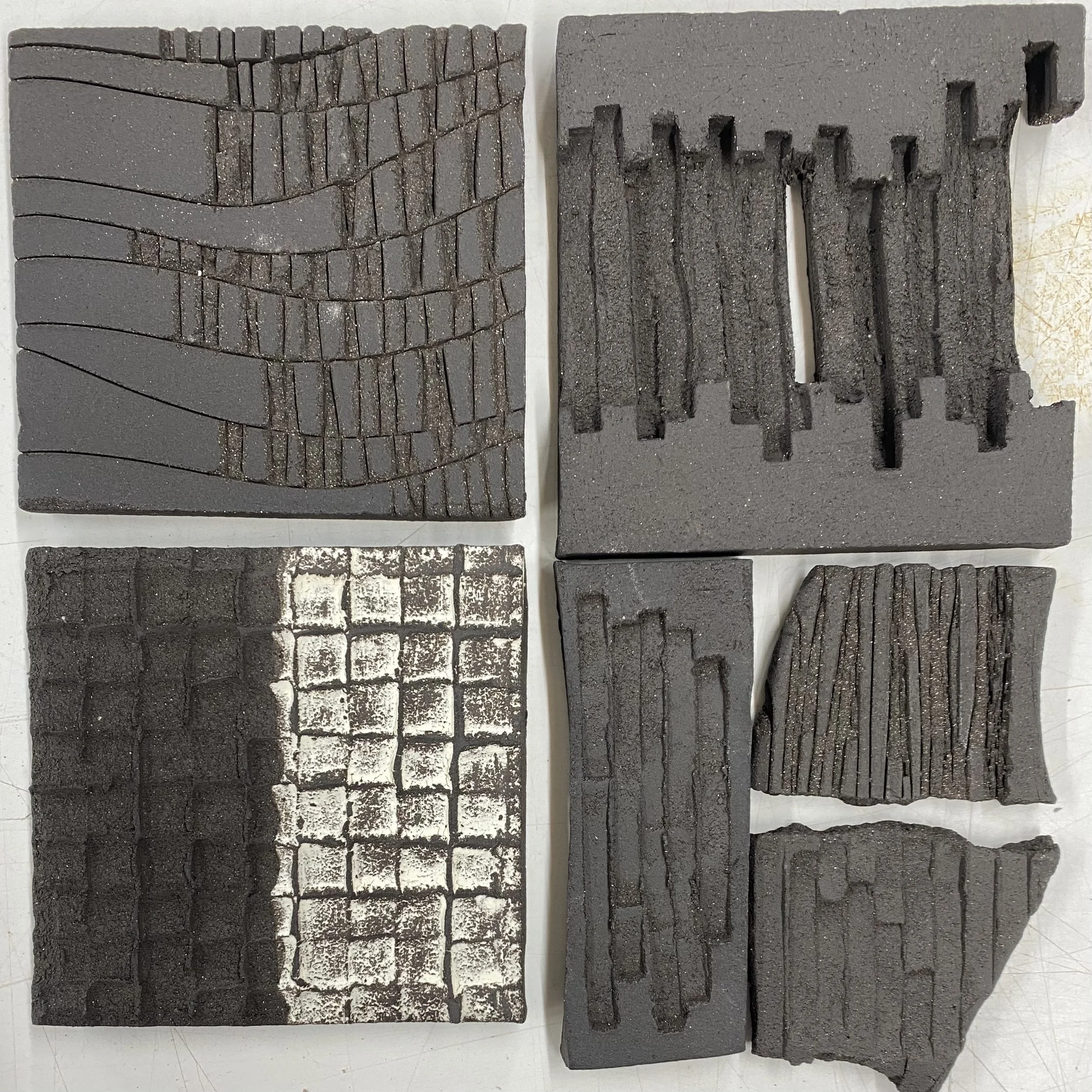
With this in mind, I began exploring how to abstract the reversed, shallow ‘S’ of these ridge and furrow patterns through mark-making. Working through quick thumbnail sketches, I became interested in how these rhythmic gestures might be translated into an abstract ceramic wall piece. Over the past few weeks, this sculpture has slowly begun to take form, built in black clay with a small section incorporating a blend of 25% black and pale buff clay — a quiet nod to the relationship between material, surface and embodied experience.
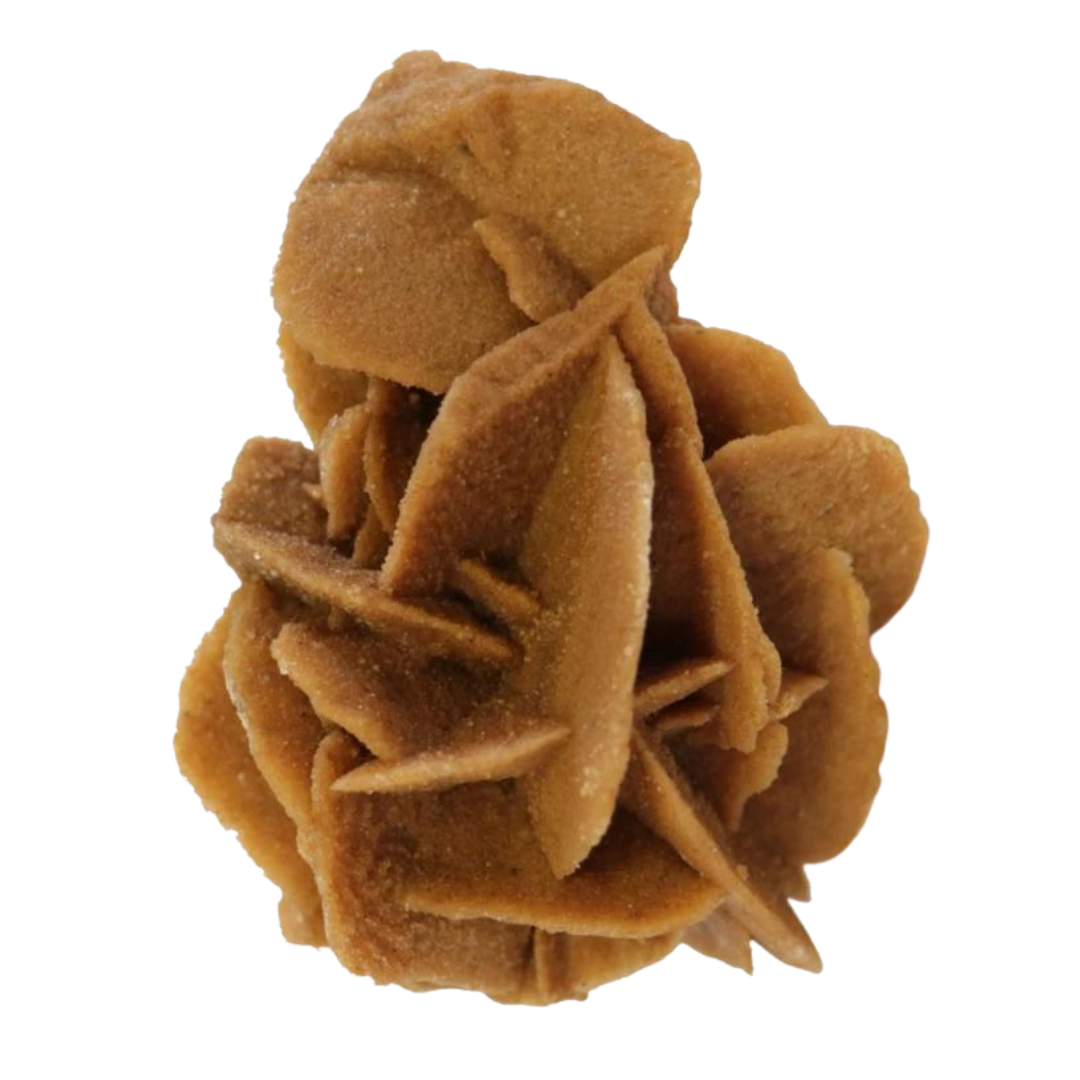
As the piece developed, it unexpectedly triggered a childhood memory of a Desert Rose that my father once gave me, brought back from what felt — at the time — like a very distant and exotic place. I have no recollection of where he had travelled, but I clearly remember the sense of wonder I felt holding that object in my hands. The Desert Rose itself has long since disappeared, but the memory remains — a reminder of how objects, like landscapes, can hold and carry emotional resonance across time.
I realise I have said this before, but this journey through the Masters has felt something of a rollercoaster — full of twists and turns, moments of doubt, and the occasional glimpse of clarity just out of reach. There have been false starts and blind alleys, yet each exploration — whether through a new technique, material or idea — has offered something in return, quietly shaping the direction of my practice.
At the beginning of this month, I hit a wall — both mentally and emotionally. I found myself with nothing left to give, no energy to draw from, and no clear sense of what to do next. After spending a couple of weeks quietly at home, I am beginning to feel re-energised, with ideas slowly returning. With our first exhibition now only eight weeks away, as part of Ceramic Wales, the pressure is certainly building. However, a positive and constructive conversation this week with my course tutor Rob Parr, has helped me begin to see a possible way forward.
With this renewed sense of direction, I will spend the next few days gathering my thoughts in my sketchbook, aiming to form a clear and considered plan of action for the weeks ahead — and hoping, quietly, that this might lead me closer to the clarity I have been searching for.
w/c 20 April 2026
Gathering Momentum
This week has felt like a significant shift — a return to momentum, with long hours in the studio and a growing sense of direction beginning to take hold. With a tentative way forward and the beginnings of a plan, I feel I have had a genuinely productive and purposeful week.
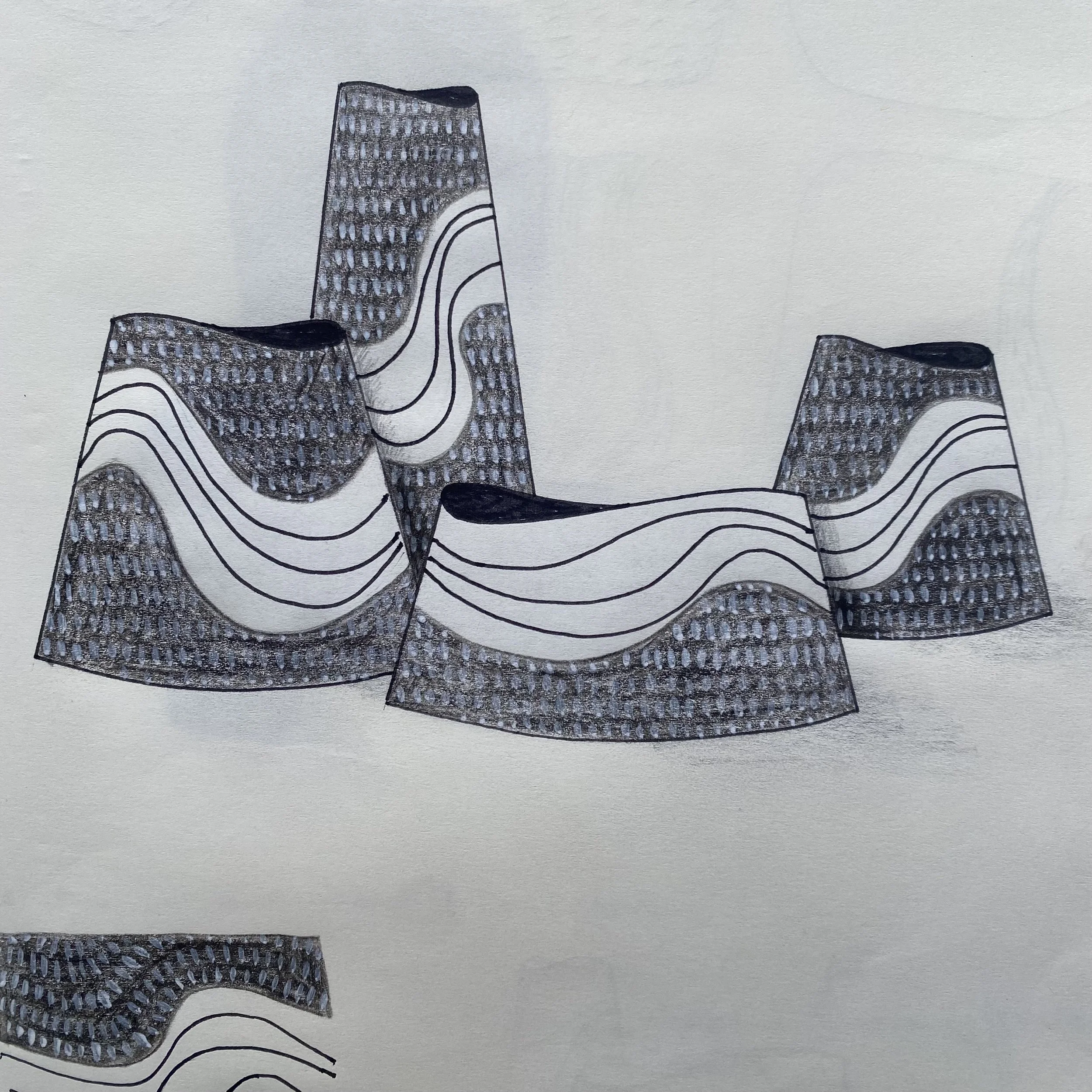
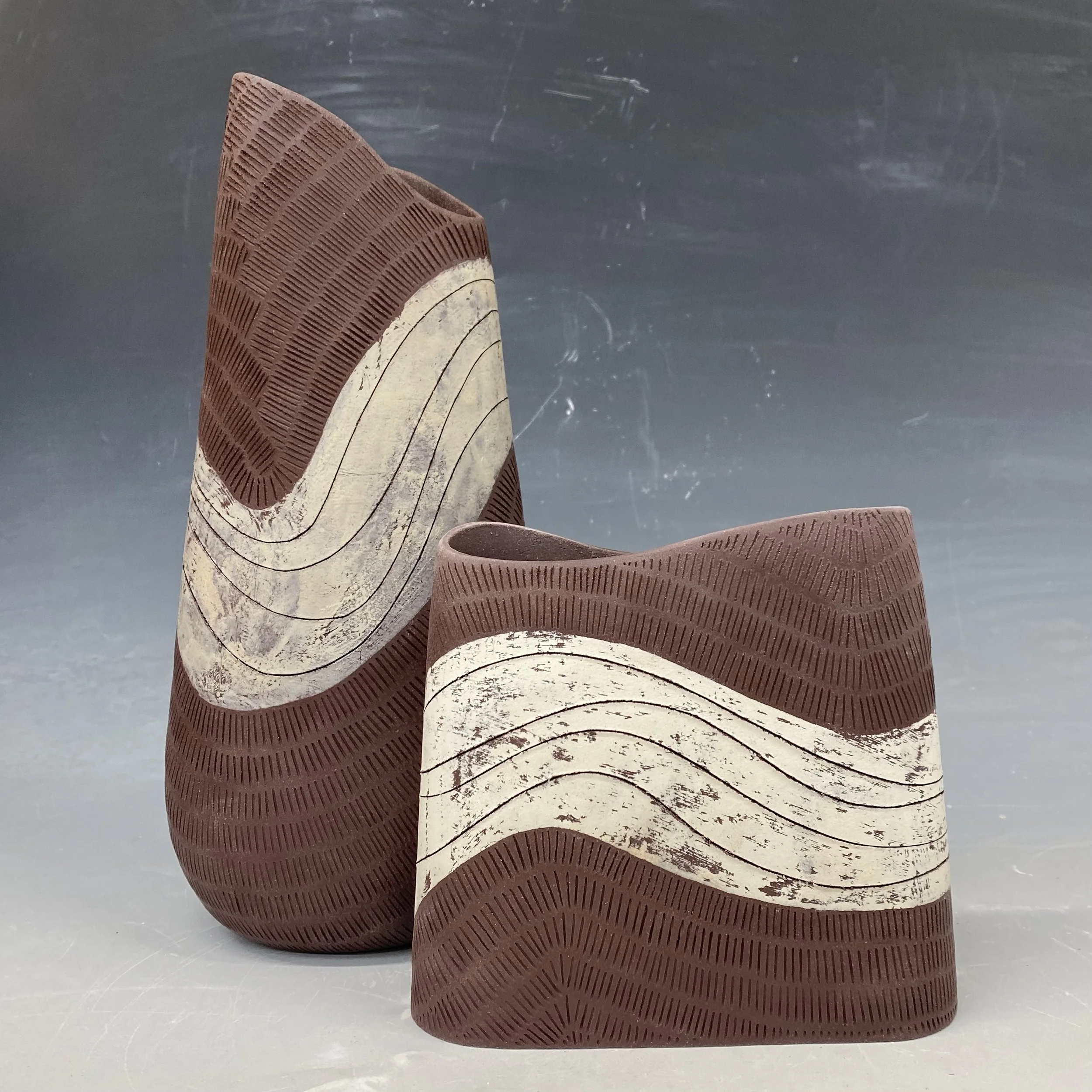
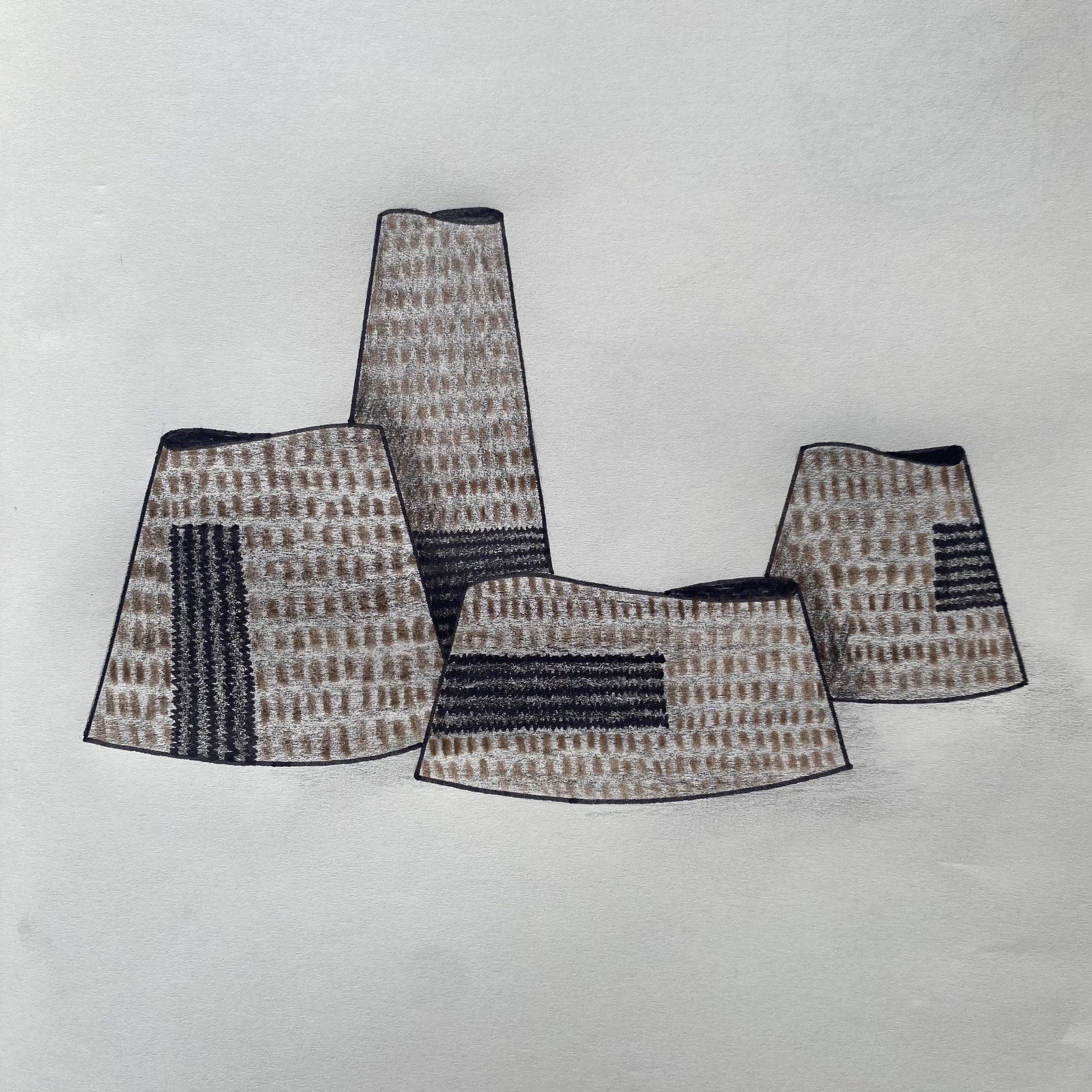
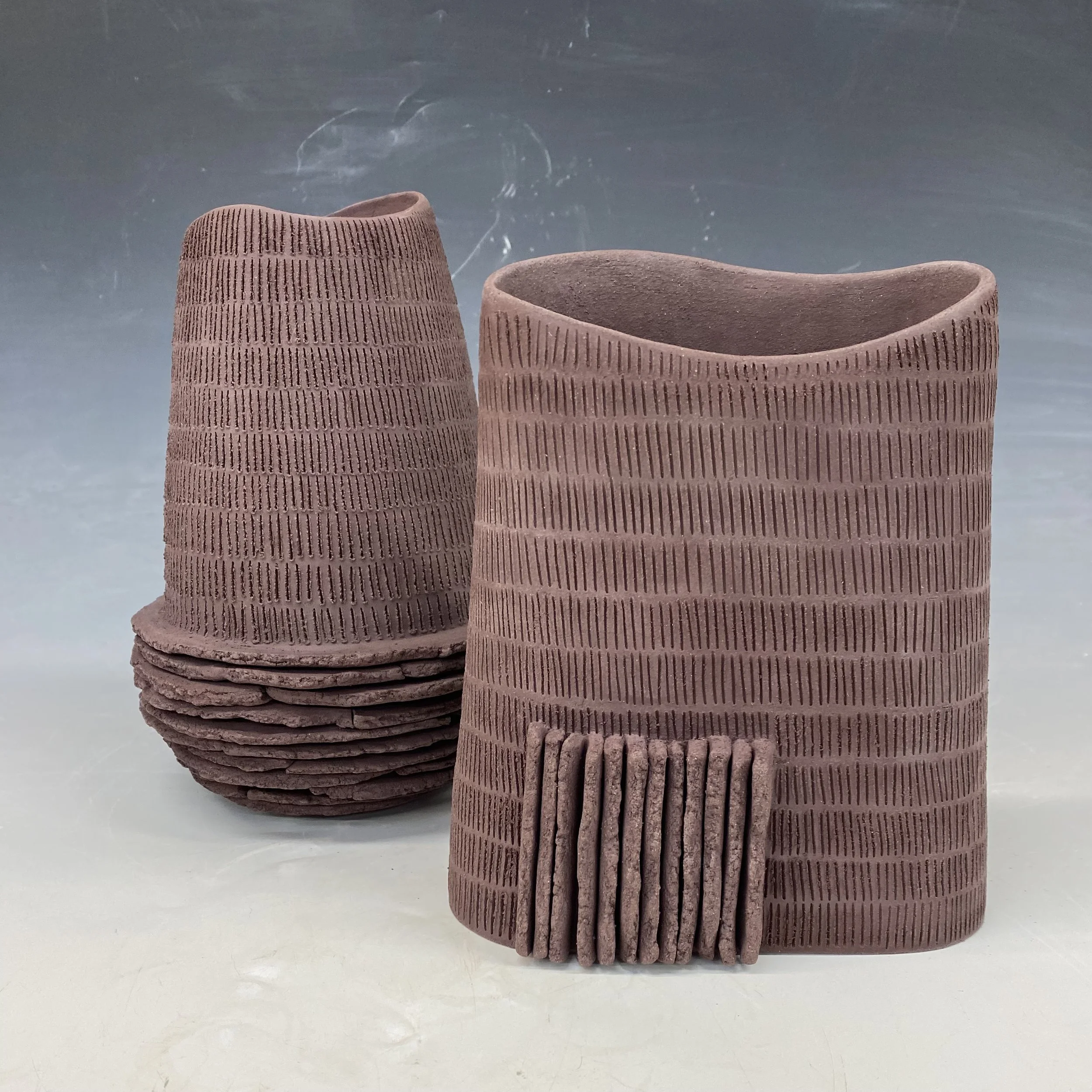
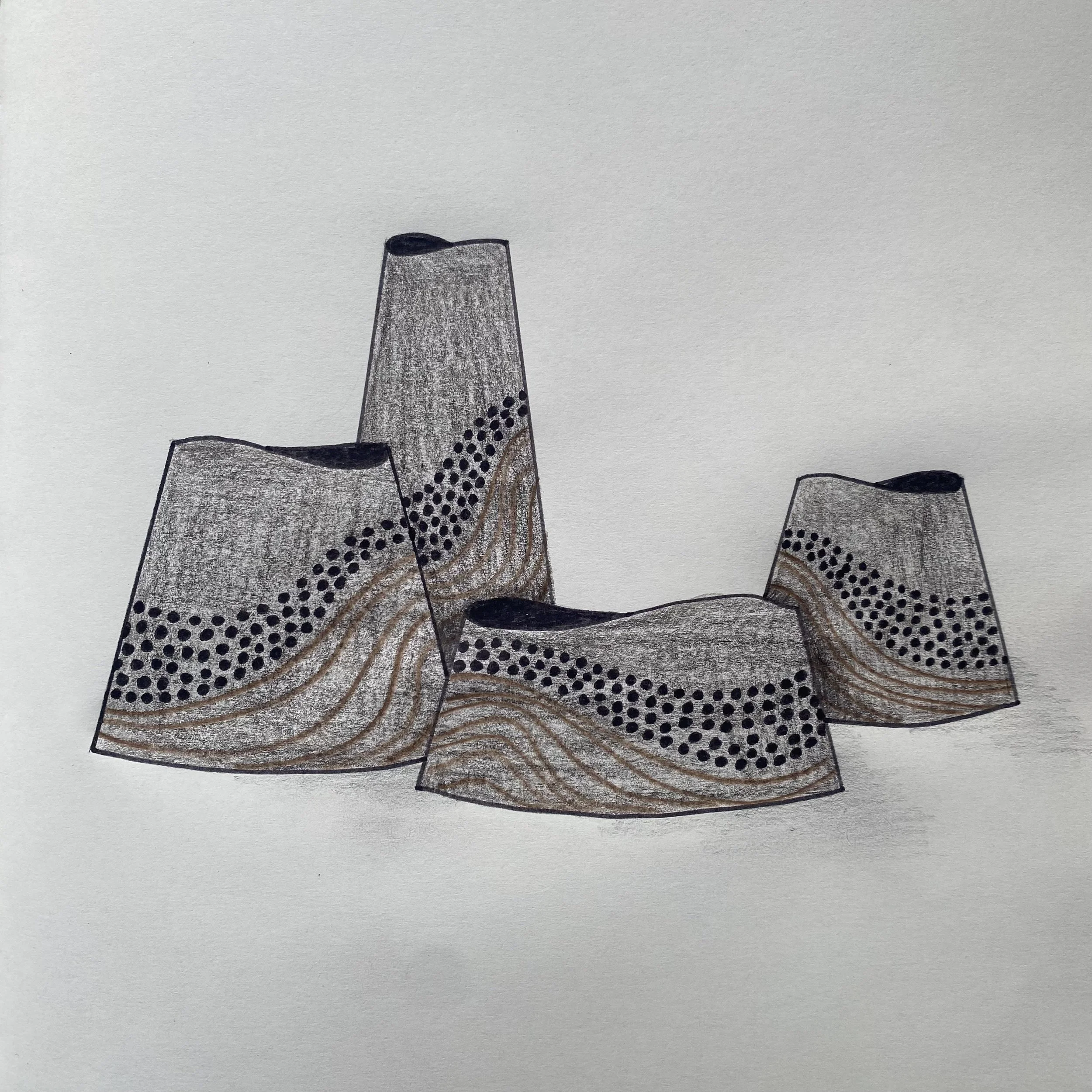
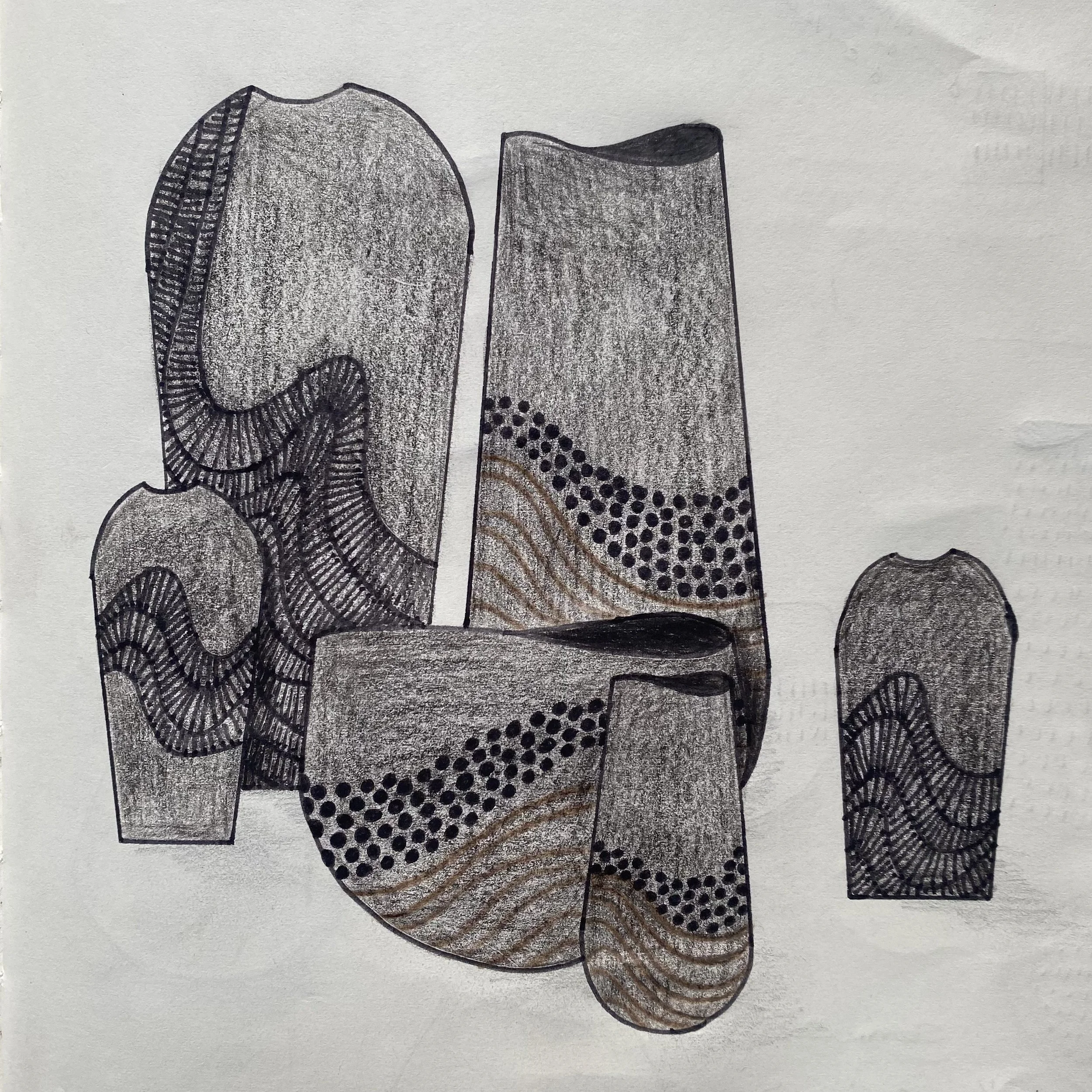
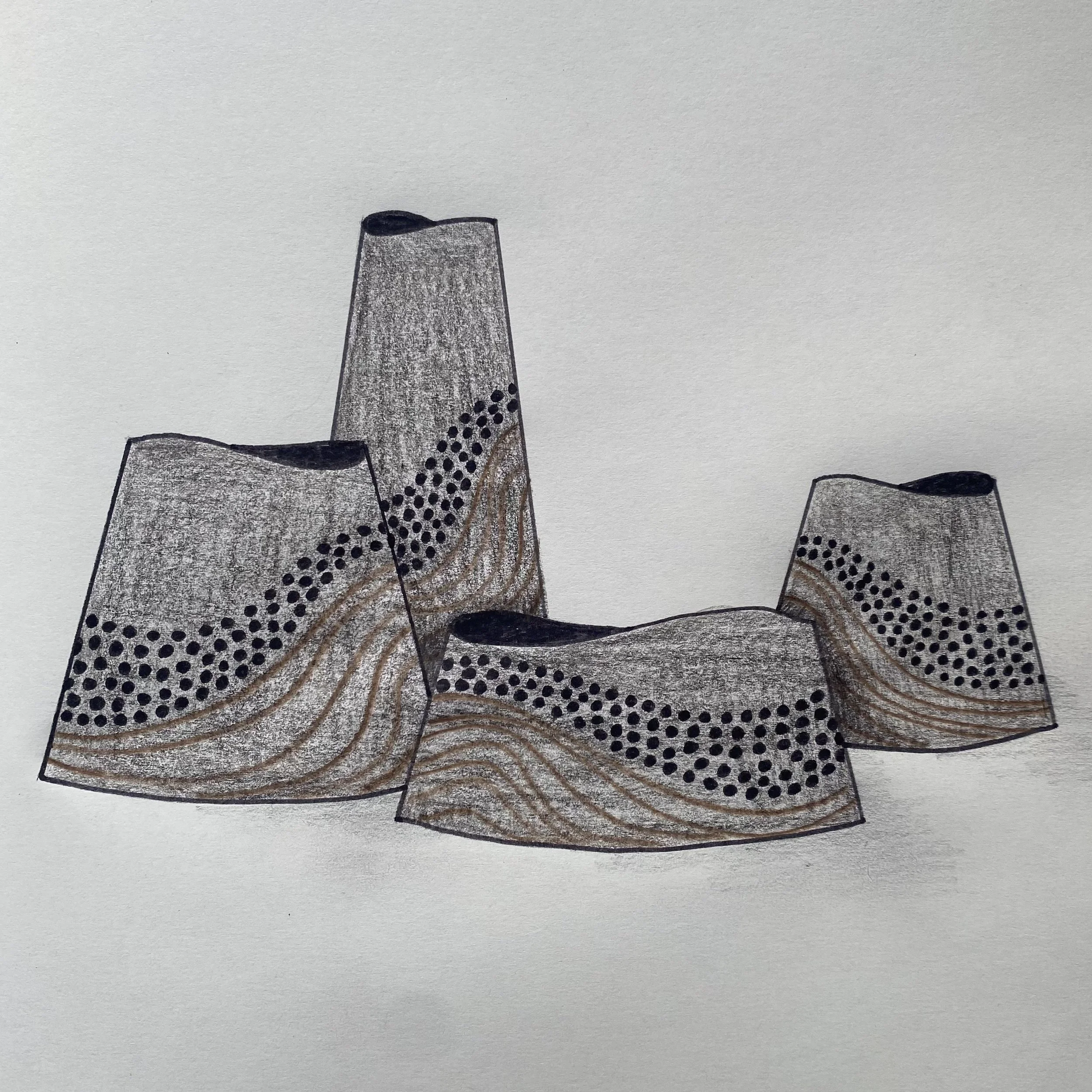
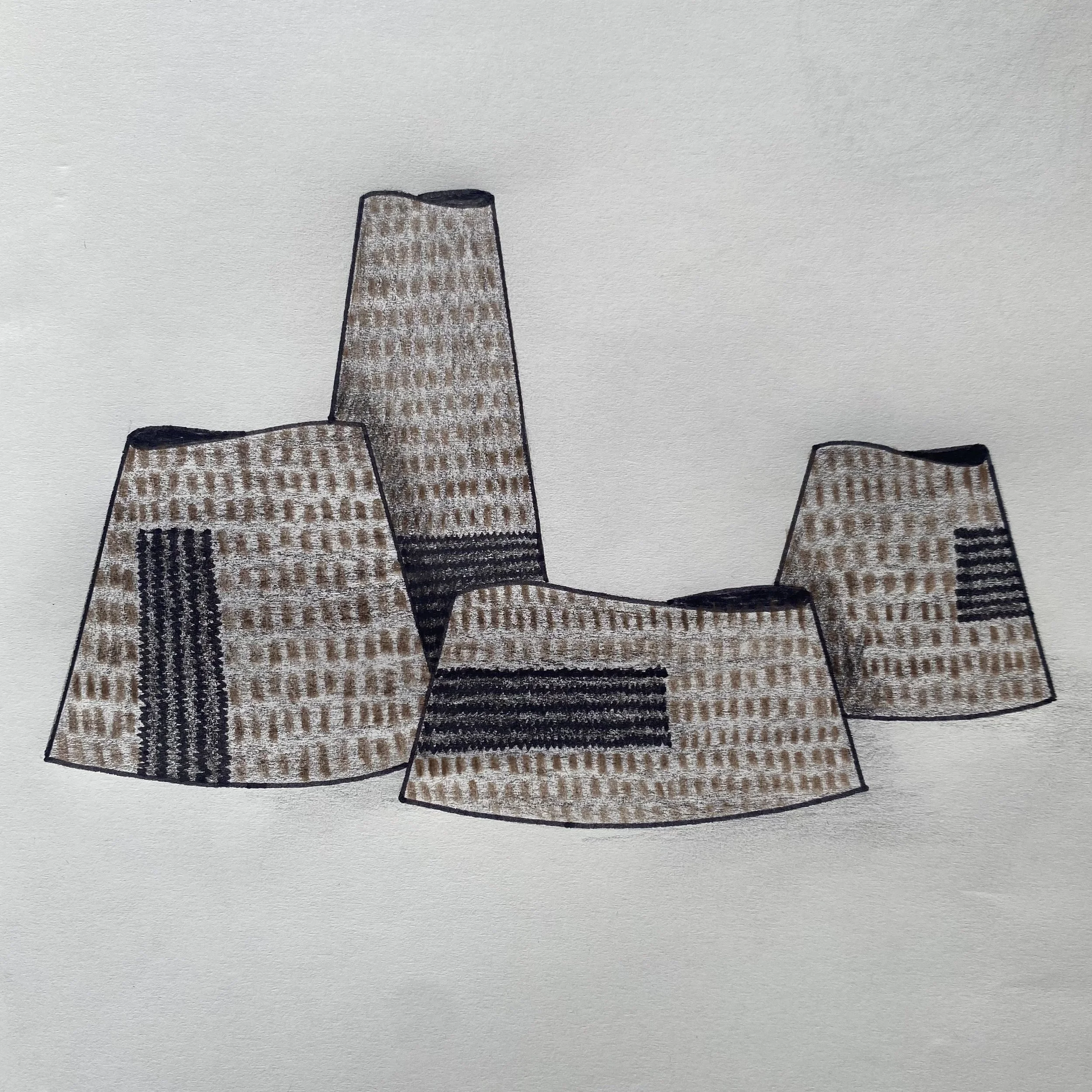
Following time spent drawing and making notes in my sketchbook, the notion of the non-functional vessel has been quietly strengthening in my thinking. Traditionally, vessels are made to hold something — but within my Memories of Place methodology, they begin to take on a different role: as containers for memory, experience and emotional resonance. This shift in understanding feels important, offering a way to bring together form, meaning and intention more cohesively.
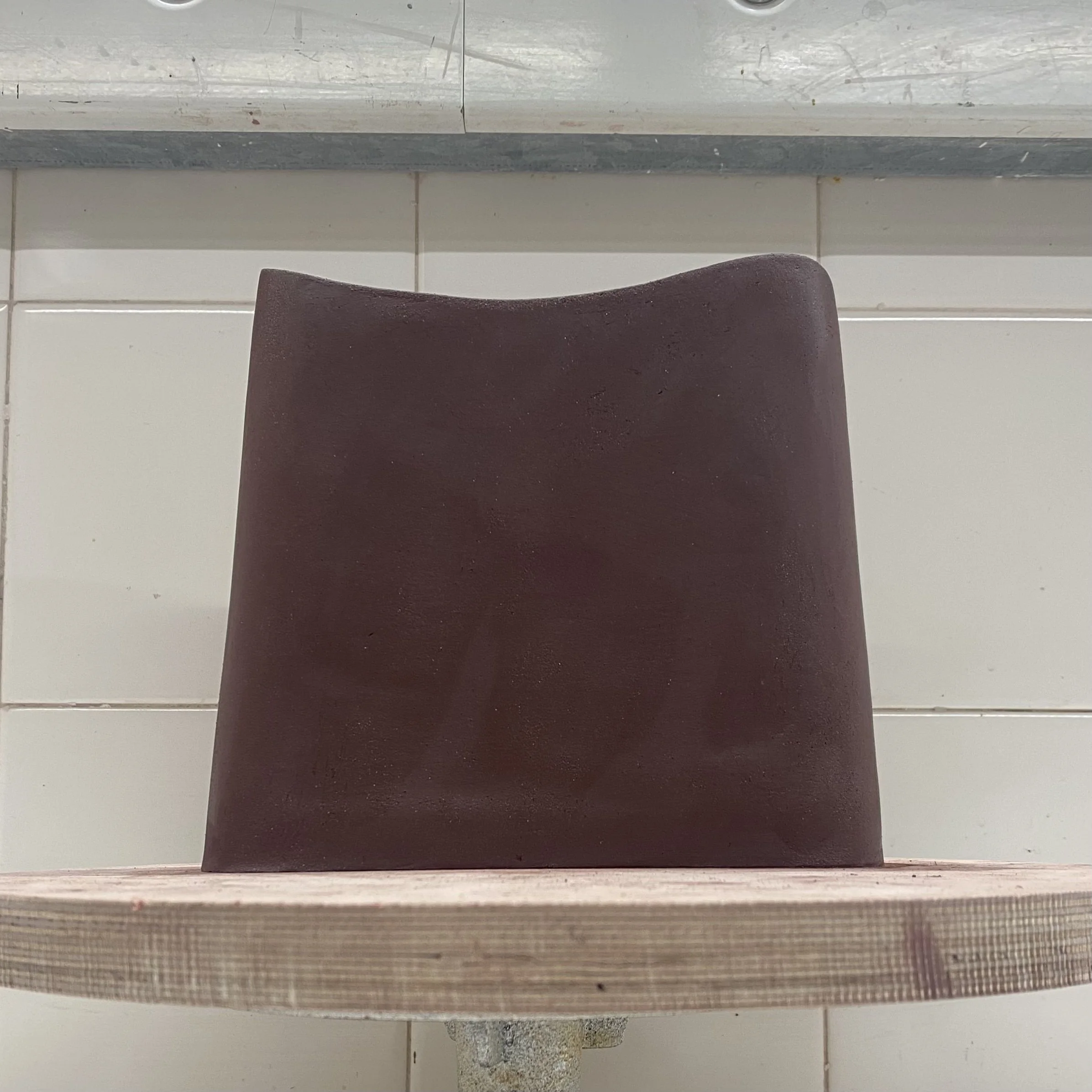
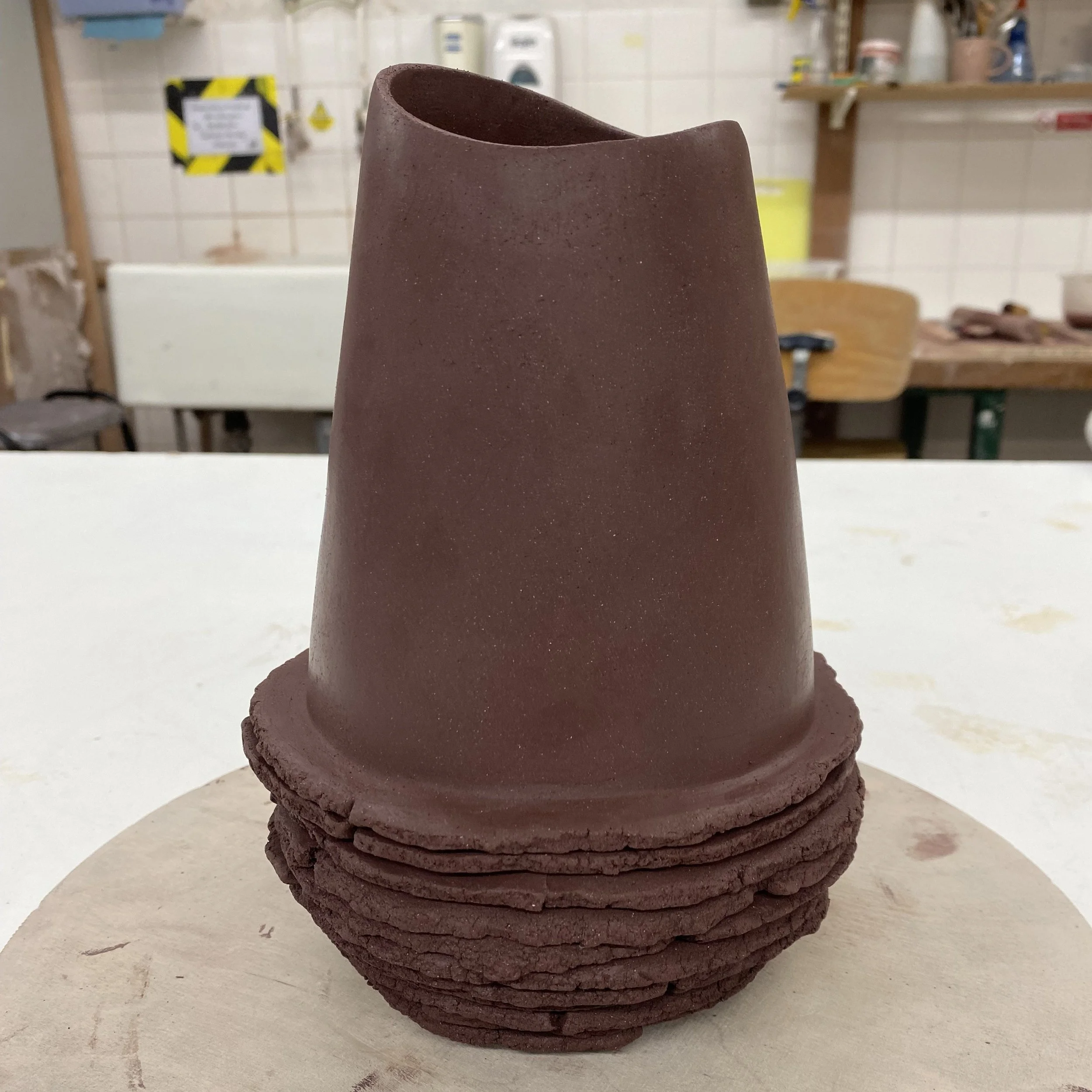
With this in mind, I have spent the week exploring a series of new vessel forms in the studio, considering how they might sit alongside — and in conversation with — the more abstract sculptural pieces I have been developing. There is something in this relationship that feels promising, a dialogue between containment and openness, between structure and gesture.
Drawing on the language developed through my test tiles — patterns, textures and surface rhythms — my aim now is to build a cohesive body of work that expresses both my lived experience of Sawbridge and the quieter, more intangible memories it holds. The fast approaching deadline of Ceramic Wales in June is certainly focusing the mind and I suspect the recent pause over Easter has provided the space I needed to reset and move forward with renewed energy.
There is still much to resolve and many long hours ahead in the studio, but for the first time in a while, I feel I am working with a sense of purpose — moving towards something that is beginning to feel both connected and true.
w/c 27 April 2026
Translating Thought into Form
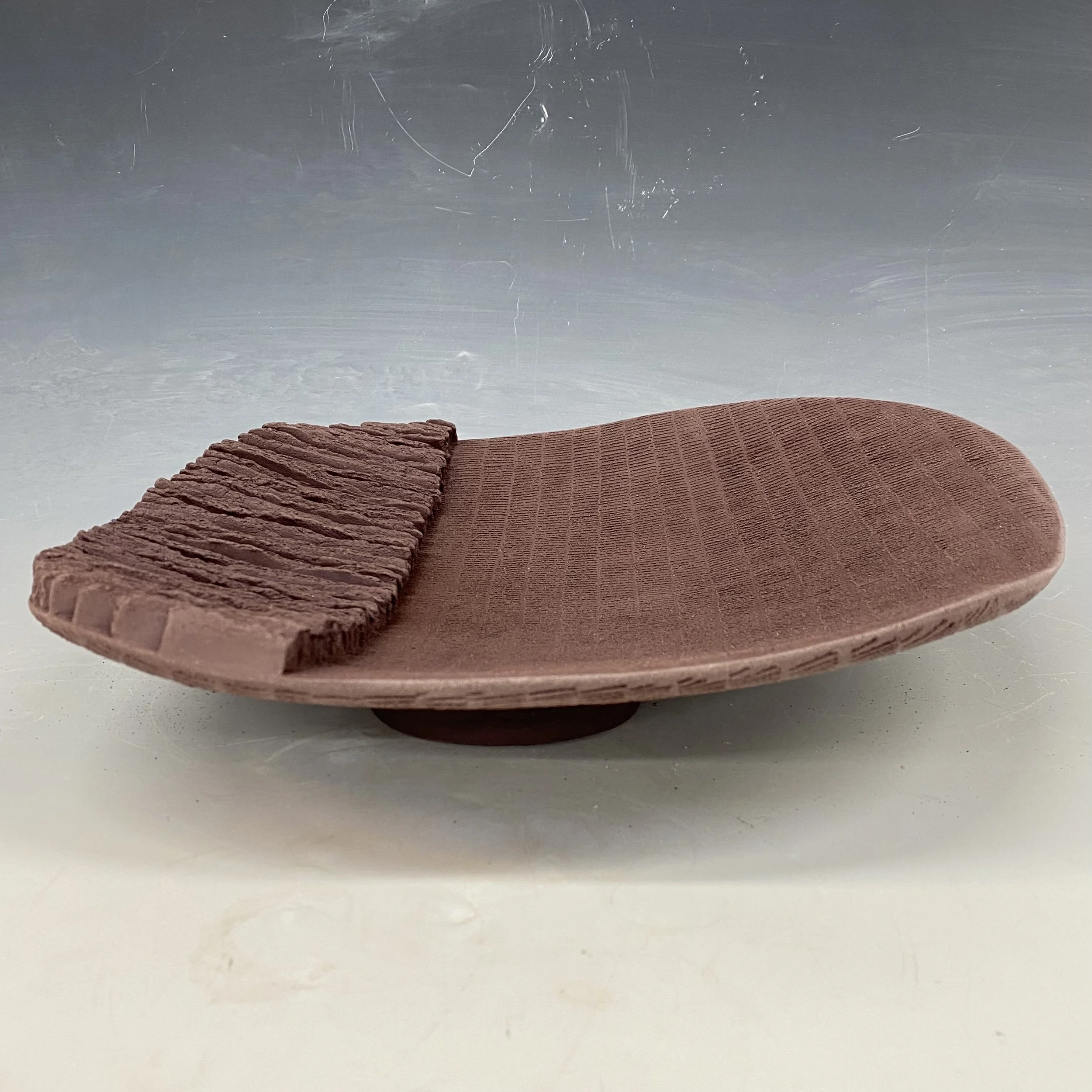
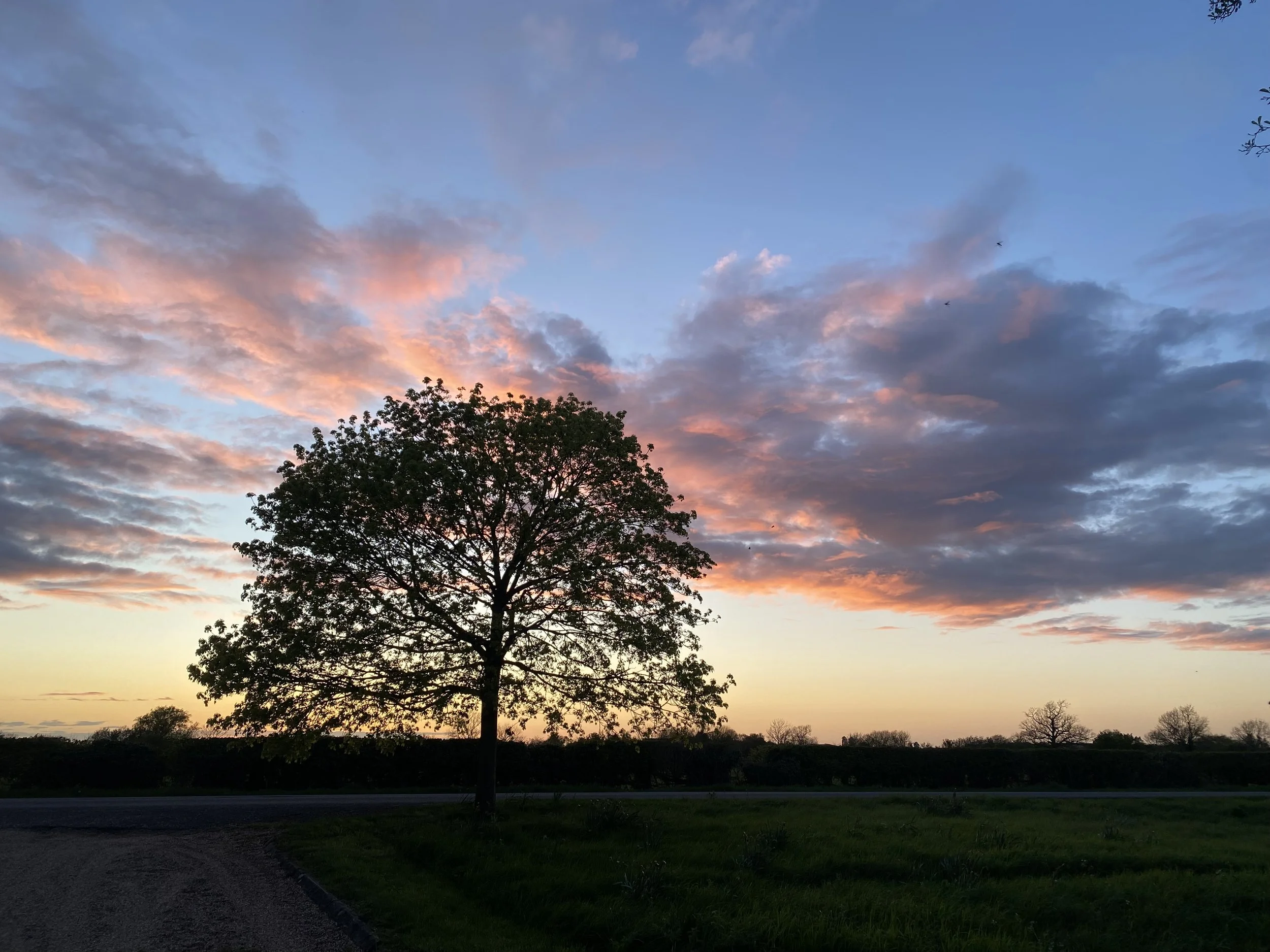
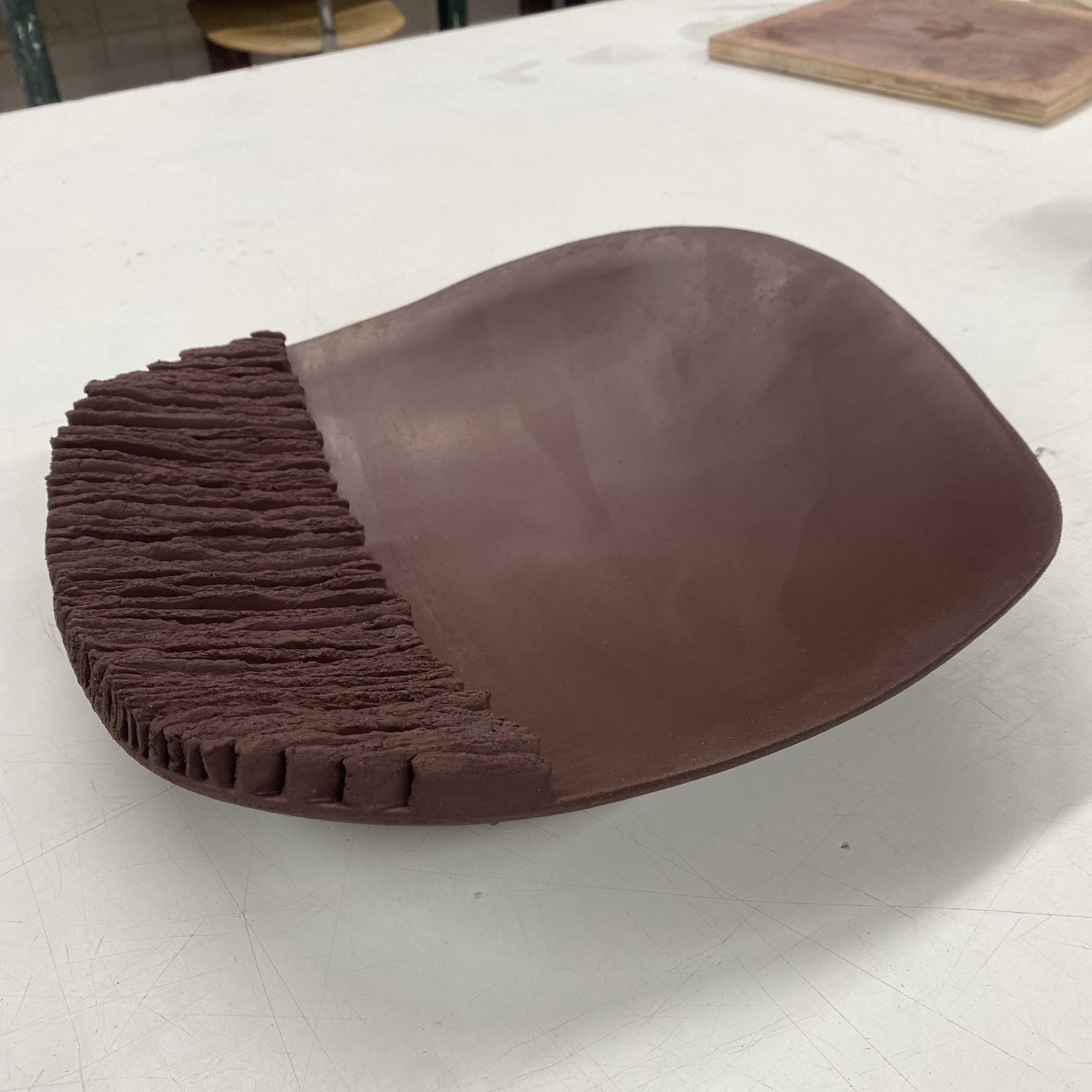
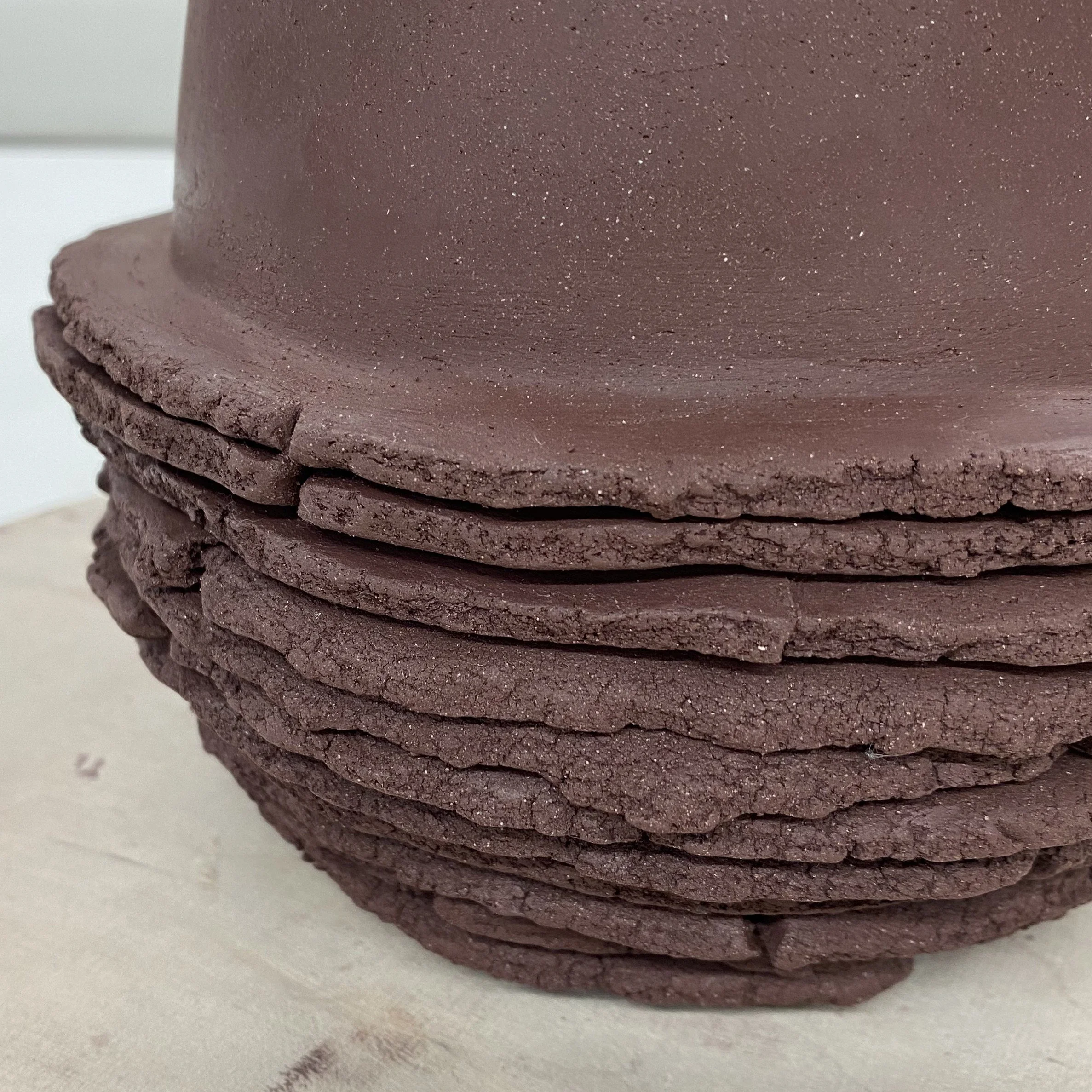
This week has felt like a natural continuation of last week’s shift in both thinking and making. Long days in the university studio have been spent attempting to translate ideas from my sketchbook into physical vessel forms — bringing together patterns, textures and rhythms that have been quietly developing over the past few months. These ideas remain deeply rooted in the landscape of Sawbridge, shaped by my lived experience of it through the winter months.
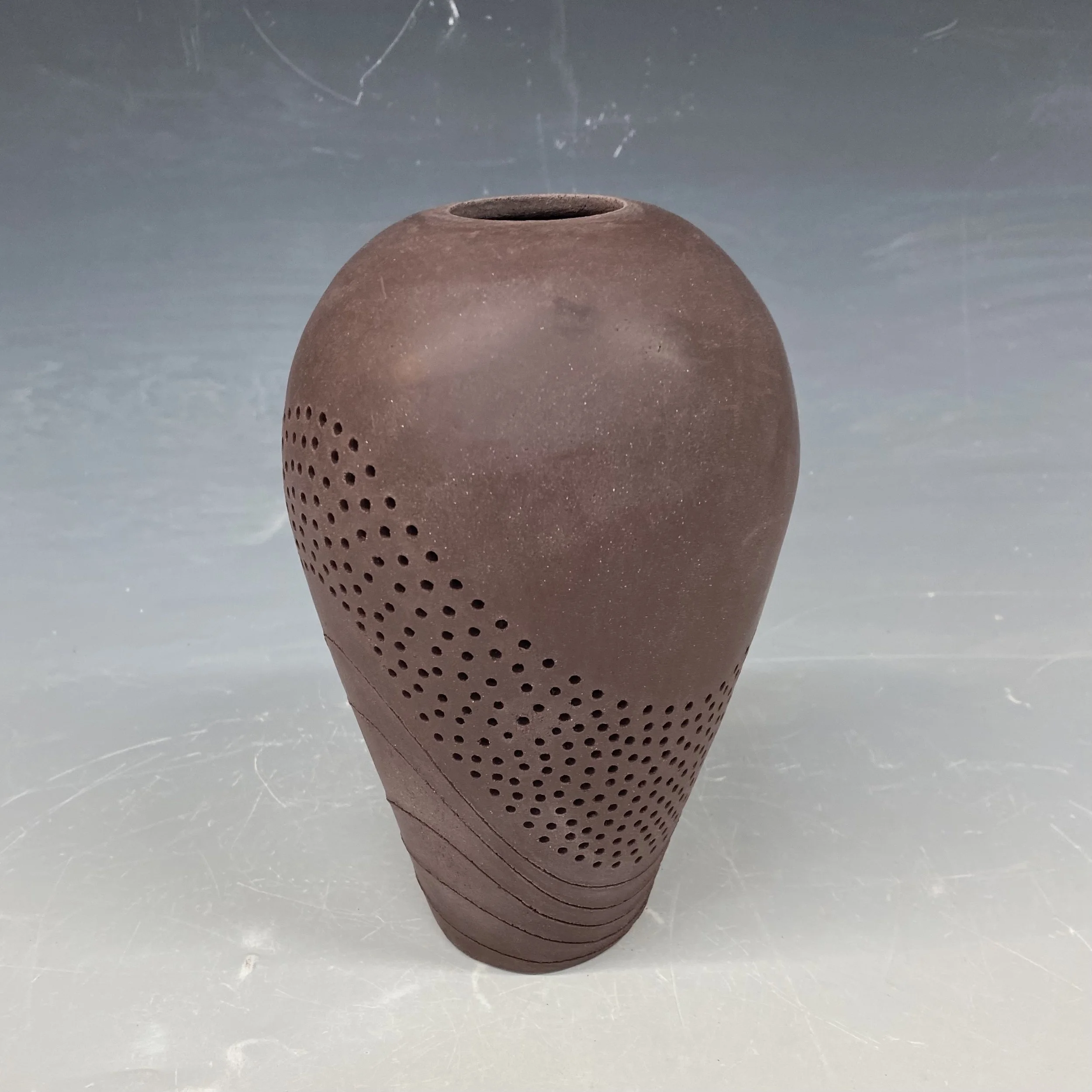
Working through these development pieces, I am beginning to recognise a stronger connection to certain forms over others. The idea of a non-functional platter — a surface for exploration, much like a canvas for a painter — is an area I feel particularly drawn to and one I would like to pursue further. Alongside this, the more oval and organically shaped vessels seem to sit more comfortably within my developing language. In contrast, the more traditional vessel forms feel less resolved and somewhat disconnected from what I am trying to express.
As always, these reflections remain provisional until the pieces have been fired, but there is a growing sense that I am beginning to navigate my way through this new area of development with a little more clarity.
The relationship between the sketchbook and the making feels increasingly important. The marks I make on paper — instinctive, repetitive, responsive — are not simply preparatory, but are becoming a direct translation into form. These vessels are beginning to act as containers, not in a functional sense, but as holders of memory — carrying the rhythms, traces and emotional resonance of place through both surface and structure.
I am also becoming more aware of how these vessel forms might offer a point of connection for the viewer. Their familiarity, their reference to traditional ceramic forms, allows them to be approached in a more immediate and accessible way. Not through simplicity, but through recognition. It feels important that these non-functional vessels sit alongside my more abstract sculptural work, creating a dialogue between the recognisable and the more ambiguous — and ultimately forming a cohesive body of work.
There is still much to resolve, but for the first time I can begin to see how these pieces might come together — not as separate ideas, but as parts of a whole that speaks more clearly of my Memories of Place.