March 2026
w/c 9 March 2026
Quiet Progress in the Studio
I finally feel as though I am beginning to settle back into a good rhythm of making in the studio, after mentally working through several issues surrounding my work and the direction I wish to take. It is deeply important to me to enjoy the process of making — the way thoughts travel through material and gradually take form as ceramic sculpture. Over the last few months some of that joy had quietly slipped away, but with just over five months remaining before the final show, I want to be fully engaged in the process once again. I want to be present for every part of it — both the highs and the inevitable lows — knowing that these experiences will ultimately shape my future practice.
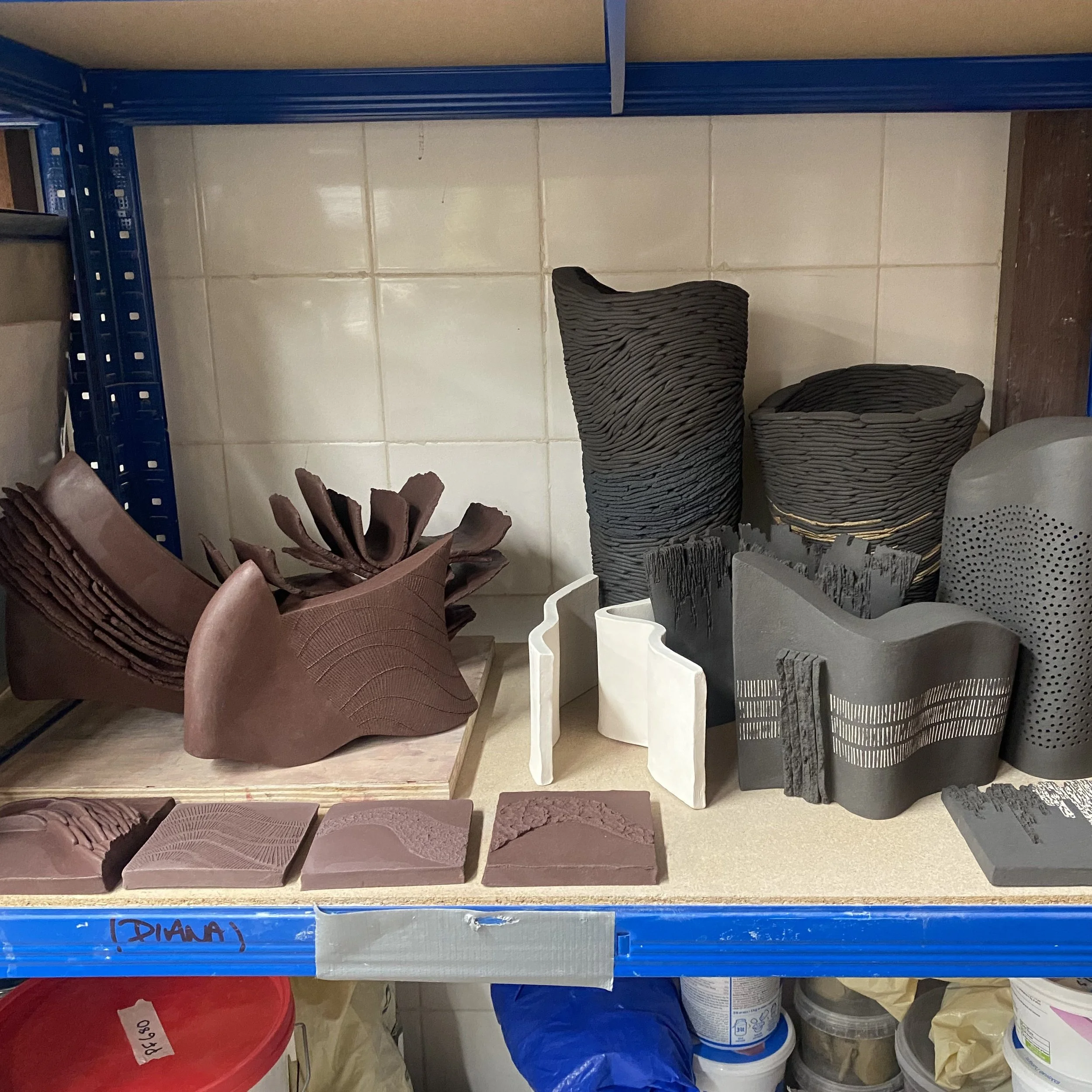
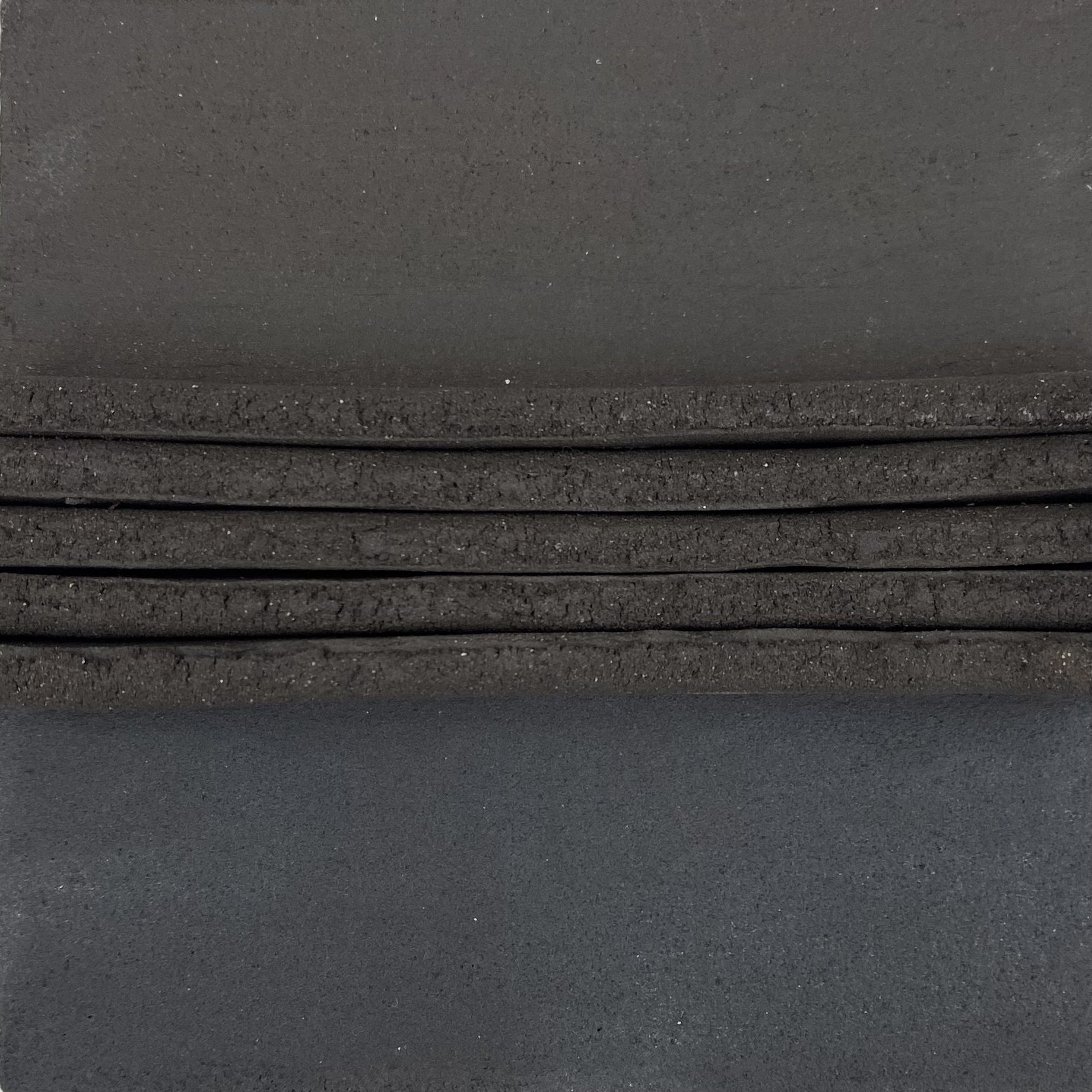
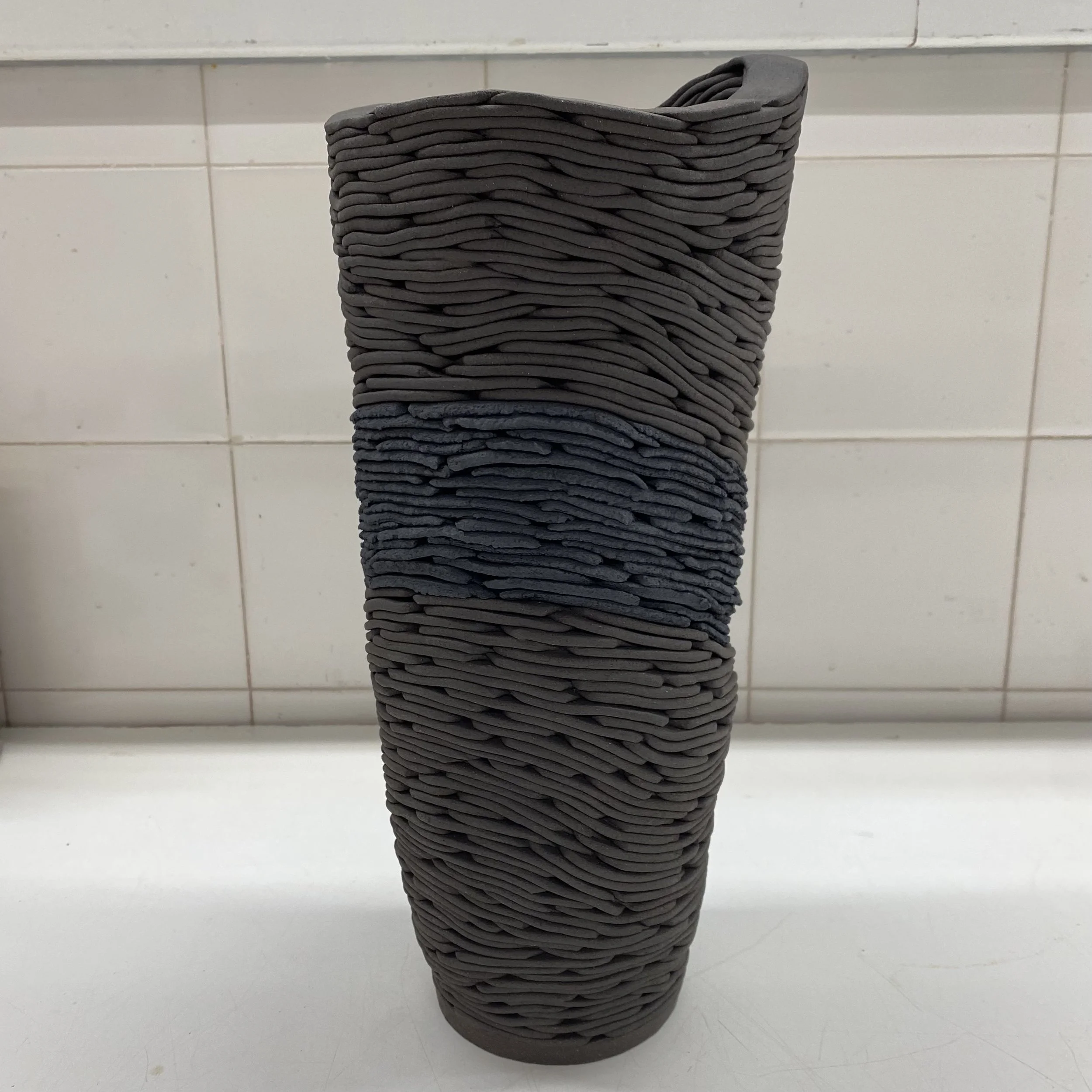
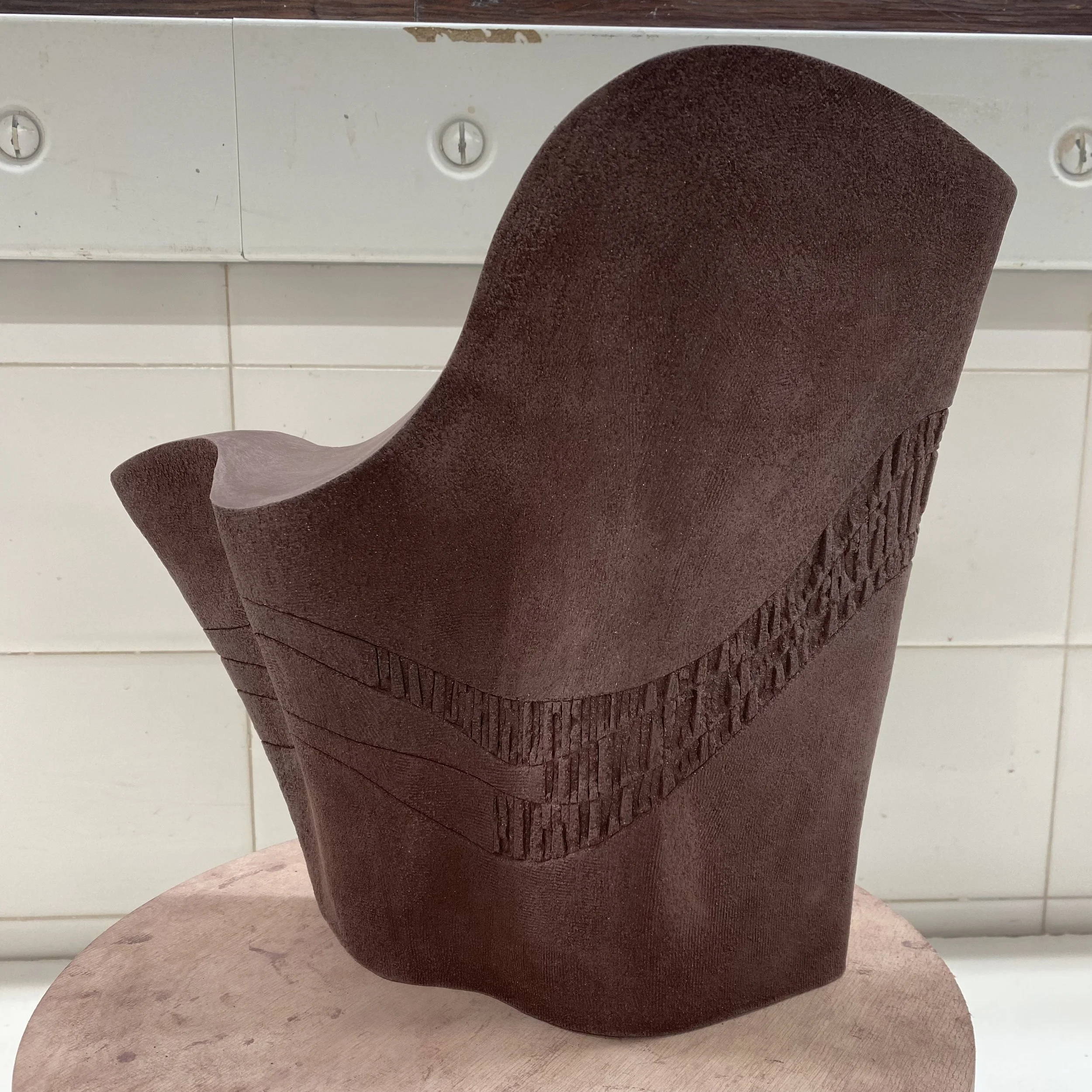
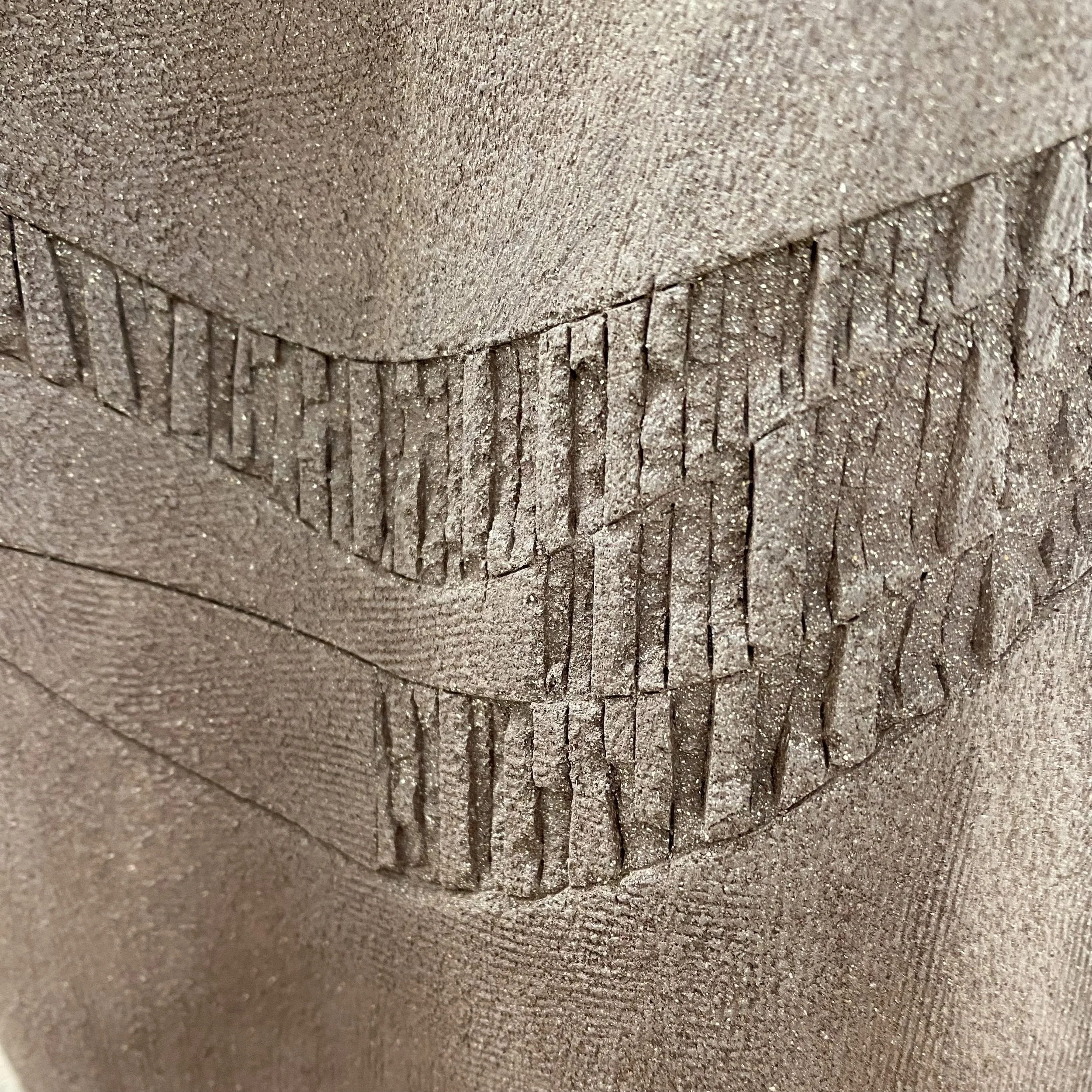
Exploratory Form 28, built using small flattened coils, emerged from its final firing this week. The partially glazed textured band has worked well, defining that section of the form without becoming a dominant or glossy statement. However, I do feel that this technique still requires further refinement if it is to communicate the ideas I hope to convey through my sculptures.
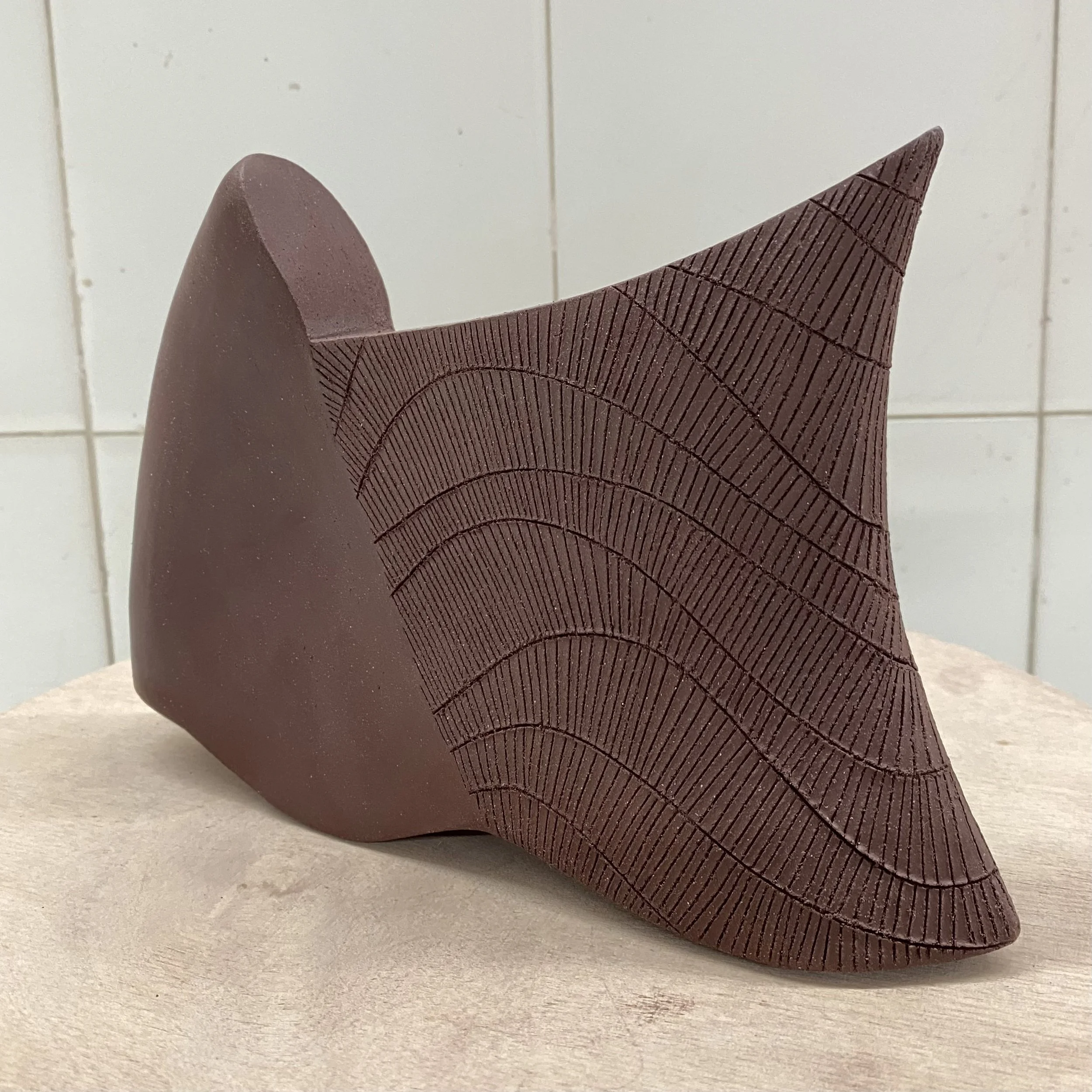
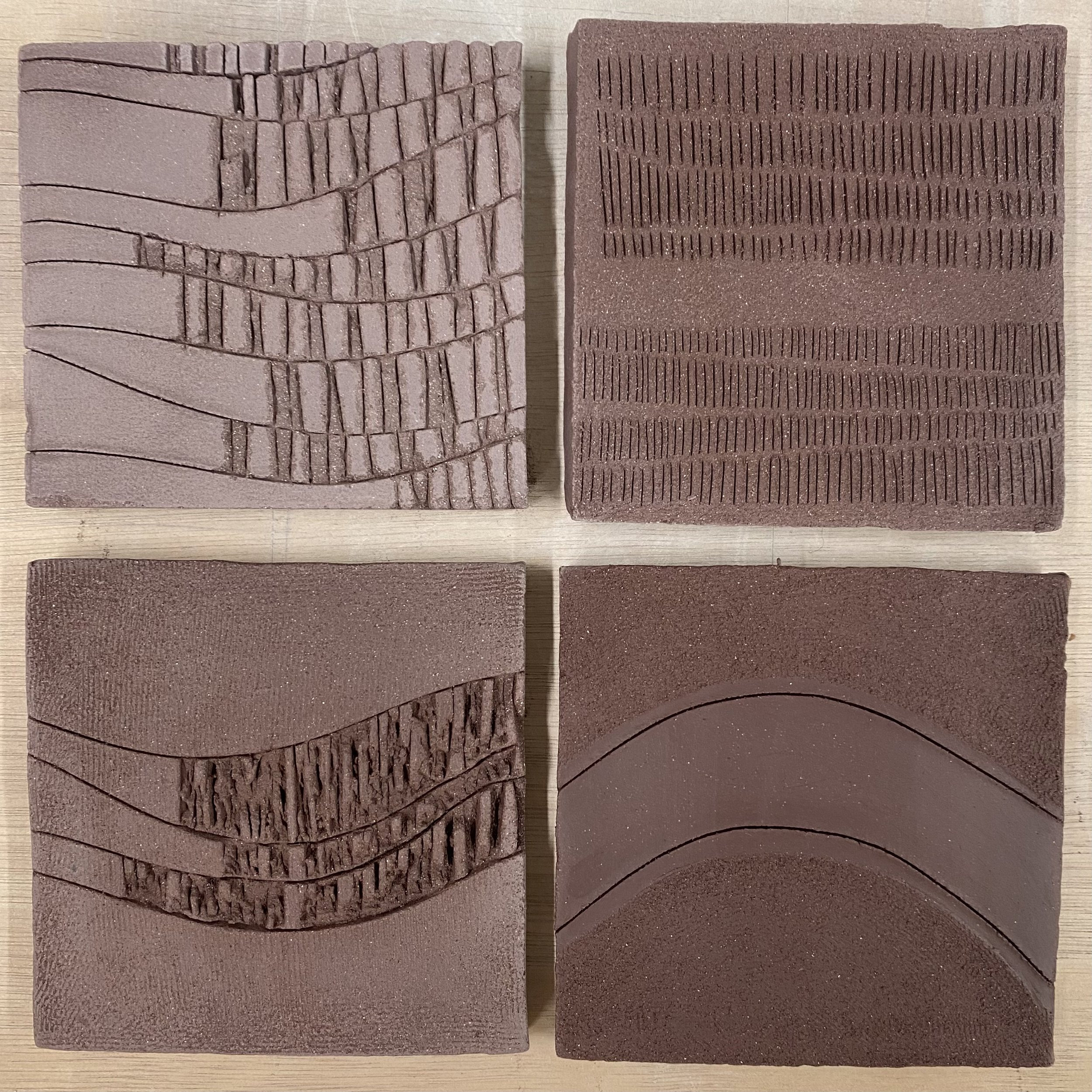
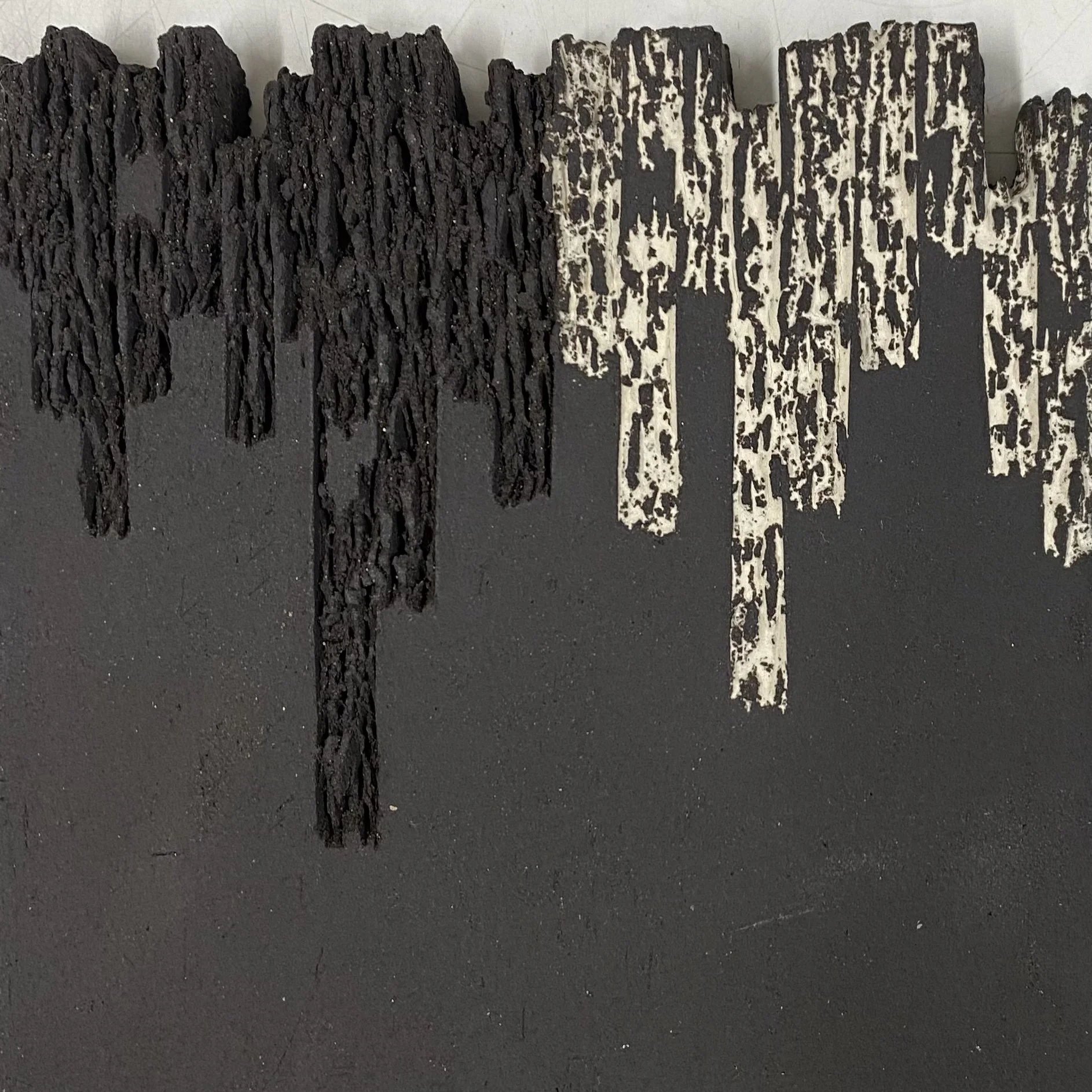
Alongside continuing to test ideas on small tiles, I am still trying to produce as many small maquettes as possible. What begins as a modest piece does, however, often have a tendency to grow — perhaps a sign that my hand-building skills are not quite as restrained as they could be. Occasionally this works in my favour. This week the larger-than-intended Exploratory Form 32 was finally dry enough to complete its surface carving. Having never attempted this technique on a finished form before, I approached it with a considerable sense of trepidation. Once completed, however, I found myself quietly pleased with the outcome. It is now drying slowly and will go into the bisque firing next week.
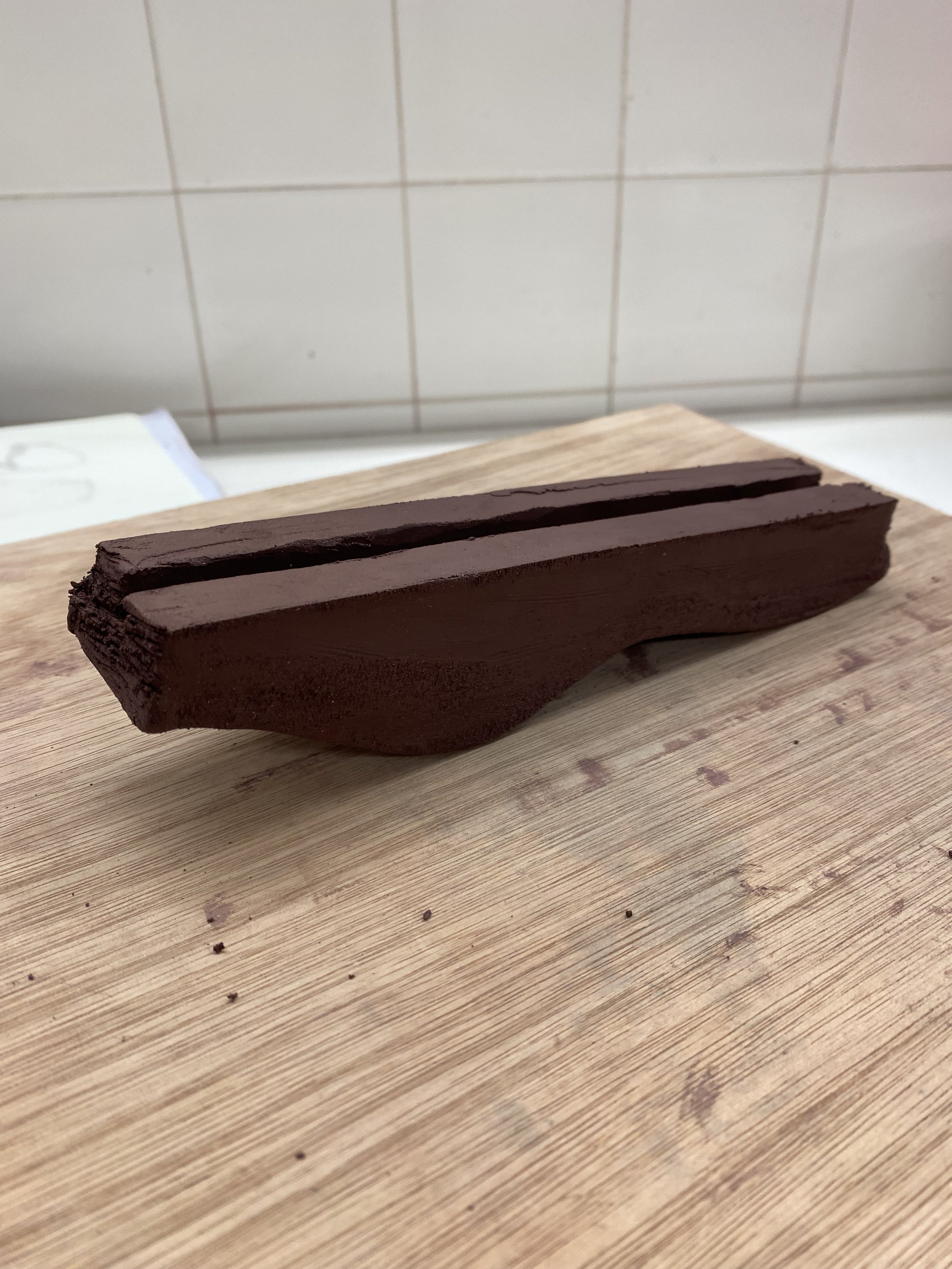
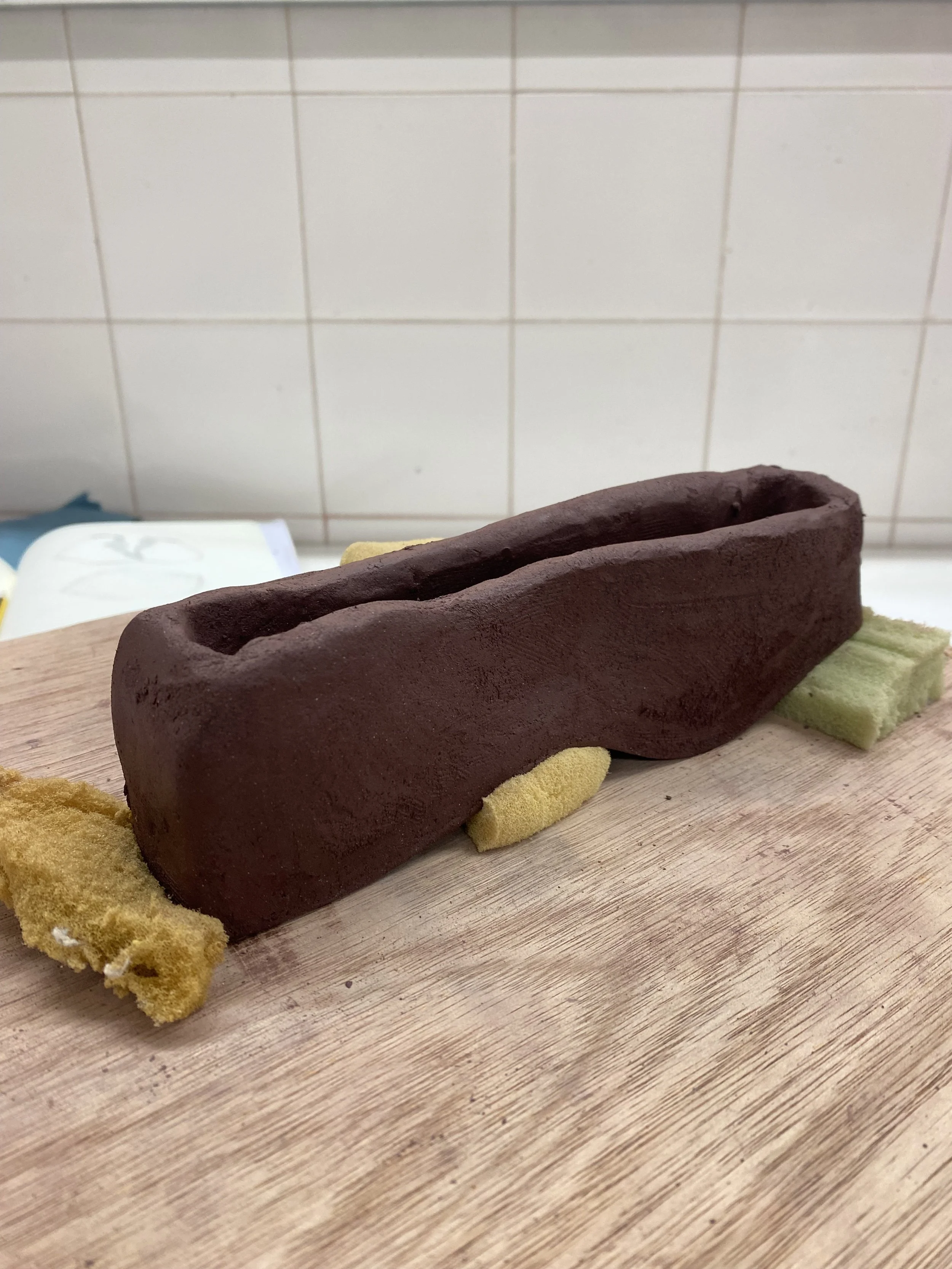
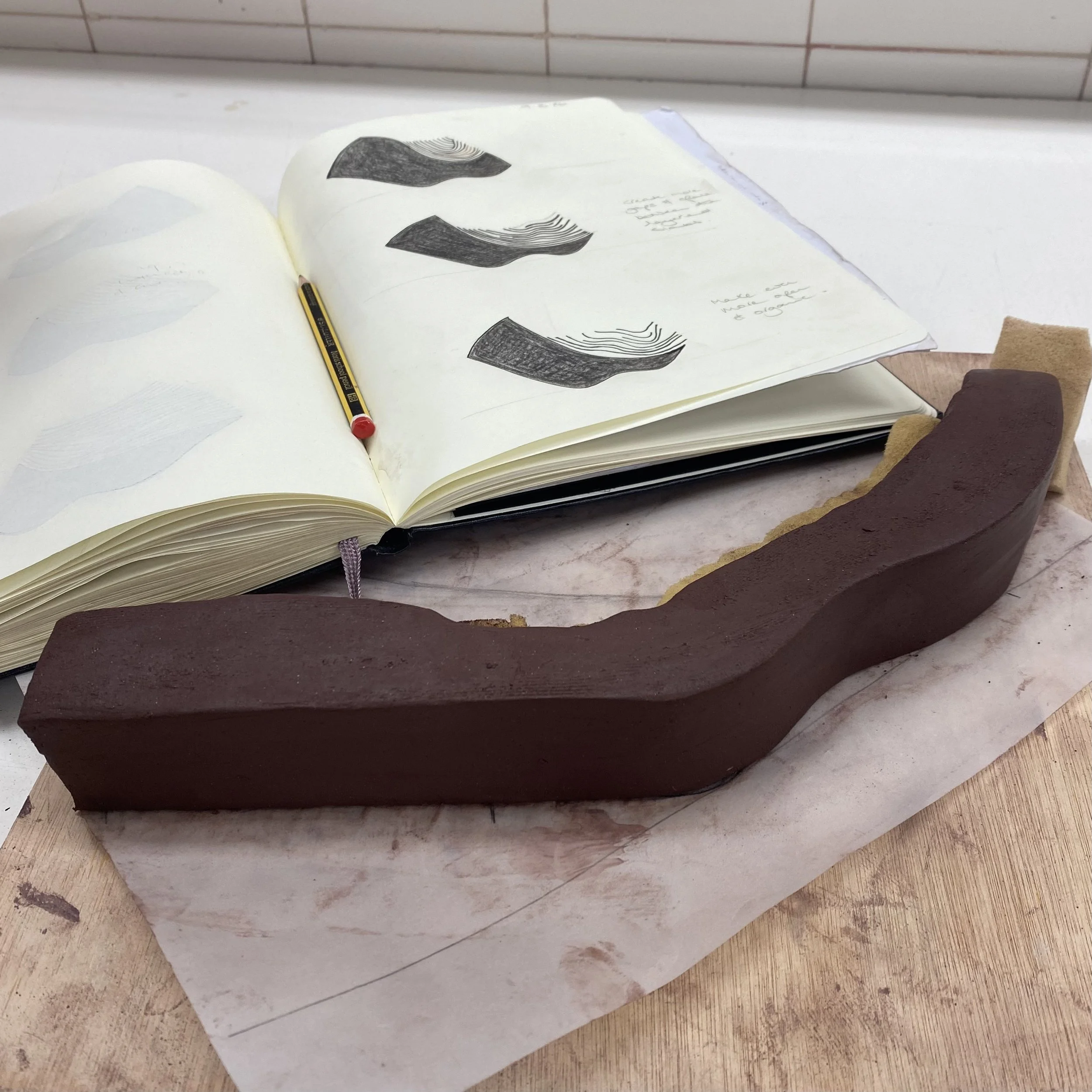
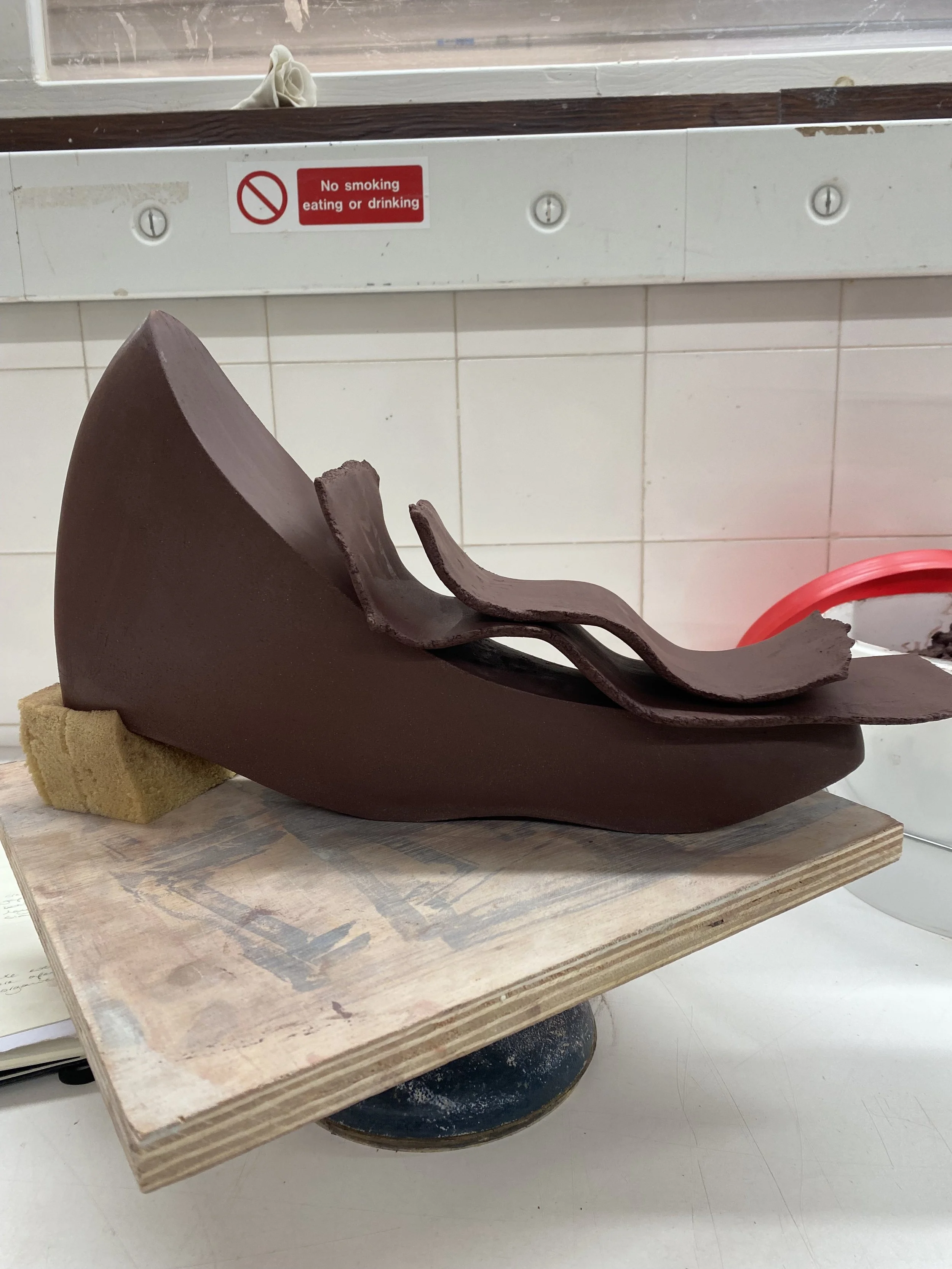
Up to this point I have been using the contour line of Sawbridge as a flat base from which some of my sculptures begin. With this in mind, I wanted to explore how that same contour might function as a shaped base instead. In trying to resolve the best way to construct forms that begin from these contour-informed bases, I started two new maquettes — Forms 33 and 34. Form 33 has stalled slightly for now, though I will return to it next week. Form 34, by contrast, seemed to develop much more quickly. Both are now resting under cover until my next studio session. I rushed slightly towards the end of Form 34 as it was progressing well, but I am now wondering whether it may require a little editing with my pottery knife — perhaps some rebuilding to contain a touch of enthusiasm and waywardness within the form. Time away from the work will hopefully bring some perspective when I uncover them again next week.
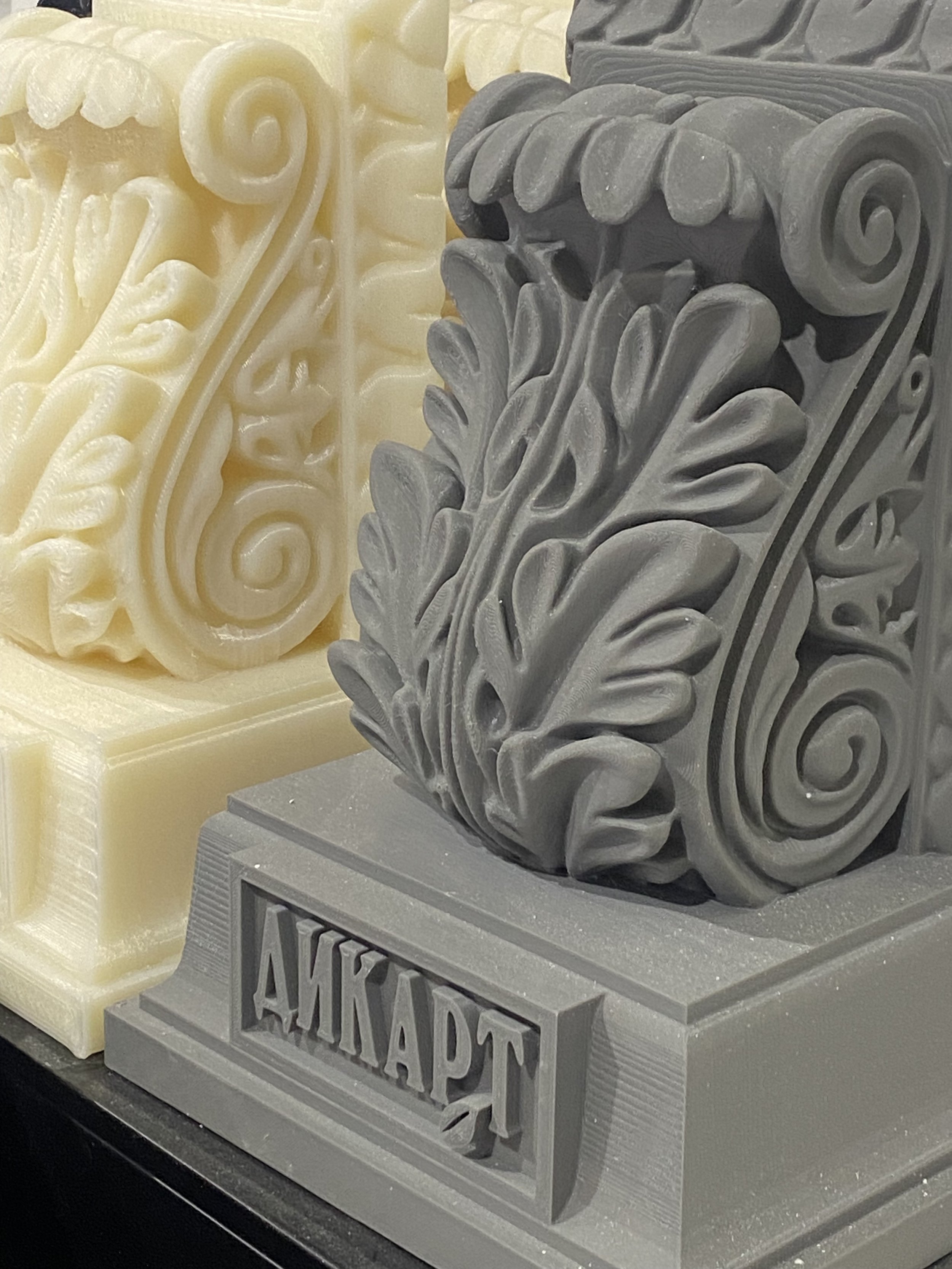
We also had a fascinating visit to the factory at Darwin Terracotta this week. It was remarkable to see craftsmanship thriving within the ceramics industry at such a scale. What struck me most, however, was how familiar the processes felt — the same methods, techniques and materials used within a studio pottery setting, simply operating on a much larger scale. Huge thanks go to Jon Wilson and the team at Darwin Terracotta for such an informative and welcoming tour, offering us a glimpse into the incredible projects they undertake across the globe.
w/c 16 March 2026
Returning to the Unresolved
Some weeks I find myself immersed in the flow of making and building, while at other times the focus shifts towards completing and resolving work. This week has felt very much like a full stop — a pause marked by finishing two forms and with it, an opportunity to step back and reflect on where the work is currently heading.
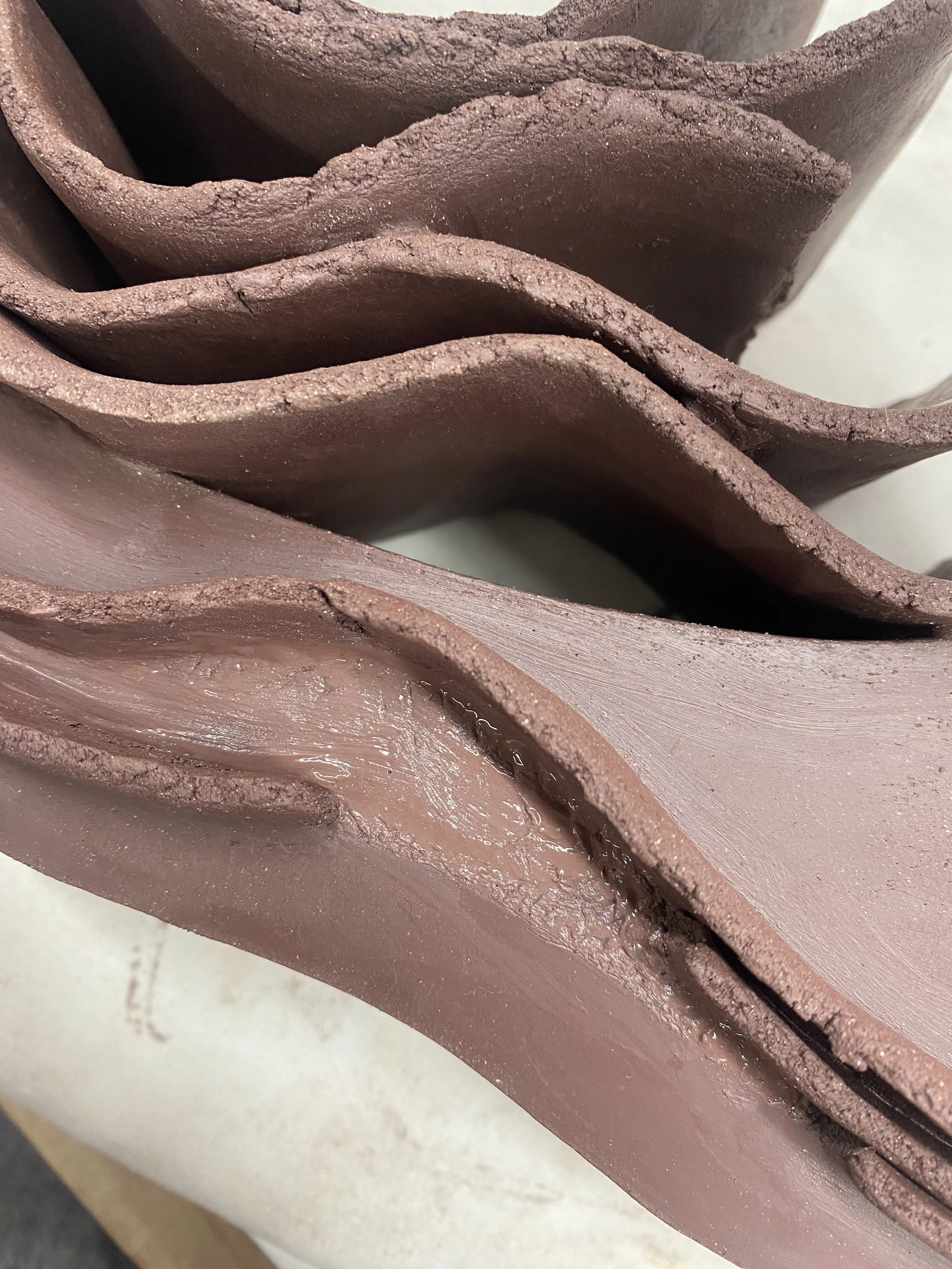
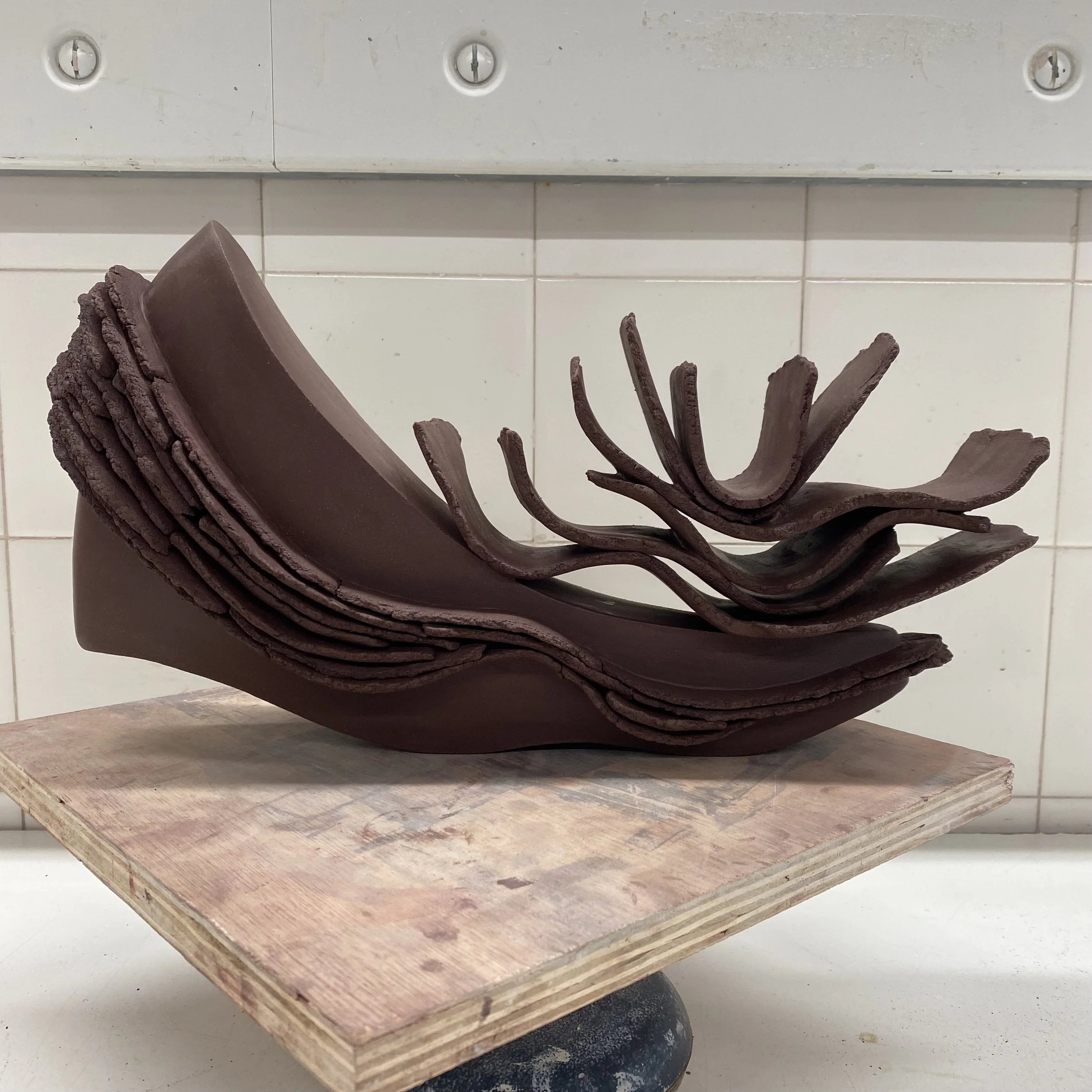
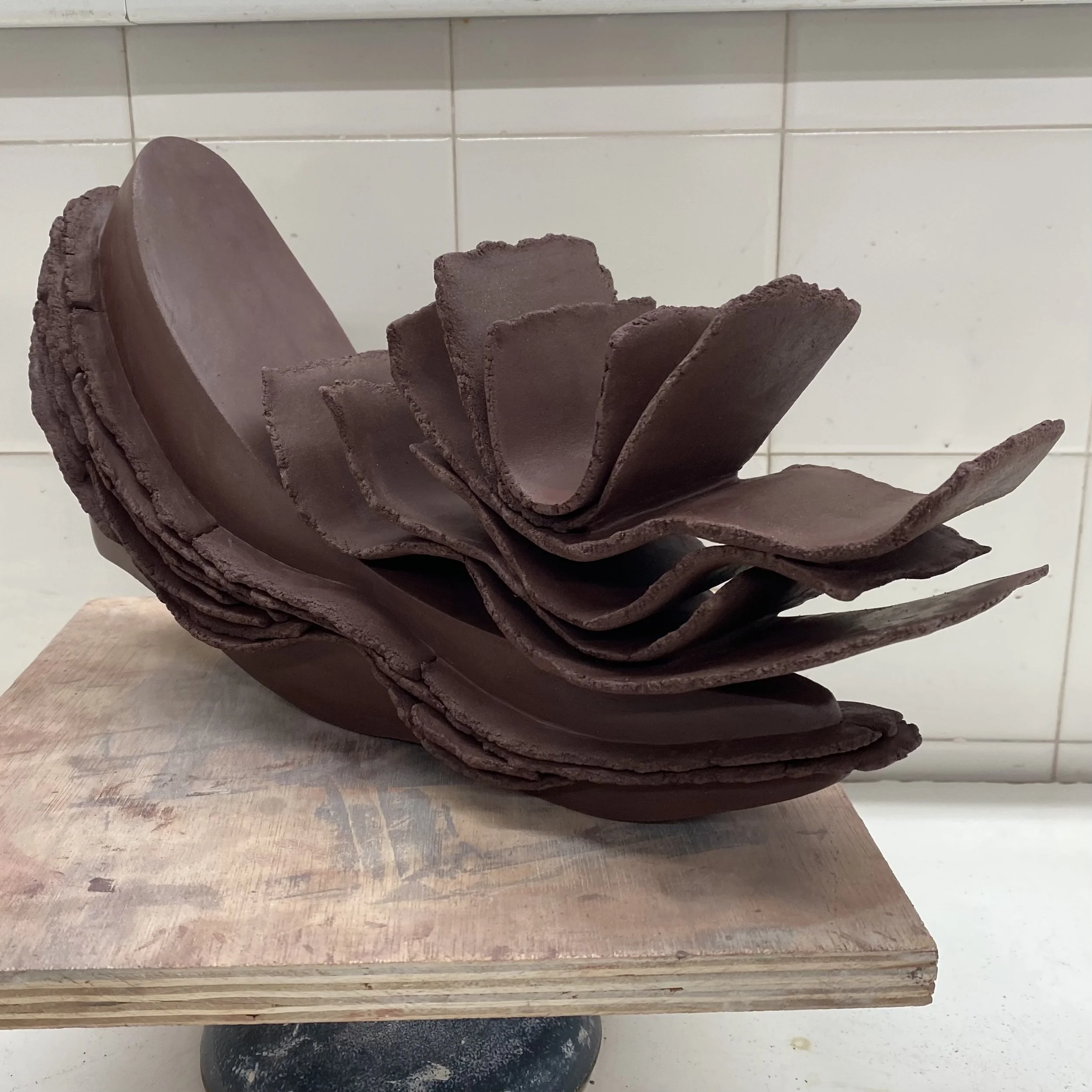
I finally completed the incised surface on Form 33. While I am drawn to the rhythm and flow within the mark-making, I feel the form itself is not quite moving in the right direction. Revisiting Form 34, which I had thought finished last week, I realised it still needed further attention. What began as a process of correction became more about listening — understanding what the piece needed in order to reach a point of balance. I added additional “land flows” to the top of the form and introduced torn slabs to the main body, allowing the surface language to move more cohesively throughout the piece. With these adjustments, the form feels more resolved — the relationship between the grounded, layered base and the more gestural upper elements now sitting in a way that feels balanced and intentional. Both pieces are currently drying, in the hope that they will be ready for bisque firing next week.
Reflecting on the work more broadly, I am beginning to notice a recurring language — an unconscious return to layers, lines and a sense of rhythmic flow. These elements continue to surface, both in my thinking and in the physical act of making, as I try to understand how best to distil my Memories of Place into sculptural form. My intention has always been to translate the emotional and spatial experience of landscape — not through representation, but through rhythm, gesture and material presence. Yet the use of layering clay is something I had, until recently, considered setting aside.
Yet it now feels as though my subconscious has other ideas. These recurring themes are quietly but persistently finding their way back into the work, suggesting that they may hold something essential. Perhaps it is time to acknowledge this more directly — to face what feels like the “elephant in the room” — rather than sidestepping it through uncertainty or fear of failure. These thoughts have surfaced repeatedly over the past year, and I am beginning to recognise that avoiding them may simply be delaying an important part of my development.
With this in mind, I intend over the coming days to return to my sketchbook, using drawing and mark-making as a way of exploring these ideas more freely. Through this process, I hope to begin to understand how these notions of layering, line and flow might evolve — and how they might more fully support my ongoing exploration of place, memory and material.
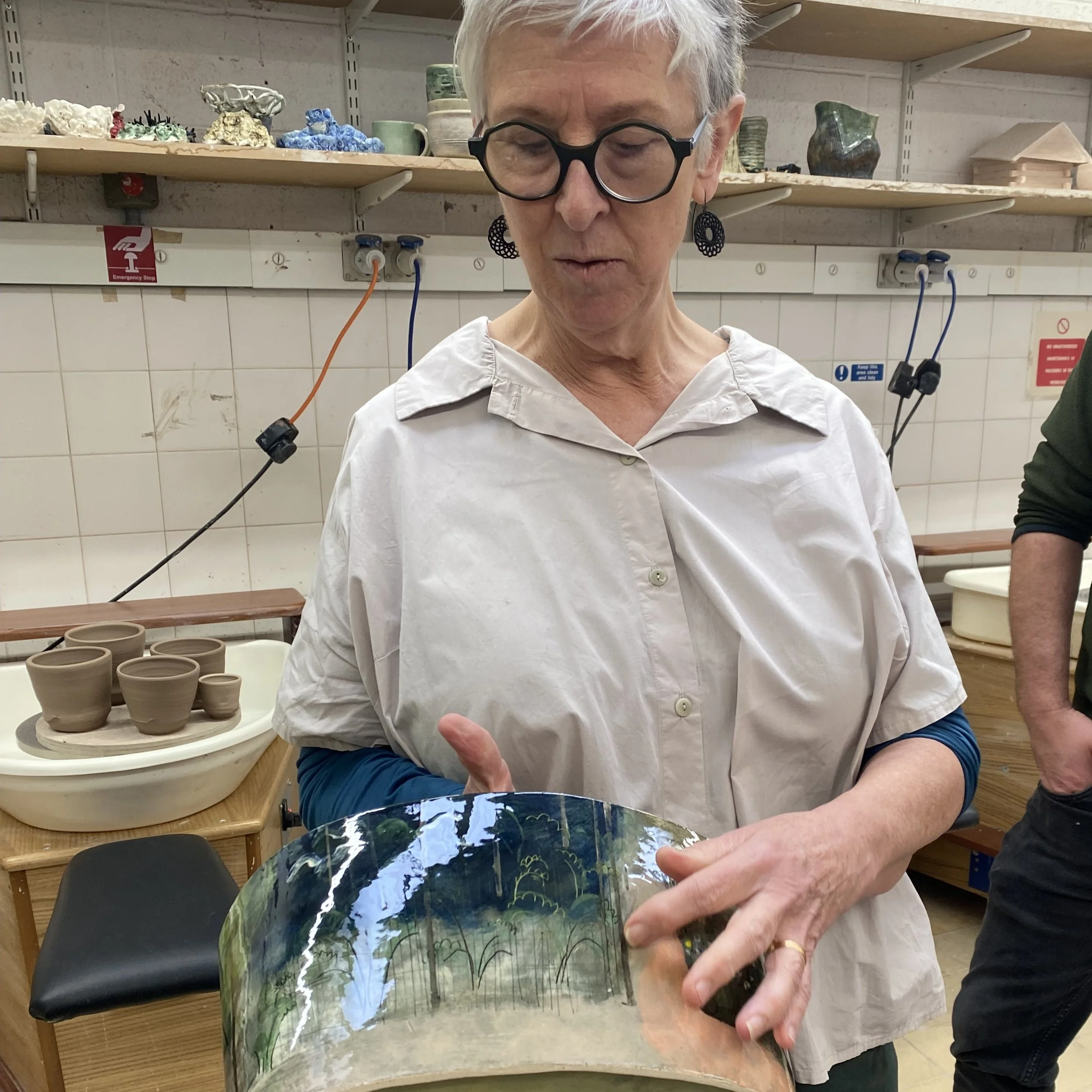
This week also included a visit from ceramic artist and visiting lecturer Anna Lambert, who delivered an engaging and insightful talk on her professional practice. Having previously interviewed her as part of an earlier assignment, it was particularly interesting to see her work discussed in this context, and to have the opportunity to speak with her again in the studio. As a former MA student and tutor at the University of Lancashire, her connection to the space added another layer of relevance. These visits from practicing artists continue to be both inspiring and invaluable, offering a glimpse into the many ways a ceramic practice can evolve beyond the academic setting.